Sokar: Ancient Egyptian God of Death and Rebirth
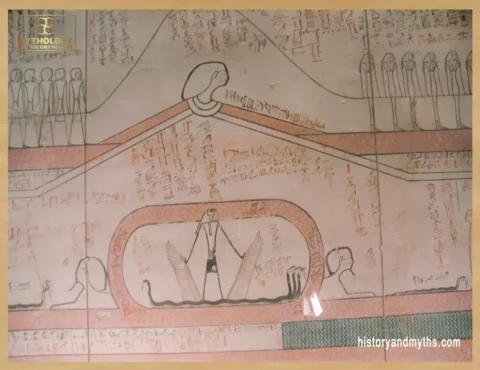
Few Egyptian gods embody the quiet power of the underworld as clearly as Sokar, the ancient funerary deity of Memphis. To the Egyptians, Sokar was not a figure of terror…
To the ancient Egyptians, the first light of dawn was more than a moment in the sky it was a sign that creation was beginning again. And rising at the…
Few ancient Egyptian gods capture the tension between danger and protection as vividly as Maahes. To the Egyptians, the lion was not just a creature of the desert it was…
In ancient Egypt’s imagination, the balance of the world was never guaranteed. Order could slip into chaos, the sun could disappear behind anger, and even the gods themselves could turn…
In the vast sacred landscape of ancient Egypt where gods shaped the rhythm of the cosmos and every sound carried meaning Ihy emerged as one of the most intriguing divine…
Among the many deities of ancient Egypt, Tayt stands out not because of towering statues or famous myths—she has none—but because of the quiet power she held over one of…
Satis was the goddess who stood at the place where Egypt began. Long before the Nile fanned into farms and cities, its first wild current surged through the granite gates…
Renenutet was the kind of goddess whose influence was felt long before her name was spoken. In a land where the rhythm of the Nile determined survival, she represented the…
In the deep layers of Egyptian religion, some deities became powerful not because of a single myth or dramatic story, but because they answered a universal human need. Neith is…
In the vast world of Egyptian religion where every city shaped its own theology and every god reflected a specific need Nehmetawy appears as a quiet but meaningful presence. She…
In ancient Egyptian thought, creation did not begin with a god lifting the sky, shaping the earth, or breathing life into the first beings. It began in silence—an endless, unfathomable…
Every child is born into the world, but who decided that child’s destiny? Ancient Egyptians believed the answer was Meskhenet. Standing beside the birthing brick, she did more than protect…
Meretseger is one of the few Egyptian goddesses whose power comes not from grand myths or temple rituals, but from the landscape itself. She lived in the minds of the…
Menhit is one of those Egyptian goddesses whose presence is small in the written record but powerful in meaning. She does not appear in long myths, nor does she dominate…
Among the many local deities that shaped daily life in Ancient Egypt, Hatmehit stands out not because she was powerful or central, but because she represents something deeply human: the…
Among the many deities who shaped Egypt’s funerary world, few remain as mysterious—and as understated—as Anput, the feminine counterpart of Anubis. While she never gained a widespread cult or mythic…
To the ancient Egyptians, the journey into the afterlife was not a sudden leap into darkness but a passage guided by familiar, welcoming forces. Among the quiet yet powerful figures…
In ancient Egypt, the idea of divine motherhood was more than tenderness or protection it was a source of cosmic authority. At the heart of this idea stood Mut, the…