Medical Diagnosis in Ancient Egypt: How Doctors Identified Disease
Ancient Egyptian medicine did not begin with treatment. Before prescribing any remedy, physicians first examined the patient, identified the condition, and judged whether it could be treated. Surviving medical texts show that diagnosis was a structured process based on observation, physical examination, and clinical judgment rather than immediate reliance on magic. Patients were classified according to prognosis, allowing doctors to decide whether a condition was treatable, uncertain, or beyond medical help.
This diagnostic approach is preserved most clearly in Egyptian medical papyri, where examination consistently precedes treatment. Rather than viewing illness through belief alone, Egyptian physicians relied on observable signs, patient responses, and accumulated experience to guide their decisions. Understanding this process reveals one of the most systematic aspects of medicine in the ancient world.
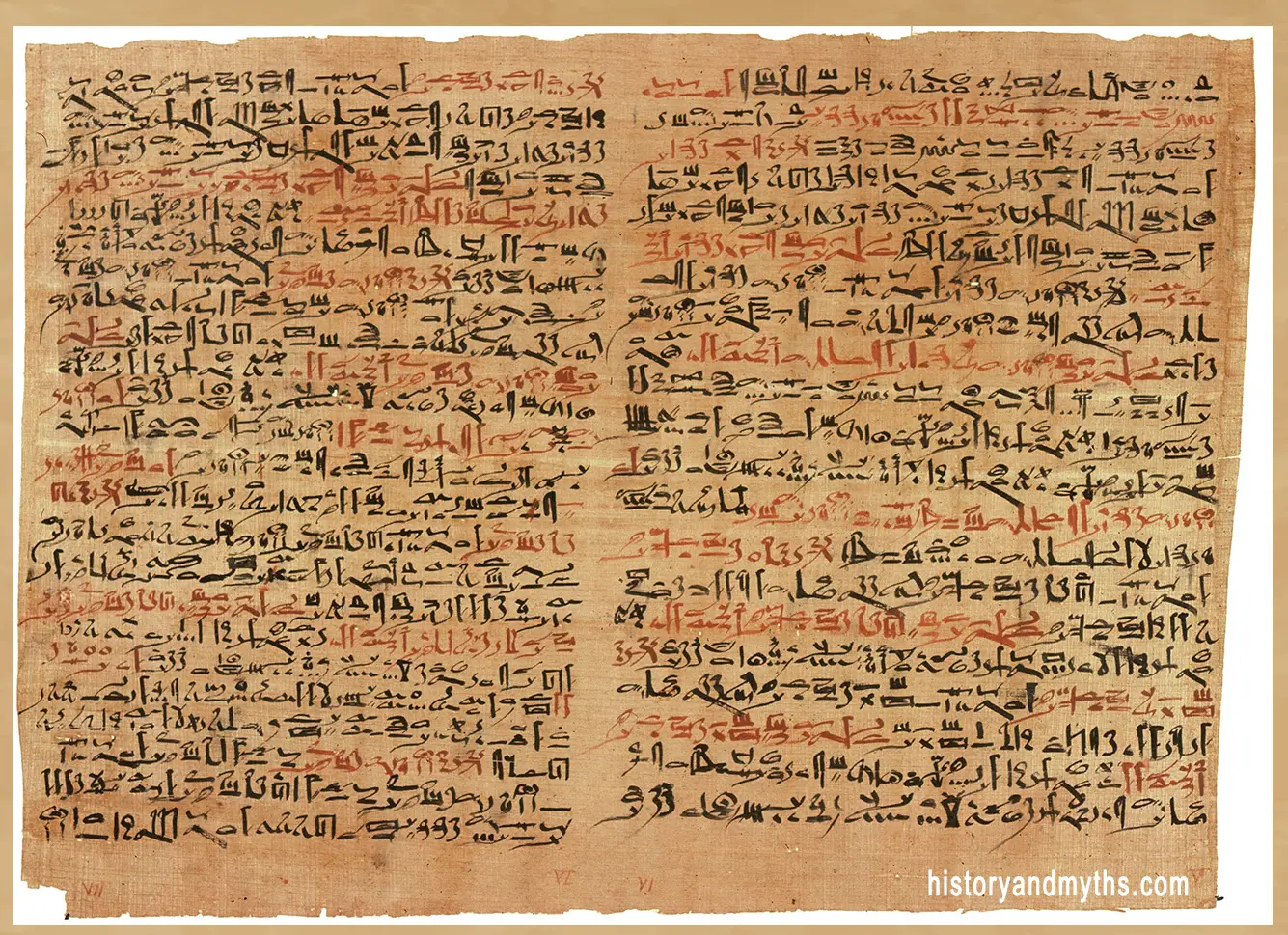
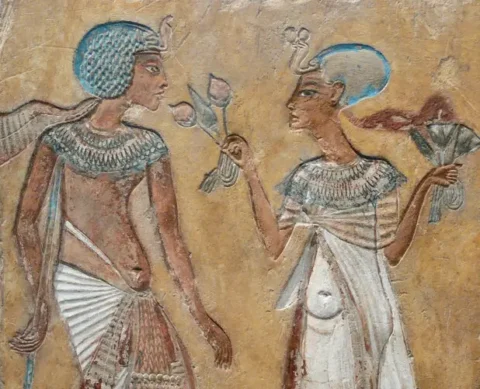
Source: Wikimedia Commons, edited photograph by Jeff Dahl (Public Domain)
How Did Ancient Egyptian Doctors Diagnose Disease?
Diagnosis in ancient Egypt was not improvised. It followed a recognizable sequence that separated observation from intervention. Physicians did not begin by prescribing remedies; they began by determining what kind of condition they were facing and whether it could be addressed at all. This distinction shaped medical practice across centuries.
The first step was identification of the problem, based on what could be seen, felt, or reported. Doctors examined the patient’s body for visible abnormalities, swelling, wounds, discoloration, or deformity. They listened to complaints, noted pain responses, and observed movement or weakness. This initial assessment established whether the condition was localized, systemic, or the result of trauma.
Next came evaluation of severity. Egyptian physicians assessed how advanced or dangerous a condition appeared. This judgment was not speculative. Medical texts describe cases in which symptoms were compared against known outcomes. A familiar pattern signaled predictability; an unfamiliar or worsening pattern raised concern. This stage determined whether treatment was advisable.
Finally, the physician issued a medical verdict. Ancient Egyptian diagnostic texts often conclude with a statement equivalent to:
- “An ailment I will treat”
- “An ailment I will fight”
- “An ailment not to be treated”
This classification was central. It acknowledged limits and prevented futile intervention. Rather than reflecting pessimism, it demonstrates clinical judgment. Recognizing when not to act was part of medical responsibility.
Diagnosis, therefore, functioned as a gatekeeping process. Only after a condition had been observed, evaluated, and classified did treatment become relevant. This approach reveals a medical culture concerned not only with healing, but with accurate recognition of disease and realistic decision-making.
| Diagnostic Step | Practice in Ancient Egypt |
|---|---|
Initial Observation |
Visual inspection of the body, posture, wounds, swelling, and skin condition |
Physical Examination |
Palpation, pressure response, assessment of pain, movement, and sensitivity |
Symptom Evaluation |
Listening to patient complaints and comparing them with known patterns |
Severity Assessment |
Determining stability, risk, and progression based on observable signs |
Case Classification |
Categorizing illness as treatable, to be fought, or untreatable |
Diagnostic Verdict |
Issuing a medical judgment before any treatment is applied |
Role of Magic |
Used after diagnosis for protection or explanation, not for identifying disease |
Observation and Physical Examination
Observation formed the foundation of diagnosis in ancient Egyptian medicine. Physicians relied first on what the body revealed without intervention. Visual inspection was systematic: doctors examined skin color, swelling, deformities, wounds, and signs of inflammation. Changes in posture, gait, or facial expression were also noted, as they indicated pain or internal distress.
Touch followed sight. Physicians palpated affected areas to assess hardness, softness, heat, or abnormal movement. In cases of injury, this helped determine whether bones were broken, displaced, or intact. Pain response mattered. A reaction to pressure was itself diagnostic, signaling the location and severity of internal damage.
Listening played a role as well. Doctors recorded patient complaints and compared them to known symptom patterns. Breathing difficulties, speech impairment, or weakness were observed directly. In trauma cases, the ability or inability to move specific body parts guided conclusions about nerve or spinal involvement.
These examinations were practical rather than theoretical. Egyptian doctors did not attempt to explain internal anatomy in abstract terms during diagnosis. Instead, they correlated external signs with expected outcomes drawn from experience. This method appears repeatedly in case-based medical texts, where observation precedes judgment.
Physical examination was therefore not incidental. It was the decisive stage that transformed symptoms into knowledge. Through careful observation and touch, physicians established whether a condition was superficial, structural, or systemic—information essential before classification or treatment could occur.
Classifying the Illness
Classification was the decisive step in ancient Egyptian diagnosis. After observation and examination, physicians did not immediately treat the patient. Instead, they categorized the condition according to its prognosis. This classification determined whether intervention was appropriate and what kind of response was justified.
Medical texts describe three distinct outcomes. A condition could be identified as treatable, meaning the physician expected recovery through known remedies. These cases involved stable symptoms, manageable pain, or injuries whose progression was familiar. Treatment here was deliberate and confident.
Other cases were classified as to be fought. This category acknowledged uncertainty. The illness or injury was serious, but not hopeless. Physicians recognized risk and proceeded cautiously, monitoring symptoms and adjusting intervention. The language reflects effort rather than guarantee, suggesting an awareness of limits without resignation.
The final category was untreatable. In these cases, physicians explicitly stated that no medical action should be taken. This decision was based on observed signs indicating irreversible damage or inevitable decline. Rather than representing failure, this classification shows clinical restraint. Recognizing when treatment would be ineffective prevented unnecessary intervention and preserved professional judgment.
This system reveals a pragmatic approach to medicine. Egyptian doctors did not promise cures for every condition. They assessed likelihood, acknowledged uncertainty, and accepted boundaries. Diagnosis was not merely descriptive; it was predictive. By classifying illness before acting, physicians aligned medical practice with experience, not optimism.
Diagnostic Tools and Techniques
Ancient Egyptian diagnosis relied on a limited but purposeful set of tools and techniques. Physicians did not use instruments to probe the body internally. Instead, they interpreted external evidence with care, drawing conclusions from visible signs, bodily responses, and material traces.
External signs were central. Swelling, redness, discharge, stiffness, or abnormal posture indicated the nature and progression of illness. In injuries, the shape and depth of wounds helped distinguish superficial damage from structural harm. Physicians noted whether a wound was clean, inflamed, or producing fluid details that guided classification.
Bodily fluids also played a diagnostic role. Discharge from wounds, the nose, ears, or other openings was observed for color, consistency, and smell. These observations were not symbolic; they reflected practical experience. Certain fluids signaled infection or decay, while others suggested a stable condition. Physicians recorded what emerged from the body rather than speculating about unseen causes.
Assessment of trauma was especially systematic. In head, neck, and spinal injuries, doctors evaluated mobility, responsiveness, and pain. The ability to speak, move limbs, or remain conscious informed prognosis. These assessments appear repeatedly in case descriptions, where outcomes are linked directly to observable responses.
What unites these techniques is restraint. Egyptian physicians did not attempt to diagnose beyond what evidence allowed. They worked within the limits of observation, correlating signs with outcomes drawn from precedent. Diagnosis was not a search for hidden mechanisms, but an exercise in disciplined interpretation of what the body revealed.
Medical Texts and Case-Based Diagnosis
Written medical texts played a direct role in shaping diagnostic practice. They were not abstract theories, but records of experience organized into cases. Among these texts, the approach is clearest in surgical and trauma-related material, where diagnosis follows a consistent, repeatable structure.
Cases typically begin with a description of the condition. The physician identifies the injury or illness in precise terms, often specifying location and visible characteristics. This is followed by examination instructions, guiding the doctor on what to observe or test movement, pain response, swelling, or discharge. Only after this examination does the text provide a diagnostic judgment, classifying the condition according to prognosis.
This structure reveals a method based on precedent. Diagnosis relied on comparison: a present case was matched against known patterns with documented outcomes. If signs aligned with previous recoverable cases, treatment was justified. If they resembled cases with fatal or irreversible outcomes, intervention was withheld. The text functioned as a guide for judgment, not a substitute for observation.
Importantly, these medical writings separate diagnosis from prescription. Remedies appear only after classification, and some cases end explicitly without treatment. This separation reinforces the idea that recognizing the nature of a condition was an independent and necessary step.
Case-based diagnosis reflects a disciplined medical culture. Knowledge was preserved not as theory, but as accumulated experience. Physicians learned to diagnose by studying outcomes as much as symptoms. The texts do not speculate about causes; they instruct doctors how to decide. In this sense, writing did not replace medical skill it formalized it.
How Egyptian Doctors Decided Whether to Treat a Patient
- Treatable: symptoms matched familiar recoverable patterns, so treatment was prescribed with confidence
- To be fought: the case was serious or uncertain, so physicians proceeded cautiously and monitored progression
- Untreatable: signs indicated irreversible decline or fatal injury, so intervention was withheld
- Diagnosis first: observation and examination came before remedies, spells, or prescriptions
- Experience-driven: judgments were made by comparing present signs to known outcomes from earlier cases
© historyandmyths.com — Educational use
Why Diagnosis Came Before Treatment
One of the most striking features of ancient Egyptian medicine is that treatment never came first. Physicians were expected to examine the patient, identify the condition, and judge its likely outcome before choosing any remedy. This sequence was practical rather than philosophical. Different illnesses required different responses, and some conditions were recognized as beyond medical help. Beginning treatment without understanding the nature of the problem could waste valuable resources or even worsen the patient’s condition.
This approach is especially clear in the Edwin Smith Papyrus, where each case follows a consistent pattern: examination, diagnosis, prognosis, and only then treatment. The structure shows that Egyptian physicians viewed accurate diagnosis as the foundation of good medical practice. Healing was not simply about applying remedies it depended on recognizing the condition correctly before deciding whether intervention was possible.
Where Did Magic Fit into Diagnosis?
Magic did not replace diagnosis in ancient Egyptian medicine. It followed it. Medical practice distinguished clearly between recognizing a condition and responding to it. Diagnosis relied on observation and judgment; magic addressed uncertainty, protection, and explanation where medicine reached its limits.
In diagnostic texts, spells do not appear during examination. Physicians first observed symptoms, tested responses, and classified the condition. Only after a verdict was reached did magical elements sometimes enter the process, particularly in cases marked as dangerous or uncertain. Magic functioned as reinforcement, not as a method of identification.
This distinction is crucial. Magic did not tell the physician what the illness was. It did not replace palpation, visual inspection, or assessment of trauma. Instead, it served to protect the patient, invoke divine support, or address perceived non-physical threats once a medical judgment had already been made.
In untreatable cases, magic could also serve a social role. When medicine offered no remedy, ritual language provided meaning and reassurance rather than cure. This did not undermine diagnosis; it acknowledged its boundaries. The physician’s responsibility was to recognize reality, not to promise recovery at all costs.
Understanding this separation corrects a common misconception. Ancient Egyptian medicine was not confused about where observation ended and belief began. Diagnosis remained a rational process grounded in experience. Magic existed alongside it, but it did not define it.
Key Takeaways
- Ancient Egyptian diagnosis was a structured process that preceded treatment.
- Physicians relied on observation, touch, and patient response rather than speculation.
- Illnesses were classified by prognosis: treatable, to be fought, or untreatable.
- Case-based texts preserved diagnostic experience rather than abstract theory.
- Magic followed diagnosis and addressed uncertainty, not disease identification.
- Recognizing limits was considered part of responsible medical judgment.
© historyandmyths.com — Educational use
Frequently Asked Questions
How did ancient Egyptian doctors diagnose disease?
They relied on observation, physical examination, and patient response before deciding whether a condition could be treated.
Did diagnosis come before treatment in ancient Egypt?
Yes. Physicians first identified and classified the illness, then decided whether treatment was appropriate.
What were the three medical verdicts used by Egyptian doctors?
Conditions were classified as treatable, to be fought, or untreatable, based on prognosis.
What role did observation play in diagnosis?
Observation was central, including visual inspection, touch, pain response, and mobility assessment.
Were medical diagnoses based on magic?
No. Diagnosis was based on examination and experience. Magic was used only after diagnosis, often for protection or reassurance.
Which medical texts show diagnostic methods most clearly?
Case-based texts, especially those focused on injuries and trauma, demonstrate structured diagnostic reasoning.
Sources & Rights
- Nunn, John F. Ancient Egyptian Medicine. London: British Museum Press, 1996.
- Ritner, Robert K. The Mechanics of Ancient Egyptian Magical Practice. Chicago: Oriental Institute of the University of Chicago, 1993.
- Breasted, James Henry. The Edwin Smith Surgical Papyrus. Vols. 1–2. Chicago: University of Chicago Press, 1930.
- Allen, James P. “The Art of Medicine in Ancient Egypt.” In Medicine and Healing in the Ancient Mediterranean, edited volume. Leiden: Brill, 2004.
- David, Rosalie. The Experience of Ancient Egypt. London: Routledge, 2000.
- Kemp, Barry J. Ancient Egypt: Anatomy of a Civilization. 2nd ed. London: Routledge, 2006.
- Bard, Kathryn A. An Introduction to the Archaeology of Ancient Egypt. Malden, MA: Wiley-Blackwell, 2015.
Written by H. Moses — All rights reserved © Mythology and History