Surgery and Medical Tools in Ancient Egypt: How Injuries Were Treated
Ancient Egyptian surgery was neither experimental nor symbolic. It was a practical response to specific medical situations, applied only when examination justified direct intervention. Contrary to popular portrayals that exaggerate ancient surgical skill, Egyptian physicians approached the body with caution. Surgery was not the default solution; it was a calculated choice made after diagnosis established both necessity and risk.
Medical texts and archaeological evidence show that Egyptian surgeons understood the limits of intervention. They treated wounds, stabilized fractures, and managed trauma when outcomes were predictable. At the same time, they recognized cases where cutting the body would worsen the condition. This balance between action and restraint defined surgical practice. Tools were designed for function, not display, and procedures followed observed patterns rather than speculation.
This article examines surgery in ancient Egypt as it was actually practiced. It explains when surgeons chose to intervene, what procedures they performed, and which tools they used. It also explores how pain, bleeding, and infection were managed, and where surgical boundaries were firmly drawn. By focusing on practice rather than legend, the article presents Egyptian surgery as a disciplined medical craft shaped by diagnosis, experience, and an awareness of risk.
Source: Wikimedia Commons, photograph by Jeff Dahl (GNU Free Documentation License, Version 1.2 or later)
Did Ancient Egyptians Practice Surgery?
Yes—but within clear limits. Ancient Egyptians practiced surgery as a controlled medical intervention, not as a general treatment approach. Surgical action was reserved for cases where physical examination showed that direct manipulation of the body could improve the outcome. This distinction separated surgery from broader medical care, which relied more heavily on remedies, bandaging, and observation.
Evidence for surgical practice comes primarily from trauma-focused medical texts and from healed skeletal remains. These sources indicate that Egyptian surgeons treated external injuries rather than internal conditions. Wounds, fractures, and surface infections were addressed when the damage was visible and accessible. Internal surgery, exploratory cutting, or invasive procedures were avoided, reflecting an awareness of risk rather than a lack of skill.
Surgery was therefore situational, not routine. A surgeon intervened only after diagnosis confirmed that the body could tolerate treatment. When prognosis was poor or signs suggested irreversible damage, intervention was withheld. This restraint aligns with the diagnostic classifications used by physicians, where some conditions were explicitly labeled as not to be treated.
Understanding this framework corrects a common misconception. Egyptian surgery was not primitive experimentation, nor was it widespread. It was a pragmatic response to trauma, grounded in observation and governed by judgment. The presence of surgical tools does not imply indiscriminate use; it reflects preparedness for specific, manageable cases.
| Aspect | Surgical Practice in Ancient Egypt |
|---|---|
Purpose of Surgery |
Controlled intervention to manage visible injuries and stabilize the body |
When Surgeons Intervened |
Only after diagnosis confirmed that physical treatment could improve prognosis |
Common Procedures |
Wound suturing, fracture stabilization, abscess drainage |
Rare Procedures |
Amputation, performed only in extreme and life-threatening cases |
Surgical Tools |
Scalpels, needles, probes, forceps, splints, and bandaging materials |
Pain Management |
Limited intervention, quick procedures, and use of calming substances |
Bleeding Control |
Pressure, careful cutting, immediate closure, and firm bandaging |
Infection Management |
Cleaning wounds, drainage when needed, and avoiding closure of infected tissue |
Surgical Limits |
No internal surgery, no exploratory cutting, strict reliance on visibility |
When Did Surgeons Intervene?
Surgical intervention in ancient Egypt was conditional. Surgeons did not act simply because an injury existed; they intervened only when examination suggested that physical treatment could change the outcome. Diagnosis determined whether cutting, stitching, or manipulation was justified.
Intervention was most likely in external and accessible injuries. Open wounds, lacerations, and fractures where bones were aligned or could be stabilized were considered suitable for surgical action. These cases allowed the surgeon to see and control the affected area, reducing uncertainty.
Stability mattered. Surgeons evaluated whether the patient could withstand the procedure. Signs such as consciousness, controlled bleeding, and limited swelling indicated a manageable condition. When symptoms pointed to severe internal damage, loss of responsiveness, or progressive deterioration, intervention was avoided. Cutting the body in such cases was understood to increase risk rather than offer benefit.
Timing was also crucial. Fresh injuries were more likely to receive surgical attention than advanced infections or neglected wounds. Early intervention reduced complications and improved healing prospects. Conversely, delayed cases with signs of systemic decline were often classified as untreatable.
This decision-making process shows that surgery was not a reaction to injury alone, but to prognosis. Surgeons acted when experience suggested a favorable balance between risk and benefit. Knowing when not to intervene was as important as technical skill.
Common Surgical Procedures
Surgical procedures in ancient Egypt focused on managing trauma and surface conditions rather than internal disease. The goal was to stabilize the body, prevent complications, and allow natural healing. Procedures were practical, limited in scope, and shaped by experience rather than theory.
Wound suturing and closure
Open wounds were cleaned and closed when edges could be aligned. Suturing reduced bleeding and protected the injury from contamination. Bandaging followed, often combined with substances intended to keep the wound stable and dry. Closure was avoided if swelling or infection suggested that sealing the wound would worsen the condition.
Fracture stabilization
Broken bones were treated through alignment and immobilization rather than invasive manipulation. Splints and bandages were used to keep limbs in place while healing occurred. Evidence from healed skeletons indicates that this method was often effective, producing functional recovery rather than anatomical perfection.
Abscess drainage
When localized infections produced visible swelling and fluid buildup, controlled drainage was performed. This relieved pressure and reduced the spread of infection. Such procedures were limited to surface collections where the outcome could be monitored directly.
Amputation (rare)
Amputation was exceptional and used only in severe cases where tissue damage was extensive and life-threatening. The rarity of this procedure reflects both its risk and the surgeons’ preference for preservation whenever possible.
Across all procedures, restraint was constant. Egyptian surgeons intervened to manage damage, not to explore the body. Surgical success depended less on aggressive action than on selecting cases where intervention aligned with recovery.
Surgical Tools and Their Uses
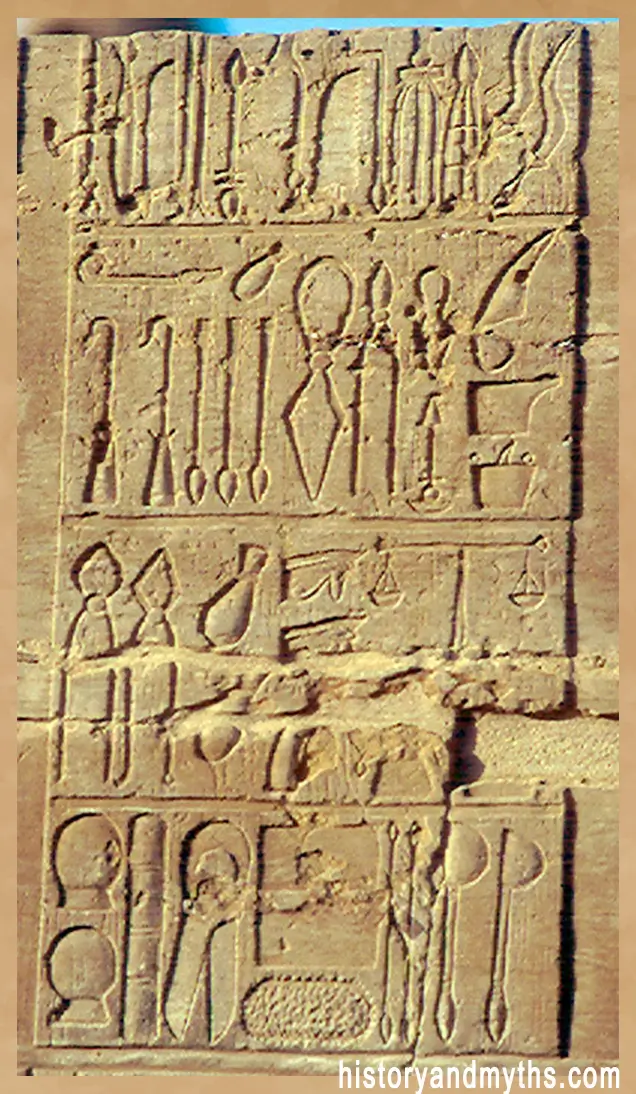
Surgical tools in ancient Egypt were designed for function, not experimentation. Their forms reflect specific tasks within a limited surgical framework. These instruments were extensions of practiced routines, used when diagnosis justified physical intervention.
Scalpels and cutting blades were employed primarily for opening wounds, removing damaged tissue, or draining localized infections. Their use was controlled and superficial. There is no evidence of exploratory cutting or deep internal surgery. Blades served defined purposes within visible and accessible areas.
Needles were used for wound closure. Suturing required precision rather than force, and needles supported controlled healing by keeping wound edges aligned. Their presence confirms that surgeons aimed to manage bleeding and protect injuries rather than leave them exposed.
Probes and spatulas assisted examination and treatment of wounds. These tools allowed surgeons to assess depth, clear debris, or apply substances without direct hand contact. Their role was diagnostic as much as therapeutic, helping evaluate the condition before further action.
Forceps and gripping tools were likely used to hold tissue, remove foreign objects, or assist in drainage. Their use reduced direct handling of injured areas, limiting further trauma during treatment.
Together, these tools indicate a restrained surgical practice. Instruments were few, adaptable, and employed selectively. Egyptian surgeons did not expand their toolkit to attempt new procedures; they refined a small set of tools to manage known conditions effectively. Skill lay in judgment and control rather than in the variety of instruments available.
Managing Pain, Bleeding, and Infection
Managing pain, bleeding, and infection was essential to the success of any surgical intervention in ancient Egypt. Surgeons understood that the procedure itself was only part of the risk; what followed could determine survival or failure.
Pain management relied on restraint rather than elimination. There is no evidence of true anesthesia. Instead, procedures were limited in scope and duration to minimize suffering. Herbal substances with calming or numbing properties were sometimes used, but surgery was designed to be quick and controlled. The choice to intervene already assumed that the patient could endure the procedure.
Bleeding control was a primary concern. Surgeons favored techniques that reduced blood loss, such as careful cutting, immediate wound closure, and firm bandaging. Pressure was applied directly to wounds, and closure followed as soon as alignment allowed. Excessive bleeding was recognized as a sign to stop intervention rather than proceed further.
Infection prevention depended on cleanliness and wound management rather than germ theory. Wounds were cleaned, debris removed, and dressings applied to protect the injury. Certain substances were used to keep wounds dry and stable, reducing decay and inflammation. Surgeons avoided sealing infected wounds, allowing drainage instead when swelling or discharge was present.
These practices reveal practical understanding rather than theoretical knowledge. Egyptian surgeons did not attempt to overcome biological limits. They managed risk by controlling exposure, limiting intervention, and monitoring visible signs. Surgical success depended less on bold technique than on maintaining stability after the procedure.
What Made Ancient Egyptian Surgery Effective?
- Diagnosis first: surgery followed examination and prognosis, not guesswork
- Case selection: surgeons intervened only in visible, manageable injuries
- Controlled procedures: suturing, stabilization, and drainage—simple actions with clear goals
- Risk management: avoiding closure of infected wounds and stopping when bleeding was severe
- Functional tools: blades, needles, probes, and bandaging designed for practical use
- Clear limits: no internal or exploratory surgery, and no intervention when prognosis was poor
© historyandmyths.com — Educational use
Limits of Ancient Egyptian Surgery
Ancient Egyptian surgery was defined as much by what it avoided as by what it attempted. Surgeons recognized that intervention carried risk, and they did not seek to overcome every condition through cutting. These limits were not accidental; they reflected accumulated experience and a clear understanding of danger.
Internal surgery was avoided
There is no evidence of attempts to operate inside the body cavity. Conditions involving internal organs, deep abdominal injury, or unseen damage were classified as unsuitable for surgical treatment. Without the ability to observe or control internal bleeding and infection, intervention was considered unsafe.
Complex or deteriorating cases were excluded
When symptoms indicated progressive decline—loss of consciousness, severe swelling, spreading infection, or neurological impairment—surgery was withheld. These signs aligned with diagnostic verdicts that identified conditions as not to be treated. Avoidance here reflects judgment, not ignorance.
Exploratory cutting did not occur
Surgeons did not cut the body to “see what was wrong.” Every incision served a known purpose: closing a wound, draining a visible abscess, or stabilizing damage already identified through examination. Surgery followed diagnosis; it did not replace it.
Anatomical limits were acknowledged
While Egyptian physicians observed anatomy through injury, they did not attempt to manipulate structures they could not reliably repair. Preservation of function mattered more than aggressive correction. Healing was expected to occur through stability, not reconstruction.
These limits reveal a disciplined medical culture. Egyptian surgeons understood that knowing when not to act was as critical as technical skill. Surgery functioned within a narrow, controlled space—defined by visibility, accessibility, and prognosis. Within those boundaries, intervention could be effective. Outside them, restraint was the safer and more responsible choice.
Key Takeaways
- Ancient Egyptian surgery was selective, not routine, and always followed diagnosis.
- Surgeons intervened only when injuries were visible, accessible, and prognoses manageable.
- Common procedures focused on stabilization: suturing wounds, immobilizing fractures, and draining abscesses.
- Surgical tools were few and functional, designed for specific tasks rather than exploration.
- Risk control—managing bleeding, preventing infection, and limiting pain—guided every decision.
- Clear boundaries defined practice: no internal or exploratory surgery and restraint in poor-prognosis cases.
© historyandmyths.com — Educational use
Frequently Asked Questions
Did ancient Egyptians really practice surgery?
Yes. Surgery was practiced as a controlled medical intervention, mainly for treating visible injuries such as wounds, fractures, and abscesses.
What types of surgical procedures were most common?
The most common procedures included wound suturing, fracture stabilization, and drainage of localized infections. Amputation was rare.
What tools did ancient Egyptian surgeons use?
Surgeons used practical tools such as scalpels, needles, probes, forceps, splints, and bandaging materials designed for specific tasks.
How did surgeons decide when to operate?
Surgical intervention followed diagnosis. Surgeons operated only when examination showed that intervention could improve the outcome.
How did ancient Egyptian surgeons manage pain and bleeding?
Pain was minimized by limiting procedures and working quickly, while bleeding was controlled through pressure, careful cutting, and immediate closure.
Were there limits to ancient Egyptian surgery?
Yes. Internal and exploratory surgery was avoided, and cases with poor prognosis were often classified as not to be treated.
Sources & Rights
- Breasted, James Henry. The Edwin Smith Surgical Papyrus. Vols. 1–2. Chicago: University of Chicago Press, 1930.
- Nunn, John F. Ancient Egyptian Medicine. London: British Museum Press, 1996.
- Allen, James P. The Art of Medicine in Ancient Egypt. New York: Metropolitan Museum of Art, 2005.
- Ritner, Robert K. The Mechanics of Ancient Egyptian Magical Practice. Chicago: Oriental Institute of the University of Chicago, 1993.
- Kemp, Barry J. Ancient Egypt: Anatomy of a Civilization. 2nd ed. London: Routledge, 2006.
- David, Rosalie. The Experience of Ancient Egypt. London: Routledge, 2000.
- Bard, Kathryn A. An Introduction to the Archaeology of Ancient Egypt. Malden, MA: Wiley-Blackwell, 2015.
Written by H. Moses — All rights reserved © Mythology and History