Civil Contracts in Ancient Egypt: Property, Loans, and Labor
In ancient Egypt, legal contracts were not limited to marriage or family arrangements. Ordinary people relied on civil contracts to regulate everyday matters such as buying and selling property, renting homes or land, borrowing grain or silver, hiring labor, and forming partnerships. These agreements were not informal promises; they were recognized legal tools backed by witnesses, written records, and the authority of the state.
What makes these contracts significant is not their existence, but how routinely they were used. Farmers, craftsmen, traders, and even women acting independently entered binding agreements to protect their interests and resolve disputes before they escalated. Contracts defined obligations clearly: who owed what, under which conditions, and what would happen if one party failed to comply. In a society deeply concerned with order and accountability, written agreements became a practical extension of law into daily life.
This article focuses on civil contracts beyond marriage—how they were formed, who had the legal capacity to sign them, and how they were enforced when conflicts arose. By examining contracts for property, labor, loans, and rentals, we can see how law functioned not as an abstract ideal, but as a working system that allowed Egyptian society to operate with predictability, trust, and legal recourse.
What Civil Contracts Meant in Ancient Egypt
In ancient Egypt, a civil contract was a formal legal agreement used to regulate obligations between individuals outside the framework of marriage. Its purpose was practical: to define rights, responsibilities, and consequences in clear terms that could be enforced if necessary. These contracts functioned as tools of legal security, allowing people to manage property, labor, and debt with predictability.
Civil contracts were not exceptional documents reserved for elites. They were part of everyday life. Farmers recorded land transactions, workers secured wages, lenders protected loans, and tenants defined rental terms. The presence of standardized formulas, witnesses, and written records shows that these agreements were designed to prevent disputes before they arose, not merely to resolve them afterward.
What distinguished a civil contract from informal agreement was legal recognition. Once documented and witnessed, a contract carried authority beyond personal trust. It could be presented before officials or courts, transforming private arrangements into enforceable obligations. In this way, civil contracts extended the reach of law into daily economic and social interactions, reinforcing order without constant state intervention.
Understanding civil contracts in ancient Egypt therefore means recognizing them as instruments of governance at the local level. They enabled individuals to act autonomously while remaining within a shared legal framework—an essential feature of a society that depended on stability, accountability, and continuity.
| Contract Type | Purpose | Key Terms Defined | Legal Safeguards |
|---|---|---|---|
| Sale & Property Transfer | Permanent exchange of land, houses, or goods | Object sold, price, confirmation of payment | Written record, witnesses, court recognition |
| Loans & Debt | Temporary access to grain, silver, or goods | Amount, repayment deadline, penalties | Witnesses, oath, enforceable repayment |
| Rental Agreements | Temporary use of property or equipment | Duration, rent, maintenance duties | Written terms, dispute resolution |
| Labor Contracts | Regulation of work and compensation | Type of work, duration, wages | Witnessed agreement, legal enforcement |
Types of Civil Contracts Beyond Marriage
Civil contracts in ancient Egypt covered a wide range of practical arrangements necessary for daily life. These agreements followed recognizable legal patterns and were drafted to clarify obligations, reduce risk, and provide recourse in case of dispute.
Sales and Property Transfers
Contracts of sale documented the transfer of ownership for land, houses, livestock, and movable goods. They specified the object sold, the agreed price, and confirmation of payment. Once recorded and witnessed, these contracts protected both buyer and seller, preventing later claims or denial of the transaction.
Loans, Debts, and Repayment
Loan contracts regulated borrowing of grain, silver, or other commodities. They defined repayment terms, deadlines, and penalties for default. These agreements were essential in an agrarian economy exposed to seasonal uncertainty, allowing individuals to manage shortages while maintaining legal accountability.
Rental Agreements
Rental contracts governed the temporary use of houses, land, or equipment. They clarified duration, payment, and responsibilities for maintenance or damage. By formalizing rental terms, these contracts reduced conflict between owners and tenants and ensured predictable income or access.
Labor and Service Contracts
Agreements for labor specified the nature of work, compensation, and time frame. Craftsmen, agricultural workers, and hired specialists relied on such contracts to secure payment and define expectations. These documents demonstrate that labor relations were regulated by law, not left to informal negotiation alone.
Across these categories, civil contracts functioned as risk-management tools. They translated social and economic interactions into legally recognized obligations, enabling cooperation among individuals who did not rely solely on personal trust or kinship. This diversity of contracts reveals a legal culture deeply embedded in everyday economic life.
Who Could Sign a Legal Contract?
In ancient Egypt, the ability to enter a civil contract depended on legal capacity, not gender or marital status alone. Individuals recognized as legally competent could sign contracts, assume obligations, and enforce their rights. This capacity was tied to personal status and practical independence rather than formal citizenship in the modern sense.
Men and women alike could act as contracting parties, provided they were not under legal restriction. Women, in particular, appear frequently in contract documents as buyers, sellers, lenders, and tenants, demonstrating their ability to engage independently in civil agreements. This autonomy distinguished Egyptian legal practice from many contemporary societies.
Social status influenced access to certain resources but did not eliminate contractual rights. Farmers, artisans, and laborers all appear in surviving contracts, indicating that civil law applied broadly across society. The presence of witnesses and written documentation helped level disparities by anchoring agreements in recognized legal form rather than personal power.
Legal capacity therefore functioned as a practical standard. Those who could manage property, labor, or debt were treated as responsible legal actors. This approach allowed civil contracts to operate as reliable instruments of order, enabling diverse members of society to participate in regulated economic life.
How Contracts Were Made Binding
A civil contract in ancient Egypt became legally binding through formal procedure, not personal trust alone. The key elements were documentation, witnesses, and recognized legal language. Together, these transformed a private agreement into an enforceable obligation.
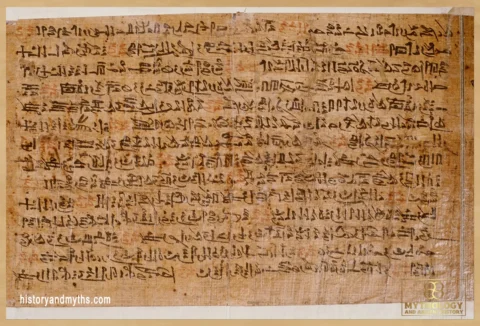
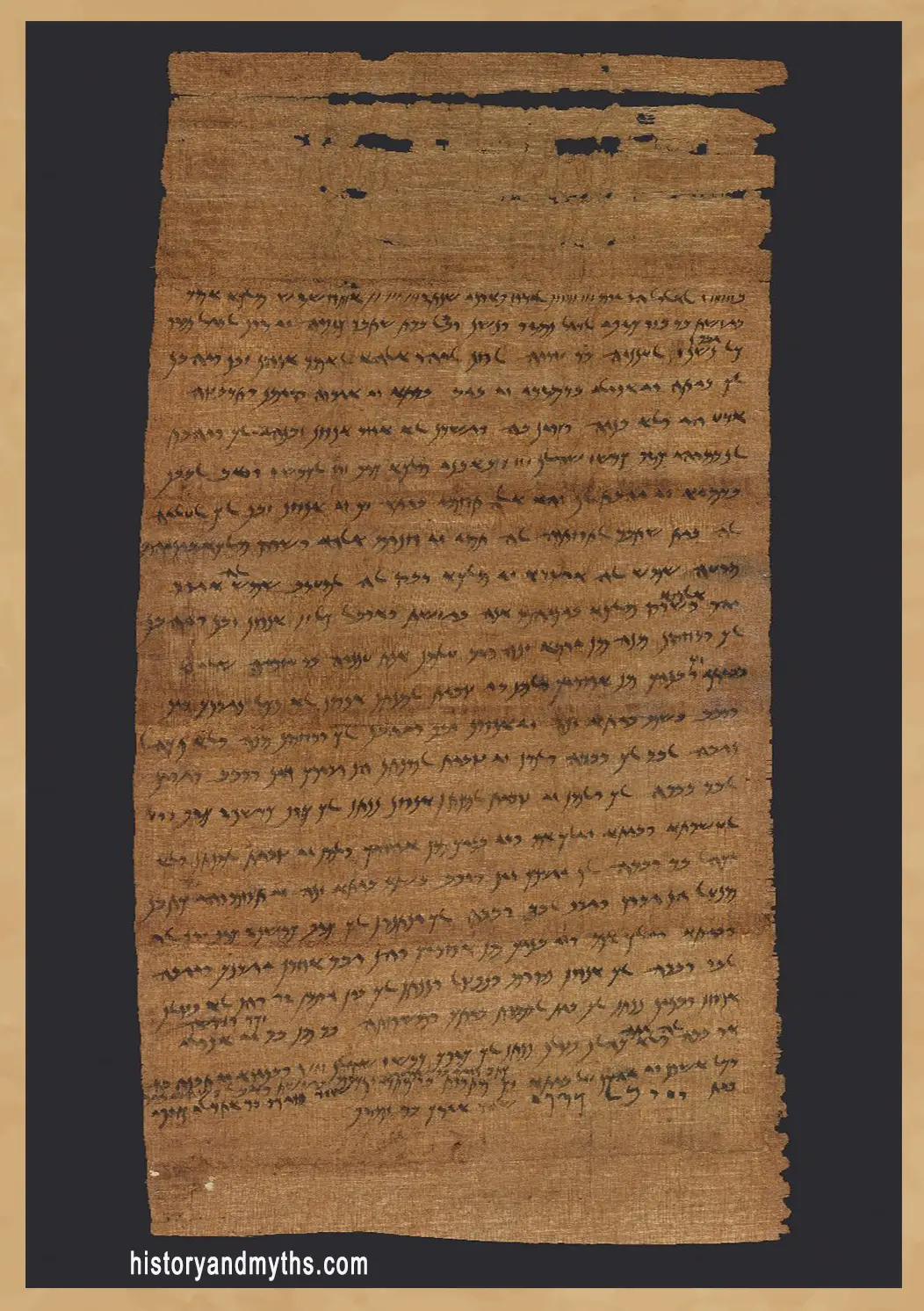
Written records were central. Contracts followed standardized formulas that identified the parties, described the obligation, and confirmed consent. Writing fixed the terms in a durable form that could be consulted in case of disagreement. This reduced ambiguity and limited opportunities for denial or manipulation.
Witnesses provided legal weight. Their presence confirmed that the agreement was entered voluntarily and according to accepted norms. In disputes, witnesses served as living proof that the contract had been properly concluded. In some cases, oaths reinforced this process by invoking moral and legal accountability, further discouraging breach.
These mechanisms ensured that contracts were not symbolic documents, but actionable legal instruments. Once formalized, an agreement could be presented before officials or courts, making enforcement possible. Binding force came from procedure, not coercion—allowing law to function predictably within everyday social and economic life.
What Happened When a Contract Was Broken?
When a civil contract was breached in ancient Egypt, the issue did not remain a private dispute. A broken agreement became a legal matter subject to formal complaint and adjudication. The injured party could bring the written contract before local officials or a court to seek enforcement or compensation.
Legal proceedings focused on proof, not rhetoric. The contract itself, supported by witnesses and records, served as primary evidence. Courts examined whether obligations had been fulfilled as stated. If a party failed to deliver payment, property, or labor, responsibility was assessed based on the documented terms rather than social status or personal influence.
Consequences varied depending on the breach. Remedies could include repayment, restitution of property, or fulfillment of the original obligation. In cases involving deception or deliberate refusal, penalties reinforced accountability. The aim was not punishment for its own sake, but restoration of order and trust within the legal framework.
This process shows that civil contracts were more than administrative tools—they were enforceable mechanisms that linked private agreements to public authority. By providing a clear path from breach to resolution, Egyptian law ensured that contracts functioned as reliable foundations for economic and social interaction.
Civil Contracts Beyond Marriage — How the System Worked
- Everyday legal tools: Contracts regulated sales, loans, rentals, and labor, not just family matters.
- Broad legal access: Men and women could contract independently if legally competent.
- Binding procedure: Written records, witnesses, and formal language made agreements enforceable.
- Proof over status: Courts relied on documents and testimony, not social rank.
- Clear remedies: Breaches led to restitution, repayment, or fulfillment of obligations.
- Order through law: Contracts extended legal stability into daily economic life.
© historyandmyths.com — Educational use
Why Civil Contracts Mattered for Social Order
Civil contracts were essential to maintaining social stability in ancient Egypt. By translating everyday interactions into legally recognized obligations, they reduced uncertainty and limited conflict before it escalated. People could cooperate beyond family ties, confident that agreements were protected by law rather than personal power.
These contracts also decentralized governance. Instead of constant state intervention, individuals managed property, labor, and debt through standardized agreements that could be enforced when necessary. This allowed the legal system to function efficiently at the local level while reinforcing broader concepts of order and accountability.
Most importantly, civil contracts normalized legal responsibility. By defining expectations clearly and providing remedies for breach, they embedded law into daily life. In doing so, they supported a society that valued predictability and trust—key conditions for economic activity and long-term social cohesion.
Key Takeaways
- Civil contracts in ancient Egypt regulated daily economic life beyond marriage.
- Sales, loans, rentals, and labor agreements were legally recognized and enforceable.
- Legal capacity depended on competence, not gender or marital status.
- Written records and witnesses turned private agreements into binding obligations.
- Courts enforced contracts through restitution and fulfillment, not arbitrary power.
- These contracts strengthened social order by reducing conflict and uncertainty.
Frequently Asked Questions
Did ancient Egyptians use civil contracts outside marriage?
Yes. Civil contracts regulated sales, loans, rentals, labor, and property transfers independently of marriage.
What types of civil contracts existed in ancient Egypt?
Common contracts included sales of property, loan agreements, rental contracts, and labor or service agreements.
Who was legally allowed to sign a contract?
Any legally competent individual could sign a contract, including women acting independently of marital status.
How were contracts made legally binding?
Contracts became binding through written records, witnesses, and standardized legal formulas recognized by courts.
What happened if someone broke a contract?
The injured party could bring the contract before officials or courts to seek repayment, restitution, or enforcement.
Were civil contracts enforced equally across social classes?
Courts relied primarily on written proof and testimony, which helped limit the influence of social status.
Why were civil contracts important for Egyptian society?
They reduced conflict, enabled cooperation beyond family ties, and embedded legal order into daily life.
Sources & Rights
- Kemp, Barry J. Ancient Egypt: Anatomy of a Civilization. 2nd ed. London: Routledge, 2006.
- Allam, Schafik. Egyptian Law Courts in Pharaonic and Hellenistic Times. Wiesbaden: Harrassowitz, 1973.
- Menu, Bernadette. Le régime juridique des terres et du personnel attaché à la terre dans l’Égypte ancienne. Cairo: IFAO, 1970.
- Johnson, Janet H. “The Legal Status of Women in Ancient Egypt.” In Women in Antiquity, edited by Sarah Pomeroy. Detroit: Wayne State University Press, 1994.
- Lichtheim, Miriam. Ancient Egyptian Literature, Volume III: The Late Period. Berkeley: University of California Press, 1980.
- McDowell, A. G. Village Life in Ancient Egypt: Laundry Lists and Love Songs. Oxford: Oxford University Press, 1999.
- Westbrook, Raymond. A History of Ancient Near Eastern Law. Leiden: Brill, 2003.
- Eyres, Harry. Documents of the Egyptian Legal System. London: British Museum Press, 2002.
- Quirke, Stephen. The Administration of Egypt in the Late Middle Kingdom. New Malden: SIA Publishing, 1990.
- Shaw, Ian, ed. The Oxford History of Ancient Egypt. Oxford: Oxford University Press, 2000.
- Janssen, Jac. J. Commodity Prices from the Ramessid Period. Leiden: Brill, 1975.
Written by H. Moses — All rights reserved © Mythology and History