Mathematics in Ancient Egypt: How Numbers Ran Daily Administration
Why did ancient Egyptians need mathematics? Was it used to solve abstract problems, or was it a practical tool that helped officials collect taxes, measure land, distribute grain, and organize the daily work of the state?
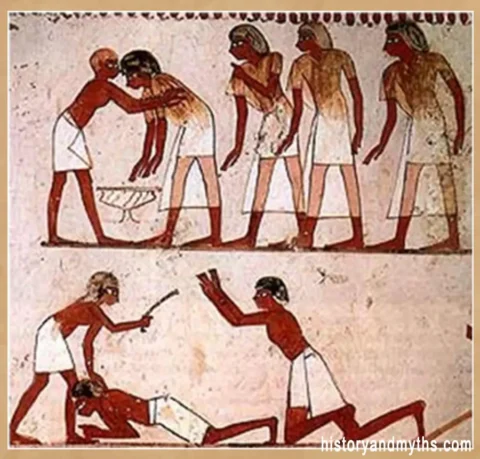
In ancient Egypt, mathematics developed to meet administrative needs rather than philosophical curiosity. Scribes and officials relied on calculation to record harvests, assess taxes, allocate rations, and manage resources across a complex bureaucracy. Numbers became essential because efficient government depended on accurate measurement and reliable records.
This article explains how mathematics functioned in everyday administration, who used it, where calculations were applied, and why practical numerical knowledge became one of the foundations of Egyptian state organization.
Source: Wikimedia Commons, photograph by Ad Meskens (Creative Commons Attribution-ShareAlike 4.0)
Who Used Mathematics in Ancient Egypt?
Mathematics in ancient Egypt was primarily the domain of scribes and administrative officials. These were not mathematicians in the modern sense, but trained professionals whose daily work required constant calculation. Their authority came from literacy, numerical competence, and familiarity with standardized procedures rather than from theoretical knowledge.
Scribes were the main users of mathematics. Trained in writing and calculation, they recorded taxes, tracked deliveries, measured land, and distributed rations. Their work demanded reliable arithmetic, especially in handling fractions, conversions, and totals. Accuracy was essential because administrative records affected food supplies, labor obligations, and state revenue.
Officials and supervisors also relied on mathematics, though often indirectly. Overseers of storehouses, construction projects, and agricultural estates depended on numerical reports prepared by scribes. Decisions about labor allocation, material distribution, and scheduling were based on calculated data rather than estimation alone.
Mathematics was therefore embedded in a hierarchical workflow. Scribes performed calculations; officials interpreted the results. This division ensured consistency across the administration. Numbers moved upward through reports and accounts, shaping decisions at higher levels without requiring every official to calculate personally.
Importantly, mathematics was not used by the general population in formal contexts. Farmers and workers operated within systems measured and recorded by others. Mathematical authority belonged to those trained to apply it within administrative structures. This concentration of numerical knowledge reinforced the role of the state and its bureaucracy.
| Administrative Area | Mathematical Use | Purpose |
|---|---|---|
| Taxation | Land measurement and yield calculation | Assess agricultural obligations in grain |
| Rations | Fractional division of food supplies | Ensure fair and consistent worker distribution |
| Storehouses | Addition and subtraction of stock totals | Monitor resources and prevent shortages |
| Labor Projects | Counting workforce and time allocation | Organize manpower and schedules |
| Measurement | Standard units for length, area, and volume | Translate physical reality into records |
Mathematics as an Administrative Tool
In ancient Egypt, mathematics functioned as an instrument of administration, not as an independent field of study. Calculation existed to support governance. Every numerical operation answered a practical question: how much was owed, how much was stored, how much was needed, and how much labor could be assigned.
Administrative mathematics was standardized. Officials relied on fixed units of measure, consistent methods of calculation, and repeatable procedures. This standardization reduced disputes and allowed records from different regions to be compared and verified. Mathematics provided the state with a common numerical language through which resources could be controlled.
The most frequent calculations involved distribution and balance. Grain entering storehouses had to match grain leaving them. Rations issued to workers were calculated according to rank, task, and duration. Taxes assessed on land or produce were converted into quantities that could be collected and recorded. Mathematics ensured that inputs and outputs aligned, at least on paper.
Importantly, calculation was not abstracted from context. Numbers were always tied to material reality measures of grain, land, labor, or goods. There was little interest in numerical manipulation beyond what administration required. Complex calculations appeared only when practical problems demanded them.
This administrative focus explains both the strengths and limits of Egyptian mathematics. It was effective, consistent, and adaptable within bureaucratic needs, but it did not develop into a theoretical science. Mathematics served the state by making administration measurable, predictable, and accountable.
Why Egyptian Mathematics Remained Practical
Unlike later Greek mathematics, Egyptian mathematics was never intended to become an independent field of abstract study. Its development was driven by the practical needs of government rather than by the search for mathematical theories. Every calculation answered a real administrative problem, whether measuring farmland after the Nile flood, assessing taxes, distributing grain, or organizing labor on state projects.
This practical focus shaped the entire mathematical tradition. Scribes learned methods that produced reliable results, not because they wished to explore numerical principles, but because accurate calculations kept records consistent and administration efficient. Mathematical knowledge therefore evolved alongside bureaucracy, becoming one of the essential tools that allowed the Egyptian state to function across thousands of communities and large territories.
Rather than limiting Egyptian mathematics, this practical approach made it remarkably successful within its historical context. The goal was not to discover new mathematical ideas, but to transform harvests, land, labor, and resources into standardized records that officials could measure, compare, and manage. Mathematics became valuable because it solved administrative problems, not because it existed as a separate scientific discipline.
Calculating Taxes, Rations, and Resources
Mathematics played a central role in managing taxation and redistribution in ancient Egypt. The state did not rely on vague assessments or negotiated amounts. Taxes were calculated quantities, converted into measurable units that could be recorded, stored, and redistributed.
Taxes and Agricultural Assessment
Taxation was closely tied to agricultural output. Land was measured, harvests were estimated, and obligations were calculated accordingly. Scribes converted land area and crop yield into expected contributions, usually paid in grain. These calculations allowed the state to anticipate revenue and plan storage and distribution.
Tax records were numerical summaries rather than narrative descriptions. What mattered was the total amount owed and delivered, not the circumstances of production. Mathematics transformed local agricultural activity into standardized administrative data.
Rations and Workforce Support
Rations were calculated with similar precision. Workers on state projects such as construction, quarrying, or temple service received food allocations based on role, rank, and duration of service. Mathematics ensured consistency: rations were predictable, divisible, and scalable.
Fractions were especially important here. Grain and bread had to be divided among large groups without waste. Mathematical methods allowed scribes to break down totals into fair and repeatable portions, maintaining order and minimizing disputes.
Resource Management and Storage
Storehouses depended on continuous calculation. Incoming goods were measured and recorded; outgoing supplies were deducted. Mathematics allowed administrators to monitor stock levels and detect shortages or discrepancies. Resource management was therefore an ongoing numerical process rather than a periodic review.
Through these practices, mathematics became the mechanism that connected production, taxation, labor, and consumption. It translated physical goods into administrative control, enabling the state to function across time and space.
Measurement, Units, and Practical Calculation
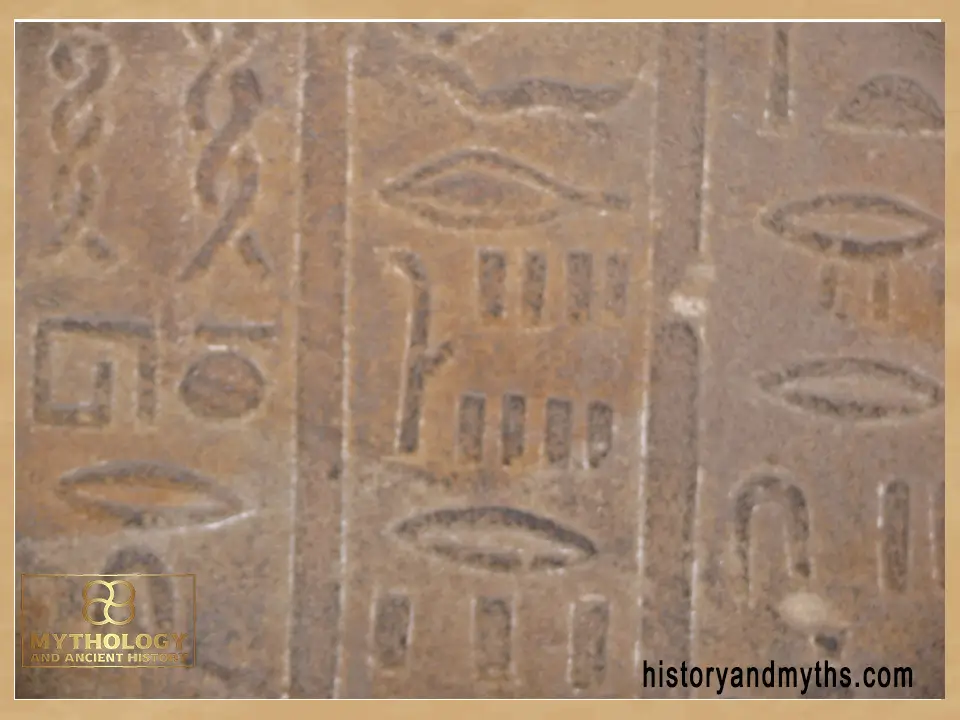
Administrative mathematics in ancient Egypt depended on measurement before calculation. Numbers had meaning only when tied to standardized units. Length, area, volume, and weight were all quantified using fixed systems that allowed scribes to translate physical reality into administrative records.
Measuring Land and Space
Land measurement was essential for taxation and redistribution. Fields were surveyed using standard units of length, allowing area to be calculated and recorded. These measurements were especially important after the annual Nile flood, which could alter field boundaries. Mathematics provided a way to restore order by re-establishing measurable space.
Accuracy mattered less than consistency. As long as the same units and methods were applied across regions, calculations remained administratively valid.
Volume and Capacity
Grain, beer, and other commodities were measured by volume. Administrative mathematics focused on containers, capacities, and totals rather than abstract quantities. Volumetric calculation allowed officials to compare production, assess taxes, and manage rations using repeatable standards.
These calculations were practical and cumulative. Totals were built by adding standardized units rather than by complex formulas. The goal was control and predictability, not mathematical elegance.
Tools of Practical Calculation
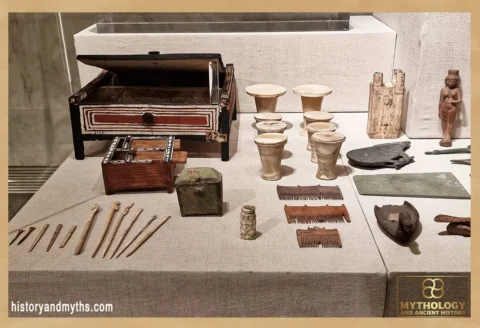
Calculation tools were simple but effective. Scribes relied on tables, reference lists, and repeated procedures rather than improvisation. Fractions were used to divide quantities, but always in service of distribution or measurement. Mathematics followed routine, reducing error and speeding administrative work.
This system ensured that mathematics remained accessible to trained scribes and tightly integrated with daily administrative tasks. Measurement and calculation worked together to make governance possible without requiring advanced theoretical knowledge.
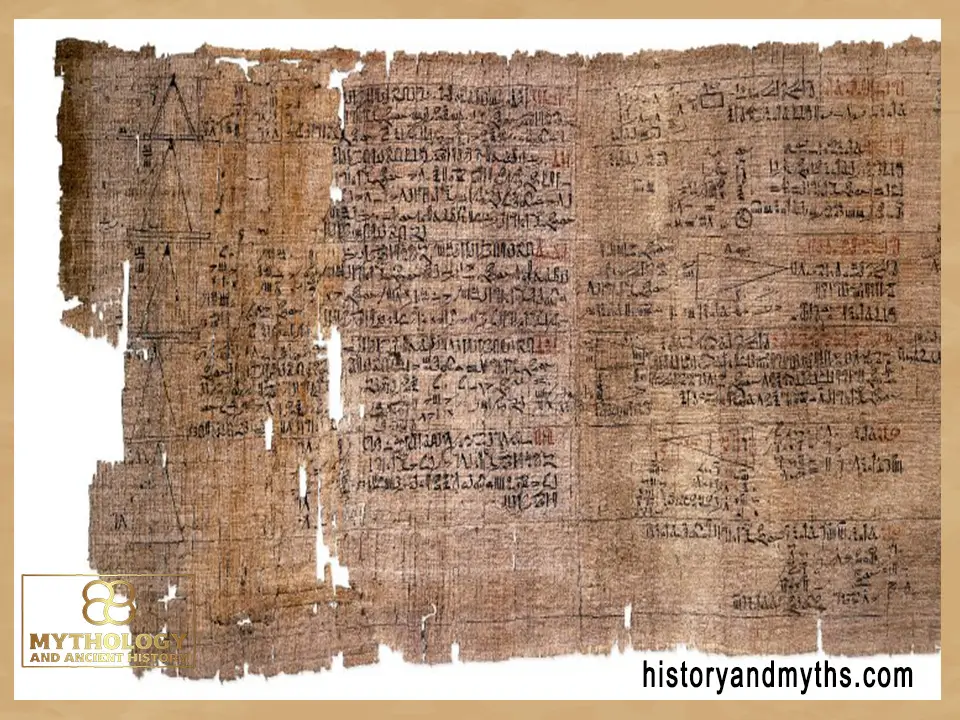
Source: Wikimedia Commons, public domain (Rhind Mathematical Papyrus)
Why Mathematics Was Essential to Egyptian Administration
- State control: calculations transformed crops, labor, and goods into manageable data.
- Standardization: fixed units allowed records from different regions to be compared.
- Predictability: mathematics enabled planning for taxation, storage, and distribution.
- Bureaucratic efficiency: scribes applied repeatable procedures to reduce error.
- Practical focus: numbers served administration, not abstract theory.
© historyandmyths.com — Educational use
Limits of Ancient Egyptian Mathematics
The strengths of ancient Egyptian mathematics were also its limits. Because calculation developed to serve administration, it rarely moved beyond immediate practical needs. Mathematics was not pursued as an abstract discipline, nor was it used to explore theoretical problems unrelated to governance or resource management.
One clear limitation was the absence of symbolic abstraction. Calculations relied on concrete quantities and known procedures rather than generalized formulas. This made the system reliable for routine tasks but less flexible when faced with unfamiliar problems. Innovation occurred only when administrative necessity demanded it.
Another limit was the scope of application. Mathematics was concentrated within the bureaucracy. It was not widely disseminated beyond scribes and officials, nor was it applied to scientific inquiry in the modern sense. Geometry, for example, was used for land measurement, not for exploring spatial theory. Arithmetic existed to divide rations, not to investigate numerical properties.
Precision was also bounded by purpose. Administrative mathematics aimed for functional accuracy, not mathematical perfection. Estimates were acceptable as long as they supported taxation, storage, and distribution. Exactness beyond that point offered little administrative advantage.
These limits were not failures. They reflect a system optimized for stability and control rather than innovation. Ancient Egyptian mathematics succeeded because it was narrowly focused, repeatable, and embedded in daily administration. Its effectiveness lay in serving the state, not in advancing mathematical theory.
Key Takeaways
- Mathematics in ancient Egypt functioned primarily as an administrative tool.
- Scribes were the main practitioners of calculation within the bureaucracy.
- Numbers were used to manage taxes, rations, labor, and state resources.
- Measurement systems allowed physical goods to be converted into records.
- Accuracy was practical rather than theoretical, focused on usability.
- The system’s limits reflect its optimization for governance, not abstraction.
© historyandmyths.com — Educational use
Frequently Asked Questions
How was mathematics used in daily administration in ancient Egypt?
It was used to calculate taxes, distribute rations, manage storehouses, and organize labor through standardized numerical procedures.
Who performed mathematical calculations in ancient Egypt?
Trained scribes carried out most calculations, while officials relied on their numerical records to make administrative decisions.
Was ancient Egyptian mathematics theoretical or practical?
It was primarily practical, focused on solving administrative problems rather than developing abstract mathematical theory.
What kinds of quantities were commonly calculated?
Common calculations included land area, crop yield, grain volume, labor rations, and inventory totals.
Why were standardized units important?
Standard units ensured consistency across regions, allowing records to be compared and verified within the bureaucracy.
Did mathematics affect ordinary people directly?
Yes. While most people did not calculate themselves, administrative mathematics determined taxes, rations, and labor obligations.
Sources & Rights
- Clagett, Marshall. Ancient Egyptian Science, Volume I: Knowledge and Order. Philadelphia: American Philosophical Society, 1989.
- Imhausen, Annette. Mathematics in Ancient Egypt: A Contextual History. Princeton: Princeton University Press, 2016.
- Robins, Gay, and Charles Shute. The Rhind Mathematical Papyrus. London: British Museum Press, 1987.
- Gillings, Richard J. Mathematics in the Time of the Pharaohs. New York: Dover Publications, 1982.
- Kemp, Barry J. Ancient Egypt: Anatomy of a Civilization. 3rd ed. London: Routledge, 2018.
- Quirke, Stephen. Exploring Religion in Ancient Egypt. Wiley-Blackwell, 2015.
- British Museum. The Rhind Mathematical Papyrus.
- University College London, Petrie Museum. Mathematics and Administration in Ancient Egypt.
Written by H. Moses — All rights reserved © Mythology and History