Tax Collection in Ancient Egypt: How the State Enforced Obligation
How did ancient Egyptians pay taxes without a standardized monetary economy? Who decided how much each farmer or landowner owed? And how could the state enforce tax obligations across a kingdom that stretched for hundreds of miles along the Nile?
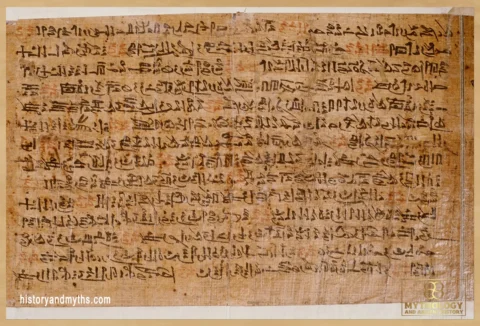
In ancient Egypt, tax collection was far more than the gathering of grain or labor. It was one of the administrative systems that allowed the state to measure land, record production, assign obligations, and maintain authority over people and resources. Scribes, surveys, and official registers were just as important as the taxes themselves because documentation transformed agricultural output into state responsibility.
This article examines how tax collection actually worked in ancient Egypt, how obligations were assessed, recorded, and enforced, why most taxes were paid in grain, goods, or labor instead of money, and what the system reveals about the remarkable administrative capacity of one of history’s longest-lasting civilizations.
Why Taxation Was Administrative, Not Monetary
Taxation in ancient Egypt operated within an economy that lacked standardized coinage for most of its history. As a result, taxes could not function as monetary extraction. Instead, they served as administrative instruments designed to track obligations and enforce participation in the state system.
Taxes were assessed in kind or labor, but their real purpose was documentation. Measurement, recording, and classification mattered more than the material itself. Grain, livestock, or workdays became units through which the state could quantify responsibility. Once recorded, an individual or household became accountable, regardless of whether payment was immediate or deferred.
This system allowed taxation to function without continuous exchange. Obligations could be adjusted, postponed, or converted depending on circumstances, but they remained visible within official records. Taxation therefore created continuity. It linked individuals to land, production, and service through administrative recognition rather than cash flow.
Understanding taxation in this context clarifies why collection emphasized assessment over enforcement. The primary goal was not to extract value at a single moment, but to establish a durable record of obligation. Taxation made resources governable by making them known.
| Stage | What Happened | Administrative Purpose |
|---|---|---|
| Assessment | Land, output, or labor potential was measured and evaluated | Define obligation before any collection took place |
| Registration | Names, plots, and duties were entered into official records | Create long-term administrative visibility |
| Scheduling | Collection timed to harvest or labor availability | Reduce resistance and simplify verification |
| Collection | Goods or labor delivered under supervision | Execute recorded obligation predictably |
| Verification | Delivery checked against existing records | Confirm compliance and update registers |
What Was Taxed (And Why)
Taxation in ancient Egypt targeted resources that were stable, measurable, and administratively traceable. The goal was not to tax everything, but to tax what could be reliably assessed and recorded. This selectivity reveals how taxation functioned as a tool of governance rather than simple extraction.
Land was the primary basis of assessment. Fields could be measured, mapped, and linked to expected output, making them ideal units for long-term obligation. Production followed naturally. Grain, livestock, and other yields were taxed because they translated land into quantifiable results. Taxation therefore reinforced the connection between territory, productivity, and state oversight.
Labor was also taxable, especially where material assessment was impractical. Work obligations substituted for produce when needed, allowing the state to convert human effort into infrastructure, transport, or service. This flexibility ensured that individuals remained accountable even when yields fluctuated.
What was not taxed is equally revealing. Personal possessions, small-scale exchange, and informal activity largely escaped assessment because they resisted standardization. Taxation focused on what could be seen, measured, and recorded. The system prioritized visibility over completeness, reinforcing administrative control where it was most effective.
Assessment and Registration
Assessment was the core of tax collection in ancient Egypt. Before anything was taken, it had to be evaluated, categorized, and entered into record. Taxation began with observation and measurement, not enforcement. This process ensured that obligation was established before collection ever occurred.
Land was surveyed, fields were measured, and expected yields were calculated using standardized units. These assessments created a baseline against which future performance could be judged. Registration followed assessment. Names, plots, and obligations were entered into administrative records, transforming physical resources into documented responsibilities.
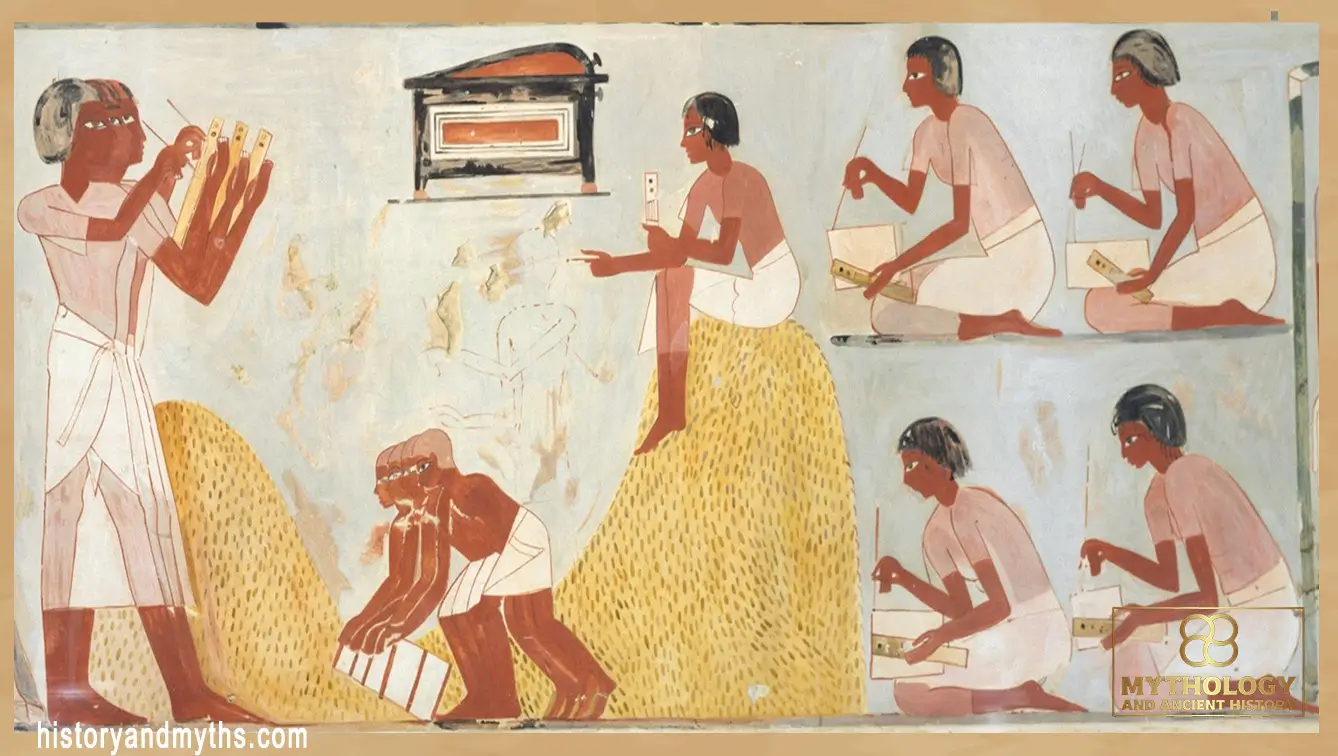
Scribes played a central role in this system. Their records linked land to individuals and individuals to obligations, creating continuity across seasons and years. Once registered, an obligation persisted even if circumstances changed. Assessment fixed expectations, while registration preserved them.
This system reduced ambiguity. By defining obligations in advance, the state minimized disputes during collection. Taxation therefore relied less on negotiation at the moment of payment and more on prior documentation. Assessment and registration turned taxation into a predictable administrative process rather than an improvised demand.
Collection in Practice
Tax collection in ancient Egypt was a visible administrative event rather than a private transaction. Collection followed assessment and registration, making it the execution of a pre-defined obligation rather than a new demand. Officials arrived with records already in hand, reinforcing the authority of documentation over negotiation.
Collection occurred at specific points in the year, often aligned with harvest or periods of labor availability. This timing reduced resistance and simplified verification. Measured goods were delivered, labor obligations fulfilled, or services rendered according to what had been recorded in advance. Compliance was checked against existing registers, not improvised expectations.
The act of collection itself reinforced state presence. Officials, scribes, and supervisors operated together, ensuring that delivery matched assessment. Discrepancies were noted immediately, turning collection into a moment of verification rather than confrontation. The process emphasized order and predictability over force.
Collection in practice demonstrates that taxation was not episodic extraction. It was the visible confirmation of an ongoing administrative relationship. Payment did not end obligation; it reaffirmed it within the system of records that governed land, labor, and production.
Enforcement and Compliance
Enforcement in ancient Egyptian taxation relied less on constant coercion and more on structural dependence. Compliance was achieved through the integration of individuals into administrative systems that controlled access to land, labor assignments, and resources. Once registered, remaining outside the system became increasingly difficult.
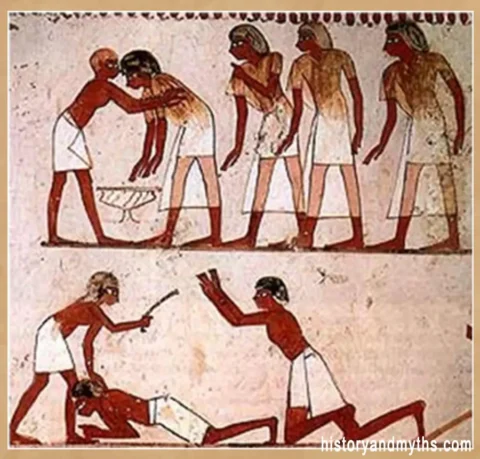
Sanctions existed, but they were not always immediate or violent. Failure to meet obligations could result in reassessment, increased scrutiny, loss of access to rations, or reassignment of labor. These consequences targeted livelihood rather than punishment alone, encouraging compliance without continuous force.
Visibility was a key enforcement mechanism. Regular assessments, repeated registration, and the presence of officials created an environment in which obligations were continuously monitored. Individuals understood that non-compliance would be recorded and remembered, even if enforcement was delayed.
Compliance therefore emerged from predictability. Knowing that obligations were fixed, documented, and revisited reduced resistance. Enforcement was embedded in the administrative process itself, making taxation a sustained condition rather than an isolated demand.
Tax Collection — Core Framework
- Administrative purpose: Taxation created visibility and obligation, not monetary revenue.
- Assessment first: Land, output, and labor were evaluated before any collection.
- Registration: Records linked individuals, land, and duties into a permanent system.
- Collection: Payment executed pre-defined obligations, not negotiated demands.
- Compliance: Enforcement relied on documentation and dependency, not constant force.
- Flexibility: Obligations could be adjusted to preserve long-term extraction.
- Limits: Administrative failure exposed systemic vulnerability.
© historyandmyths.com — Educational use
Flexibility and Limits of the Tax System
Despite its rigidity on paper, the Egyptian tax system allowed a degree of administrative flexibility. Assessments could be adjusted when floods failed, yields declined, or labor shortages emerged. This flexibility was pragmatic rather than benevolent. It aimed to preserve long-term extraction by preventing total collapse of productive capacity.
Adjustments did not eliminate obligation; they recalibrated it. Deferred payments, reduced assessments, or temporary labor substitutions kept individuals within the system while acknowledging short-term constraints. The priority was continuity of registration and control, not immediate collection at any cost.
However, this flexibility had limits. Prolonged environmental stress, administrative breakdown, or excessive extraction strained the system beyond its capacity to adapt. When records became unreliable or enforcement uneven, compliance weakened. In such cases, taxation amplified instability rather than containing it.
These limits reveal the true nature of taxation in ancient Egypt. It was an effective mechanism for managing obligation at scale, but it depended on functioning administration and predictable conditions. Where those failed, the system’s emphasis on visibility and control exposed its vulnerabilities.
Key Takeaways
- Taxation functioned as an administrative system, not a monetary one.
- Assessment and registration defined obligation before collection occurred.
- Land, production, and labor were taxed because they were measurable and visible.
- Collection executed recorded duties rather than negotiated demands.
- Compliance relied on documentation and dependency more than force.
- Flexibility preserved long-term control, but administrative failure exposed limits.
Frequently Asked Questions
How were taxes collected in ancient Egypt?
Taxes were collected through a structured administrative process based on prior assessment and registration, not on ad hoc demands.
What types of taxes existed in ancient Egypt?
Obligations were assessed in land output, goods in kind, or labor service, depending on what could be reliably measured and recorded.
Who was responsible for assessing taxes?
Officials and scribes conducted assessments by surveying land, estimating yields, and recording obligations in administrative registers.
When did tax collection usually take place?
Collection was timed to harvest periods or labor availability to simplify verification and ensure compliance.
How was compliance enforced without money?
Compliance relied on documentation, repeated registration, and dependence on state-controlled resources rather than constant coercion.
Could tax obligations be adjusted?
Yes. Assessments could be reduced, deferred, or converted to labor during poor harvests or exceptional conditions.
What happened if taxes were not paid?
Non-compliance led to reassessment, increased scrutiny, loss of access to rations, or reassignment of labor duties.
Sources & Rights
- Allen, James P. The Heqanakht Papyri. New York: Metropolitan Museum of Art, 2002.
- Baines, John, and Jaromír Málek. Atlas of Ancient Egypt. New York: Facts On File, 1980.
- Brewer, Douglas J., and Emily Teeter. Egypt and the Egyptians. 2nd ed. Cambridge: Cambridge University Press, 2007.
- Haring, Ben. Divine Households: Administrative and Economic Aspects of the New Kingdom Royal Memorial Temples in Western Thebes. Leiden: Brill, 1997.
- Janssen, Jac. J. Village Varia: Ten Studies on the History and Administration of Deir el-Medina. Leiden: Nederlands Instituut voor het Nabije Oosten, 1997.
- Katary, Sally L. D. Land Tenure in the Ramesside Period. London: Kegan Paul International, 1989.
- Kemp, Barry J. Ancient Egypt: Anatomy of a Civilization. 3rd ed. London: Routledge, 2018.
- Moreno García, Juan Carlos. Ancient Egyptian Administration. Leiden: Brill, 2013.
- Shaw, Ian, ed. The Oxford History of Ancient Egypt. Oxford: Oxford University Press, 2000.
- Trigger, Bruce G., Barry J. Kemp, David O’Connor, and Alan B. Lloyd. Ancient Egypt: A Social History. Cambridge: Cambridge University Press, 1983.
- University College London, Petrie Museum of Egyptian and Sudanese Archaeology. Ancient Egyptian Administration and Economy.
- Metropolitan Museum of Art. The Heqanakht Papyri and the Administration of Middle Kingdom Egypt.
Written by H. Moses — All rights reserved © Mythology and History