How Money Was Used in Daily Ancient Greek Transactions
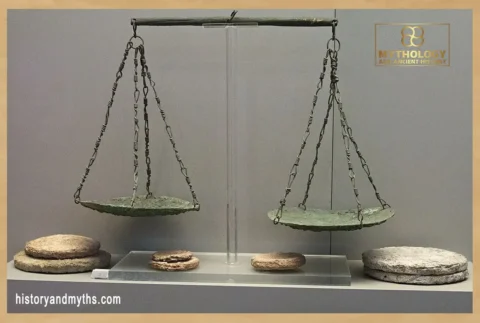
Money in ancient Greek markets was used for direct, face-to-face payment, not as an abstract system. Buyers paid with coins on the spot, prices were understood in familiar values, and…
Greek merchants made profit by controlling margins, timing, costs, and risk within a market where prices changed daily. They bought goods when supply was high and prices were low, then…
Bargaining in ancient Greek markets worked through a clear, repeatable process rather than random haggling. Sellers opened with a flexible asking price based on time, competition, and the type of…
Ancient Greek trade in the agora worked as a structured daily system of exchange, not random buying and selling. Farmers, craftsmen, and merchants brought goods into the market early, displayed…
Ancient Greek courts did not rely on professional judges or lawyers. Instead, large citizen juries decided cases directly, and litigants presented their own arguments. Magistrates organized the process but did…
A verdict in ancient Greece did not enforce itself. Once the court ruled, the outcome had to be carried out in practice, and that responsibility fell largely on the winning…
A guilty verdict in an Athenian court did not automatically fix the penalty. After conviction, the process shifted to a separate stage where punishment had to be chosen, not assumed….
A lawsuit in ancient Greece did not begin with a state investigation—it started when a citizen chose to act. To bring a case, the accuser had to file a formal…
In Athenian courts, verdicts were decided directly by large juries through a secret ballot system, not by judges. Each juror received voting disks, chose one in private, and cast it…
Athenian juries were selected through a structured random process designed to prevent control or bias. Eligible citizens enrolled for service, and each day jurors were chosen using a device called…
Ancient Greeks faced earthquakes, floods, droughts, and occasional volcanic events, with earthquakes posing the most immediate threat to cities and infrastructure. They explained these events in two ways: religiously, as…
Ancient Greek medicine combined observation-based treatment with long-standing healing traditions, creating a system that could both explain illness and attempt to manage it. Physicians studied symptoms, tracked changes in the…
Ancient Greek baths were not large luxury complexes like those of Rome; they were simple, functional spaces tied closely to daily routines, especially in the gymnasium. Greeks maintained hygiene primarily…
Ancient Greek mining and metal production were organized systems that turned raw resources into economic and political power. Greeks extracted silver, copper, iron, and gold from sites such as Laurion,…
Ancient Greeks used fire signals and light beacons to send messages across long distances in a matter of minutes, long before written dispatches could arrive. By placing signal stations on…
Greek timekeeping was based on a lunisolar calendar, where months followed the moon but the year was adjusted to match the sun. There was no single Greek calendar; each city-state…
Ancient Greek diplomacy did not operate through a central government. Each city-state negotiated its own agreements, sent its own envoys, and decided when to form alliances or break them. Treaties…
In ancient Greece, crime and punishment were not handled by a permanent police force or a centralized authority. Punishment followed a trial and was carried out as the direct result…