Wage Payments and Rations in Ancient Egypt: How Workers Were Paid
When people ask how workers were paid in antiquity, they usually imagine wages, money, and negotiated salaries. In Ancient Egypt, none of these assumptions apply. Egyptian labor was compensated through rations, not wages-an approach that shaped how work, status, and power functioned across the entire society.
Rations were not casual handouts or temporary support. They formed a structured system of compensation based on grain, beer, oil, textiles, and basic necessities. These payments were tied to role, rank, and institutional affiliation rather than hours worked or market value. The goal was not economic competition, but stability: ensuring that workers, craftsmen, and officials could sustain themselves while remaining dependent on the administrative system that supplied them.
Understanding this system is essential to understanding Egyptian society itself. Ration-based payment explains why labor could be organized without markets, why hierarchy remained stable for centuries, and why disruptions-such as delayed deliveries-could trigger collective action. This article examines how wage payments and rations actually worked, who received more and why, and what surviving records reveal about an economy built on provision rather than pay.
What Did “Payment” Mean in Ancient Egypt?
The word “payment” carries modern assumptions that do not fit the Egyptian context. In ancient Egypt, compensation was not a negotiated exchange between employer and worker. It was an administrative provision defined by obligation, status, and function.
Payment meant entitlement. A worker did not earn rations by outperforming others or bargaining for better terms; rations were assigned because the system required that role to exist. Grain, beer, oil, and other essentials were distributed according to predefined standards. These standards reflected hierarchy, not productivity.
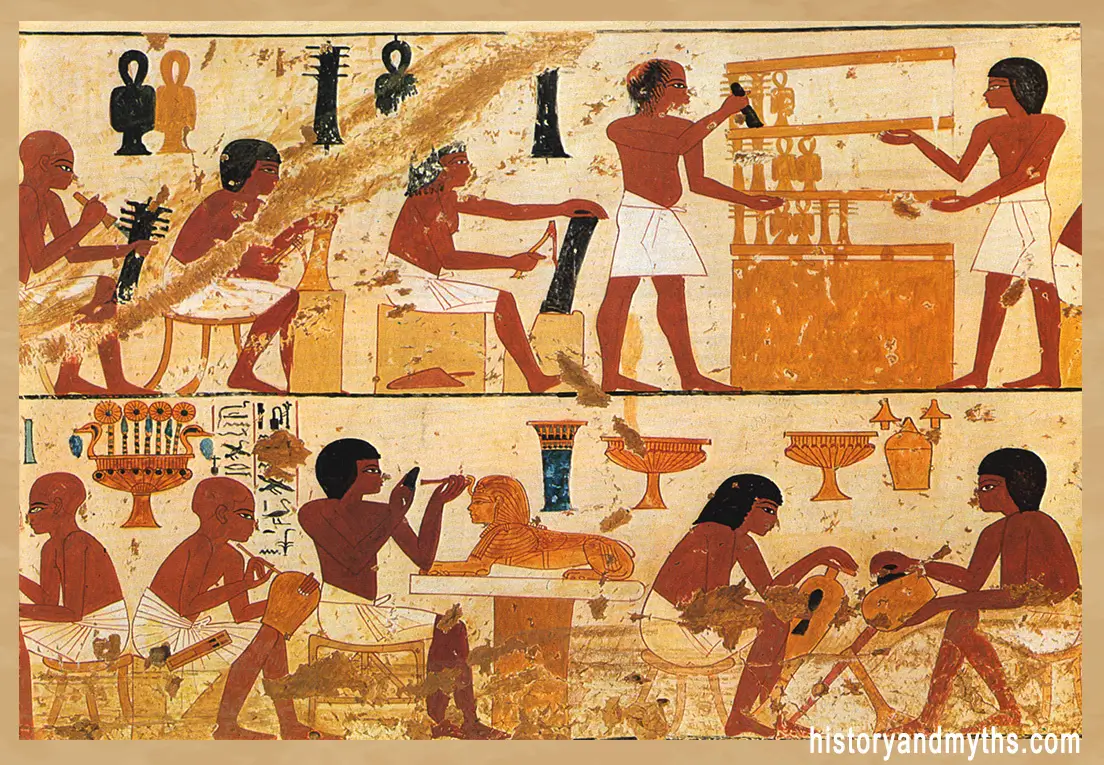
There was no concept of an hourly wage or flexible salary. Work was embedded within institutions-state projects, temple estates, royal workshops-and compensation flowed from those institutions downward. The question was never “How much is this labor worth?” but “What does this role require to be sustained?”
This distinction explains why Egyptian records focus on quantities rather than prices. Texts list measures of grain and jars of beer, not monetary equivalents. Payment was concrete, predictable, and controlled. By removing negotiation from compensation, the system reduced conflict while reinforcing dependence on administrative supply.
In this framework, rations were not merely food-they were the mechanism that bound labor to authority.
| Worker Category | Type of Compensation | Typical Rations | Basis of Allocation | Economic Status |
|---|---|---|---|---|
| Unskilled Laborers | Basic rations | Grain and beer | Subsistence needs | Minimal security |
| Skilled Workers & Artisans | Enhanced rations | More grain, beer, occasional oil | Skill scarcity | Stable but dependent |
| Scribes | High rations | Grain, beer, oil, textiles | Administrative authority | High prestige |
| Overseers & Officials | Superior allocations | Larger shares of all staples | Rank and proximity to power | Elite security |
Rations as Wages: Grain, Beer, and Necessities
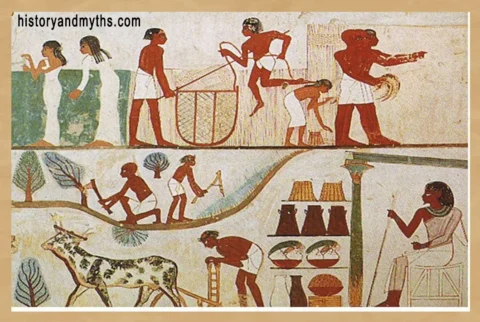
Rations were the practical core of compensation. Instead of money, workers received measured allocations of essentials-primarily grain and beer, supplemented by oil, vegetables, fuel, and occasionally textiles. These were not symbolic payments; they were the means of survival in a non-monetized economy.
Grain formed the base of all rations. It could be consumed directly, stored, or converted into bread and beer. Beer, far from a luxury, was a daily staple and a reliable calorie source. Together, grain and beer provided predictable sustenance that allowed institutions to maintain a steady workforce without cash circulation.
Crucially, rations were standardized. Allocations followed fixed scales tied to role and rank. A skilled craftsman received more than an unskilled laborer; overseers and scribes received more than those they supervised. Variation reflected hierarchy, not negotiation or effort. The system rewarded position, not performance.
Because rations were tangible and measurable, they were easy to audit. Lists and tallies ensured accountability and reduced dispute. This made the system resilient: workers depended on deliveries, and institutions retained control by regulating them. In practice, rations functioned as wages-but wages designed to secure stability and obedience rather than incentivize competition.
Wage Hierarchies: Who Received More and Why?
Ration levels in ancient Egypt followed a clear hierarchy. Higher allocations did not reward harder labor; they reflected administrative value. The closer a role was to authority, record-keeping, or supervision, the greater the share it received.
At the base were unskilled laborers. Their rations were sufficient for survival but minimal, designed to sustain basic work rather than offer security or advancement. Skilled craftsmen-stonecutters, carpenters, metalworkers-received larger shares, not because they worked longer hours, but because their skills were harder to replace.
Above them stood scribes and overseers. Their rations were noticeably higher, even when their physical labor was minimal. This imbalance reveals the system’s priorities: control, coordination, and documentation mattered more than effort. Those who ensured the system functioned were valued more than those who executed its physical demands.
The hierarchy was therefore structural, not moral. Rations reinforced social order by embedding status directly into daily sustenance. To eat more was to rank higher. In this way, compensation became a visible expression of authority-quiet, regular, and difficult to challenge.
Skilled vs Unskilled Workers
The difference between skilled and unskilled workers in ancient Egypt was real but carefully contained. Skill increased rations, but it did not create independence. A master craftsman received more than a general laborer, yet both remained dependent on institutional supply.
Skilled workers-such as stonemasons, sculptors, and specialized artisans-were harder to replace. Training took time, and errors were costly. For this reason, their rations were higher and more stable. Skill reduced vulnerability, but it did not translate into bargaining power. Allocation still flowed from above.
Unskilled laborers, by contrast, were replaceable. Their rations covered basic needs and little more. The system assumed continuity through numbers rather than expertise. What mattered was availability, not individuality.
Crucially, neither group operated within a labor market. Skill did not allow a worker to sell services freely or negotiate terms. It only adjusted their position within a fixed hierarchy. This ensured that even valuable expertise remained embedded in administration, not liberated by it.
In this way, the Egyptian economy acknowledged skill without allowing it to disrupt control. Differentiation existed, but mobility did not.
Delayed Payments and Labor Strikes
Because rations were the foundation of survival, any delay in payment was immediately destabilizing. Workers did not protest low wages; they protested missing rations. When deliveries failed, the system’s promise of stability collapsed.
The clearest evidence comes from the well-documented strike at Deir el-Medina during the reign of Ramesses III. Artisans responsible for royal tomb construction stopped working-not to demand higher compensation, but because their grain rations had not arrived. Their demands were precise and practical: food, not reform.
This moment reveals the true nature of Egyptian labor relations. Workers accepted hierarchy and ration-based compensation as long as the system functioned. When it did not, collective action became a rational response. The strike was not ideological; it was administrative failure made visible.
Importantly, the workers did not challenge authority itself. They appealed to officials, invoked records, and demanded fulfillment of existing obligations. Protest aimed to restore the system, not dismantle it. This confirms that rations were understood as entitlements, not favors.
Delayed payments exposed the fragility beneath apparent stability. An economy built on provision could endure for centuries-but only as long as supply remained reliable. When it faltered, even the most controlled system had to confront its limits.
Wage Payments in Ancient Egypt (The Ration System)
- Work Assignment — Labor was organized through institutions (state projects, temples, estates), not a free job market.
- Rations as Pay — Compensation came as staples (grain, beer) plus necessities (oil, textiles, fuel when available).
- Hierarchy Built In — Larger shares went to scribes and overseers because authority and coordination mattered most.
- Records Controlled Reality — Lists, tallies, and delivery registers validated who received what and when.
- Failure Triggered Protest — Delayed rations could halt work, as shown by documented strikes in Deir el-Medina.
Key Insight: Egyptian “wages” were designed for stability and administrative control—not competition or bargaining.
© historyandmyths.com — Educational use
Evidence from Wage Lists and Papyri
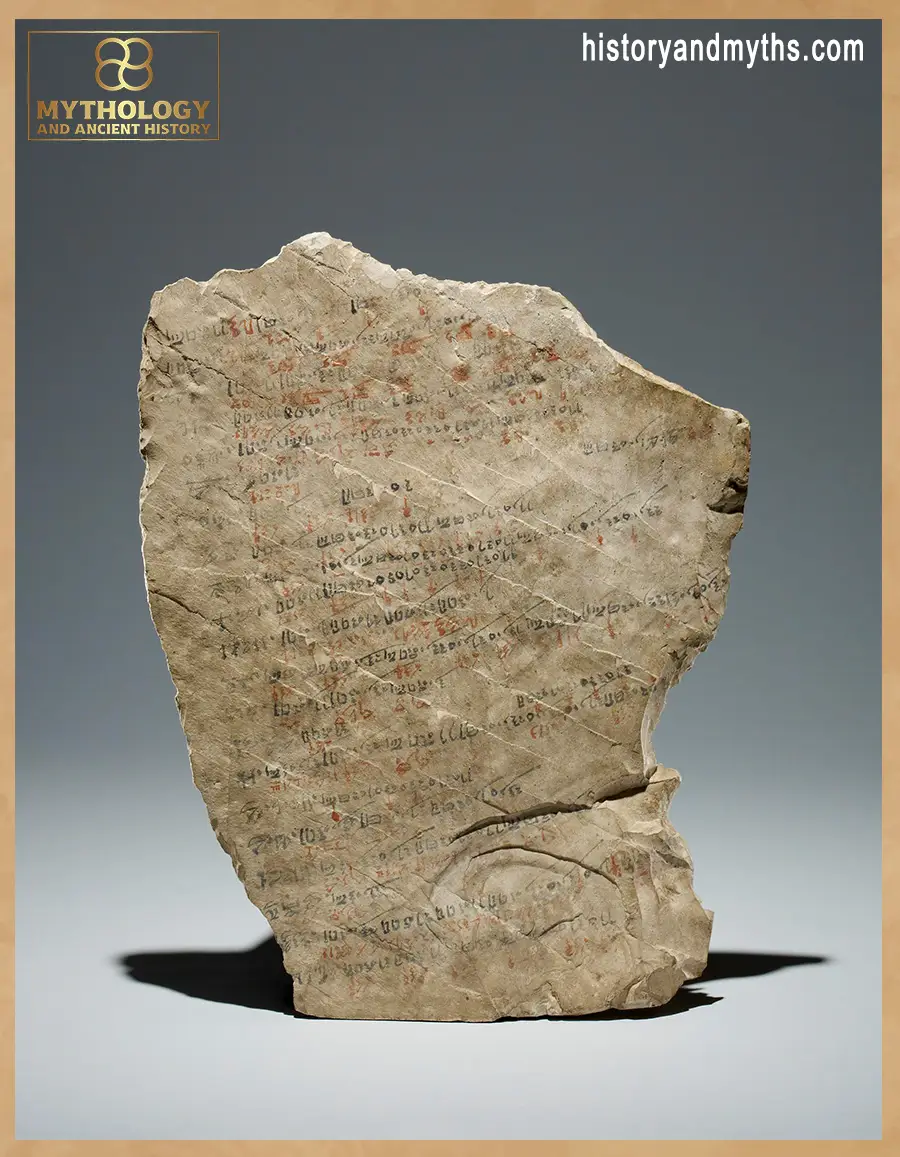
Our understanding of wages and rations in ancient Egypt rests on administrative documents, not literary descriptions. Wage lists, delivery registers, and ration accounts record compensation as quantities of goods-grain measures, beer jars, oil allotments-assigned to named individuals or groups.
Archives from Deir el-Medina are especially clear. They preserve monthly ration lists showing standardized distributions by role and rank, as well as complaints filed when deliveries were delayed. The language is procedural and numerical, emphasizing entitlement and accountability rather than negotiation or reward.
Similar patterns appear across temple and state records. Compensation is documented as provision, not pay. There are no contracts setting prices for labor, no references to bargaining, and no market rates. What survives instead is a paper trail designed to ensure continuity: who received what, when, and under whose authority.
These sources confirm the system described throughout this article. Wages were real, measurable, and essential-but they were administrative rations, not salaries. The evidence leaves little room for reinterpretation: labor in ancient Egypt was sustained by provision, controlled by records, and stabilized through hierarchy.
- Ancient Egyptian wages were paid as rations, not money or negotiated salaries.
- Grain and beer formed the core of compensation, ensuring basic survival rather than profit.
- Ration levels reflected hierarchy and administrative value, not physical effort.
- Skilled workers received more than unskilled laborers, but remained institutionally dependent.
- Delayed rations, not low pay, were the primary cause of labor unrest and strikes.
Frequently Asked Questions
Did ancient Egyptians receive wages?
Ancient Egyptians did not receive wages in the modern sense. Compensation was provided through rations of food and basic necessities rather than money.
What were workers paid with in ancient Egypt?
Workers were paid mainly with grain and beer, along with items such as oil, vegetables, and occasionally textiles or fuel.
Why did ancient Egypt use rations instead of money?
Rations ensured survival and administrative control in a non-monetized economy, reducing dependence on markets and wage negotiation.
Were all workers paid the same rations?
No. Ration levels reflected hierarchy. Skilled workers, scribes, and overseers received larger shares than unskilled laborers.
Did skilled workers earn higher wages?
Skilled workers received higher rations, but this reflected their value to the system, not free-market bargaining or personal wealth.
What caused labor strikes in ancient Egypt?
Labor strikes occurred when ration deliveries were delayed, threatening survival rather than income expectations.
Sources & Rights
- Janssen, Jac. J. Commodity Prices from the Ramessid Period: An Economic Study of the Village of Necropolis Workmen at Thebes. Leiden: E. J. Brill, 1975.
- Černý, Jaroslav. A Community of Workmen at Thebes in the Ramesside Period. Cairo: Institut Français d’Archéologie Orientale, 1973.
- Kemp, Barry J. Ancient Egypt: Anatomy of a Civilization. 2nd ed. London: Routledge, 2006.
- Trigger, Bruce G., Barry J. Kemp, David O’Connor, and Alan B. Lloyd. Ancient Egypt: A Social History. Cambridge: Cambridge University Press, 1983.
- Eyre, Christopher. The Use of Documents in Pharaonic Egypt. Oxford: Oxford University Press, 2013.
- Wilkinson, Toby. The Rise and Fall of Ancient Egypt. New York: Random House, 2010.
Written by H. Moses — All rights reserved © Mythology and History