Life of a Scribe in Ancient Egypt: Daily Work, Power, and Status
What was the daily life of a scribe in ancient Egypt really like? Were scribes wealthy officials with great authority, or skilled professionals whose work kept the Egyptian state functioning every day?
Scribes were among the most important officials in ancient Egypt because nearly every tax record, legal document, land survey, ration list, and administrative order depended on their writing. Their profession offered education, stability, and social respect, but it also demanded constant accuracy, discipline, and accountability within a highly organized bureaucracy.
This article explores how Egyptian scribes lived and worked, what responsibilities filled their daily routine, how they advanced through the administrative hierarchy, and why their influence came from trusted documentation rather than personal political power.
Source: Wikimedia Commons, photo by ArchaiOptix (CC BY-SA 4.0)
A Day in the Life of an Egyptian Scribe
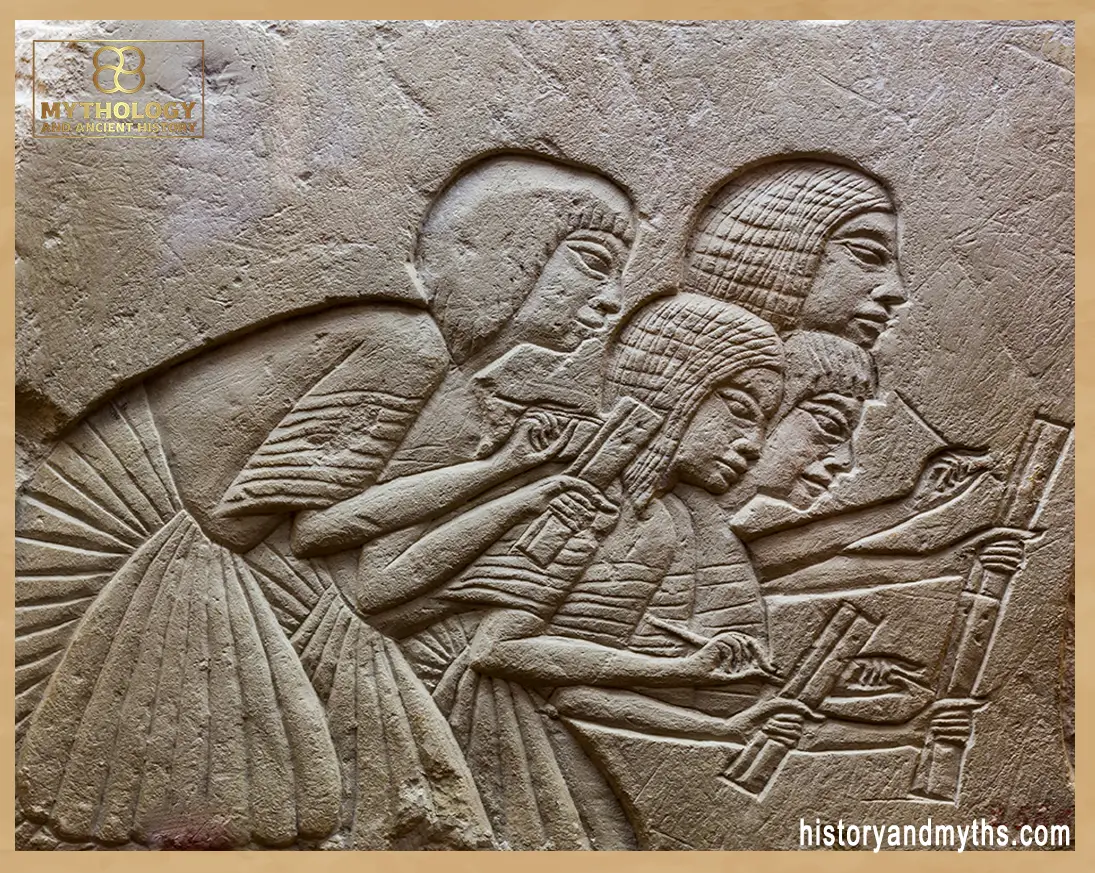
A scribe’s day was shaped by place and function rather than fixed hours. Most worked within administrative offices attached to temples, estates, courts, or granaries. Others accompanied officials into the field. Wherever he worked, the scribe’s role was constant: to observe, record, and formalize decisions in writing.
The working day typically began with preparation. Tools were checked-palette, pens, ink-and documents from the previous day reviewed. Accuracy was cumulative; a single error could invalidate an account or trigger an audit. Junior scribes copied entries or assisted seniors, while experienced scribes drafted records independently. Writing was rarely solitary. Orders were dictated, figures verified aloud, and entries confirmed in the presence of supervisors or witnesses.
Much of the day was spent on routine documentation: ration lists, delivery notes, labor rosters, land measurements, and correspondence. In courts, scribes recorded testimony and verdicts; in estates, they logged produce and workforce assignments; in temples, they tracked offerings and inventories. The content varied, but the method did not-clear layout, standardized phrasing, and precise numbers.
Supervision was constant. Scribal work carried authority because it was trusted, and trust depended on conformity. Senior officials reviewed entries, corrected mistakes, and approved final copies. Responsibility increased with rank, but so did accountability. A senior scribe might manage multiple registers and oversee juniors, yet he remained answerable to overseers and administrators.
The day ended with reconciliation: totals checked, documents filed, and materials secured. Writing fixed events into record, transforming actions into obligations. This daily process-repetitive, meticulous, and controlled-was the essence of scribal life. The scribe did not merely witness administration; he made it permanent.
| Aspect | Life of a Scribe |
|---|---|
| Primary Role | Recording, calculating, and formalizing administrative activity |
| Work Environment | Temples, courts, granaries, estates, and administrative offices |
| Daily Tasks | Accounts, taxation records, legal documents, correspondence |
| Career Progression | Junior scribe → Independent scribe → Senior or overseer scribe |
| Authority | Derived from accurate documentation, not decision-making power |
| Supervision | Continuous oversight, audits, and hierarchical review |
| Social Status | Respected professional class, below elites but above manual workers |
| Material Life | Stable income in rations or salary-in-kind; limited wealth |
| Key Reality | Prestige existed, but only through discipline, accuracy, and loyalty |
What Did Scribes Actually Do?
Scribes were specialists whose tasks varied by institution, but their core function was the same: to convert activity into enforceable records. Their work fell into several clear categories, each tied to a branch of administration.
Record-keeping and Accounts
Scribes maintained registers of goods, labor, and payments. They calculated rations, logged deliveries, reconciled totals, and updated balances. In granaries and estates, this meant tracking grain from harvest to distribution; in workshops, monitoring materials and output. Precision was essential because records determined obligations.
Taxation and Assessment
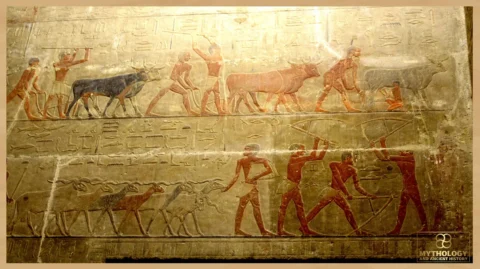
Field scribes measured land, recorded yields, and assessed dues. After the inundation, they recalculated boundaries and taxable areas. These figures fed directly into state revenue, making scribal entries the basis for collection and enforcement.
Legal Documentation
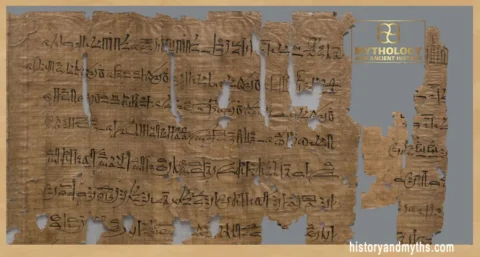
In courts, scribes recorded petitions, testimony, contracts, and verdicts. They standardized language to ensure clarity and continuity, preserving decisions for reference. The written record carried authority beyond the spoken word, binding parties to outcomes.
Temple Administration
Temple scribes managed inventories, offerings, personnel lists, and ritual schedules. Their records linked economic activity to cult practice, ensuring that resources supported daily rites and festivals. This work required familiarity with both administrative and sacred language.
Correspondence and Orders
Scribes drafted letters and directives on behalf of officials. Formulaic phrasing ensured rank and protocol were respected. These documents transmitted decisions across distances, coordinating labor and resources.
Across all tasks, scribes did not decide policy; they executed it. Their power lay in accuracy and standardization. By fixing actions in writing, they transformed movement, speech, and exchange into obligations the state could verify and enforce.
Career Path: From Junior Scribe to Overseer
A scribal career followed a gradual and closely supervised progression. Advancement depended less on seniority alone than on proven reliability. Errors delayed promotion; consistency accelerated it. There were no formal examinations. Competence was demonstrated through daily performance.
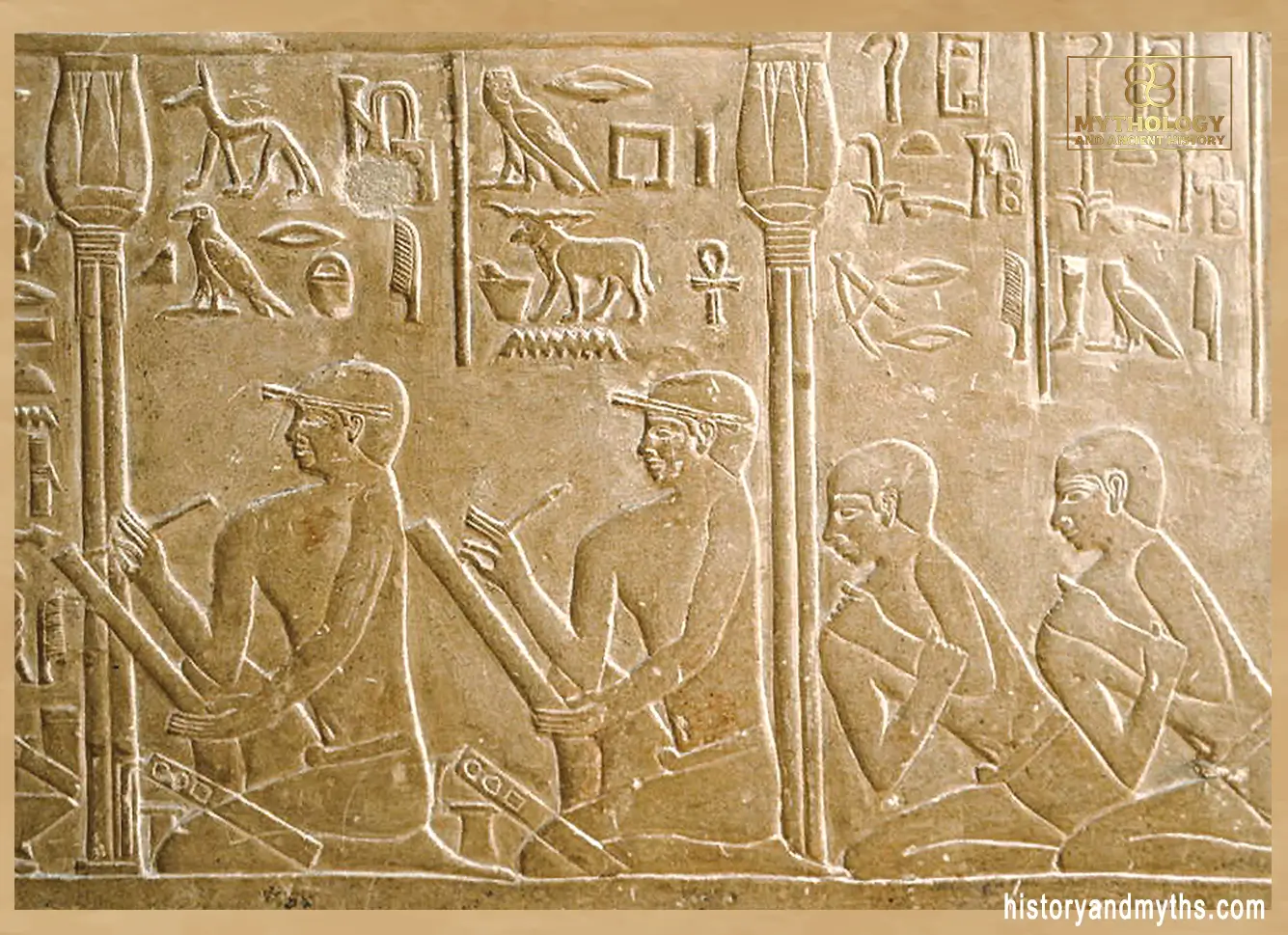
Junior scribes began with limited responsibility. They copied entries, assisted with calculations, and maintained subsidiary registers under direct supervision. Their work was checked line by line. At this stage, obedience and accuracy mattered more than initiative.
With experience, a scribe could become fully independent, trusted to draft records, manage accounts, or document proceedings without constant oversight. This level formed the backbone of administration. Most scribes spent their careers here, performing essential work without rising into managerial roles.
A smaller number advanced to senior or supervising positions. These scribes oversaw teams, verified totals, coordinated documentation across departments, and reported to higher officials. They did not abandon writing; rather, they combined it with review and control. Their authority extended over processes, not policy.
At the top of the profession were overseer scribes, embedded within larger administrative hierarchies. They coordinated records for estates, temples, or regional offices, ensuring conformity with central standards. Even at this level, authority remained delegated. Oversight did not replace accountability.
This career structure explains both the prestige and the limits of scribal power. Promotion offered stability and influence, but never independence. A scribe advanced by serving the system more effectively, not by escaping it.
Source: Wikimedia Commons, photo by LBM1948 (CC BY-SA 4.0)
Power, Authority, and Limits
The power of a scribe did not come from decision-making, but from documentation. Writing transformed actions into obligations, and obligations into enforceable reality. In this sense, scribes occupied a strategic position within the state. What was written could be audited, remembered, and acted upon. What was not written effectively did not exist.
This authority, however, was delegated, not personal. Scribes recorded decisions made by officials, priests, or judges; they did not issue those decisions themselves. Their influence lay in execution. Accurate records enabled taxation, labor control, legal enforcement, and temple management. Inaccurate records disrupted these processes and exposed the scribe to punishment.
The limits of scribal power were clearly defined. A scribe could not alter outcomes, reinterpret law, or ignore instruction. Deviations from standardized formats or figures were visible and traceable. Oversight mechanisms-crosschecking, audits, and hierarchical review-restricted individual discretion. Authority increased with rank, but autonomy did not.
At the same time, proximity to power mattered. Senior scribes who worked closely with administrators or priests gained informal influence through access to information. Knowing figures, schedules, and precedents allowed them to advise, clarify, and sometimes shape how decisions were implemented. This influence was subtle and conditional, dependent on trust rather than office.
Scribal power, then, was functional rather than political. It rested on competence, reliability, and institutional confidence. The scribe mattered because the system depended on writing, but the system also ensured that no single scribe could stand above it.
Why Were Scribes So Difficult to Replace?
The importance of Egyptian scribes did not come from writing alone. Their value lay in mastering a specialized administrative system that required years of training. A skilled scribe understood official formulas, accounting methods, land measurements, legal terminology, and institutional procedures that could not be learned quickly through experience alone.
Because the state depended on consistent records, replacing an experienced scribe was far more difficult than replacing most manual workers. New officials required extensive training before they could produce documents that met administrative standards. Accuracy protected taxation, legal decisions, temple administration, and the distribution of resources across the kingdom.
For this reason, scribes became one of the foundations of Egyptian bureaucracy. Their expertise preserved continuity within the administration, allowing institutions to function even as individual rulers, governors, or officials changed over time.
Social Status and Daily Life
Scribes occupied a respected but carefully bounded social position. Literacy set them apart from most of the population, yet their status depended on function rather than wealth alone. A scribe’s standing was shaped by where he worked, whom he served, and how long he remained reliable.
Income and material life
Most scribes received rations or salaries in kind-grain, beer, textiles sometimes supplemented by land assignments or housing tied to office. Senior scribes could live comfortably, but the majority were not wealthy elites. Their material security was stable rather than luxurious, reflecting salaried service rather than independent power.
Housing and community
Scribes often lived near their place of work: temple quarters, estate compounds, or administrative towns. Communities like Deir el-Medina show scribes integrated into tightly organized settlements where status differences existed but daily life remained communal. Proximity to administration meant visibility; scribes were known, observed, and accountable.
Family and social networks
Scribal families benefited from continuity. Literacy passed informally within households, giving children an advantage even before formal schooling. Marriage reinforced networks among administrative families, but this did not free scribes from obligation. Family ties could open doors, yet performance sustained careers.
Workload and pressure
Daily life involved constant deadlines and scrutiny. Errors affected others-laborers, taxpayers, temples-and consequences followed. The absence of physical labor did not mean absence of strain. Mental focus, long hours of calculation and copying, and responsibility for accuracy defined the profession.
Socially, the scribe stood above manual workers but below high officials and priests. His position was secure but conditional. Respect followed competence; failure threatened stability. Scribal life offered order and predictability, not privilege without cost.
What Defined a Successful Scribal Career?
- Accuracy under pressure: totals, names, and formats had to be reliable every day
- Standardized writing: correct formulas and layouts mattered as much as legibility
- Trust and oversight: promotion followed consistent work that survived review and audits
- Institutional fluency: knowing procedure—who signs, who verifies, and what must be recorded
- Progress through responsibility: from copying to managing registers and supervising juniors
- Limits of power: influence came from information access, not from issuing decisions
© historyandmyths.com — Educational use
The Ideal Scribe vs the Real One
Ancient Egyptian texts present the scribe as an ideal figure: comfortable, respected, and intellectually superior to manual workers. Instructional compositions praise the profession as orderly and rewarding, urging students to endure training in exchange for a life spared physical hardship. This image served a purpose. It motivated compliance, justified discipline, and reinforced loyalty to administrative service.
The reality was more restrained. Scribal life was structured, supervised, and demanding. While scribes avoided manual labor, they carried responsibility for records that affected taxation, labor obligations, and legal outcomes. Mistakes had consequences. Advancement required sustained accuracy, not talent alone. The daily routine left little room for personal expression.
The contrast between ideal and reality reveals how education functioned ideologically. Texts elevated the scribe to secure commitment, while practice trained him to conform. Prestige existed, but it was conditional. Stability replaced freedom; order replaced independence.
Understanding this distinction clarifies the scribal role. The scribe was not a philosopher-administrator or a cultural elite in the modern sense. He was a professional specialist shaped by training, oversight, and institutional need. His value lay not in symbolic status, but in reliable execution.
Key Takeaways
- Egyptian scribes were professional officials, not independent intellectuals.
- Their authority came from accurate documentation, not from making decisions.
- Daily work focused on records, accounts, and enforcement of obligations.
- Career advancement depended on reliability and conformity, not creativity.
- Social status was stable but conditional, tied to institutional service.
- Literary praise of scribes masked a demanding and closely supervised reality.
© historyandmyths.com — Educational use
Frequently Asked Questions
What was the main role of a scribe in ancient Egypt?
The main role of a scribe was to record, calculate, and formalize administrative activity, including taxes, rations, legal decisions, and correspondence.
Did scribes have real power in ancient Egypt?
Scribes held functional power through documentation, but they did not make policy decisions. Their authority depended on accuracy and institutional trust.
Where did Egyptian scribes work?
Scribes worked in temples, courts, granaries, estates, and administrative offices, sometimes accompanying officials during inspections and assessments.
Was being a scribe a high-status profession?
The profession carried respect and stability, but status depended on rank and service. Most scribes lived comfortably but were not wealthy elites.
How did a scribe advance in his career?
Career advancement depended on consistent accuracy, reliability, and the ability to manage records and supervise others, rather than formal examinations.
Is the ideal image of the scribe accurate?
Literary texts idealized scribes, but daily life involved pressure, supervision, and responsibility. Prestige existed, but it was conditional.
Sources & Rights
- Baines, John. “Literacy and Power in Ancient Egypt.” Man 18, no. 3 (1983): 572–599.
- Eyre, Christopher. The Use of Documents in Pharaonic Egypt. Oxford University Press, 2013.
- Janssen, Jac. J. Village Varia: Ten Studies on the History and Administration of Deir el-Medina. Leiden: Brill.
- Kemp, Barry J. Ancient Egypt: Anatomy of a Civilization. 3rd ed. Routledge, 2018.
- Lichtheim, Miriam. Ancient Egyptian Literature, Volume I. University of California Press, 1973.
- Parkinson, R. B. Voices from Ancient Egypt. British Museum Press, 1991.
- Quirke, Stephen. Exploring Religion in Ancient Egypt. Wiley-Blackwell, 2015.
- British Museum. The Satire of the Trades and Scribal Education.
- The Metropolitan Museum of Art. The Seated Scribe and Egyptian Administration.
- University College London, Petrie Museum. Scribes and Literacy in Ancient Egypt.
Written by H. Moses — All rights reserved © Mythology and History