Economic Crises and Famine in Ancient Egypt: When the System Failed
Famine in ancient Egypt is often explained as a simple consequence of a weak Nile flood. This explanation is incomplete. While environmental stress triggered shortages, famine emerged only when Egypt’s tightly controlled economic system failed to respond. In a society built on centralized storage, redistribution, and ration-based compensation, crisis was less about nature and more about administration.
Egypt’s economy depended on predictability. Grain surpluses were collected, stored, and redistributed to workers, officials, temples, and dependents. When this system functioned, Egypt absorbed years of poor harvests without collapse. When it broke down-through mismanagement, local failure, political instability, or disruption of transport-shortage turned into famine.
This article examines economic crises and famine as systemic events, not isolated disasters. It explains what caused economic breakdowns, how failures in storage and redistribution amplified scarcity, what the surviving texts actually record, and why famine often marked the end of stability rather than a temporary hardship. By shifting focus from the river to the system, we can understand why some shortages passed quietly while others reshaped history.
What Caused Economic Crises in Ancient Egypt?
Economic crises in ancient Egypt rarely had a single cause. They emerged from the interaction between environmental stress and administrative weakness. The Nile could trigger pressure, but it was the system’s response that determined whether pressure became crisis.
Irregular or insufficient floods reduced agricultural output, but Egypt was structurally prepared for variation. Grain storage, taxation in kind, and redistribution existed precisely to buffer bad years. Crisis began when these mechanisms failed to operate as intended. Local mismanagement, breakdowns in record-keeping, and corruption at provincial levels could disrupt supply long before scarcity became widespread.
Political instability amplified these problems. Periods of weak central authority strained oversight of granaries and transport networks. Without effective coordination, surplus regions failed to compensate for deficit areas. The economy did not collapse because grain vanished, but because movement and control of grain broke down.
Transport disruptions also played a role. Flood timing, damaged infrastructure, or insecurity along routes slowed redistribution. In an economy without free markets to compensate, delay itself was destructive. Workers dependent on rations felt the impact immediately.
Economic crisis, therefore, was not an accident of nature. It was the product of systemic vulnerability: a centralized economy that functioned efficiently in stability, but had limited flexibility when administration faltered.
| Factor | Role in Crisis | System Impact | Outcome |
|---|---|---|---|
| Irregular Nile Floods | Reduced agricultural output | Initial pressure on food supply | Manageable shortage if systems held |
| Grain Storage Failure | Poor oversight or depleted reserves | Loss of buffering capacity | Shortage escalates toward famine |
| Redistribution Breakdown | Delayed or blocked deliveries | Rations fail to reach dependents | Hunger despite available grain |
| Administrative Weakness | Loss of coordination and records | Systemic paralysis | Economic crisis |
| Social Response | Migration, unrest, ritual appeals | Erosion of trust and labor systems | Long-term instability |
Famine as a System Failure
Famine in ancient Egypt was not simply the absence of food. It was the failure of the system designed to distribute it. Scarcity became famine only when administrative mechanisms stopped functioning across regions and institutions.
Egypt’s economy depended on centralized redistribution. Grain moved from producers to state and temple granaries, then back out to workers, officials, and dependents through rations. This model worked well in stable conditions, but it left little room for local correction. When redistribution failed, there was no alternative market to absorb shock.
Delayed deliveries were often more dangerous than low harvests. Workers dependent on rations could not wait for recovery or adjustment. A breakdown in scheduling, accounting, or transport immediately translated into hunger. The system’s strength-control-became its weakness.
Crucially, famine did not strike evenly. Regions with functioning administration could endure shortages, while others collapsed despite available resources elsewhere. This uneven impact confirms that famine was not a natural blanket disaster, but a selective failure of coordination.
In this sense, famine exposes the limits of centralized control. The system was built to manage abundance efficiently, not scarcity flexibly. When stress exceeded administrative capacity, hunger followed-not because Egypt lacked food, but because it lost the ability to move it.
Grain Storage, Redistribution, and Collapse
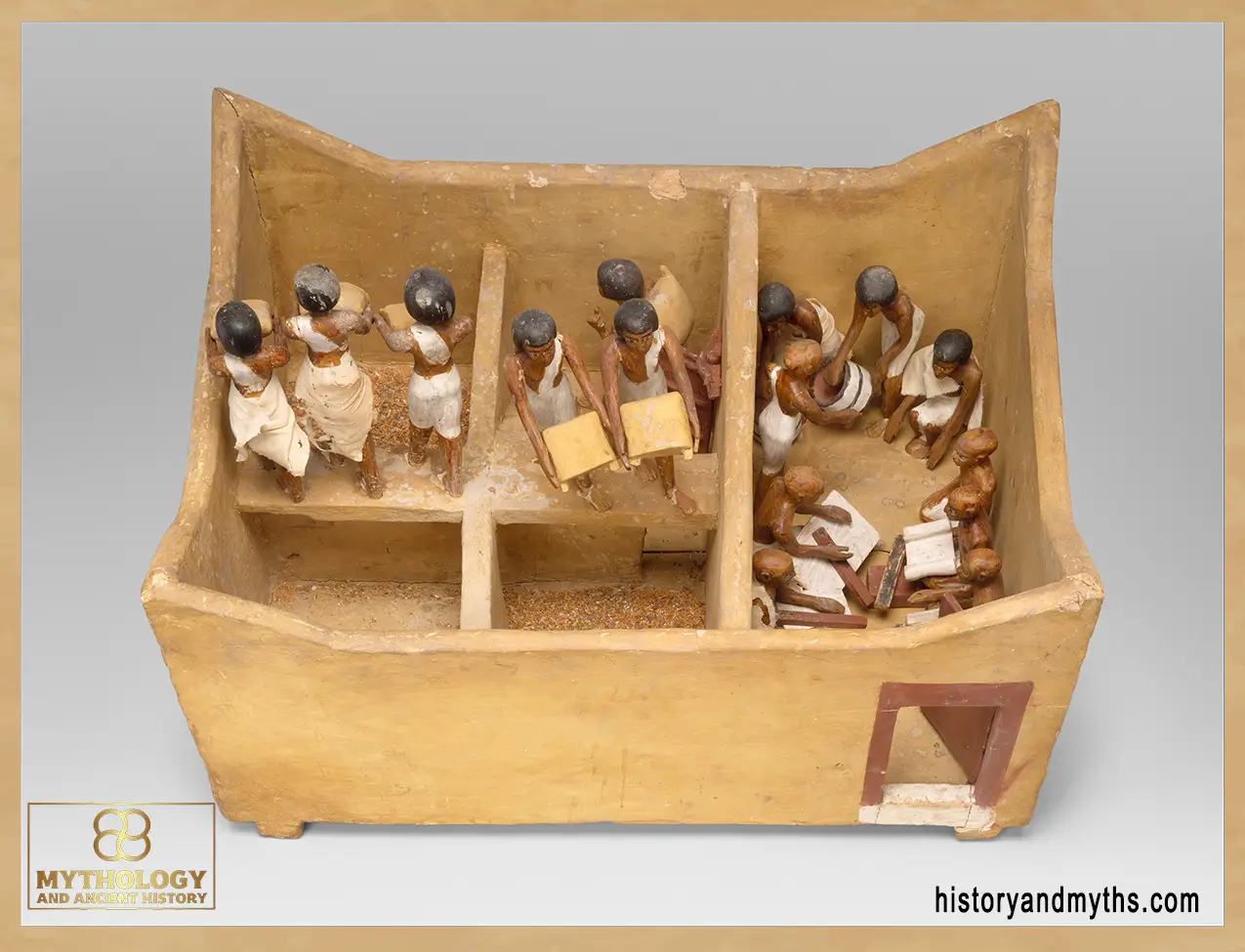
Grain storage was the backbone of Egypt’s economic resilience. Surpluses collected through taxation in kind were stored in state and temple granaries, creating reserves meant to stabilize years of poor harvests. As long as these reserves were managed, monitored, and moved effectively, Egypt could absorb prolonged stress.
Collapse began when storage and redistribution stopped aligning. Granaries could be full while people starved. The problem was not always shortage, but access. Failures in accounting, supervision, or transport severed the link between stored grain and dependent populations.
Redistribution required coordination across multiple levels: local officials, scribes, transport crews, and central oversight. When one link failed, the system stalled. Grain could not be released without authorization; authorization could not be verified without records; records could not move without functioning administration. Delay compounded delay.
Unlike economies with active markets, Egypt offered few alternatives. People could not easily buy grain elsewhere or negotiate prices. Survival depended on institutional release. When that release failed, collapse followed quickly.
This explains why famine often coincided with periods of administrative strain. Storage alone did not prevent disaster. Only effective redistribution could. When redistribution faltered, grain ceased to function as security and became a symbol of systemic failure.
Evidence from Texts and Inscriptions
Evidence for economic crises and famine in ancient Egypt comes primarily from official inscriptions, administrative complaints, and later retrospective texts. These sources do not describe famine as a single, continuous phenomenon; instead, they record moments when order failed and required explanation, justification, or commemoration.
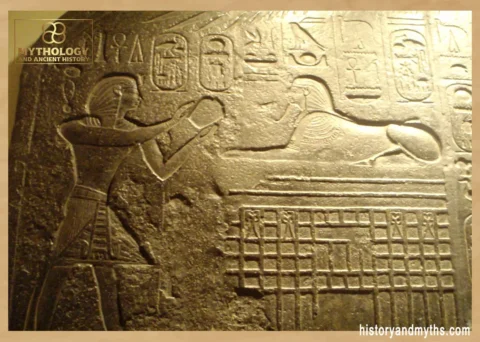
Texts such as the so-called Famine Stela present crisis through a political and religious lens, linking scarcity to divine displeasure and restoration to renewed authority. While these accounts are not neutral reports, they reveal how famine was understood: not as routine hardship, but as a breakdown demanding systemic correction. The emphasis is on restoration-reopening granaries, reasserting control, and reestablishing redistribution.
Administrative documents provide quieter but more reliable signals. Complaints about missing rations, delayed deliveries, or abandoned duties point to disruption long before catastrophe is declared. These texts rarely use the language of famine; instead, they record failure in process-missed schedules, incomplete accounts, and unresolved shortages.
Importantly, the evidence is uneven. Periods of stability leave fewer traces of crisis, while moments of collapse generate inscriptions precisely because they were exceptional. The absence of constant famine records should not be read as denial of hardship, but as confirmation that famine was not normal. It appeared when systems failed, and texts survive because failure demanded response.
Taken together, the sources support a consistent conclusion: famine entered the record not as a natural cycle, but as a signal of administrative breakdown requiring ideological and practical repair.
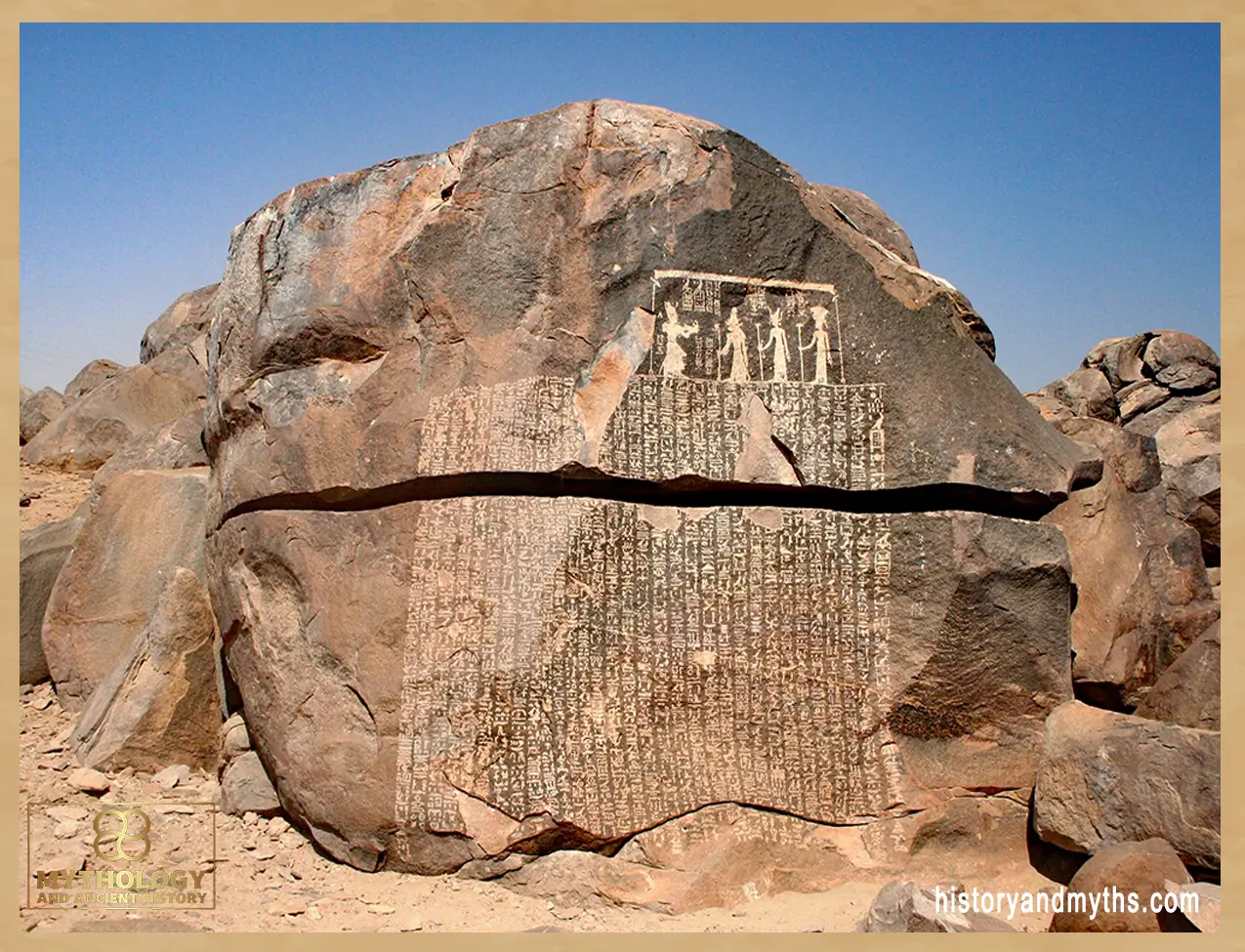
Scholarly note: The Famine Stele is a Ptolemaic-period inscription reflecting later ideological interpretations of earlier famine traditions rather than a contemporary Old Kingdom record.
Social Consequences of Famine
Famine reshaped society long before it destroyed it. The most immediate consequence was dislocation. When rations failed, workers abandoned projects, left settlements, or sought survival elsewhere. Labor systems built on stability could not function under prolonged scarcity.
Social trust eroded quickly. Redistribution was the foundation of legitimacy; when it failed, confidence in officials and institutions weakened. Complaints increased, obligations were ignored, and local authority fractured. Famine exposed the gap between administrative promise and lived reality.
Economic pressure also altered behavior. People delayed taxes, withheld labor, or turned to informal survival strategies that lay outside institutional control. These responses did not overthrow the system, but they undermined its coherence. Order depended on compliance; hunger reduced willingness to comply.
Religious and ideological responses followed. Appeals to divine intervention intensified, and rituals aimed at restoring balance multiplied. These were not separate from economic reality. They functioned as social mechanisms to explain crisis and reaffirm authority when material systems failed.
Most importantly, famine rarely ended cleanly. Even when conditions improved, recovery was uneven. Skills were lost, communities fragmented, and administrative capacity diminished. The crisis left behind a weakened structure-one more vulnerable to the next disruption.
From Economic Stress to Famine (Ancient Egypt)
- Environmental Shock — Weak or irregular Nile floods reduce harvests and shrink local surplus.
- Storage Pressure — Granaries should buffer bad years, but reserves fail when oversight breaks or stocks are misallocated.
- Redistribution Stalls — Grain exists, but deliveries slow down or stop due to transport disruption and administrative paralysis.
- Rations Fail — Workers and dependents lose their lifeline; hunger spreads faster than the harvest can recover.
- Social Unraveling — Migration, unrest, and loss of trust weaken institutions, making recovery uneven and fragile.
Key Insight: In a centralized economy, famine was often a failure of redistribution—not only a failure of nature.
© historyandmyths.com — Educational use
Why Economic Crises Marked the End of Stability
Economic crises in ancient Egypt were rarely temporary interruptions. They marked turning points. When the mechanisms of storage, redistribution, and control failed, recovery was never complete. Stability depended on continuity; crisis broke that chain.
The Egyptian economy was highly efficient under normal conditions, but it lacked flexibility. Centralization allowed for control and predictability, yet it also meant that failure spread quickly. Once administrative trust eroded, restoring it required more than renewed harvests. Records had to be rebuilt, authority reasserted, and labor reorganized-often under weaker conditions than before.
This is why major crises tend to cluster around broader transitions. Periods of famine often coincide with political fragmentation, weakened central power, or the end of dynastic phases. The crisis did not cause collapse alone, but it exposed vulnerabilities that could no longer be concealed.
Famine, therefore, was not merely a humanitarian disaster. It was a diagnostic event-revealing the limits of Egypt’s economic model. When redistribution failed, the illusion of permanence shattered. What followed was not immediate ruin, but gradual instability.
As a result, economic crises serve as markers in Egyptian history. They signal moments when the system that sustained order lost its capacity to adapt. Understanding famine in this way shifts the narrative from nature to structure-and explains why recovery was always partial, and decline often followed.
- Famine was rarely caused by the Nile alone; it emerged when storage and redistribution systems failed.
- Egypt’s centralized economy absorbed environmental shocks when administration and transport remained functional.
- Redistribution breakdown could create hunger even when grain still existed in reserves.
- Crises produced uneven regional impacts, revealing failures of coordination rather than uniform natural disaster.
- Economic crises often marked turning points, weakening trust, labor systems, and long-term stability.
Frequently Asked Questions
What caused economic crises in ancient Egypt?
Crises emerged when environmental stress combined with administrative failure, disrupting storage, transport, and redistribution.
Was famine caused only by weak Nile floods?
No. Low floods created pressure, but famine occurred when centralized systems failed to distribute available grain.
How did ancient Egypt try to prevent famine?
By collecting grain as tax in kind, storing surpluses in granaries, and redistributing rations to workers and dependents.
Why could people starve even when grain existed?
Because access depended on authorization and delivery. When records, transport, or oversight broke down, redistribution stalled.
Were famines common in ancient Egypt?
They were not constant. Famines appear during periods of instability, indicating systemic breakdown rather than routine scarcity.
What were the social effects of famine?
Labor disruption, migration, loss of trust in institutions, and long-term weakening of administrative capacity.
Sources & Rights
- Kemp, Barry J. Ancient Egypt: Anatomy of a Civilization. 2nd ed. London: Routledge, 2006.
- Trigger, Bruce G., Barry J. Kemp, David O’Connor, and Alan B. Lloyd. Ancient Egypt: A Social History. Cambridge: Cambridge University Press, 1983.
- Janssen, Jac. J. Commodity Prices from the Ramessid Period: An Economic Study of the Village of Necropolis Workmen at Thebes. Leiden: E. J. Brill, 1975.
- Černý, Jaroslav. A Community of Workmen at Thebes in the Ramesside Period. Cairo: Institut Français d’Archéologie Orientale, 1973.
- Allen, James P. The Ancient Egyptian Pyramid Texts. Atlanta: Society of Biblical Literature, 2005.
- Assmann, Jan. Death and Salvation in Ancient Egypt. Ithaca: Cornell University Press, 2005.
Written by H. Moses — All rights reserved © Mythology and History