Why Gods Needed Sacred Cities in Sumerian Mythology
In Sumerian mythology, cities were far more than places where people lived, traded, or governed. Each major city was closely connected to a specific deity and was often viewed as a sacred center where divine power entered the human world. To the Sumerians, the relationship between gods and cities was so important that political authority, religious identity, and cosmic order were all tied to particular urban centers.
This connection raises an important question: why did the gods need cities at all? Unlike many later religious traditions in which deities exist independently of specific locations, Sumerian gods were deeply linked to temples, sacred districts, and the communities that served them. A city’s prosperity reflected the favor of its patron deity, while its destruction could be interpreted as a sign of divine abandonment.
Understanding why gods needed cities reveals one of the most distinctive features of Sumerian mythology. It shows how the Sumerians imagined the divine world not as a distant realm separated from human society, but as a presence rooted in sacred cities that connected heaven, earth, and the cosmic order itself.
Cities as the Homes of the Gods
The strongest reason gods were associated with cities is that Sumerians viewed those cities as their earthly homes. A god was not believed to exist only in a distant heavenly realm. Through the temple, rituals, and sacred image housed within the sanctuary, the deity was understood to be present within the city itself. This made the city more than a political or economic center; it became a place where divine and human worlds met.
For this reason, major temples were often described as the residences of the gods. Maintaining these sacred spaces was one of the most important responsibilities of both rulers and communities. Offerings, festivals, and daily rituals were not symbolic gestures alone but acts intended to serve and honor the deity who resided there.
This belief gave cities a sacred identity that extended beyond geography. Nippur was linked to Enlil, Eridu to Enki, Uruk to Inanna, and Ur to Nanna. These connections helped define the role of each city within the wider religious landscape of Sumer. A city was important not only because people lived there, but because it was regarded as the chosen dwelling place of a divine power.
Why Did Gods Need Cities in Sumerian Mythology?
| Concept | Meaning in Sumerian Belief |
|---|---|
| Sacred Cities | Cities served as the earthly centers of divine authority. |
| Patron Deities | Each major city was associated with a specific god. |
| Temples | The primary locations where gods were believed to dwell among humans. |
| Divine Presence | Gods interacted with humanity through temples, rituals, and sacred institutions. |
| Cosmic Order | Cities reflected the organization of the divine world. |
| Religious Identity | A city’s character was closely tied to its patron deity. |
| City Destruction | The fall of a city could be seen as a sign of divine abandonment. |
| Holy Cities | Centers such as Nippur and Eridu held exceptional religious importance. |
| Divine Statues | Sacred images represented the active presence of the gods. |
| Human–Divine Relationship | Cities connected people, rulers, temples, and gods within a shared sacred system. |
Why Every Major God Had a Sacred City
The connection between gods and cities was not random. In Sumerian mythology, each major deity was associated with a specific city that served as the center of that god’s cult, rituals, and earthly influence. This arrangement helped organize the divine world in the same way that responsibilities were distributed among different gods. Rather than concentrating all authority in a single place, sacred power was spread across multiple cities, each linked to a particular divine role.
These relationships gave cities distinct religious identities. Eridu was associated with Enki and wisdom, Uruk with Inanna and royal power, Nippur with Enlil and cosmic authority, and Ur with Nanna and the moon. The city’s significance therefore came not only from its population or political strength but also from its connection to the deity believed to dwell there.
This system helped integrate religion into everyday life. People did not worship abstract powers detached from the world around them. They lived in cities that possessed sacred identities, celebrated local patron gods, and participated in rituals that reinforced the bond between the community and its divine protector. As a result, the city became one of the most important links between human society and the gods.
Cities as Centers of Divine Power
In Sumerian mythology, a city’s importance came not only from its people or its rulers but from the divine presence associated with it. The city served as the primary location where a god’s authority was expressed in the human world. Through temples, festivals, priesthoods, and sacred rituals, divine power became visible and active within the community.
This connection gave cities a religious role that extended beyond administration or commerce. They functioned as centers through which the gods maintained relationships with humanity. Offerings were presented there, important ceremonies were performed there, and major religious decisions were often connected to the city’s sacred institutions. The city’s well-being therefore reflected the strength of its relationship with its patron deity.
Because of this role, cities became focal points within the larger divine order. They were not merely places where gods were worshiped; they were the locations through which divine authority was believed to operate. In the Sumerian imagination, the power of a god was inseparable from the sacred city that represented that god’s presence on earth.
Why Losing a City Was a Religious Disaster
In Sumerian thought, the fall of a city carried consequences that extended far beyond military defeat or political change. Because each major city was linked to a patron deity, the loss of that city could be interpreted as evidence that divine protection had weakened or disappeared. A conquered city was not simply a defeated community; it was a sacred center whose relationship with its god had been disrupted.
This belief is reflected in Mesopotamian lamentation texts, which often describe destroyed cities as places abandoned by their divine patrons. The suffering of the population, the destruction of temples, and the collapse of civic life were understood as signs of a deeper religious crisis. The disaster affected not only people but also the sacred order that connected the city to its god.
As a result, rebuilding a city involved more than repairing walls and restoring institutions. It also required renewing the bond between the community and the deity believed to dwell there. In this way, the fate of a city was inseparable from the presence and favor of its patron god, making urban decline a spiritual as well as a political catastrophe.
Why Gods and Cities Needed Each Other
The relationship between gods and cities was not one-sided. Cities depended on their patron deities for protection, legitimacy, and identity, while the gods were honored, served, and celebrated through the temples and communities that existed within those cities. This created a partnership that stood at the center of Sumerian religious life.
Without a sacred city, a god would lack the temple, rituals, priesthood, and offerings through which divine presence was expressed on earth. Without its patron deity, a city would lose the source of sacred authority that justified its place within the wider cosmic order. Each reinforced the importance of the other.
This mutual dependence helps explain why cities occupy such a prominent place in Sumerian mythology. They were not merely locations where religious activity occurred. They were the foundations of the relationship between humanity and the divine, linking gods, temples, rulers, and ordinary people into a single sacred system.
Why Were Cities Important to the Gods?
In Sumerian mythology, cities were not simply places where people lived. They were sacred centers where gods were worshiped, divine authority was expressed, and cosmic order was maintained. Through temples and rituals, cities connected the human world to the divine realm and gave each major deity a visible presence on earth.
Cities and the Structure of the Cosmic Order
The link between gods and cities was also a way of organizing the universe itself. In Sumerian mythology, divine responsibilities were distributed among different deities, and those responsibilities were reflected in the cities associated with them. The sacred landscape of Sumer mirrored the structure of the divine world.
This meant that cities were more than religious centers. They acted as visible points within a larger cosmic system. A city dedicated to a particular god represented that deity’s role, authority, and sphere of influence. Together, these sacred centers formed a network that connected different aspects of existence, from kingship and justice to fertility and wisdom.
By assigning major gods to specific cities, the Sumerians transformed geography into a reflection of cosmic order. The arrangement helped explain how divine powers interacted with the human world and why certain cities occupied such an important place in both mythology and religious life.
Why Cities Were Essential to Sumerian Mythology
Cities occupy a central place in Sumerian mythology because they provided a bridge between the divine and human worlds. Through their temples, rituals, and patron deities, they became the locations where cosmic order was maintained and where divine authority took visible form. The city was not merely the setting of religious life; it was one of its foundations.
This helps explain why myths, hymns, and religious texts repeatedly emphasize sacred cities and their gods. The prosperity of a city reflected divine favor, while its decline could signal a breakdown in the relationship between humanity and the divine. Religious identity, political authority, and communal life were all tied to these sacred centers.
For the Sumerians, gods did not exist apart from the world of cities. Their presence was experienced through the places dedicated to them, making urban centers essential components of the religious landscape. Understanding this connection reveals why cities were far more than geographic locations—they were vital parts of the sacred order that shaped Sumerian mythology itself.
Did the Gods Truly Need Cities?
From a theological perspective, Sumerian gods did not require cities in the same way humans required homes. Yet mythology consistently places divine activity within specific urban centers. This was because cities provided the framework through which relationships between gods and people were maintained. Temples, rituals, offerings, and festivals all depended on the existence of sacred communities organized around a patron deity.
The city therefore acted as a meeting point between two worlds. Through it, divine authority could be expressed, worship could be performed, and cosmic order could be reinforced. Without these sacred centers, the connection between humanity and the gods would have lacked a physical and social foundation.
For this reason, Sumerian mythology repeatedly links divine power to particular cities. The question was not whether the gods needed cities for survival, but whether the divine order could be fully realized in the human world without them. In Sumerian belief, the answer was largely no.
Why Temples Mattered More Than the City Itself
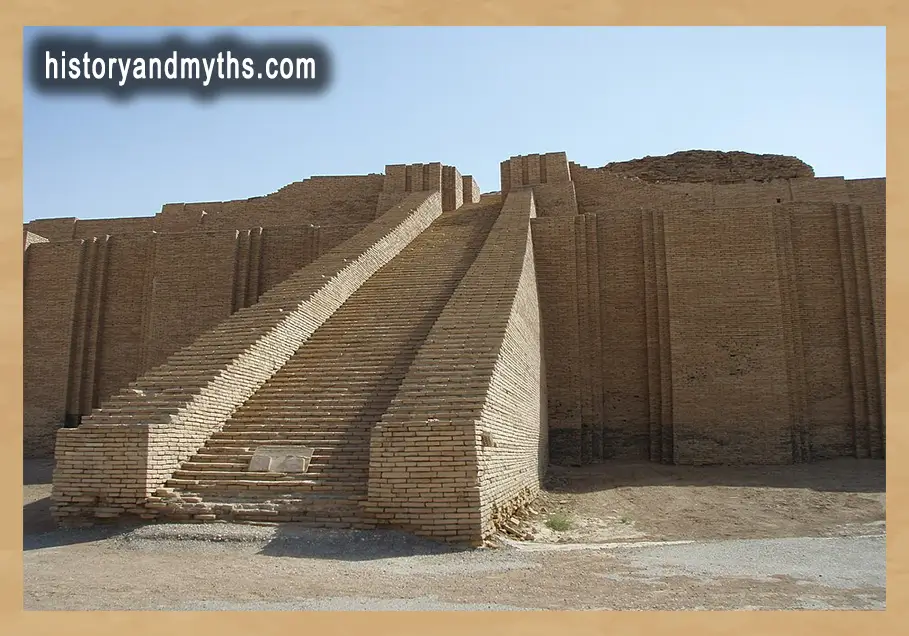
Although gods were associated with entire cities, the temple stood at the center of that relationship. It was the place where the deity’s presence was believed to reside, where offerings were presented, and where daily rituals maintained the connection between the divine and human worlds. Without the temple, a city could not fully function as a sacred center.
This explains why temples occupied such an important place in Sumerian religion. They were more than religious buildings; they served as the focal point of a city’s spiritual identity. The city’s status as a sacred place ultimately depended on the presence of the deity’s temple and the worship carried out within it.
For the Sumerians, the temple transformed an ordinary settlement into a city connected to the divine order. It was the institution that anchored the god’s presence on earth and allowed the relationship between the deity and the community to continue across generations.
Why Some Cities Became Holier Than Others
Not all sacred cities held the same religious importance. Certain cities acquired special status because of their association with major deities, ancient traditions, or influential temples. Their significance often extended beyond local worship and affected the religious life of Sumer as a whole.
Nippur provides a clear example. Although political power frequently shifted between different cities, Nippur remained one of the most respected religious centers because it was associated with Enlil, one of the highest gods in the Mesopotamian pantheon. Other cities gained prominence through their connection to deities such as Enki, Inanna, or Nanna.
The existence of these highly revered centers created a sacred geography within Sumerian mythology. Some cities were viewed not merely as homes of particular gods but as places of exceptional religious importance where the relationship between the divine world and humanity was believed to be especially strong.
What Happened When a God’s Statue Was Taken?
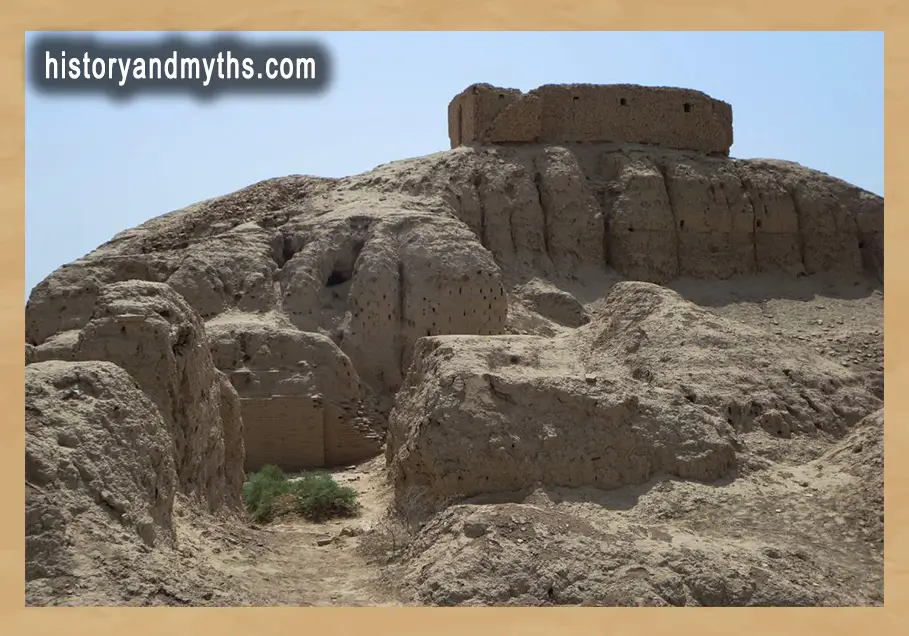
In Mesopotamian belief, a divine statue was far more than a symbolic representation. Through religious rituals, it was treated as a vessel through which a god’s presence could be experienced within the temple. As a result, the loss of a sacred statue carried profound religious consequences.
When enemies removed a city’s divine image, the event could be interpreted as a sign that the god had abandoned the community or that the bond between the deity and the city had been broken. Such actions damaged not only civic pride but also the religious foundations upon which the city depended.
For this reason, recovering or restoring a divine statue was often regarded as a sacred duty. The return of the image symbolized the restoration of divine favor and the renewal of the relationship between the city, its people, and its patron god. In a world where cities and gods were deeply connected, the fate of a sacred statue could influence the fate of the entire community.
Conclusion
In Sumerian mythology, cities were not simply places where gods were worshiped. They were sacred centers through which divine authority entered the human world. Each major deity was connected to a specific city, and that connection helped define the city’s identity, religious significance, and place within the cosmic order.The relationship between gods and cities shaped how the Sumerians understood power, protection, and community. A city’s prosperity reflected the favor of its patron deity, while its destruction could be interpreted as a sign of divine withdrawal. Temples, rituals, and sacred institutions all reinforced the bond between the gods and the urban centers associated with them.
Understanding why gods needed cities reveals an important feature of Sumerian belief: divine power was not imagined as distant or abstract. It was rooted in sacred places where heaven and earth were believed to meet. For the Sumerians, cities were essential because they provided the foundation upon which the relationship between humanity, the gods, and the cosmic order could be maintained.
Key Takeaways
- Major Sumerian gods were closely associated with specific cities.
- Temples served as the primary earthly homes of the gods.
- Cities acted as centers of divine authority and religious identity.
- Sacred cities helped connect humanity to the divine world.
- The prosperity of a city reflected the favor of its patron deity.
- The destruction of a city could be interpreted as divine abandonment.
- Some cities became holier than others because of their gods and temples.
- Divine statues were treated as vessels of sacred presence.
- Religion, politics, and urban life were deeply interconnected.
- Cities formed an essential part of the cosmic order described in Sumerian mythology.
Frequently Asked Questions
Why did Sumerian gods need cities?
Cities provided the temples, rituals, and communities through which divine authority could be expressed in the human world.
Did every major Sumerian god have a city?
Most important deities were strongly associated with particular cities that served as their primary cult centers.
Why were temples so important?
Temples were considered the earthly residences of the gods and the focal points of religious life.
Which cities were considered especially sacred?
Religious centers such as Nippur, Eridu, Uruk, and Ur held exceptional significance because of their connections to major deities.
What happened when a sacred city was destroyed?
Its destruction could be interpreted as a sign that divine protection had been withdrawn.
Were cities part of the cosmic order?
Yes. Sumerians viewed sacred cities as components of a larger divine system that connected gods and humanity.
Why were divine statues important?
They were treated as vessels through which a god’s presence could be experienced within a temple.
Did cities need gods as much as gods needed cities?
Sumerian belief presented a close relationship in which cities gained protection and identity while gods received worship and sacred service.
How did cities shape Sumerian mythology?
Many myths, hymns, and religious traditions were connected to specific sacred cities and their patron deities.
What role did patron gods play?
Patron deities protected their cities and gave them religious meaning and status within the divine order.
SOURCES
- Jacobsen, Thorkild. The Treasures of Darkness: A History of Mesopotamian Religion. New Haven: Yale University Press, 1976.
- Kramer, Samuel Noah. Sumerian Mythology: A Study of Spiritual and Literary Achievement in the Third Millennium B.C.. Philadelphia: University of Pennsylvania Press, 1961.
- Black, Jeremy, and Anthony Green. Gods, Demons and Symbols of Ancient Mesopotamia: An Illustrated Dictionary. Austin: University of Texas Press, 1992.
- Dalley, Stephanie. Myths from Mesopotamia: Creation, the Flood, Gilgamesh, and Others. Oxford: Oxford University Press, 2008.
- Bottéro, Jean. Religion in Ancient Mesopotamia. Chicago: University of Chicago Press, 2001.
- Leick, Gwendolyn. A Dictionary of Ancient Near Eastern Mythology. London: Routledge, 1998.
- Crawford, Harriet. Sumer and the Sumerians. Cambridge: Cambridge University Press, 2004.
- Postgate, J. N. Early Mesopotamia: Society and Economy at the Dawn of History. London: Routledge, 1994.
- Van De Mieroop, Marc. A History of the Ancient Near East ca. 3000–323 BC. Hoboken: Wiley-Blackwell, 2016.
- Roux, Georges. Ancient Iraq. London: Penguin Books, 1992.
- Foster, Benjamin R. Before the Muses: An Anthology of Akkadian Literature. Bethesda: CDL Press, 2005.
- Hallo, William W., and K. Lawson Younger Jr., eds. The Context of Scripture, Volume 1. Leiden: Brill, 2003.
- Cooper, Jerrold S. The Curse of Agade. Baltimore: Johns Hopkins University Press, 1983.
- Michalowski, Piotr. The Lamentation over the Destruction of Sumer and Ur. Winona Lake: Eisenbrauns, 1989.
- Glassner, Jean-Jacques. Mesopotamian Chronicles. Atlanta: Society of Biblical Literature, 2004.
- George, Andrew R. House Most High: The Temples of Ancient Mesopotamia. Winona Lake: Eisenbrauns, 1993.
- Electronic Text Corpus of Sumerian Literature (ETCSL), University of Oxford.
- The Metropolitan Museum of Art. Essays on Mesopotamian Religion, Sacred Cities, and Patron Deities.
- British Museum Collection Online. Resources on Mesopotamian Temples, Divine Kingship, and Sacred Geography.
- Written by H. Moses — All rights reserved © Mythology and History