Why Sumerian Gods Behaved Like Rulers in Sumerian Mythology
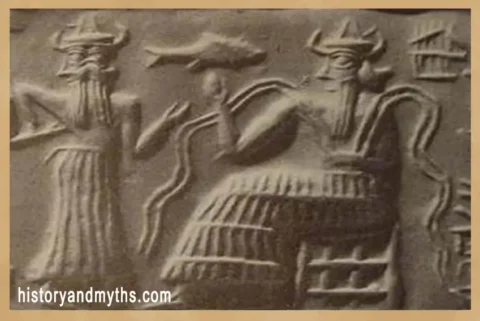
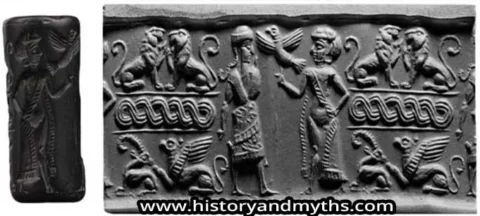
The gods of Sumer did not behave like distant supernatural beings who existed outside society. In mythological texts, they ruled cities, issued commands, held assemblies, assigned responsibilities, rewarded loyalty, and punished disobedience. To modern readers, many of these actions can seem surprisingly similar to the behavior of kings and political leaders rather than the actions of purely cosmic deities.
This resemblance was not accidental. The Sumerians viewed the universe as an ordered system governed by authority, hierarchy, and responsibility. Just as human communities depended on rulers and institutions to maintain stability, the cosmos itself was believed to operate under divine leadership. The gods were therefore imagined not only as powerful beings but also as rulers who managed the world, protected cities, and enforced the principles that sustained civilization.
Understanding why Sumerian gods behaved like rulers offers a deeper insight into Mesopotamian religion. It reveals how the Sumerians connected divine power with political authority and why their myths often portray the universe as a kingdom governed by laws, duties, and a carefully maintained order.
Why Did Sumerian Gods Act Like Kings?
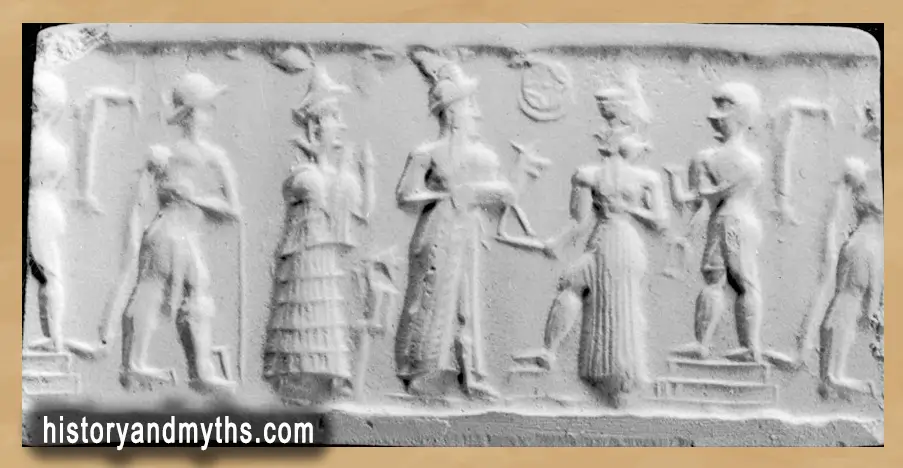
The ruler-like behavior of Sumerian gods reflected the way the Sumerians understood the world itself. They did not separate divine authority from political authority as modern societies often do. The same principles that governed cities, temples, and kingdoms were believed to govern the cosmos. As a result, the gods were imagined as rulers because rule, leadership, and administration were seen as necessary for maintaining order in both heaven and earth.
This worldview emerged from life in one of the world’s earliest urban civilizations. Sumerian cities depended on organized systems of authority to manage agriculture, labor, trade, religious ceremonies, and public works. Without leadership, society risked disorder. The Sumerians applied this same logic to the universe. If cities required rulers, then the cosmos required rulers as well.
For this reason, myths frequently portray gods issuing commands, assigning responsibilities, settling disputes, and supervising both divine and human affairs. These actions were not borrowed from royal behavior by coincidence. They reflected a deeper belief that authority was a fundamental part of existence itself. The gods acted like kings because the Sumerians understood order through the language of kingship, governance, and organized power.
Why Did Sumerian Gods Behave Like Rulers?
| Concept | Role in Sumerian Belief |
|---|---|
| Divine Kingship | The gods governed the universe through authority, hierarchy, and responsibility. |
| Cosmic Order | The world functioned according to a structured system maintained by the gods. |
| Divine Assembly | Major decisions could involve councils of gods rather than a single ruler. |
| Sacred Laws | Divine commands protected the institutions that supported civilization. |
| Patron Gods | Major cities were linked to specific deities who acted as their protectors. |
| Kingship | Human rulers governed on behalf of the gods rather than independently. |
| The Me | Divine powers that regulated civilization, authority, and social order. |
| Political Legitimacy | Authority was considered valid when supported by divine approval. |
| Hierarchy | Both the divine world and human society operated through ranked structures. |
| Order over Heroism | Maintaining stability mattered more than individual achievements. |
The Universe as a Divine Kingdom
To the Sumerians, the universe was not an impersonal system governed by natural forces alone. It was understood as a structured realm of authority in which every being, place, and function occupied a defined position. Just as a kingdom required leadership, responsibilities, and hierarchy, the cosmos was believed to operate through a similar framework under the supervision of the gods.
This idea appears throughout Mesopotamian mythology. Different gods were associated with specific domains, cities, natural forces, and social functions. Their authority was not random. Each deity held responsibility for a particular part of the cosmic order, creating a system in which power was distributed rather than concentrated in a single figure. The result was a universe governed through ranks, duties, and delegated authority.
Viewing the cosmos as a kingdom also helped explain stability in the world around them. Seasonal cycles, agricultural fertility, political authority, and social order were all seen as signs that the divine system was functioning properly. When disorder appeared—whether through famine, conflict, or disaster—it could be interpreted as a disruption within that larger cosmic structure. In this way, the image of a divine kingdom provided the Sumerians with a framework for understanding both order and crisis in the world they inhabited.
How Divine Authority Reflected Human Government
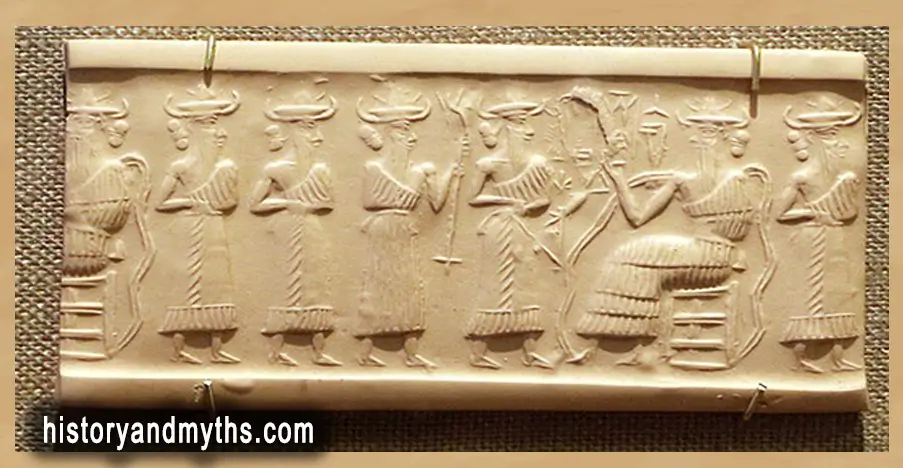
The authority of the gods closely mirrored the political structures that existed in Sumerian society. Cities were governed through rulers, officials, priests, and administrative institutions, and the divine world was imagined in much the same way. Rather than existing outside human experience, the gods were understood through familiar models of leadership and governance.
This connection can be seen in the language of Sumerian texts. Gods command, judge, assign duties, and oversee territories in ways that resemble the responsibilities of earthly rulers. Their authority extends over specific domains, and their decisions affect both divine and human affairs. Such descriptions reflect a society that viewed organized leadership as essential for maintaining stability.
The relationship worked in both directions. Human governments drew legitimacy from the gods, while myths portrayed divine authority using concepts taken from political life. As a result, religion and government were not separate spheres. Together, they formed a single vision of how order was established and maintained throughout the universe.
The Assembly of the Gods
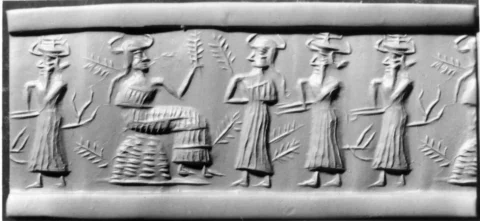
One of the clearest signs that Sumerian gods were imagined as rulers is the presence of divine assemblies. In many Mesopotamian traditions, major decisions were not made by a single deity acting alone. Instead, important matters could be discussed within a council of gods, where authority was exercised collectively through an established hierarchy.
These assemblies reflected a broader Sumerian understanding of leadership. Complex societies required consultation, cooperation, and recognized chains of authority. The divine world was therefore portrayed in similar terms. Senior gods held greater influence, while other deities participated according to their status and responsibilities within the cosmic order.
The existence of divine councils also helped explain how authority functioned across a vast and interconnected universe. Rather than presenting the cosmos as dependent on the will of one figure, Sumerian mythology described a structured system in which decisions emerged from an organized community of divine powers. This made the government of the gods appear less like personal rule and more like the administration of a kingdom.
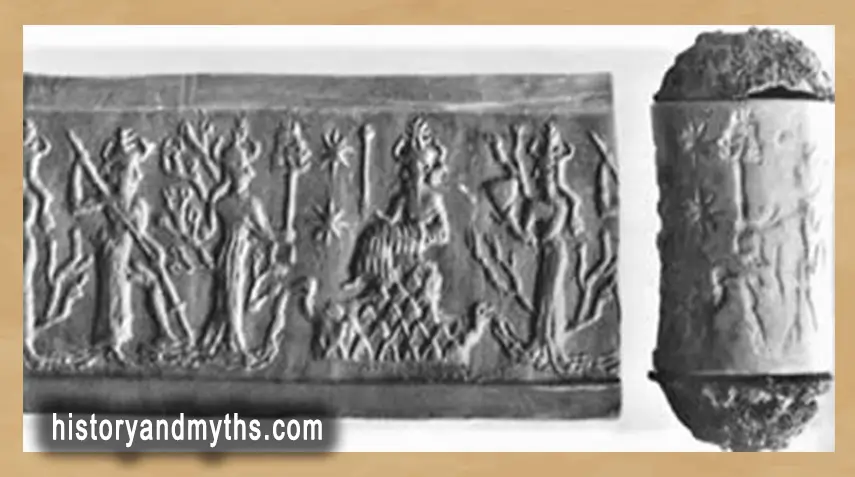
Why Gods Issued Laws and Commands
Sumerian gods were not simply sources of power; they were guardians of order. Their commands established the boundaries that allowed the cosmos, society, and daily life to function properly. Myths often portray divine authority as something expressed through decrees, decisions, and instructions because order was believed to depend on clear rules rather than uncontrolled force.
This idea is closely connected to the concept of the Me, the divine powers and institutions that governed civilization. Kingship, priesthood, craftsmanship, justice, and other foundations of society were understood as parts of an ordered system that ultimately originated with the gods. By issuing commands, the gods maintained these structures and ensured that each element of the world fulfilled its proper role.
For the Sumerians, law and authority were therefore not purely human inventions. They reflected a deeper cosmic reality. The gods commanded because they were responsible for preserving the framework that held both society and the universe together. Without divine authority, order itself was believed to be at risk.
Gods, Cities, and Political Power
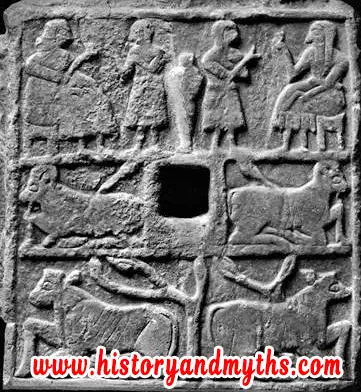
The connection between gods and political authority was especially visible in the Sumerian city-state system. Nearly every major city was associated with a patron deity who was regarded as its true owner and protector. Temples were not merely places of worship; they stood at the center of economic, religious, and political life, reinforcing the belief that civic authority ultimately derived from divine power.
This relationship shaped how the Sumerians understood government. Rulers did not claim to possess power independently. Instead, they governed on behalf of the gods and were expected to maintain the order that the divine powers had established. Success in war, prosperity in agriculture, and stability within the city could all be interpreted as signs of divine favor.
As a result, political authority and religious belief became deeply intertwined. The city belonged to its god, the temple represented divine presence, and the ruler served as a guardian of the order that linked heaven and earth. This system helped explain why Sumerian mythology so often portrays gods not only as supernatural beings but also as sovereign powers closely connected to the governance of human society.
Why Were Sumerian Gods Like Rulers?
The Sumerians viewed the universe as an organized system that required leadership, authority, and stability. Because their cities depended on rulers, laws, and institutions, they imagined the gods in similar terms. Divine authority was seen as the cosmic equivalent of human government, making the gods guardians of order rather than simply powerful supernatural beings.
Why Kings Ruled in the Name of the Gods
Sumerian kings were not viewed as independent sources of authority. Their legitimacy rested on the belief that power ultimately belonged to the gods and that human rulers governed only through divine approval. In royal inscriptions, kings frequently present themselves as chosen, appointed, or supported by specific deities rather than as self-made leaders.
This belief helped explain why political authority carried religious significance. Governing a city was not simply an administrative task; it was a responsibility connected to maintaining the order established by the gods. A ruler was expected to protect temples, uphold justice, support religious rituals, and preserve stability within the community. Success in these duties reinforced the idea that divine favor remained with both the king and the city.
As a result, kingship was understood as part of a larger cosmic system. The gods ruled the universe, while kings managed human society on their behalf. This relationship strengthened both religious belief and political authority, creating a model in which earthly government reflected the structure of divine rule itself.
The Difference Between Sumerian Gods and Later Heroic Gods
Many later mythological traditions place greater emphasis on heroic adventures, individual achievements, and dramatic battles between extraordinary figures. Sumerian mythology takes a noticeably different approach. Although heroes appear in Mesopotamian literature, the central concern of many myths is not personal glory but the preservation of order, authority, and civilization.
This difference helps explain why Sumerian gods often resemble rulers more than warriors. Their importance comes from governing cities, maintaining cosmic balance, assigning responsibilities, and protecting the institutions that allow society to function. Power is measured less by individual feats and more by the ability to sustain stability across the world.
As a result, Sumerian mythology focuses on administration as much as action. The gods are remembered not simply because they are powerful but because they occupy essential positions within a larger system. Their authority reflects the values of a civilization that depended on organization, cooperation, and continuity rather than on the achievements of isolated heroes.
Why Order Mattered More Than Individual Power
A defining feature of Sumerian mythology is its emphasis on maintaining order rather than celebrating individual power. Even the most important gods are typically presented as parts of a larger system rather than independent figures acting solely according to personal ambition. Their authority derives from their place within the cosmic structure and from the responsibilities attached to that position.
This perspective reflects the realities of early urban civilization. Large populations, agricultural networks, irrigation systems, temples, and trade all depended on cooperation and stability. The survival of society required reliable institutions far more than exceptional individuals. As a result, myths often focus on preserving balance, fulfilling duties, and protecting established structures rather than on personal achievement alone.
Understanding this priority helps explain why Sumerian gods behaved like rulers. Their role was not simply to demonstrate strength but to maintain the framework that allowed both the universe and human civilization to function. In Sumerian thought, lasting order was more valuable than individual power because it ensured the continued survival of the world itself.
Why This View of the Gods Made Sense to the Sumerians
The image of gods as rulers emerged naturally from the world the Sumerians knew. They lived in organized city-states where authority, administration, and cooperation were essential for survival. Irrigation systems had to be maintained, agricultural production coordinated, temples managed, and public order preserved. Leadership was not an abstract idea but a daily reality that shaped every aspect of life.
When the Sumerians looked at the wider universe, they interpreted it through the same framework. The regular movement of celestial bodies, the return of seasonal cycles, the fertility of the land, and the functioning of society all suggested the presence of an organized system rather than random events. The gods were therefore imagined as leaders because leadership was the model that best explained how order could exist on such a large scale.
This perspective also helped connect religion to everyday experience. Instead of existing in a distant and unknowable realm, the gods operated according to principles that people recognized from their own communities. By portraying divine powers as rulers, Sumerian mythology transformed the structure of human society into a model for understanding the cosmos itself.
Were Sumerian Gods Above the Rules?
Although the gods occupied the highest positions in the universe, Sumerian mythology does not portray them as acting entirely without limits. Divine authority operated within a larger cosmic framework built on order, responsibility, and established roles. Each major deity possessed specific powers and duties, and the stability of the world depended on those responsibilities being maintained rather than ignored.
This idea helps explain why myths often emphasize hierarchy and cooperation among the gods. Important decisions could involve divine assemblies, and authority was distributed across multiple deities rather than concentrated in a single unrestricted ruler. The universe functioned because every divine power fulfilled its place within the larger system.
As a result, Sumerian religion presented order as something greater than any individual figure. Even the most powerful gods derived their significance from their role in preserving cosmic balance. Authority was respected not simply because the gods were powerful but because they were guardians of the structure that allowed the world to exist and function.
How Divine Rule Shaped Everyday Life
The belief that the gods governed the universe influenced far more than religious rituals. It shaped how the Sumerians understood authority, responsibility, and social order in their daily lives. Just as the cosmos was believed to function through hierarchy and assigned duties, society was expected to operate according to similar principles.
This worldview encouraged respect for institutions that were seen as part of the divinely established order. Temples, kingship, laws, and civic responsibilities were not viewed merely as human creations. They were connected to a larger system that linked earthly life to the authority of the gods. Fulfilling one’s duties therefore carried both social and religious significance.
For ordinary people, divine rule helped explain why order mattered. Successful harvests, stable cities, functioning governments, and peaceful communities were all understood as signs that the proper relationship between humanity and the gods was being maintained. In this way, the idea of divine kingship was not confined to mythology; it influenced how people interpreted the world around them and their place within it.
Conclusion
The ruler-like behavior of Sumerian gods was not a coincidence or a literary invention detached from reality. It reflected the way the Sumerians understood both society and the universe. Living in one of the world’s earliest urban civilizations, they viewed authority, hierarchy, and administration as essential for maintaining stability. These same principles were projected onto the divine world, where the gods governed the cosmos much as rulers governed cities.
This perspective explains why Sumerian myths feature divine assemblies, sacred laws, appointed kings, and gods closely connected to political institutions. Rather than emphasizing individual heroism, these traditions focused on leadership, responsibility, and the preservation of order. The gods were imagined as rulers because rule itself was seen as a fundamental requirement for civilization and cosmic balance.
By understanding this connection between religion and governance, we gain a clearer picture of Sumerian thought. Their myths were not only stories about powerful deities but also reflections of a society that believed order, authority, and organized leadership were necessary for both human life and the functioning of the universe.
Key Takeaways
- Sumerian gods were portrayed as rulers because authority was seen as essential for maintaining order.
- The universe was understood as a structured kingdom governed by divine powers.
- Many myths describe assemblies of gods that discussed and managed important matters.
- Divine commands and laws were believed to protect the foundations of civilization.
- Each major city had a patron deity connected to political and religious authority.
- Sumerian kings ruled as representatives of the gods rather than independent sovereigns.
- The concept of the Me linked divine authority to social institutions and cultural order.
- Sumerian mythology emphasized administration and stability more than heroic individualism.
- Even powerful gods operated within a larger cosmic system based on order and responsibility.
- The idea of divine rule influenced daily life, government, religion, and social expectations.
Frequently Asked Questions
Why did Sumerian gods behave like rulers?
The Sumerians believed that the universe required leadership and organization just as human societies did. As a result, gods were portrayed as rulers responsible for maintaining order.
Did Sumerian gods have a hierarchy?
Yes. Different gods held different ranks, responsibilities, and spheres of influence within the divine order.
What was the Assembly of the Gods?
It was a divine council in which important decisions could be discussed and authorized by leading deities.
Why were cities connected to specific gods?
Each major city-state had a patron deity who was considered its protector and divine owner.
Did Sumerian kings claim divine authority?
Kings ruled with the approval of the gods and often described themselves as chosen by particular deities.
Were the gods above all rules?
Sumerian mythology usually presents the gods as part of a larger cosmic order in which duties and responsibilities were distributed among different divine powers.
Why was order more important than heroism?
The survival of early urban society depended on stability, cooperation, and institutions rather than individual achievements alone.
How did divine rule affect everyday life?
It influenced ideas about government, law, social responsibilities, religion, and the relationship between humans and the gods.
SOURCES
- Jacobsen, Thorkild. The Treasures of Darkness: A History of Mesopotamian Religion. New Haven: Yale University Press, 1976.
- Kramer, Samuel Noah. Sumerian Mythology: A Study of Spiritual and Literary Achievement in the Third Millennium B.C.. Philadelphia: University of Pennsylvania Press, 1961.
- Bottéro, Jean. Religion in Ancient Mesopotamia. Chicago: University of Chicago Press, 2001.
- Black, Jeremy, and Anthony Green. Gods, Demons and Symbols of Ancient Mesopotamia: An Illustrated Dictionary. Austin: University of Texas Press, 1992.
- Leick, Gwendolyn. A Dictionary of Ancient Near Eastern Mythology. London: Routledge, 1998.
- Crawford, Harriet. Sumer and the Sumerians. Cambridge: Cambridge University Press, 2004.
- Van De Mieroop, Marc. A History of the Ancient Near East ca. 3000–323 BC. Hoboken: Wiley-Blackwell, 2016.
- Postgate, J. N. Early Mesopotamia: Society and Economy at the Dawn of History. London: Routledge, 1994.
- Roux, Georges. Ancient Iraq. London: Penguin Books, 1992.
- Foster, Benjamin R. Before the Muses: An Anthology of Akkadian Literature. Bethesda: CDL Press, 2005.
- Hallo, William W., and K. Lawson Younger Jr., eds. The Context of Scripture, Volume 1: Canonical Compositions from the Biblical World. Leiden: Brill, 2003.
- Cooper, Jerrold S. The Curse of Agade. Baltimore: Johns Hopkins University Press, 1983.
- Michalowski, Piotr. The Correspondence of the Kings of Ur. Winona Lake: Eisenbrauns, 2011.
- Glassner, Jean-Jacques. Mesopotamian Chronicles. Atlanta: Society of Biblical Literature, 2004.
- Westenholz, Joan Goodnick. Legends of the Kings of Akkade. Winona Lake: Eisenbrauns, 1997.
- Asher-Greve, Julia M., and Joan Goodnick Westenholz. Goddesses in Context. Fribourg: Academic Press Fribourg, 2013.
- Dalley, Stephanie. Myths from Mesopotamia. Oxford: Oxford University Press, 2008.
- Electronic Text Corpus of Sumerian Literature (ETCSL). University of Oxford. Texts relating to divine assemblies, kingship, temples, and cosmic order.
- Penn Museum. Mesopotamian Religion and Urban Civilization Collections.
- Written by H. Moses — All rights reserved © Mythology and History