Divine Order in Sumerian Mythology: Gods, Humans, and Civilization
In Sumerian mythology, order was not simply a desirable condition—it was the principle that allowed the universe, society, and human life to function at all. The Sumerians believed that the world operated according to a divinely established structure in which gods, humans, cities, and natural forces each had a defined place and purpose. When that structure was maintained, civilization prospered; when it was threatened, disorder and suffering followed.
This concept of divine order extended far beyond religion. It shaped ideas about kingship, law, temple worship, agriculture, and the relationship between humanity and the gods. Social stability was not viewed as a purely human achievement but as a reflection of a deeper cosmic order established by divine authority.
Understanding divine order is essential to understanding Sumerian mythology itself. It explains why the gods created humans, why sacred powers such as the Me were so important, and why the preservation of stability became one of the central concerns of Mesopotamian civilization.

Divine Order Was the Foundation of the Cosmos
In Sumerian mythology, order was woven into the very structure of existence. The universe was not imagined as a collection of unrelated forces but as an organized system in which every realm had a defined place. The heavens belonged to the celestial gods, the earth was the domain of human life, and the underworld possessed its own rulers and functions. Stability depended on these boundaries remaining intact.
This cosmic arrangement gave meaning to the world around the Sumerians. Natural cycles, seasonal changes, agricultural production, and the continuity of society were understood as signs that the established order was functioning properly. The universe operated because each power fulfilled its assigned role within a larger framework governed by divine authority.
For this reason, order was not merely a social ideal. It was a cosmic necessity. The same principle that maintained harmony among the gods also sustained human civilization and the natural world. In Sumerian thought, the stability of the cosmos and the stability of society were ultimately expressions of the same divine order.
Key Elements of Divine Order in Sumerian Mythology
| Element | Role in Divine Order |
|---|---|
| The Gods | Maintained balance and governed specific parts of the cosmos. |
| Humanity | Helped preserve order through work, worship, and social duties. |
| Cities | Served as organized centers of civilization and stability. |
| Temples | Connected the human world to divine authority. |
| Kingship | Provided earthly leadership modeled on cosmic order. |
| The Me | Supplied the sacred powers that sustained civilization. |
| Law and Justice | Preserved harmony within society. |
| Cosmic Stability | Ensured the proper functioning of the universe. |
The Gods Were Responsible for Maintaining Order
Sumerian mythology presents the gods not only as creators but also as guardians of the cosmic structure. Establishing order was only the beginning; preserving it required continuous divine oversight. Each major deity possessed responsibilities connected to specific realms of existence, ensuring that the different parts of the universe functioned together as intended.
This division of authority reflected the Sumerian belief that stability depended on proper administration. Just as cities required rulers, officials, and institutions, the cosmos required divine powers that governed heaven, earth, fresh waters, fertility, justice, and other essential forces. Order survived because these responsibilities were maintained rather than neglected.
The role of the gods therefore extended beyond power alone. Their importance lay in their ability to uphold balance and prevent the collapse of the established structure. Through their actions, the universe remained predictable, productive, and habitable. Divine authority was valuable because it protected order, and order was what allowed both the cosmos and human civilization to endure.
Human Society Reflected Divine Order
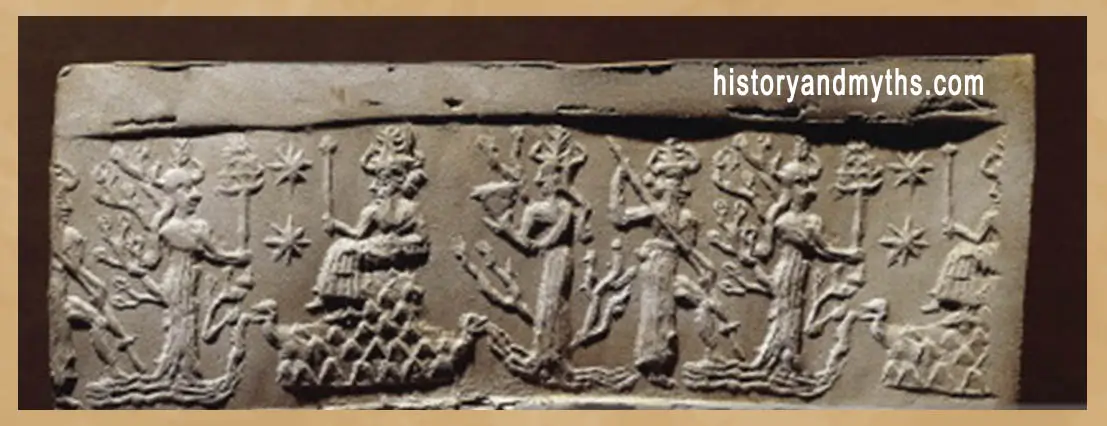
The Sumerians believed that the organization of human society mirrored the structure of the divine world. Cities, temples, rulers, priests, and social institutions were not seen as purely human creations but as earthly expressions of a cosmic order established by the gods. A well-governed society reflected the same principles of balance and hierarchy that governed the universe itself.
This belief gave political and religious institutions a deeper significance. Kingship was not simply a form of government, and temples were more than places of worship. Both existed because they helped maintain the order upon which civilization depended. Their legitimacy came from their connection to the divine structure that guided the world.
As a result, social stability carried religious importance. Maintaining laws, fulfilling civic responsibilities, and supporting sacred institutions were all ways of participating in the preservation of order. For the Sumerians, the health of a city and the stability of the cosmos were closely connected, each reflecting the success of the same divine system.
Why Disorder Was Feared in Sumerian Thought
If order was the foundation of existence, then disorder represented one of the greatest dangers imaginable. Sumerian myths and religious traditions often portray instability as a threat capable of disrupting the balance upon which both the cosmos and civilization depended. Famine, social unrest, failed harvests, invasions, and the decline of cities could all be interpreted as signs that the proper order had been disturbed.
This fear was rooted in the realities of Mesopotamian life. Communities depended on irrigation systems, agricultural cycles, and organized institutions to survive. Even a small breakdown in these systems could have serious consequences. Mythology reflected these concerns by emphasizing the importance of preserving balance and fulfilling responsibilities.
As a result, disorder was not viewed simply as inconvenience or misfortune. It symbolized the weakening of the structure that connected gods, humans, and society. The preservation of order therefore became more than a practical necessity—it became a religious and cultural obligation central to the Sumerian understanding of the world.
What Was Divine Order in Sumerian Mythology?
Divine order was the belief that the universe functioned according to a structured system established and maintained by the gods. This order governed the cosmos, human society, religious institutions, and the relationship between gods and humanity.
Divine Order Required Cooperation Between Gods and Humans
Sumerian mythology did not portray order as something maintained by the gods alone. While divine powers established the structure of the cosmos, humans were expected to play an active role in preserving it. Through work, worship, civic responsibilities, and support for temples and cities, people helped sustain the order upon which society depended.
This relationship created a system of mutual responsibility. The gods provided stability, fertility, protection, and the foundations of civilization, while humans fulfilled the duties necessary to keep that system functioning. Religious rituals, agricultural labor, and the maintenance of social institutions were all seen as contributions to the preservation of order.
This idea helps explain why human purpose occupies such an important place in Sumerian belief. People were not passive observers of the divine plan. They were participants within it. The stability of the world depended on cooperation between divine authority and human responsibility, making order a shared task rather than a one-sided gift from the gods.
What Divine Order Reveals About the Sumerian Worldview
The concept of divine order reveals a civilization that valued stability above almost everything else. The Sumerians lived in a world where survival depended on successful agriculture, functioning cities, reliable institutions, and cooperation among large populations. Their mythology reflected these realities by portraying order as the condition that made life possible and chaos as a constant threat.
This worldview also explains why responsibility appears so frequently in Sumerian religious thought. Gods had duties, rulers had duties, priests had duties, and ordinary people had duties. Every part of society was expected to contribute to the maintenance of a larger system. Order endured when each role was fulfilled properly.
More broadly, divine order shows that Sumerian mythology was less concerned with individual heroism than with balance, continuity, and collective stability. The central question was not how a single figure could change the world, but how the world itself could remain functioning and secure. In this sense, divine order stands at the heart of the Sumerian understanding of both civilization and the cosmos.
Conclusion
In Sumerian mythology, divine order was more than a religious idea—it was the principle that connected the cosmos, the gods, and human society into a single functioning system. The universe remained stable because every realm, institution, and individual had a defined place and purpose within a structure established by divine authority.
This belief shaped the Sumerian understanding of government, religion, labor, and community life. Cities prospered when order was maintained, and disorder was feared because it threatened the balance upon which both civilization and survival depended. Human beings were expected to contribute to that stability through their responsibilities, just as the gods fulfilled their own roles within the cosmic framework.
By examining divine order, we gain insight into one of the most important ideas in Sumerian thought: the conviction that prosperity, civilization, and even life itself depended on preserving the balance that held the world together. For the Sumerians, order was not simply desirable—it was essential.
Key Takeaways
- Divine order was the foundation of the Sumerian understanding of the cosmos.
- The gods were responsible for preserving balance and stability.
- Human society was designed to reflect the structure of the divine world.
- Temples, cities, and kingship were considered parts of a sacred order.
- The Me helped translate divine order into civilization.
- Disorder was feared because it threatened both society and the cosmos.
- Humans shared responsibility for maintaining order through their duties.
- Divine order reveals the Sumerian emphasis on stability, balance, and continuity.
Frequently Asked Questions
What was divine order in Sumerian mythology?
Divine order was the sacred structure that governed the cosmos, society, and the relationship between gods and humans.
Why was order important to the Sumerians?
The Sumerians believed that stability, prosperity, and civilization depended on maintaining the proper cosmic and social order.
Who maintained divine order?
The gods were primarily responsible for maintaining order, while humans helped preserve it through their duties and religious obligations.
How did human society reflect divine order?
Institutions such as kingship, temples, and laws were seen as earthly reflections of the cosmic structure established by the gods.
What role did the Me play in divine order?
The Me represented the sacred powers that allowed civilization and social institutions to function within the divine framework.
Why was disorder feared in Sumerian belief?
Disorder threatened the stability of both society and the cosmos and could lead to suffering, decline, and chaos.
Did humans have a role in maintaining order?
Yes. Through work, worship, and civic responsibilities, humans contributed to preserving the balance established by the gods.
What does divine order reveal about Sumerian mythology?
It reveals a worldview centered on stability, responsibility, hierarchy, and the interconnectedness of gods, humanity, and civilization.
SOURCES
- Jacobsen, Thorkild. The Treasures of Darkness: A History of Mesopotamian Religion. Yale University Press, 1976.
- Kramer, Samuel Noah. Sumerian Mythology: A Study of Spiritual and Literary Achievement in the Third Millennium B.C.. University of Pennsylvania Press, 1961.
- Kramer, Samuel Noah. History Begins at Sumer. University of Pennsylvania Press, 1981.
- Bottéro, Jean. Religion in Ancient Mesopotamia. University of Chicago Press, 2001.
- Black, Jeremy, and Anthony Green. Gods, Demons and Symbols of Ancient Mesopotamia. University of Texas Press, 1992.
- Leick, Gwendolyn. A Dictionary of Ancient Near Eastern Mythology. Routledge, 1998.
- Dalley, Stephanie. Myths from Mesopotamia: Creation, the Flood, Gilgamesh, and Others. Oxford University Press, 2008.
- Van De Mieroop, Marc. A History of the Ancient Near East ca. 3000–323 BC. Wiley-Blackwell, 2016.
- Postgate, J. N. Early Mesopotamia: Society and Economy at the Dawn of History. Routledge, 1994.
- Snell, Daniel C. Life in the Ancient Near East. Yale University Press, 1997.
- Hallo, William W., and K. Lawson Younger Jr., eds. The Context of Scripture, Volume 1: Canonical Compositions from the Biblical World. Brill, 2003.
- Civil, Miguel. “The Sumerian Human and Its World.” In Literatures from the Ancient Near East. Society of Biblical Literature.
- Michalowski, Piotr. “Mesopotamian Mythology.” In The Oxford Encyclopedia of Archaeology in the Near East. Oxford University Press.
- Cohen, Mark E. The Canonical Lamentations of Ancient Mesopotamia. CDL Press, 1988.
- Katz, Dina. The Image of the Netherworld in the Sumerian Sources. CDL Press, 2003.
- Lambert, W. G. Babylonian Creation Myths. Eisenbrauns, 2013.
- ETCSL (Electronic Text Corpus of Sumerian Literature). University of Oxford.
- “Enki and the World Order.” Electronic Text Corpus of Sumerian Literature.
- “Inanna and Enki.” Electronic Text Corpus of Sumerian Literature.
- “Enlil and Ninlil.” Electronic Text Corpus of Sumerian Literature.
- Glassner, Jean-Jacques. Mesopotamian Chronicles. Society of Biblical Literature, 2004.
- Roux, Georges. Ancient Iraq. Penguin Books, 1992.