How Fate Shaped Babylonian Mythology and Religion
Fate occupied a central place in Babylonian religion, but it was not viewed as an impersonal force controlling the universe. The Babylonians believed that fate was established through divine authority and upheld by the gods who governed both the cosmos and human society. From the Tablets of Destiny to royal legitimacy, omens, and religious rituals, the idea of fate influenced how people understood power, success, disaster, and the future itself. By examining who controlled fate, how it was revealed, and whether it could be altered, we can better understand why this concept became one of the foundations of Babylonian religious thought.
Who Controlled Fate in Babylonian Religion?
To the Babylonians, fate was not an abstract force that operated independently of the gods. It was believed to be established through divine authority and enforced as part of the cosmic order. The power to determine fate belonged to the highest gods, particularly those who held supreme authority within the divine assembly.
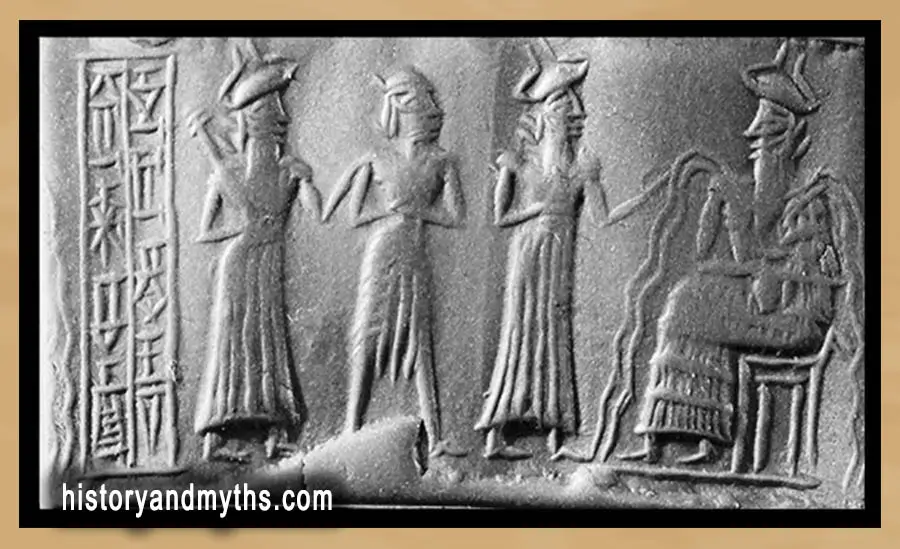
Ancient Mesopotamian texts frequently describe the gods meeting in council to make decisions that affected both the divine and human worlds. These decisions could determine the outcome of wars, the rise of kings, the prosperity of cities, or the future of entire peoples. Fate was therefore viewed as an expression of divine rule rather than a random or impersonal force.
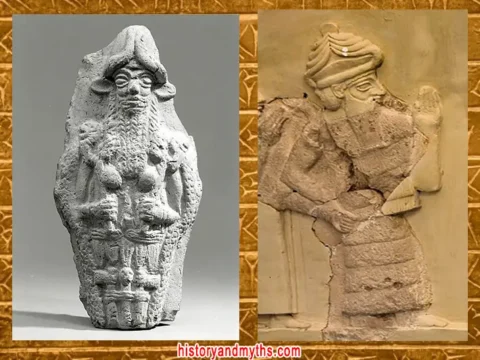
Over time, different gods became associated with the authority to decree destinies. In earlier traditions, figures such as Anu and Enlil occupied central roles, while later Babylonian theology increasingly emphasized Marduk’s authority after his rise to supremacy in the Enuma Elish. The right to establish fate became one of the clearest symbols of divine kingship and ultimate power.
For this reason, controlling fate was not merely a religious privilege. It represented the highest form of authority in the universe, placing the gods who possessed it above all rivals.
Babylonian Fate Overview
| Aspect | Details |
|---|---|
| Core Concept | Fate as divine authority and cosmic order |
| Controlled By | The major gods and the divine assembly |
| Symbol of Fate | The Tablets of Destiny |
| Connection to Kingship | Legitimate rule depended on divine approval |
| Human Response | Prayer, rituals, omens, and divination |
| Main Purpose | Understanding and responding to divine decisions |
The Tablets of Destiny and the Right to Rule
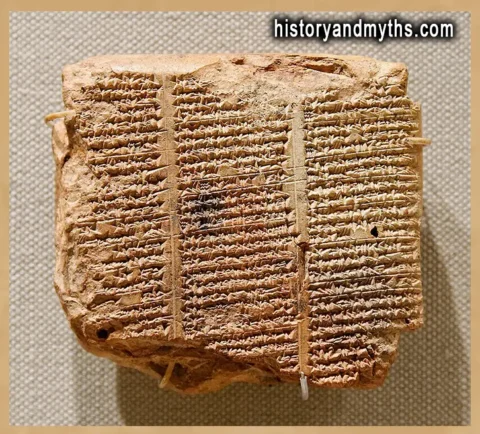
No object symbolized fate more clearly in Babylonian mythology than the Tablets of Destiny. These divine tablets were believed to grant their holder the authority to issue decrees that shaped the order of the universe. Possessing them was not simply a matter of prestige. It meant holding the power to determine who ruled, which gods held authority, and how the cosmic order would function.
This idea appears most clearly in myths where rival powers attempt to seize the tablets. The struggle is never about ownership alone. It is a struggle for legitimacy. A god who controlled the Tablets of Destiny could exercise authority over both divine and human affairs, while a god who lost them risked losing that authority.
For the Babylonians, fate and power were inseparable. The right to rule did not come from strength alone but from divine recognition. The Tablets of Destiny became the ultimate symbol of that recognition, explaining why they appear repeatedly in stories about kingship, divine conflict, and the maintenance of cosmic order.
How Fate Gave Kings the Right to Rule
In Babylonian thought, a king did not rule simply because he inherited a throne or commanded an army. His authority was believed to originate from the gods. Royal inscriptions frequently present kings as chosen, approved, or appointed by divine powers, reinforcing the idea that legitimate rule depended on a destiny established by the gods.
This belief helped connect political authority to the cosmic order. A successful king was seen as evidence that the gods supported his reign, while military defeat, famine, or instability could be interpreted as signs that divine favor had been withdrawn. As a result, maintaining the gods’ approval became an essential part of kingship.
The importance of fate in royal ideology explains why Babylonian rulers invested heavily in temples, rituals, and religious ceremonies. These actions were not merely expressions of personal devotion. They demonstrated that the king governed according to the divine order that the gods had established for the world.
How Ordinary People Tried to Discover Their Fate
While the gods were believed to determine fate, people did not think the future was completely hidden. One of the main purposes of Babylonian religion was to identify signs that revealed divine intentions before events unfolded. This belief encouraged the development of some of the ancient world’s most sophisticated systems of divination.
Babylonian priests carefully observed celestial events, unusual natural phenomena, dreams, and ritual omens. These signs were not viewed as random occurrences. They were interpreted as messages through which the gods disclosed information about future prosperity, danger, political change, or divine displeasure.
The goal was not to escape fate but to understand it. By recognizing a warning in advance, a king might perform additional rituals, a temple might offer sacrifices, or an individual might seek divine protection. In this way, divination became an important bridge between human uncertainty and the divine decisions believed to govern the future.
Why Fate Mattered in Babylonian Mythology
In Babylonian religion, fate was not an impersonal force but an expression of divine authority. The gods determined destinies, granted kings the right to rule, revealed signs of future events, and maintained the cosmic order through their decisions. Understanding fate was therefore essential to understanding Babylonian religion itself.
Could the Gods Change a Person’s Fate?
Babylonian religion did not present fate as a completely rigid force that could never be altered. While the gods were believed to establish destinies, people also believed that divine decisions could be influenced through proper rituals, prayers, and acts of devotion. This is one reason why religious practice occupied such an important place in Babylonian life.
When unusual omens suggested misfortune, priests often recommended rituals intended to avert danger or reduce its effects. These actions were not seen as attempts to overthrow fate itself. Instead, they reflected the belief that the gods could show mercy, reconsider a decision, or provide protection against a threatened outcome.
This balance between divine authority and human response shaped Babylonian attitudes toward the future. People accepted that the gods ultimately controlled destiny, yet they continued to pray, make offerings, and seek guidance because they believed their actions could still influence how divine intentions unfolded in their lives.
Why Fate Was Central to Babylonian Religion
The importance of fate extended far beyond mythology. It influenced how the Babylonians understood political authority, religious practice, and the relationship between humans and the gods. Kings derived legitimacy from divine approval, priests searched for signs of future events, and ordinary people sought protection through prayer and ritual because all believed that the course of life was ultimately connected to decisions made in the divine realm.
For this reason, fate was not viewed as a separate religious concept. It was woven into nearly every aspect of Babylonian thought. The belief that the gods established and governed destiny helped explain why the world functioned as it did and why maintaining a proper relationship with the divine remained one of the central concerns of Babylonian society.
Why Uncertainty Made Fate So Important
Life in ancient Babylonia was shaped by forces that people could not fully control. Floods could destroy crops, drought could threaten entire communities, diseases could spread without warning, and wars could alter the fate of kingdoms within a short time. In a world filled with uncertainty, understanding the future became a serious concern rather than a philosophical question.
The concept of fate offered a way to explain these unpredictable events. If the gods governed destiny, then signs, omens, and religious rituals could help people understand what lay ahead or prepare for what was coming. This belief encouraged the development of divination, astrology, and other practices designed to interpret divine intentions.
For many Babylonians, fate was not simply about knowing the future. It was about finding order in an uncertain world and understanding how human life fit within a larger divine plan.
Why Fate Was Central to Babylonian Religion
The importance of fate extended far beyond mythology. It influenced how the Babylonians understood political authority, religious practice, and the relationship between humans and the gods. Kings derived legitimacy from divine approval, priests searched for signs of future events, and ordinary people sought protection through prayer and ritual because all believed that the course of life was ultimately connected to decisions made in the divine realm.
For this reason, fate was not viewed as a separate religious concept. It was woven into nearly every aspect of Babylonian thought. The belief that the gods established and governed destiny helped explain why the world functioned as it did and why maintaining a proper relationship with the divine remained one of the central concerns of Babylonian society.
Key Takeaways
- Babylonians viewed fate as a divine decision rather than an independent force.
- The highest gods possessed the authority to establish destinies.
- The Tablets of Destiny symbolized supreme cosmic authority.
- Royal legitimacy depended on divine approval and fate.
- Omens and divination were used to understand future events.
- People believed prayer and ritual could influence divine decisions.
- Fate helped explain uncertainty in both personal and political life.
- The concept of fate was deeply connected to religion, kingship, and cosmic order.
Frequently Asked Questions About Fate in Babylonian Mythology
What did fate mean in Babylonian mythology?
Fate was understood as a divine decision established by the gods and enforced as part of the cosmic order.
Who controlled fate in Babylonian religion?
The authority to determine fate belonged to the highest gods, especially those who ruled within the divine assembly.
What were the Tablets of Destiny?
The Tablets of Destiny were sacred objects that symbolized the authority to establish destinies and govern the universe.
Why were Babylonian kings connected to fate?
Kings were believed to rule through divine approval, making fate an important source of political legitimacy.
How did Babylonians try to discover their fate?
They relied on omens, dreams, divination, and astronomical observations to interpret divine intentions.
Could fate be changed in Babylonian belief?
While the gods controlled destiny, people believed prayers and rituals could sometimes influence divine decisions.
Why was fate so important in Babylonian religion?
It helped explain authority, success, disaster, and the relationship between humans and the gods.
Sources
- Black, Jeremy, and Anthony Green. Gods, Demons and Symbols of Ancient Mesopotamia. London: British Museum Press, 1992.
- Bottéro, Jean. Religion in Ancient Mesopotamia. Chicago: University of Chicago Press, 2001.
- Dalley, Stephanie. Myths from Mesopotamia: Creation, the Flood, Gilgamesh, and Others. Oxford: Oxford University Press, 2000.
- Foster, Benjamin R. Before the Muses: An Anthology of Akkadian Literature. 3rd ed. Bethesda, MD: CDL Press, 2005.
- George, Andrew R. The Babylonian Gilgamesh Epic. Oxford: Oxford University Press, 2003.
- Jacobsen, Thorkild. The Treasures of Darkness: A History of Mesopotamian Religion. New Haven: Yale University Press, 1976.
- Kramer, Samuel Noah. History Begins at Sumer. Philadelphia: University of Pennsylvania Press, 1981.
- Kriwaczek, Paul. Babylon: Mesopotamia and the Birth of Civilization. New York: Thomas Dunne Books, 2010.
- Lambert, W. G. Babylonian Creation Myths. Winona Lake: Eisenbrauns, 2013.
- Leick, Gwendolyn. Mesopotamia: The Invention of the City. London: Penguin Books, 2002.
- Leick, Gwendolyn. A Dictionary of Ancient Near Eastern Mythology. London: Routledge, 1991.
- Livingstone, Alasdair. Mystical and Mythological Explanatory Works of Assyrian and Babylonian Scholars. Oxford: Clarendon Press, 1986.
- Oppenheim, A. Leo. Ancient Mesopotamia: Portrait of a Dead Civilization. Chicago: University of Chicago Press, 1977.
- Pongratz-Leisten, Beate. Religion and Ideology in Assyria. Berlin: De Gruyter, 2015.
- Roux, Georges. Ancient Iraq. London: Penguin Books, 1992.
- Snell, Daniel C. Religion in the Ancient Near East. Cambridge: Cambridge University Press, 2011.
- Van De Mieroop, Marc. A History of the Ancient Near East. Oxford: Wiley-Blackwell, 2015.
- Wiggermann, F. A. M. Mesopotamian Protective Spirits. Groningen: Styx Publications, 1992.
- Wiseman, Donald J. The Vassal-Treaties of Esarhaddon. London: British School of Archaeology in Iraq, 1958.
- Zgoll, Annette. The Ancient Mesopotamian Gods and Their World. Münster: Ugarit-Verlag, 2018.
Written by H. Moses — All rights reserved © Mythology and History