Aos Sí: The Supernatural People of Irish Folklore and Mythology
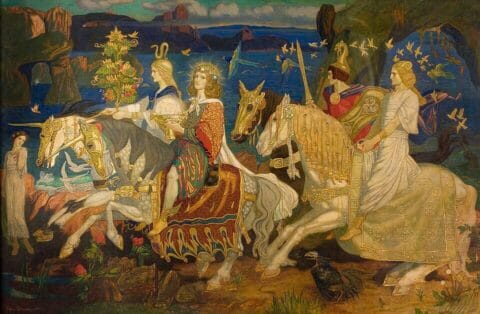
The Aos Sí are the supernatural people of Irish tradition, closely associated with ancient mounds, hidden places and the Otherworld. In English they are often called “fairies,” but that word can be misleading if it brings to mind the small, winged creatures of later popular culture.
Their name is connected with the síd, the supernatural mounds or dwellings linked with the otherworldly realm. Medieval Irish texts already speak of the áes síde, the “people of the síd,” showing that the idea is far older than modern fairy folklore.
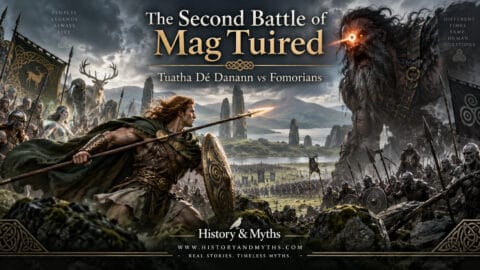
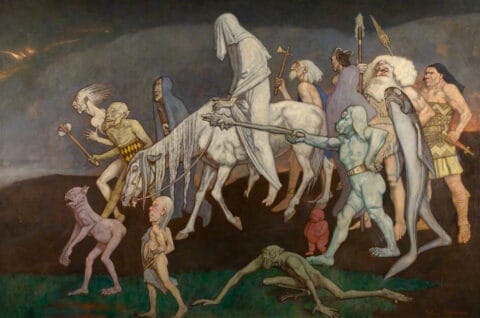
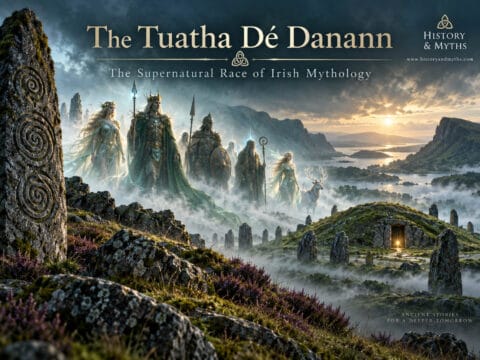
The Aos Sí are also frequently identified with the Tuatha Dé Danann, the supernatural race of Irish mythology. The connection is important, but the two terms are not simply interchangeable. The Tuatha Dé belong to a specific mythological tradition, while the Aos Sí became a broader category in later Irish folklore for the hidden supernatural beings believed to inhabit mounds, forts and other liminal places.
So who were the Aos Sí, how did they become associated with the Tuatha Dé Danann, and why did generations of Irish people treat the “Good People” with such caution and respect?
Who Were the Aos Sí?
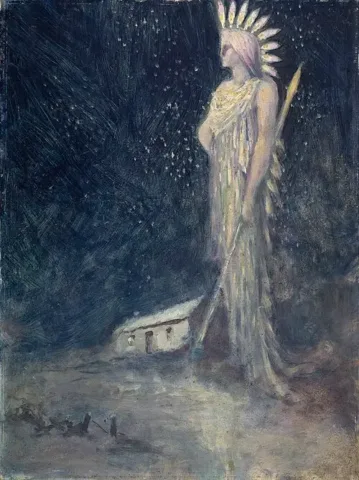
The Aos Sí are the supernatural inhabitants of the hidden world in Irish tradition, associated with ancient mounds, hills, forts and other places linked with the Otherworld.
They are not a single type of creature with one fixed appearance or role. Irish stories present them as a supernatural society with its own dwellings, rulers, families and customs. They feast, travel, make agreements, interfere in human affairs and sometimes draw people into their own realm.
References to the people of the síd appear in medieval Irish literature, while belief in supernatural inhabitants of mounds and forts continued much later in Irish folklore. The details changed over time, but the idea of a hidden community connected with particular places remained remarkably persistent.
What Does Aos Sí Mean?
Aos Sí is an Irish term usually translated as “people of the mounds” or “people of the síd.” The word aos means a people, group or community, while sí comes from the older Irish síd, used for supernatural mounds and dwellings associated with the Otherworld.
The connection appears directly in medieval Irish literature. In Echtra Chonnlai (The Adventure of Connla), a mysterious woman says that her people live in a great síd and are therefore called the áes síde, an earlier form of Aos Sí.
The name therefore identifies them through their association with the síd, rather than defining them as one particular kind of creature.
Aos Sí is the modern Irish form. Older texts contain spellings such as áes síde, reflecting the same underlying tradition.
How Do You Pronounce Aos Sí?
Aos Sí is pronounced roughly “ays shee” or “ees shee,” depending on the Irish dialect.
The first word, aos, varies regionally, while sí is pronounced close to “shee.” For English readers, either approximation is more useful than trying to pronounce the term as it is spelled.
Are the Aos Sí Fairies?
In English, the Aos Sí are usually called fairies, but the translation can be misleading.
The problem is not the word itself, but the modern image attached to it. The Aos Sí were not simply imagined as tiny, winged creatures. In Irish tradition, they could appear in human form, live in communities, enter relationships with humans and move between the human world and the Otherworld.
“Fairy” is therefore useful as a broad English label, especially for later folklore, as long as it is understood in its older sense. The Aos Sí were supernatural beings who could be helpful, dangerous or unpredictable, and were often treated with caution rather than as harmless creatures of fantasy.
The Síd: Why They Were Called the People of the Mounds
In medieval Irish tradition, a síd was more than an ordinary hill or mound. It could be understood as a supernatural dwelling or as a point of access to the Otherworld.
Stories place halls, rulers, feasts and entire communities within these locations. The visible mound was therefore only one layer of the place; behind it lay a realm that followed different rules from the human world.
This helps explain why particular hills and ancient sites carried such weight in Irish tradition. A familiar feature in the landscape could also be imagined as the residence of supernatural beings.
The síd made the Otherworld feel geographically close. It was not always somewhere distant or unreachable; it could begin at a mound, hill or ancient place already known to the people living nearby.
Are the Aos Sí the Same as the Tuatha Dé Danann?
Not exactly. The Tuatha Dé Danann and the Aos Sí are closely connected in Irish tradition, but the terms are not interchangeable.
The Tuatha Dé Danann are a specific supernatural people of medieval Irish mythology, with named figures such as the Dagda, Lugh, Brigid, Midir and Aengus. The Aos Sí are defined more broadly as the supernatural inhabitants of the síd and, in later folklore, the hidden people associated with mounds, forts and the Otherworld.
The overlap is genuine. Medieval tales place major figures of the Tuatha Dé Danann inside particular síd dwellings. Midir, for example, is associated with Brí Léith, while Aengus is linked with Brú na Bóinne.
So while the Tuatha Dé Danann helped shape the later tradition of the Aos Sí, the two names should not be treated as exact synonyms.
How the Tuatha Dé Became Associated with the Síd
Medieval Irish tradition does not preserve one single account of how the Tuatha Dé Danann came to inhabit the síd, but several texts place major members of the group inside specific supernatural mounds.
In De Gabáil in t-Sída, “The Taking of the Síd,” preserved in the Book of Leinster, the Dagda distributes different síd dwellings among the Tuatha Dé. Lugh receives one mound, Ogma another, while the Dagda keeps several for himself. Aengus later gains the Síd in Broga, associated with Brú na Bóinne, through the famous promise that he may have it for “a day and a night.”
The story presents the síd as territories belonging to members of the Tuatha Dé, complete with their own rulers and supernatural abundance. Other tales, including Tochmarc Étaíne, likewise connect figures such as Midir with particular mounds.
This close association gradually linked the Tuatha Dé with the wider supernatural population of the síd. Later folklore preserved the idea of powerful hidden beings living in mounds and ancient places, even when the named figures of the earlier mythology had faded from the story.
The Aos Sí and the Irish Otherworld
The Aos Sí belong to the Irish Otherworld, a supernatural realm that exists alongside the human world rather than simply beneath it.
Medieval Irish tales describe this realm under several names, including Tír na mBeo, the Land of the Living, and Mag Mell, the Pleasant Plain. In Echtra Chonnlai, the mysterious woman who approaches Connla says she comes from a land without death, want or conflict, where feasting continues without end.
The Otherworld is not one fixed geographical place. It may be reached through a síd, across the sea or by entering a supernatural landscape normally inaccessible to humans.
Life there can follow different rules. Stories describe endless feasts, extraordinary beauty and inhabitants who do not age in the ordinary way.
For the Aos Sí, this means their world can be both close and inaccessible: tied to familiar places in Ireland, yet governed by conditions unlike those of ordinary human life.
What Did the Aos Sí Look Like?
The Aos Sí do not have one fixed appearance in Irish tradition.
In medieval literature, supernatural figures connected with the síd often appear in recognizably human form and may be described as strikingly beautiful, richly dressed or unusually impressive. They can speak, travel, marry and interact with humans without looking like a completely different species.
Later folklore is less consistent. Some accounts describe the fairy people as human-sized and beautiful, while others portray them as smaller, older, stranger or visibly supernatural. Their appearance could vary with the story, region and type of encounter.
What is notably absent from the older Irish tradition is the modern stereotype of tiny winged fairies. That image became dominant much later in popular culture and should not be projected back onto the Aos Sí.
Their appearance therefore ranges from almost human to unmistakably otherworldly, depending on the tradition being told.
The Good People: Why Their Names Were Avoided
In Irish folklore, the Aos Sí were often referred to by respectful names rather than spoken about directly as fairies.
Common expressions included na daoine maithe, “the Good People,” and na daoine uaisle, “the Gentry.” Such names were not simply compliments. They reflected the belief that the fairy people could be easily offended and that careless speech might attract unwanted attention.
Calling them the “Good People” therefore did not mean they were always considered harmless or benevolent. The phrase could work as a form of caution or flattery toward beings whose power was taken seriously.
These indirect names reveal an important feature of Irish fairy belief: language itself could be treated as part of the etiquette surrounding the Aos Sí.
Fairy Forts, Mounds and Lone Hawthorn Trees
In later Irish folklore, certain places in the landscape became strongly associated with the Aos Sí, especially fairy forts, ancient mounds and hawthorn trees.
Fairy forts were usually old circular earthworks or ringforts. Archaeologically, many had once been farmsteads or defended settlements, but folklore gave them a second identity as places inhabited or visited by the fairy people. Stories collected in the twentieth century describe lights, music and movement around these sites.
Hawthorn trees could carry similar associations, especially when they stood on or near a fort. Folklore records include accounts of people refusing to cut particular trees because misfortune was believed to follow interference.
Not every hawthorn tree or ancient fort was automatically considered supernatural. Reputation depended on local tradition and the stories attached to a specific place.
Through these beliefs, the Aos Sí became tied to recognizable features of the Irish landscape rather than existing only in an abstract supernatural realm.
How the Aos Sí Interacted with Humans
Irish tradition does not present the Aos Sí as uniformly hostile or friendly. Their behavior varies from one story to another and often depends on the circumstances of the encounter.
Some tales describe them giving gifts, sharing food, inviting humans to music or dancing, or passing on unusual knowledge. Others associate them with illness, accidents, spoiled milk, sudden misfortune or unexplained disappearances.
Later folklore also preserves stories of people entering fairy gatherings, encountering supernatural processions or spending time in the Otherworld before returning home.
What remains consistent is their unpredictability. The Aos Sí are not simply monsters or helpful spirits; they are a separate supernatural community whose contact with humans can end well, badly or somewhere in between.
Changelings and Human Abductions
One of the darker beliefs associated with the Aos Sí was the idea that they could take a human and leave a changeling in that person’s place.
In Irish folklore, changeling stories most often involve infants or young children. A child who became weak, sickly or behaved differently might be believed to have been taken by the fairy people and replaced with a supernatural substitute. Folklore records from Ireland preserve versions of this belief well into the twentieth century.
Adults could also be said to have been “taken by the fairies.” Stories describe people disappearing into fairy gatherings, spending time in the Otherworld or returning changed. In one recorded Leitrim tradition, a man was said to have been carried away by fairies and later returned with the ability to see them.
Such beliefs could be used to explain sudden illness, disability, unusual behavior or unexplained disappearance. They were not always harmless: folklore also preserves disturbing practices intended to force the fairies to return the missing person.
Changelings belonged to folk belief rather than to one fixed myth about the Aos Sí. Their stories show how seriously some communities once treated the possibility that humans could be taken across the boundary between the ordinary world and the hidden one.
Offerings, Courtesy and the Danger of Offending Them
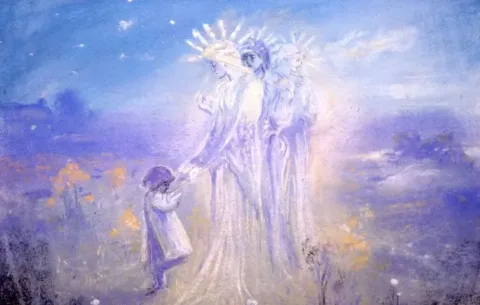
Irish folklore preserves a range of customs intended to avoid offending the Aos Sí or attracting unwanted attention.
Milk and butter appear frequently in these traditions. In some areas, a small amount of milk might be left or poured out for the fairy people, while giving away milk or butter at certain times, especially around May Day, could be considered unlucky.
These customs were closely tied to household and agricultural prosperity. If milk spoiled, butter failed or livestock suffered, supernatural interference could sometimes be suspected.
There was no single rulebook for dealing with the Aos Sí. Practices varied by region and local tradition, but the underlying idea was consistent: small acts of caution were thought to reduce the risk of provoking powerful unseen neighbors.
Samhain, Bealtaine and Times of Encounter
Irish folklore often places encounters with the Aos Sí around Samhain and Bealtaine, two major seasonal turning points in the traditional calendar.
At Bealtaine, fairies were often believed to be especially active. Folklore records include precautions involving children, cattle, milk and butter, along with customs such as decorating the home with flowers and avoiding the gift of milk, butter or fire on May Day.
Samhain carried a similar association with supernatural movement and contact. Later tradition preserves stories of strange processions, encounters with otherworldly beings and unusual activity around places linked with the fairy people.
Neither festival was simply a “fairy holiday.” Their importance was much broader, but both became periods when contact with the hidden world was thought to be more likely than usual.
Were the Aos Sí Fallen Angels, Gods or Spirits of the Dead?
Irish tradition never settled on one explanation for the origin of the Aos Sí.
In medieval mythology, many beings associated with the síd are closely connected with the Tuatha Dé Danann, which helps explain why later writers sometimes linked the Aos Sí with an older supernatural or divine population.
Christian folklore offered a different explanation. Some traditions described the fairy people as fallen angels who had been cast out of heaven without being condemned to hell. Versions of this belief were still being recorded in Ireland in the twentieth century.
Other traditions blurred the line between the fairy world and the dead. Deceased humans could sometimes be imagined as entering the fairy realm, and the two categories were not always kept completely separate.
The result is not one fixed origin story, but several layers of belief. Depending on the period and tradition, the Aos Sí could be connected with older mythological beings, Christian ideas about fallen angels, or the world of the dead.
What the Aos Sí Represent in Irish Tradition
The Aos Sí sit at the meeting point between mythology, landscape and folk belief.
In medieval literature, they are tied to the síd, the Otherworld and figures connected with the Tuatha Dé Danann. In later folklore, those associations become part of local stories about particular places, encounters and unseen dangers.
What endured was the idea that the Irish landscape had more than one layer: the visible world of everyday life and another, supernatural world linked to familiar hills, mounds, forts and other marked places.
The Aos Sí therefore represent more than “fairies” in the modern sense. They reflect a tradition in which landscape, memory and supernatural belief remained closely connected.
Academic Sources
This article draws on medieval Irish texts, modern Celtic scholarship and archival folklore collections to distinguish the Aos Sí of early literature from later Irish fairy belief.
-
Echtra Chondla (The Adventure of Connla).
Irish Sagas Online, University College Cork.
Primary medieval source for the term áes síde, the people of the síd, and descriptions of the Irish Otherworld.
-
De Gabáil in t-Sída (The Taking of the Síd).
Book of Leinster, Corpus of Electronic Texts (CELT), University College Cork.
Primary source for the distribution of síd dwellings among figures of the Tuatha Dé Danann, including Lugh, Ogma, the Dagda and Aengus.
-
Tochmarc Étaíne (The Wooing of Étaín).
Corpus of Electronic Texts (CELT), University College Cork.
Important medieval source for Midir, Brí Léith and the association between major Tuatha Dé figures and supernatural mounds.
-
Mark Williams.
Ireland’s Immortals: A History of the Gods of Irish Myth.
Princeton University Press, 2016.
Major modern study of the Tuatha Dé Danann and the transformation of Irish supernatural figures from medieval mythology into later literary and folkloric traditions.
-
Marion Dowd.
“Bewitched by an Elf Dart: Fairy Archaeology, Folk Magic and Traditional Medicine in Ireland.”
Cambridge Archaeological Journal, 28(3), 2018, pp. 451–473.
Peer-reviewed study of the Irish sí, fairy forts, archaeological sites, supernatural belief and the relationship between folklore and the physical landscape.
-
John Carey.
“The Location of the Otherworld in Irish Tradition.”
Éigse, Vol. 19, 1982–83, pp. 36–43.
Important scholarly discussion of how early Irish texts imagined the location and accessibility of the Otherworld.
-
Tomás Ó Cathasaigh.
“The Semantics of Síd.”
Éigse, Vol. 17, 1977–78, pp. 137–155.
Specialist study of the meaning and development of the term síd, central to understanding the name and identity of the Aos Sí.
-
National Folklore Collection, University College Dublin.
Dúchas.ie.
Primary folklore archive preserving Irish oral traditions about fairy forts, changelings, offerings, seasonal customs, supernatural encounters and local beliefs surrounding the fairy people.