Táin Bó Cúailnge: Ireland’s Great Cattle Raid Epic Explained
The Táin Bó Cúailnge, usually translated as The Cattle Raid of Cooley, is the central epic of the Ulster Cycle and one of the most important surviving stories from medieval Irish literature.
At its heart is a war over Donn Cúailnge, the great Brown Bull of Cooley. Queen Medb of Connacht wants the bull after a dispute over wealth with her husband, Ailill, and leads an army into Ulster to seize it. But the men of Ulster are struck by a supernatural weakness, leaving the young Cú Chulainn to delay the invasion almost alone.
The story grows far beyond a raid for cattle. It becomes a conflict about wealth, honor, loyalty, kingship, and vengeance, ending not with a simple victory but with the violent fate of the two bulls that caused the war in the first place.
What Is the Táin Bó Cúailnge?
The title Táin Bó Cúailnge means The Cattle Raid of Cooley, referring to the expedition into Cooley to seize Donn Cúailnge.
The epic survives in several medieval recensions rather than as one fixed text. Some scenes differ between manuscripts, while others appear only in particular versions.
That textual history is important because the Táin we read today is not a single unchanged narrative, but a story preserved and reshaped across different medieval Irish manuscripts.
Why Did Queen Medb Start the Cattle Raid?
The best-known version begins with Medb and her husband Ailill comparing their wealth. Their possessions are almost equal until one difference appears: Ailill owns Finnbhennach, an exceptional white-horned bull, while Medb has no animal of equal value.
Medb learns that Donn Cúailnge, the great bull of Cooley, belongs to Dáire mac Fiachna in Ulster. She first offers generous payment to borrow him, but the agreement collapses after her messengers boast that the bull would have been taken by force if necessary.
Medb then gathers an army and marches into Ulster to seize Donn Cúailnge.
This famous opening belongs to the Book of Leinster recension. An earlier surviving version begins with the forces already assembling for the raid, so the medieval texts do not present the beginning in exactly the same way.
Why Was Donn Cúailnge So Important?
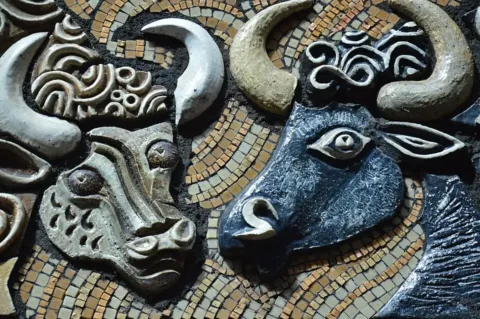
In the social world reflected by early Irish literature, cattle represented wealth, status, and political power. An exceptional bull could therefore be far more than a valuable animal.
Donn Cúailnge becomes important because possessing him would give Medb an animal equal to Ailill’s Finnbhennach and restore the balance she believes has been lost.
He also gives the epic its structure. The raid begins over Donn Cúailnge, and the story ultimately ends with the confrontation between Donn Cúailnge and Finnbhennach.
The two bulls are therefore not just prizes in the background. They frame the entire conflict from beginning to end.
Why Couldn’t Ulster Defend Itself?
When Medb’s army enters Ulster, most of its fighting men are struck by a supernatural weakness known as the debility of the Ulstermen.
A related tale explains this as the result of Macha’s curse. After being forced to race the king’s horses while heavily pregnant, she curses the men of Ulster to suffer a period of helplessness when they most need their strength.
During the Táin, that weakness prevents Ulster from meeting Medb’s army in open battle.
Cú Chulainn is not affected, leaving him as the only major defender able to resist the invasion while the other warriors recover.
The story of Macha’s curse belongs to the group of prefatory tales associated with the Táin, rather than appearing as one continuous episode in every surviving version of the epic.
How Did Cú Chulainn Hold Back Medb’s Army?
Cú Chulainn cannot defeat Medb’s army outright, so he focuses on delaying it.
He uses ambushes, sudden attacks, and a series of single combats at river fords to slow the advance and force Medb to commit one warrior after another against him.
These duels prevent the invading force from moving freely and gradually cost Medb both time and fighters.
Cú Chulainn’s success lies in buying Ulster enough time for its warriors to recover and return to the war.
Why Was Fergus Fighting for Medb?
One of the more unusual features of the Táin is that Fergus mac Róich, a former king and warrior of Ulster, appears in Medb’s army.
Fergus had gone into exile after a political break with Conchobar mac Nessa, king of Ulster, and eventually found refuge in Connacht. That placed him among the forces marching against his own province.
Yet Fergus still knows Ulster intimately and retains strong personal ties there, especially with Cú Chulainn.
His divided loyalty becomes important later in the campaign, because he fights for Medb without ever becoming fully detached from Ulster.
The Duel Between Cú Chulainn and Fer Diad
One of the most painful episodes in the Táin is Cú Chulainn’s fight with Fer Diad, a warrior who had trained alongside him.
Medb eventually persuades Fer Diad to face him after other champions fail. Their battle lasts for several days, with neither gaining an easy advantage.
Cú Chulainn finally kills Fer Diad with the Gáe Bolga, but the victory is treated as a personal loss rather than a triumph. He mourns the man he has just defeated.
The duel gives the raid a more personal cost: the war has reached the point where former companions are being forced to kill one another.
Read More
Cú Chulainn in Irish Mythology: Hero of the Ulster Cycle
What Happened When Ulster Recovered?
Eventually the weakness affecting the Ulstermen passes, and Conchobar mac Nessa gathers the warriors of the province for open battle.
The final clash takes place at Gáirech and Ilgáirech. Cú Chulainn, still badly wounded after his duel with Fer Diad, initially stays out of the fighting but later returns to the battlefield.
There he confronts Fergus, who keeps an earlier promise to withdraw if the two meet again. When Fergus retreats, much of Medb’s army follows.
The Connacht-led forces are driven back, but Donn Cúailnge has already been taken toward Connacht.
How Did the Táin Bó Cúailnge End?
In Connacht, Donn Cúailnge finally encounters Finnbhennach, Ailill’s great white-horned bull.
The two animals fight, and Donn Cúailnge kills his rival. He then travels back toward Ulster carrying parts of Finnbhennach’s body on his horns.
Badly wounded and exhausted, Donn Cúailnge eventually collapses and dies.
The epic therefore ends where its central dispute began: with the two bulls whose rivalry helped set the entire conflict in motion, and with neither animal surviving it.
Who Won the Táin Bó Cúailnge?
Ulster wins the military conflict. Once its warriors recover, Medb’s forces are driven back and the invasion collapses.
Medb nevertheless achieves part of her original aim because Donn Cúailnge is taken to Connacht.
That success does not last. Donn Cúailnge kills Finnbhennach and then dies himself, leaving Medb without the prize that started the war.
The Táin therefore ends without a lasting triumph for either side.
How Old Is the Táin Bó Cúailnge?
The surviving Táin comes from medieval manuscripts, but the tradition behind it is older than any single copy that remains today.
An early recension is preserved mainly through Lebor na hUidre and the Yellow Book of Lecan, while a later and fuller version appears in the Book of Leinster.
The surviving texts do not always tell the story in exactly the same way. Episodes can be expanded, shortened, rearranged, or absent depending on the recension.
What we call the Táin Bó Cúailnge is therefore the product of a long Irish storytelling and manuscript tradition, rather than one fixed text preserved unchanged from the beginning.
Did the Cattle Raid of Cooley Really Happen?
The Táin Bó Cúailnge is set in a recognizably Irish landscape, and many of the places named in the story are real. That does not make it a reliable record of a single historical war.
Its world combines kings, cattle raids, political rivalries, supernatural curses, and heroic combat. Some of those elements may reflect features of early Irish society, especially the importance of cattle, status, and raiding, but the story was shaped by a long oral and written tradition.
Scholars therefore treat the Táin primarily as heroic literature and mythology, not as a documented account of an actual campaign.
Its historical value lies in what it can reveal about the society and traditions behind the text, rather than in proving that the raid happened exactly as described.
Why Is the Táin Bó Cúailnge Important?
The Táin Bó Cúailnge stands at the center of the Ulster Cycle and is one of the most important surviving works of medieval Irish heroic literature.
Its story brings together kingship, wealth, loyalty, honor, warfare, and divided allegiance in a conflict where personal obligations often matter as much as political ones.
The epic is also important because it preserves a distinctly Irish heroic world rather than a simple story of one champion defeating his enemies. Medb, Fergus, Cú Chulainn, Conchobar, and the two bulls all shape the outcome.
That complexity has helped the Táin remain central to the study of Irish mythology and early Irish literature.
Academic Sources
This article draws on scholarly editions of the Táin Bó Cúailnge and modern academic research on its manuscripts, recensions, literary development, historical setting, and the role of cattle in early Irish society.
Primary Texts and Scholarly Editions
- O’Rahilly, Cecile, ed. and trans.
Táin Bó Cúailnge: Recension I.
Dublin: Dublin Institute for Advanced Studies, 1976.
The standard scholarly edition and English translation of the earlier recension, based principally on Lebor na hUidre and the Yellow Book of Lecan.
- O’Rahilly, Cecile, ed. and trans.
Táin Bó Cúalnge from the Book of Leinster.
Dublin: Dublin Institute for Advanced Studies, 1967.
Essential for the later Book of Leinster recension, including the famous opening in which Medb and Ailill compare their wealth.
Modern Scholarship
- Mallory, J. P., ed.
Aspects of the Táin.
Belfast: December Publications, 1992.
A major collection of studies on the development of the Táin, its literary structure, archaeological context, and the limits of using the epic as evidence for Ireland’s Iron Age.
- Carey, John, ed.
Táin Bó Cúalnge from the Book of Leinster: Reassessments.
Irish Texts Society, 2020.
Recent scholarship reconsidering the Book of Leinster text, the relationship between the major recensions, and how the medieval Táin was edited, transmitted, and read.
- Kelly, Fergus.
Early Irish Farming: A Study Based Mainly on the Law-texts of the 7th and 8th Centuries AD.
Dublin: School of Celtic Studies, Dublin Institute for Advanced Studies, 1997.
Useful for understanding the economic and social importance of cattle in early Ireland, providing historical context for the wealth and status attached to Donn Cúailnge and Finnbhennach.
The surviving versions of the Táin Bó Cúailnge do not always preserve the same scenes or details. Where the recensions differ, this article distinguishes between them rather than treating the epic as one unchanged medieval text.
Copyright Notice
© 2026 History & Myths. All rights reserved.
This article is original editorial content created for HistoryAndMyths.com.
Unauthorized reproduction, republication, or substantial copying of the text,
structure, or original analysis is prohibited without prior written permission.
Brief quotations are permitted for commentary, research, or educational use
when accompanied by clear attribution and a link to the original article.