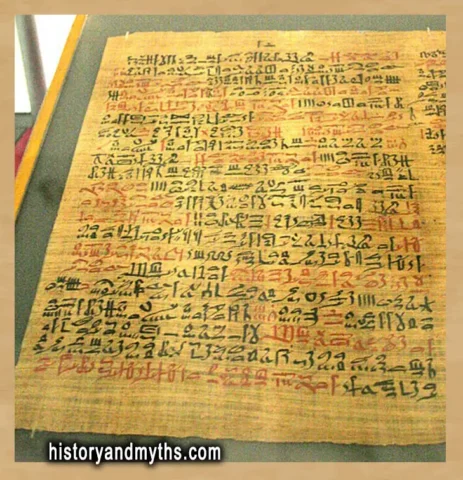
Social Classes in Ancient Egypt: Life, Power, and Inequality
Ancient Egypt is often imagined as a world of pharaohs, priests, and monumental temples. Yet behind this image stood a complex society built on clearly defined social roles, where every individual from farmer to noble had a place, a duty, and a purpose. Understanding these social classes is essential to understanding how Egypt functioned as a civilization for thousands of years.
Egyptian society was undeniably hierarchical, but it was not chaotic or arbitrary. Social classes were shaped by work, education, religious authority, and proximity to the state rather than by birth alone. Most people lived as farmers and laborers, supporting the economy through agriculture and state service, while a smaller educated class managed administration, religion, and law. Each level depended on the others to maintain order and stability.
This article explores how social classes actually worked in ancient Egypt not as a rigid pyramid on paper, but as a living system that governed daily life, opportunity, and power. By examining farmers, workers, soldiers, scribes, priests, and elites, we uncover whether Egyptian society was oppressive, flexible, or surprisingly practical and what it meant to live within it.
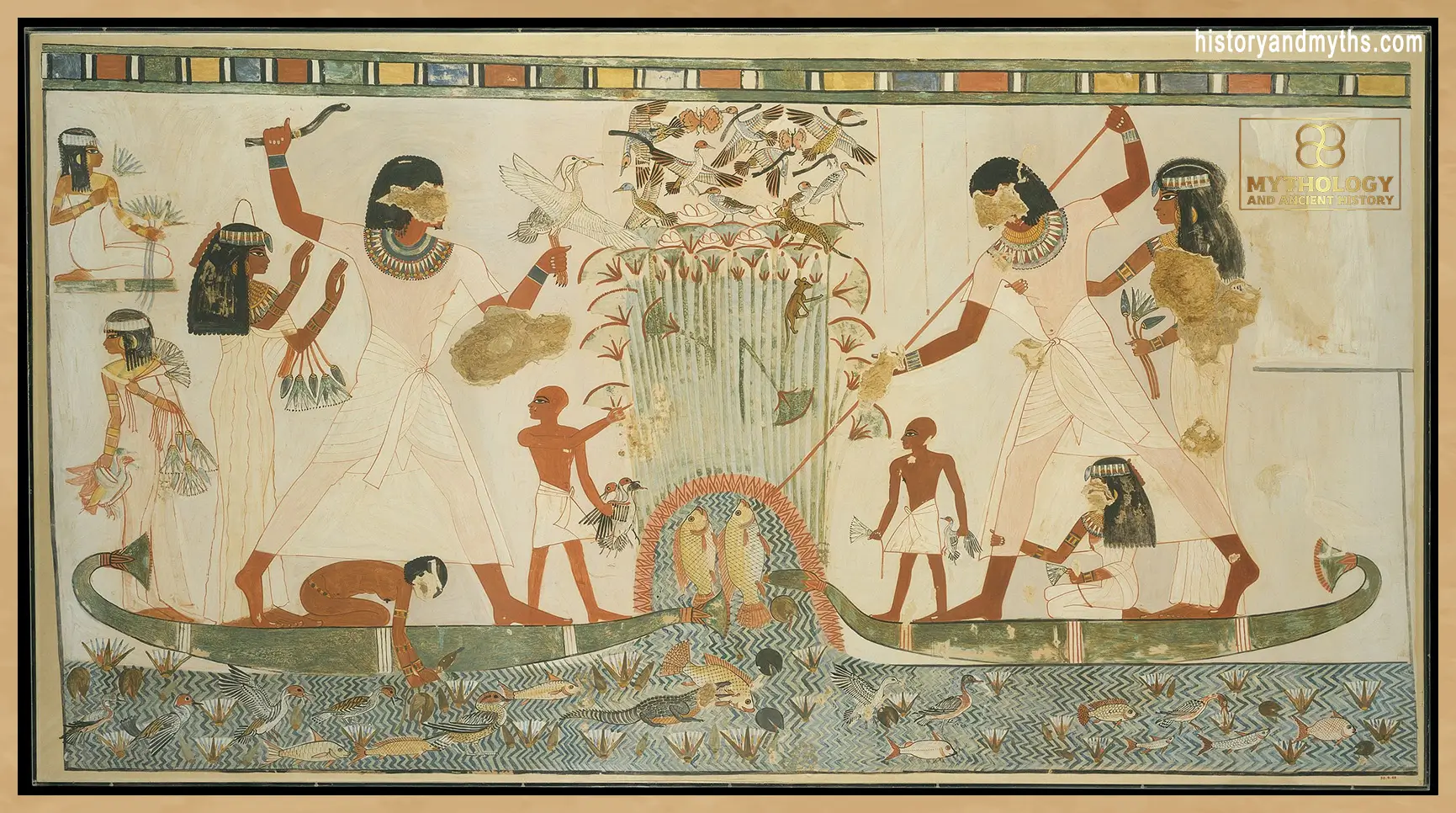
How the Egyptian Social System Actually Worked
The social structure of ancient Egypt did not exist to create privilege for a few, but to keep the state functioning. Society was organized around responsibility rather than abstract status. Every class had a defined role tied to survival, administration, or religious order, and neglecting that role threatened the balance of the entire system.
At the base of society were farmers and laborers, who produced food and carried out state labor. Above them stood skilled workers, soldiers, and local officials, followed by scribes, priests, and administrative elites. At the top stood the royal family and high nobility. This hierarchy reflected access to education, authority, and resources not personal worth or divine favoritism.
What made the Egyptian system distinctive was interdependence. Farmers depended on officials to manage irrigation and grain storage. Officials relied on scribes to record taxes and labor. Priests depended on agricultural surplus to sustain temples. Even the pharaoh’s power rested on the successful cooperation of every lower level. Social order was therefore practical, not symbolic.
Unlike later rigid caste systems, class boundaries were not sealed. Movement was limited, but not impossible. Literacy, military service, and state loyalty could elevate an individual’s position over time. A farmer’s son could become a scribe; a successful scribe could gain land and status. The system rewarded usefulness rather than ambition alone.
Law and justice also played a role in maintaining balance. Courts operated at local and regional levels, and written records show that ordinary people could bring complaints, testify, and seek rulings. While elites held influence, the law itself was not officially restricted to a single class.
In essence, Egypt’s social system was a controlled hierarchy designed to preserve stability. It limited chaos, distributed responsibility, and ensured continuity allowing one of history’s longest-lasting civilizations to endure.
| Social Group | Role and Daily Reality |
|---|---|
| Pharaoh & Royal Family | Symbol of divine authority; ultimate political and religious leadership |
| Nobles & High Officials | Administrators, governors, judges; controlled land and local power |
| Priests | Managed temples, rituals, and large economic estates |
| Scribes | Educated administrators; record-keepers, tax managers, legal clerks |
| Soldiers | Defended borders; gained status through military service |
| Craftsmen & Artisans | Produced tools, art, and goods; skilled but socially moderate status |
| Farmers & Laborers | Agricultural producers; backbone of economy and state labor |
| Slaves (Limited Group) | Prisoners of war or servants; not the main labor force |
Farmers and Laborers: The Backbone of Egyptian Society
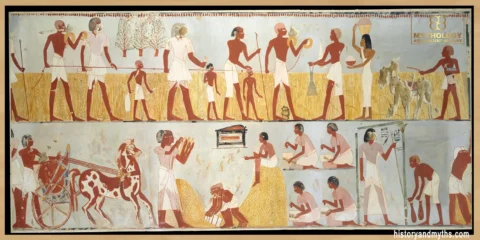
Farmers formed the largest social group in ancient Egypt and carried the true weight of civilization. Their labor fed the population, sustained temples, financed the state, and made monumental building projects possible. Without their work, neither kings nor priests could exist.
Most farmers lived in small villages along the Nile. Their lives were governed by the river’s cycle flooding, planting, harvesting, and storage. During the growing season, they worked their own plots or land assigned by the state or temples. In return, they paid taxes primarily in grain, not money. These taxes were essential for feeding officials, soldiers, and temple personnel.
Laborers were not slaves in the modern sense. Many were farmers temporarily reassigned during the flood season, when fields lay underwater. At this time, they worked on canals, temples, tombs, and royal projects as part of their civic obligation to the state. This system, known today as corvée labor, was demanding but finite and seasonal.
Life was physically exhausting. Skeletal evidence shows worn joints, back injuries, and signs of malnutrition during poor harvest years. Yet farmers were not powerless. They had families, property rights, and access to local courts. Records show peasants filing complaints against officials and even appealing unjust treatment something rare in many ancient societies.
Despite their low status, farmers were socially respected. Egyptian texts frequently describe them as the “providers of the Two Lands.” Their role was understood as essential, not shameful. Religious imagery often depicted agricultural labor as a sacred act aligned with cosmic order.
In short, farmers and laborers were not invisible masses. They were recognized contributors to Egypt’s survival, bound to the land, the state, and the gods through work that defined the civilization itself.
Scribes and Soldiers: Paths to Power and Mobility
Above farmers and laborers stood two groups that offered the clearest paths to advancement in ancient Egyptian society: scribes and soldiers. These roles did not depend on noble birth, but on skill, training, and service to the state.
Scribes formed the backbone of administration. Literacy was rare, and the ability to read and write granted immediate social distinction. Scribes recorded taxes, managed grain stores, drafted legal documents, and supervised labor projects. Because Egypt relied on written records to function, scribes held real power even when they came from modest backgrounds. Many tomb inscriptions proudly emphasize education rather than lineage, showing that learning was a recognized path upward.
Military service offered another route to status. Soldiers protected Egypt’s borders, escorted expeditions, and enforced state authority. Successful service could be rewarded with land, titles, and shares of war booty. During periods of expansion, especially in the New Kingdom, soldiers gained increasing prestige and social influence.
Neither role guaranteed elite status, but both allowed individuals to rise above agricultural labor. A scribe could become an administrator; a decorated soldier could join the lower nobility. These careers created limited but real social mobility within a structured hierarchy.
Together, scribes and soldiers formed the state’s operational core bridging the gap between the laboring population and the ruling elite, and proving that ancient Egyptian society, while hierarchical, was not entirely closed.
Priests, Nobles, and the Elite Class
At the upper levels of Egyptian society stood priests, nobles, and high officials the groups closest to power, land, and decision-making. Their authority did not come solely from wealth, but from their roles within the religious and administrative structure of the state.
Priests controlled temples, rituals, and large economic estates. Temples were not only religious centers but major institutions that owned land, livestock, and workshops. High-ranking priests managed these resources, supervised workers, and advised rulers. While priesthood was prestigious, it was also bureaucratic; many priests served in rotational shifts and were expected to follow strict regulations.
Nobles and senior officials governed provinces, collected taxes, oversaw justice, and represented royal authority at the local level. Their power was practical rather than ceremonial. They lived comfortably, owned land, and commissioned elaborate tombs, but their status depended on loyalty and service to the state. Failure could result in loss of office or favor.
Unlike later aristocracies, elite status in Egypt was not always hereditary. While noble families existed, advancement through royal appointment was common. A capable scribe or military officer could be elevated into elite ranks, reinforcing the idea that usefulness to the state outweighed ancestry.
The elite class therefore functioned as managers of order rather than detached rulers. Their authority rested on maintaining stability linking divine belief, economic control, and political power into a system that kept Egypt unified.
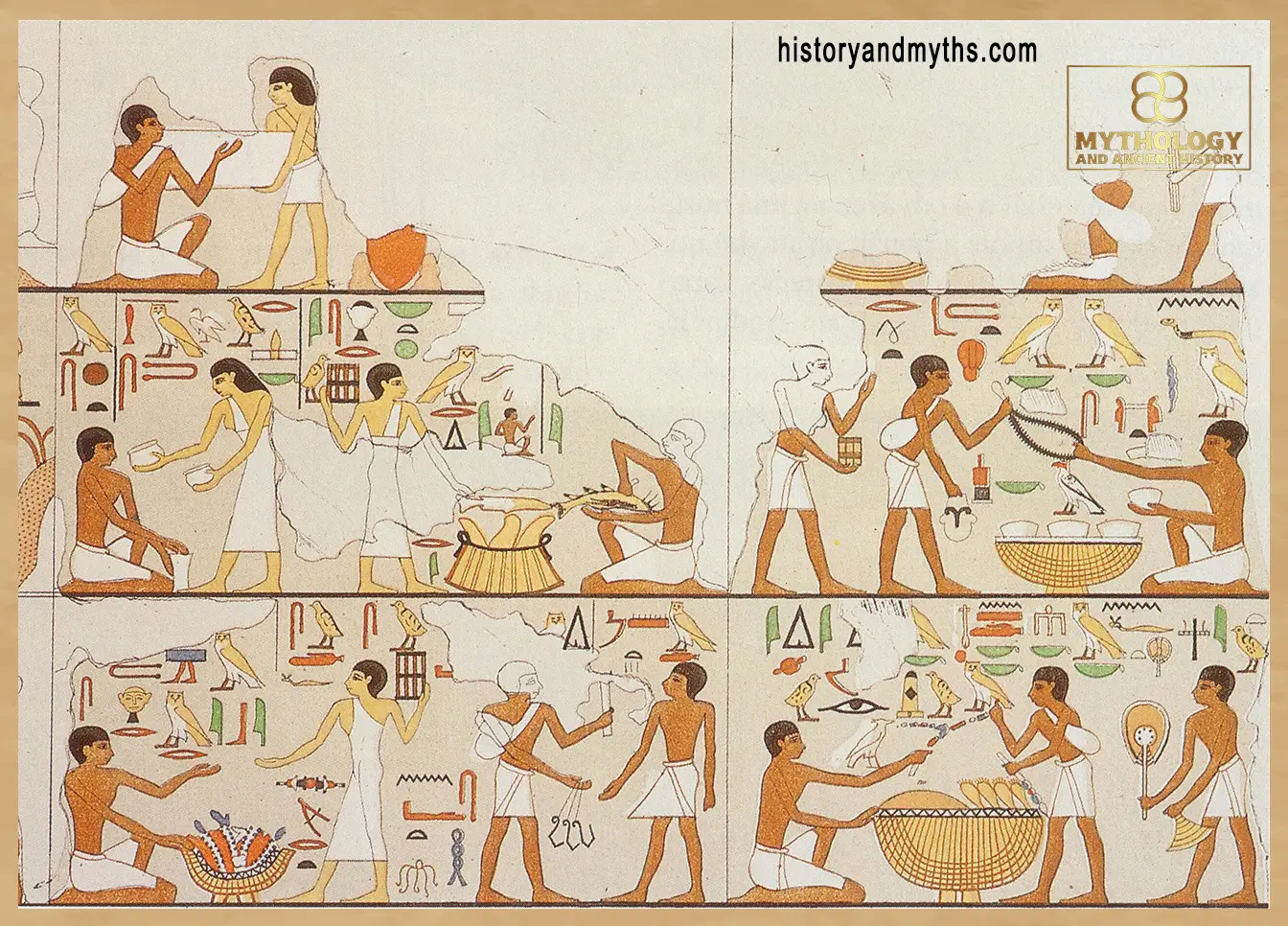
How Egyptian Society Actually Worked
- Society was hierarchical, but not entirely closed.
- Birth mattered, yet skill and service could change status.
- Education and literacy were the strongest tools for advancement.
- Most people were free citizens bound by duty, not slavery.
- The state rewarded usefulness more than ancestry.
Was There Slavery in Ancient Egypt?
The idea that ancient Egypt was built entirely on slave labor is one of the most persistent myths in popular history. In reality, slavery in Egypt did not resemble the large-scale, race-based systems known from later civilizations such as Greece, Rome, or the modern Atlantic world.
Most large construction and agricultural projects relied on free citizens fulfilling state obligations, not enslaved populations. Farmers were temporarily reassigned during the Nile flood season to work on canals, temples, and royal tombs. This labor was compulsory but seasonal and limited, and workers returned to their homes and land afterward.
Slaves did exist, but they formed a small and specific group. They were usually prisoners of war, foreigners, or individuals punished for crimes. These people could be owned by the state, temples, or wealthy households. Even then, slaves in Egypt often retained legal identities, could marry, own property in some cases, and eventually gain freedom conditions very different from later systems of permanent bondage.
Egyptian texts make a clear distinction between laborers, servants, and slaves. Confusing these categories has led to modern misunderstandings. The majority of the workforce was not enslaved but bound by civic duty, taxation, and social obligation.
In short, ancient Egypt relied on organized labor, not mass slavery. Its economy functioned through cooperation, obligation, and administration rather than coercion alone.
Was Social Mobility Possible in Ancient Egypt?
Social mobility in ancient Egypt was limited but it was real. Society was hierarchical yet not completely sealed. Birth mattered, but it did not define a person’s entire future. Skill, education, loyalty, and service to the state could change an individual’s position over time.
The clearest path upward was education. Literacy transformed lives. A farmer’s son who entered a scribal school could move into administration, avoid physical labor, and gain access to authority and wealth. Many tomb autobiographies proudly emphasize learning and service rather than noble ancestry, revealing that advancement through merit was socially recognized.
Military service offered another route. Successful soldiers, especially during the New Kingdom, could receive land grants, titles, and official appointments. Some rose from modest origins into the lower nobility, demonstrating that status could be earned through state service.
That said, mobility had limits. Most people remained within the class they were born into. Land ownership, education, and elite connections were difficult to obtain without institutional access. Movement was upward for a few, not the many.
What mattered most was usefulness. Egyptian society rewarded individuals who contributed to order, stability, and administration. While not equal, the system was functional. It allowed exceptional individuals to rise without threatening the structure as a whole.
In this balance between hierarchy and opportunity lies the secret of Egypt’s endurance a society strict enough to remain stable, yet flexible enough to adapt and survive for millennia.
Why the Egyptian Social System Endured for Thousands of Years
Ancient Egypt’s social hierarchy survived for more than three thousand years not because it prevented change, but because it balanced stability with limited flexibility. Every social group depended on the work of others, creating a system in which agriculture, administration, religion, and government reinforced one another instead of competing for authority.
The state also avoided making social status entirely hereditary. While elite families enjoyed important advantages, education, military service, and royal appointments allowed talented individuals to move upward. These opportunities were limited, yet they gave the system enough flexibility to reward ability without disrupting the broader social order.
Religion strengthened this stability by presenting social responsibilities as part of ma’at, the principle of cosmic order. Farmers, scribes, priests, soldiers, officials, and the pharaoh each fulfilled a role that helped preserve harmony throughout the kingdom. Serving society was therefore understood not only as civic duty but also as participation in maintaining the divine order established by the gods.
The endurance of Egyptian society was therefore not the result of rigid inequality alone. It reflected a carefully balanced system in which authority, economic production, religious belief, and administrative organization supported one another across generations. This combination of stability and controlled mobility became one of the foundations of Egypt’s remarkable longevity as a civilization.
Key Takeaways
- Ancient Egyptian society was structured but not completely rigid.
- Most people were free citizens, not slaves.
- Education and literacy offered real opportunities for social mobility.
- Scribes and soldiers formed the bridge between laborers and elites.
- Status depended on usefulness to the state more than noble birth.
- This balance between order and flexibility helped Egypt endure for millennia.
Frequently Asked Questions
How was ancient Egyptian society structured?
Ancient Egyptian society was hierarchical, organized around roles and functions, with the pharaoh at the top and farmers forming the base.
Were most ancient Egyptians slaves?
No. The majority of Egyptians were free citizens who worked as farmers, craftsmen, or laborers. Slavery existed but was limited in scale.
Could someone change their social class in ancient Egypt?
Yes, limited social mobility was possible through education, military service, or royal appointment, especially for scribes and soldiers.
What role did scribes play in society?
Scribes managed administration, taxes, and records. Literacy gave them high status and influence within the state.
Did women belong to a lower social class than men?
No. Women could own property, inherit wealth, sign contracts, and retain legal independence regardless of their husband’s status.
How important were farmers in ancient Egypt?
Farmers formed the backbone of the economy, producing food and supporting the entire social and religious system.
Was Egyptian society based on birth or merit?
Birth mattered, but skill, education, and service to the state could elevate an individual’s status.
Sources & Rights
- Baines, John, and Jaromír Málek. Atlas of Ancient Egypt. New York: Facts on File, 1980.
- Brewer, Douglas J., and Emily Teeter. Egypt and the Egyptians. 2nd ed. Cambridge: Cambridge University Press, 2007.
- David, A. Rosalie. Handbook to Life in Ancient Egypt. Rev. ed. Oxford: Oxford University Press, 2003.
- Ikram, Salima. Ancient Egypt: An Introduction. Cairo: The American University in Cairo Press, 2010.
- Kemp, Barry J. Ancient Egypt: Anatomy of a Civilization. 3rd ed. London: Routledge, 2018.
- Meskell, Lynn. Private Life in New Kingdom Egypt. Princeton: Princeton University Press, 2002.
- Shaw, Ian, ed. The Oxford History of Ancient Egypt. Oxford: Oxford University Press, 2000.
- Trigger, Bruce G., Barry J. Kemp, David O’Connor, and Alan B. Lloyd. Ancient Egypt: A Social History. Cambridge: Cambridge University Press, 1983.
- Van De Mieroop, Marc. A History of Ancient Egypt. 2nd ed. Chichester: Wiley-Blackwell, 2021.
- Wilkinson, Toby. The Rise and Fall of Ancient Egypt. New York: Random House, 2010.
- British Museum. Ancient Egyptian Society.
- Metropolitan Museum of Art. Ancient Egyptian Art Collection.
Written by H. Moses — All rights reserved © Mythology and History