Daily Life of Ordinary People in Ancient Egypt: Work, Family
When we think of ancient Egypt, the mind usually jumps to pharaohs, pyramids, and golden temples. Yet the true backbone of this civilization was not the royal court, but the millions of ordinary men and women who woke each morning to work the fields, shape clay, bake bread, and raise families along the Nile. Their lives were modest, demanding, and deeply human—and without them, Egypt’s greatness would never have existed.
For ordinary Egyptians, daily life was shaped by rhythm rather than spectacle. The rising sun signaled labor, the Nile dictated survival, and family formed the center of existence. Most people were farmers, craftsmen, builders, or household workers whose days revolved around food production, physical work, and community ties. They lived close to the land, vulnerable to floods, droughts, and state demands, yet supported by strong social bonds and shared traditions.
This article explores what life was really like for ordinary people in ancient Egypt—not elites, priests, or kings, but the majority who carried the weight of civilization. By following their daily routines, homes, food, work, beliefs, and relationships, we uncover how simple lives sustained one of history’s most enduring cultures.
A Day in the Life of an Ordinary Egyptian
Before Sunrise: Work Begins with the Nile
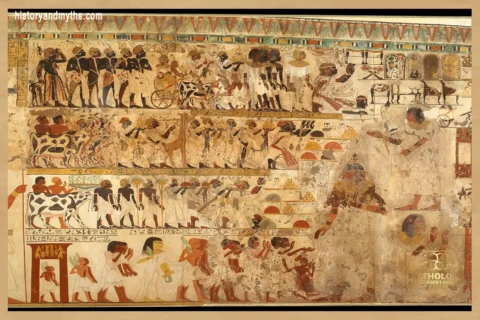
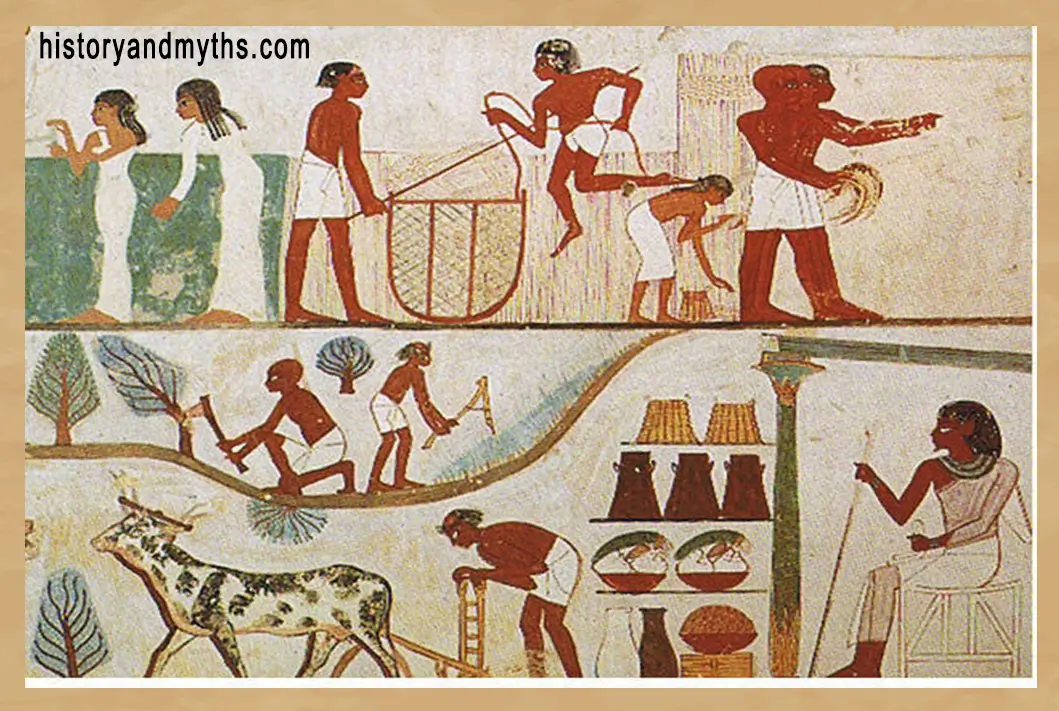
For ordinary Egyptians, the day began long before comfort or leisure had any meaning. At dawn, men rose to prepare for work in the fields, workshops, or construction sites, while women began domestic tasks such as grinding grain, fetching water, and preparing the first meal of the day. The Nile was the silent clock of their lives—its flood cycles determined when fields were plowed, when crops were planted, and when survival itself was at risk.
Farmers walked to their plots carrying simple tools made of wood and stone. Craftsmen opened small workshops attached to their homes. Labor was physical, repetitive, and unavoidable. There was no separation between “work life” and “home life”—work was life.
Midday: Labor, Rest, and Simple Meals
By midday, the Egyptian sun became unforgiving. Work slowed, not out of choice, but necessity. Laborers paused briefly to eat coarse bread, onions, and drink beer—the safest and most common beverage. This meal was not a break for pleasure, but a short recovery before returning to work.
Children often joined adults, either helping with simple tasks or observing skills they would later inherit. Learning was practical, passed from hand to hand, not from books. Survival depended on endurance, cooperation, and routine rather than ambition.
Evening: Family, Neighbors, and Quiet Rituals
As the sun set, ordinary Egyptians returned home exhausted. Evenings were spent with family and neighbors—sharing food, repairing tools, caring for children, and exchanging news. There was little privacy, but strong social closeness. Homes were modest, and life unfolded in shared spaces.
Religion entered daily life quietly at this hour. Short prayers, protective gestures, or simple offerings were made at household shrines. There were no grand ceremonies—just small acts of hope against illness, hunger, and uncertainty. Sleep came early, because the next day would begin the same way.
| Aspect of Daily Life | Ordinary Egyptians |
|---|---|
| Main Occupations | Farmers, craftsmen, builders, laborers, household workers |
| Living Environment | Villages near the Nile, simple mud-brick houses |
| Daily Routine | Work from sunrise to sunset, guided by natural cycles |
| Health Conditions | Frequent injuries, limited medical care, reliance on home remedies |
| Life Expectancy | Low due to infant mortality; adults often lived into their 40s–50s |
| Family Structure | Strong family bonds; marriage and children central to life |
| Religion | Household worship, amulets, local shrines, belief in the afterlife |
| Community Life | Shared labor, cooperation, festivals, access to local courts |
Work, Survival, and Social Duty
Work in ancient Egypt was not a personal choice or a path to social mobility—it was a duty tied directly to survival and cosmic order. Ordinary Egyptians believed that fulfilling one’s role in society helped maintain ma’at, the principle of balance and harmony that governed the universe. To work was not merely to earn food; it was to participate in sustaining the world itself.
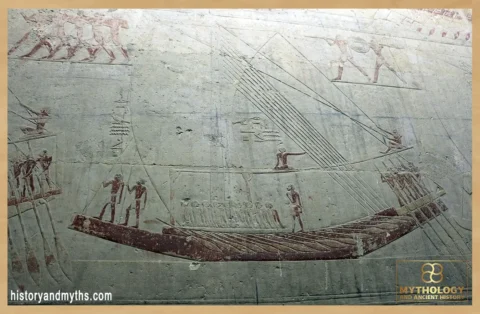
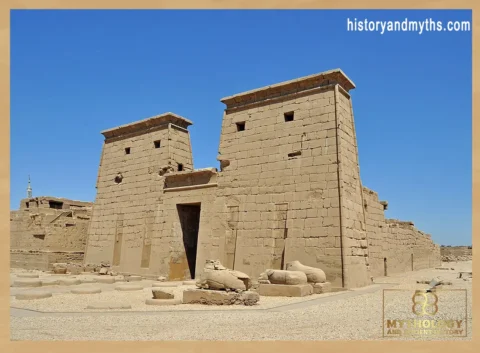
Most men labored as farmers, builders, or craftsmen, depending on the season. During the Nile flood, when fields were submerged, many were conscripted into state projects such as canal maintenance, temple construction, or transporting stone. This labor was not slavery in the modern sense, but a form of state obligation, often compensated with food, beer, and shelter.
Women’s work, though less visible in official records, was equally vital. They managed households, produced bread and beer, spun linen, raised children, and sometimes worked as musicians, mourners, or temple attendants. Their labor ensured family continuity and social stability, even if it rarely brought public recognition.
Children learned early that idleness was dangerous—not morally, but practically. Every member of society was expected to contribute according to age and ability. Those who could not work, such as the elderly or disabled, relied on family networks rather than institutions. Social security existed not as law, but as obligation.
Failure to work was not simply laziness; it was a disruption of order. In a world without safety nets, daily labor was the thin line between stability and collapse.
Health, Hardship, and Life Expectancy
Life for ordinary Egyptians was physically demanding, and the human body bore the cost of survival. Skeletal evidence shows widespread joint degeneration, spinal stress, and healed fractures—clear signs of lifelong labor. Pain was not an exception; it was a constant companion.
Medical knowledge existed, but access was limited. Most people relied on household remedies, herbal treatments, and magical spells for protection against illness. Professional physicians served temples, palaces, and elite households, while common people depended on experience passed down through generations. Disease was often understood as both a physical and spiritual imbalance.
Life expectancy was low, not because adults died young by default, but because childhood was dangerous. Many children did not survive their early years due to infection, malnutrition, or complications at birth. Those who reached adulthood, however, could live into their forties or fifties, provided they avoided serious injury or famine.
Injuries from work were common—cuts from tools, crushed limbs, and back injuries from lifting heavy loads. Healing depended on rest, which few could afford. Despite this, archaeological evidence suggests that injured individuals were sometimes cared for long enough to recover, indicating strong family and community support systems.
Hardship shaped resilience. Ordinary Egyptians did not expect comfort or longevity; they valued endurance, continuity, and the hope that a well-lived life—defined by duty and balance—would be rewarded in the afterlife.
What Made Ordinary Life Meaningful in Ancient Egypt?
For ordinary Egyptians, meaning did not come from power or wealth, but from balance, continuity, and belonging. Life was understood as part of a larger cosmic order—ma’at—where every person had a role, however small, in maintaining harmony between humans, nature, and the gods.
Family was the core source of identity. Marriage, children, and kinship were not optional stages of life but essential duties. To raise children, honor parents, and maintain a household was considered a moral achievement. Even modest homes were places of dignity, where daily routines carried social and spiritual value.
Work itself held meaning. Farming, crafting, building, or serving the state was not seen merely as labor, but as participation in sustaining Egypt itself. The Nile’s cycles reinforced this worldview: planting, harvesting, flooding, and renewal mirrored human life from birth to death. Ordinary people understood their labor as part of an eternal rhythm rather than a temporary struggle.
Religion offered reassurance rather than fear. While temples were controlled by elites, belief belonged to everyone. Household prayers, small amulets, and local shrines allowed ordinary people to feel protected and seen by the gods. The promise of the afterlife—modeled on everyday life but free from hunger and pain—gave purpose to endurance on earth.
In the end, the greatness of ancient Egypt was not built only by kings and monuments, but by ordinary lives lived with patience, responsibility, and hope. Their daily struggles, quiet faith, and commitment to family formed the true foundation of a civilization that endured for thousands of years.
Life of Ordinary Egyptians — Key Insights
- Ordinary Egyptians formed the backbone of the civilization, sustaining agriculture, crafts, and state labor.
- Daily life followed natural rhythms shaped by the Nile, sunlight, and seasonal cycles.
- Family and community were essential for survival, offering support during illness, famine, and hardship.
- Health care relied on household remedies and belief, with limited access to professional physicians.
- Religion was personal and practical, centered on protection, balance, and hope for the afterlife.
- Meaning in life came from duty, continuity, and living in harmony with ma’at.
Community, Cooperation, and Survival
Ordinary life in ancient Egypt was never lived in isolation. Survival depended on cooperation, and community bonds were often stronger than individual ambition. Villages functioned as interconnected units where neighbors relied on one another during harvests, floods, sickness, and religious festivals. In times of crisis, collective effort meant the difference between survival and collapse.
Work was frequently communal. Farmers shared tools, irrigation labor, and storage facilities. During Nile inundations, when fields were submerged, ordinary people were often recruited for state projects such as canal maintenance, temple construction, or royal tomb work. These were not slave systems in the modern sense, but forms of corvée labor expected from citizens as part of their obligation to the state.
Food distribution also reflected this collective mindset. While families prepared their own meals, grain storage was often managed at a local or regional level. In years of abundance, surplus grain was stored to offset future shortages. This system, although imperfect, helped stabilize society and reduce the risk of mass starvation during poor harvests.
Festivals reinforced social unity. Religious celebrations were among the few moments when ordinary people experienced joy beyond daily labor. Music, dancing, shared meals, and public rituals created a sense of belonging and emotional relief. These events allowed people to reaffirm their identity as part of a larger community protected by the gods.
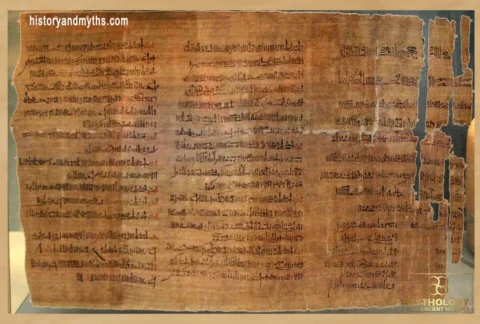
Conflict certainly existed—disputes over land, inheritance, or labor—but evidence from legal papyri shows that ordinary people had access to local courts. Justice was not reserved for elites alone, and even peasants could file complaints or testify in legal matters. This access to law reinforced a sense of order and fairness within society.
Ultimately, ordinary Egyptians survived not because life was easy, but because society was structured around cooperation, shared responsibility, and mutual dependence. Their strength lay not in individual wealth, but in the power of community.
Key Takeaways
- Ordinary people, not kings, sustained ancient Egyptian civilization through daily labor.
- Life revolved around family, work, and the natural cycles of the Nile.
- Health challenges were common, but strong community bonds offered support.
- Religion was practiced at home as much as in temples, focusing on protection and balance.
- Meaningful life was defined by duty, continuity, and harmony with cosmic order.
Frequently Asked Questions
What did ordinary people do for a living in ancient Egypt?
Most ordinary Egyptians worked as farmers, craftsmen, builders, or laborers, relying heavily on the Nile for agriculture and survival.
Where did ordinary Egyptians live?
They lived mainly in small villages near the Nile, in simple mud-brick houses designed to suit the climate.
What was daily life like for common people in ancient Egypt?
Daily life followed a strict routine shaped by sunrise, work, meals, and rest, all aligned with natural cycles.
Did ordinary Egyptians have access to medical care?
Most relied on household remedies, herbs, and magical spells, while professional physicians mainly served elites.
How long did ordinary Egyptians live?
Life expectancy was lowered by high infant mortality, but adults who survived childhood often lived into their forties or fifties.
What role did religion play in everyday life?
Religion was deeply personal, practiced through home rituals, amulets, and local shrines for protection and balance.
How important was family in ancient Egyptian society?
Family was the foundation of life, providing economic support, emotional security, and social identity.
What gave meaning to ordinary life in ancient Egypt?
Meaning came from fulfilling duties, maintaining harmony with cosmic order, and ensuring continuity through family and work.
Sources & Rights
- Baines, John, and Jaromír Málek. Atlas of Ancient Egypt. New York: Facts on File, 1980.
- Brewer, Douglas J., and Emily Teeter. Egypt and the Egyptians. Cambridge: Cambridge University Press, 2010.
- Davies, W. V. Daily Life in Ancient Egypt. London: British Museum Press, 1997.
- Ikram, Salima. Daily Life in Ancient Egypt. Cairo: American University in Cairo Press, 2009.
- Kemp, Barry J. Ancient Egypt: Anatomy of a Civilization. 2nd ed. London: Routledge, 2006.
- Robins, Gay. Women in Ancient Egypt. London: British Museum Press, 1993.
- Shaw, Ian. The Oxford History of Ancient Egypt. Oxford: Oxford University Press, 2000.
- Strouhal, Eugen. Life of the Ancient Egyptians. Norman: University of Oklahoma Press, 1992.
Written by H. Moses — All rights reserved © Mythology and History