Social Mobility in Ancient Egypt: How People Rose and Fell in Status
Social mobility in Ancient Egypt existed, but it was limited and uneven. People could rise through literacy, government service, temple careers, military reward, or highly skilled state craftsmanship, while others fell through debt, political change, legal punishment, inheritance division, or loss of patronage. The system allowed movement—but only inside firm boundaries.
Most summaries stop at the “social pyramid,” as if status was permanently fixed. That misses the real question readers care about: how did someone actually move up (or slide down) in a society built on hierarchy? The answer isn’t a feel-good story about merit. It’s a map of institutions—schools, offices, temples, armies, workshops—and the gatekeeping that controlled access to them.
This guide treats mobility as a mechanism, not a slogan. We’ll track the main routes upward, the common causes of decline, and the concrete evidence Egyptians used to prove a changed status—titles, careers, and the material choices that turned success into a public fact.
The Scribal Route: Literacy as the Most Reliable Ladder
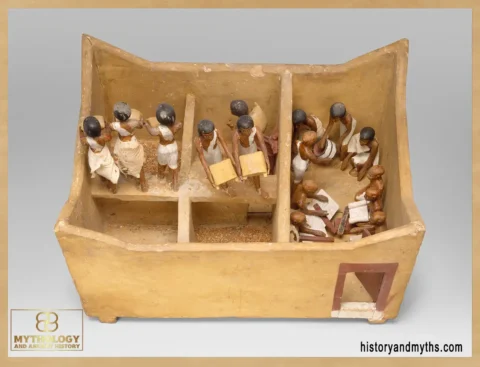
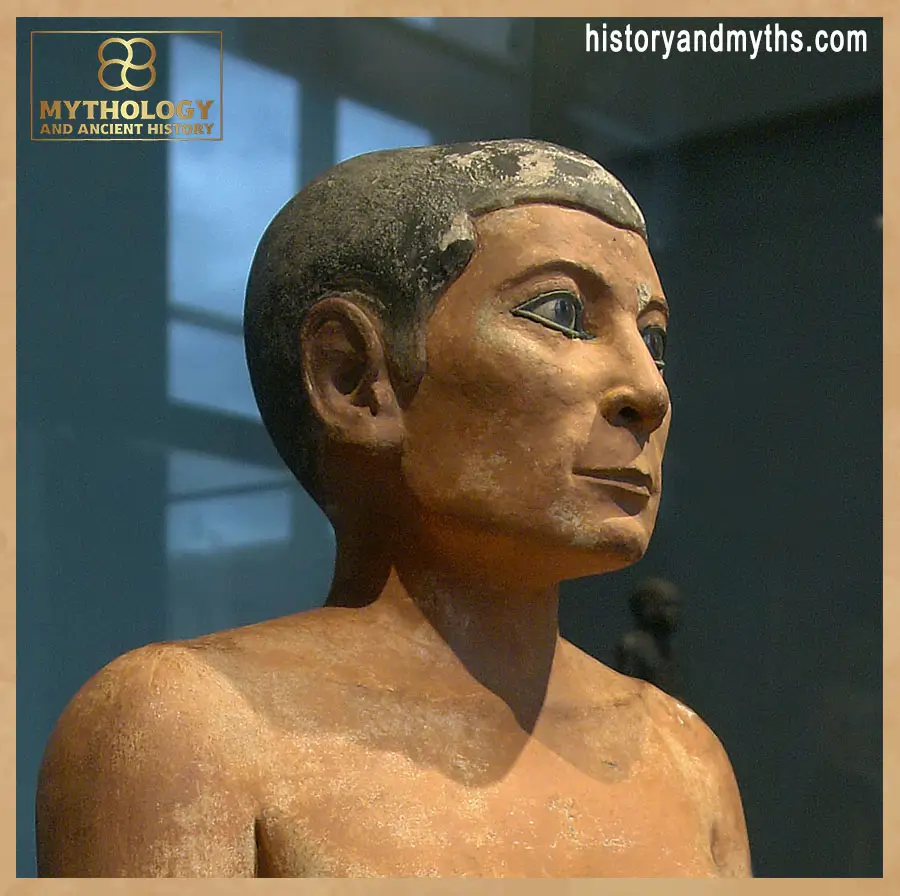
If Ancient Egypt had one “systemic shortcut” to higher status, it was literacy. Writing did not simply create prestige—it created access. A man who could read accounts, record deliveries, measure land, and manage documents could be placed near decisions that affected real resources: grain, wages, labor assignments, and legal outcomes. That proximity mattered more than the elegance of any title. It changed how others treated you, what circles you could enter, and what kind of future your household could realistically build.
This is why the scribal path shows up so consistently in Egyptian culture as a promised escape from physical labor. The point was not that scribes lived in luxury by default. The point was that scribes worked inside a machine that produced stability. When your daily work depends on paperwork instead of weather, injury, or harvest failure, your life becomes more predictable—and predictability is a form of power in a premodern economy.
But the scribal ladder had a built-in filter: access to training. Literacy was not evenly distributed, and becoming a scribe usually required time, supervision, and support. That meant mobility through education tended to concentrate in families that already had some connection to the state, the temple, or a local patron who could invest in a boy’s training. In other words, the scribal route enabled upward movement, but it rarely created mobility from absolute zero.
Most importantly, the scribal path changed status in a way Egyptians themselves recognized: it produced recognized roles. A farmer could be respected, but a scribe could be officially inserted into the state’s hierarchy. And once you entered that hierarchy, you could climb again—into treasury work, legal work, estate management, or supervision of labor and building projects.
If you want the clearest example of how Egyptians trained people for this path, see our guide to Scribal Schools and Training in Ancient Egypt.
| Mobility Route | How It Moved People | What It Required | Main Risk / Limit |
|---|---|---|---|
| Literacy & Scribal Training | Entry into administration and official recognition | Schooling + support + access | Restricted entry, network dependence |
| Government Careers | Titles, authority, stable roles in state systems | Trust + promotion ladder | Political turnover, audits, loss of patronage |
| Temple Institutions | Stable careers inside major economic centers | Institutional entry + discipline | Hierarchy, controlled access |
| Military Service | Fast visibility and rank under state demand | Performance + loyalty | High volatility, regime shifts |
| Elite Craftsmanship | Skilled work tied to state projects and stability | Rare skill + institutional attachment | Not available to most, localized opportunity |
| Downward Mobility | Loss through debt, politics, legal punishment, inheritance | Often outside personal control | Hard to reverse without protection |
Government Careers: Why Titles Meant Real Status (Not Just Vanity)
Once someone entered the administrative world, status stopped being a vague social impression and became something that could be officially recognized. Ancient Egyptian society cared deeply about rank, but what made rank durable was its connection to institutions. A title was not only a polite label—it was proof that you belonged to a chain of authority, with responsibilities other people could not claim.
The key idea is simple: government work converted literacy into power. A scribe could rise, but an official could command. As administrative systems expanded, the state needed people to manage fields, warehouses, workers, temple deliveries, and legal documents. Those tasks sound technical, but they controlled the flow of resources. The person who kept the records often had influence over who was paid, what was distributed, and how conflicts were settled.
That’s why upward mobility in Ancient Egypt often looks like a career ladder rather than a sudden leap. Someone might begin as a minor clerk, move into supervision roles, then gain a more visible title tied to taxation, estates, construction, or provincial authority. The “change in class” wasn’t a dramatic costume change—it was the gradual accumulation of official trust.
But careers also explain why mobility was never fully “open.” State jobs were not simply won through talent; they depended on being seen, selected, and supported. Patronage mattered. So did geography: opportunities were richer where administration was denser—near major cities, temples, and state projects—while village life offered fewer steps upward.
This is also where mobility becomes fragile. Administrative rank depends on the system that grants it. Political change, a failed audit, or a shift in leadership could flatten a career quickly. In a bureaucratic society, your rise is real—but it’s also conditional.
One of the clearest gateways into real administrative authority was fiscal work, which is why this connects directly with our deep dive on Tax Collection in Ancient Egypt.
Temple Institutions: Mobility Through Sacred Economy (Not Just Religion)
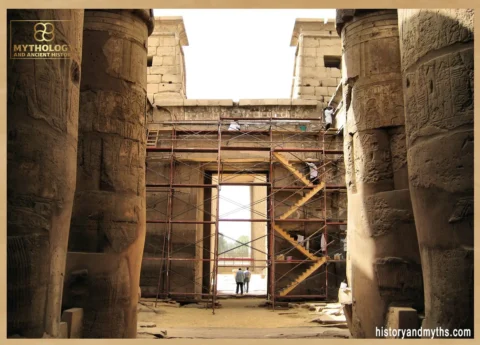
Temples in Ancient Egypt were not only places of worship; they were major economic institutions with land, staff, storage, and administrative routines. That matters for mobility because large institutions create careers: defined roles, promotion chains, and stable access to resources. A person connected to temple work—whether through priestly ranks or supporting administrative tasks—could gain social protection and long-term security that ordinary seasonal labor rarely provided.
This route upward did not mean “every temple worker was elite.” Most were not. But temple structures could lift certain individuals into recognized positions, especially those trusted with inventories, deliveries, written records, and supervision. In practical terms, the temple offered a second ladder alongside the state: if the bureaucracy is one engine of advancement, the temple is another—sometimes overlapping, sometimes competing, often reinforcing the same hierarchies of access.
Just as importantly, temple mobility shows that “religion” in Egypt cannot be separated from daily life. The sacred world was embedded in work, food supply, ritual schedules, and local authority. For many communities, the temple was not outside society—it was one of the main arenas where status could be built, displayed, or defended.
This is exactly why our article How Did Religion and Political Power Work Together in Ancient Egypt? matters here—it explains the real-world system behind temple power, not just the beliefs.
The Military Route: Fast Mobility, High Risk
Military service could create sudden mobility in Ancient Egypt because it tied a person’s status to state needs. In periods of expansion or heavy state projects, the army offered a path to rank, reward, and visibility—sometimes faster than the slow climb of administration. A man who proved reliable in discipline, logistics, or leadership could move upward through hierarchy that was simple and enforceable: orders, ranks, and outcomes.
But military mobility was never stable in the way scribal or temple careers could be. It was a high-risk ladder. Your rise depended on factors you did not fully control—campaign outcomes, political shifts, and who held power after conflict. In good times, it could elevate a family’s future. In unstable times, it could end careers abruptly or erase social gains within a generation.
So the military route matters not because it was the “main” mobility engine, but because it shows a different model: mobility through performance under pressure, rewarded by the state, but exposed to the volatility of politics and war.
Elite Craftsmanship: When Skilled Work Became a Status Ladder
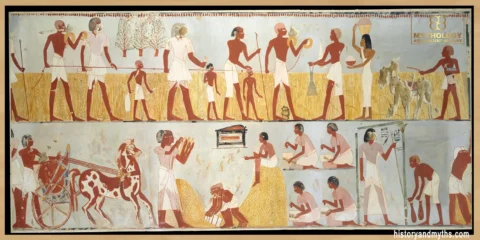
Not all manual labor was socially equal. In Ancient Egypt, certain forms of skilled craftsmanship could create real upward mobility because they were tied to elite projects, state pay, and specialized knowledge. The clearest example is the world of high-skill workers attached to major royal or temple construction—people whose work demanded accuracy, trust, and long-term organization.
This kind of labor changed status in two ways. First, it produced stable income and predictable access to supplies, which meant a household could plan beyond survival. Second, it created professional identity: being a master builder, specialist artisan, or trusted craft worker placed you above ordinary agricultural cycles, even if your hands were still doing physical work.
The larger point is that mobility in Egypt was not only about leaving labor behind. Sometimes it was about entering a kind of labor that the state considered strategic. Skill, reliability, and institutional attachment could move a person upward—even if they never became an administrator.
Downward Mobility: How People Lost Status (Fast)
Social mobility in Ancient Egypt did not only run upward. Families could lose status quickly, and the causes were often structural rather than personal failure. Debt could swallow land, tools, or long-term security. Inheritance division across generations could dilute property until a household that once had stability became ordinary again. Even a small drop in resources could matter, because daily life relied on continuity—grain, labor, and connections.
Political change was another major driver of decline. When power shifted, old networks became liabilities. A person could fall not because they were incompetent, but because their patron lost office, their department was replaced, or a new authority demanded different loyalties. In those moments, the same system that rewarded titles could also erase them.
Legal punishment and public disgrace could also destroy status. In a society where reputation and official trust mattered, being investigated, punished, or expelled from a role could remove the social platform that made mobility possible in the first place. Decline, in other words, was often about losing institutional protection—once that was gone, recovery was difficult.
What Blocked Mobility: The Hard Limits of the System
Even when mobility was possible, it wasn’t evenly available. The biggest barrier was access: access to training, to institutions, and to the networks that could place someone inside them. Literacy could lift status, but only if a family could afford the time and support needed to reach it. Temple and government careers could create stability, but entry was controlled and often depended on trust, recommendation, or patronage.
Geography mattered too. Major towns, administrative centers, and temple districts offered far more “steps” than rural villages, where most people stayed tied to agricultural cycles. Mobility was also constrained by the simple reality of hierarchy: a system that needs ranks will always limit how many people can rise at once. For every promotion upward, there must be fewer seats at the top.
Finally, mobility had to survive scrutiny. Records, audits, and legal accountability could protect order—but they could also restrict movement and punish failure. That’s why social change in Egypt wasn’t only about ambition; it was about navigating institutions that watched and judged behavior.
This is one reason legal structures mattered so much—our article Ancient Egyptian Law Explained: How Justice Worked Under Maat how authority was enforced when disputes, accusations, or punishment could reshape someone’s social future.
In Ancient Egypt, social movement wasn’t driven by “equal opportunity.” It came from access to institutions—schools, offices, temples, and state projects. Mobility was real, but it was controlled, uneven, and always tied to stability, patronage, and record-keeping.
What Counted as “Proof” of Rising Status?
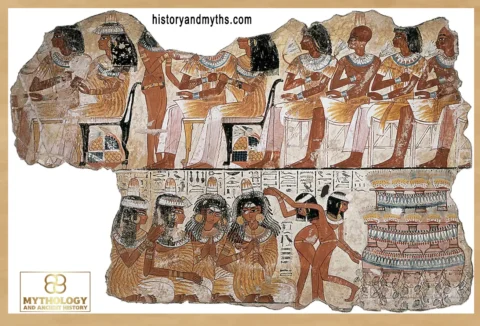
In Ancient Egypt, social mobility was only fully real when it became visible and recordable. People didn’t measure status through abstract ideas like “class identity.” They measured it through signals that could be recognized publicly: titles, responsibilities, and the material footprint of a successful life.
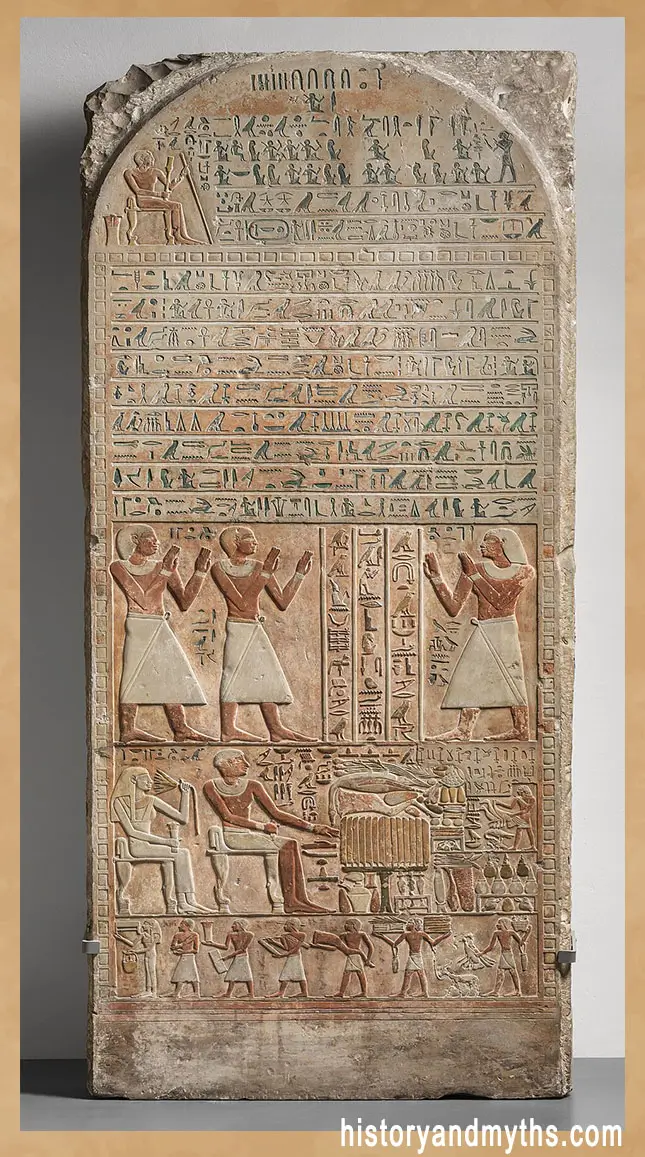
One form of proof was official identity—job titles written on stelae, coffins, or tomb walls. Another was the ability to sponsor long-term memory: better-quality burial equipment, cleaner inscriptions, more skilled workmanship, or a stronger claim to social legitimacy in the afterlife. Even when wealth was limited, Egyptians tried to anchor status through what could survive them, because permanence mattered.
This is also where mobility becomes easy to misunderstand. A person could rise without becoming “rich” in modern terms. But if they gained authority, stability, or institutional recognition, their life could still represent real social movement—especially compared to the vulnerability of seasonal labor. The goal wasn’t only comfort. It was durability: a position that outlasted a bad harvest, a political shift, or a generation.
- Mobility existed in Ancient Egypt, but it was limited and uneven.
- Literacy was the strongest long-term ladder because it opened official careers.
- Government titles mattered because they created recognized rank and authority.
- Temples offered stable careers because they were economic institutions, not just religious spaces.
- Skilled craftsmanship could lift households when linked to state projects and steady pay.
- Downward mobility was common through debt, inheritance division, politics, or punishment.
Frequently Asked Questions
Was social mobility possible in Ancient Egypt?
Yes. People could rise through literacy, government roles, temple careers, military reward, or specialized skilled work—but mobility was limited and depended on access and stability.
What was the most reliable path to higher status?
Education and scribal training were the most reliable long-term route because they led to official positions and recognized authority.
Did titles matter more than wealth?
Often, yes. Titles gave visible, recordable rank and access to institutions—sometimes more decisive than private wealth alone.
Could someone lose social status?
Yes. Debt, inheritance division, political change, and legal punishment could push individuals and families downward quickly.
Were skilled workers always low-status?
No. Some skilled craftsmen connected to state projects could gain stable income and higher social standing, even without administrative titles.
Was Ancient Egypt a rigid caste system?
It was strongly hierarchical, but not completely fixed. Mobility existed within controlled boundaries and depended on institutions and networks.
Sources & Rights
- Černý, Jaroslav. A Community of Workmen at Thebes in the Ramesside Period. Cairo: Institut Français d’Archéologie Orientale, 1973.
- Janssen, Jac. J. Commodity Prices from the Ramessid Period: An Economic Study of the Village of Necropolis Workmen at Thebes. Leiden: Brill, 1975.
- Lichtheim, Miriam. Ancient Egyptian Literature, Volume I: The Old and Middle Kingdoms. Berkeley: University of California Press, 1973.
- Lichtheim, Miriam. Ancient Egyptian Literature, Volume II: The New Kingdom. Berkeley: University of California Press, 1976.
- Shaw, Ian. The Oxford History of Ancient Egypt. Oxford: Oxford University Press, 2000.
- Trigger, Bruce G., Barry J. Kemp, David O’Connor, and Alan B. Lloyd. Ancient Egypt: A Social History. Cambridge: Cambridge University Press, 1983.
- Van De Mieroop, Marc. A History of Ancient Egypt. Malden, MA: Wiley-Blackwell, 2011.
Written by H. Moses — All rights reserved © Mythology and History