Family Life in Ancient Egypt: Inside the Egyptian Home
Family was the backbone of ancient Egyptian society. Long before temples, pyramids, or royal power defined the civilization, daily life revolved around the household. The family was not only a social bond but a working unit that shaped identity, survival, and continuity. From farmers in small villages to officials in administrative centers, the Egyptian family organized labor, property, and responsibility within society.
Unlike many ancient civilizations, family life in Egypt was remarkably stable and practical. Marriage was common, households were clearly defined, and family members depended on one another economically as much as emotionally. The structure of the family was closely tied to social class: the size of the household, the roles of its members, and even daily routines differed between peasants, craftsmen, and elite families. Yet across all classes, the family remained the primary space where work, upbringing, and tradition met.
More than a private relationship, the Egyptian family was a social institution supported by law, religion, and custom. It governed inheritance, protected women and children, and extended beyond death through ancestor worship and funerary beliefs. To understand ancient Egyptian society as a whole, one must first understand how its families lived, worked, and endured across generations.
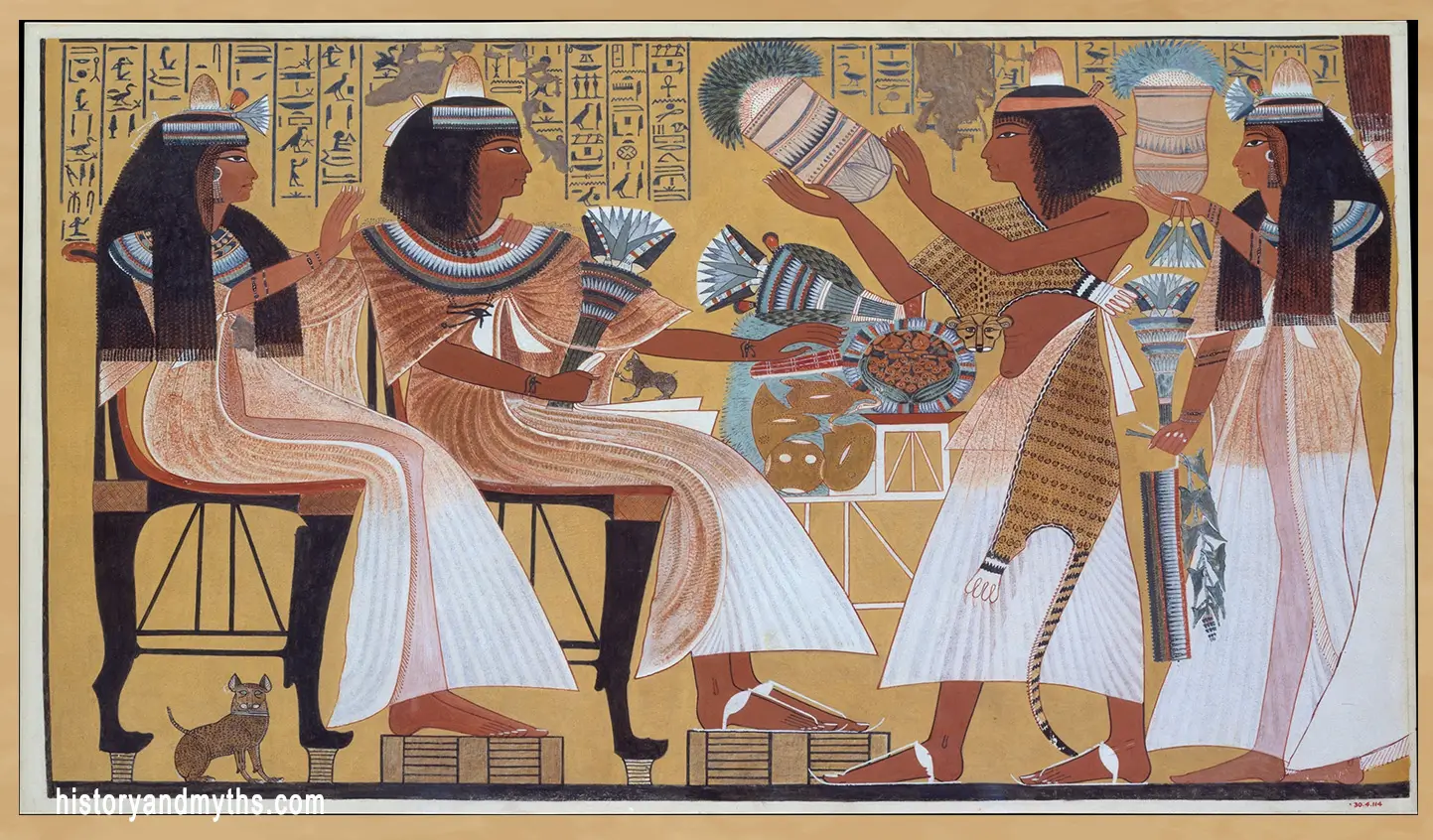
What Did an Ancient Egyptian Family Look Like?
The typical ancient Egyptian family was built around a stable household rather than a large extended clan. Most families followed a nuclear structure consisting of a husband, wife, and children living together under one roof. In some cases—especially among wealthier families—elderly parents or additional relatives might reside in the same house, but this was not the norm for the majority of the population.
Family size varied according to social class and economic ability. Peasant families often had several children, not only for emotional reasons but also for practical ones. Children represented future labor in the fields and security for parents in old age. In contrast, elite families tended to be smaller, with greater emphasis on education, inheritance planning, and maintaining social status rather than expanding the household through numbers alone.
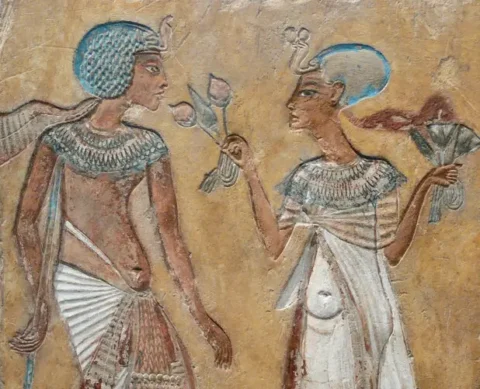
Marriage marked the foundation of the family unit. Once a couple married, they were considered an independent household, even if they lived temporarily within a larger family home. The Egyptian concept of family was closely tied to co-residence and shared responsibility rather than bloodline alone. What defined a family was not ancestry, but daily life—working together, sharing resources, and raising children within the same domestic space.
Importantly, the family was not isolated from society. Households functioned as miniature versions of the broader social order. Authority, cooperation, and division of labor inside the family reflected how Egyptian society itself was organized. By looking at the family structure, we gain a clear window into how order and stability were maintained throughout the civilization.
| Social Class | Household Size | Main Responsibilities | Children’s Role |
|---|---|---|---|
| Peasants & Laborers | Large, extended families | Agriculture, food production, survival work | Early labor and family support |
| Craftsmen & Scribes | Medium-sized households | Skilled labor, administration, education | Training and profession inheritance |
| Elite & Officials | Smaller nuclear families | Household management, authority, status | Preparation for rank and inheritance |
Roles of Father, Mother, and Children in the Household
Inside the ancient Egyptian family, each member had a clearly defined role that supported the stability of the household. These roles were practical rather than symbolic, shaped by daily needs and economic reality more than abstract ideals.
The father was typically responsible for providing for the family and representing it outside the home. He worked as a farmer, craftsman, laborer, or official depending on his social position. His authority within the household was recognized, but it was not absolute. Decisions related to property, work, and family affairs were often shared, especially in stable marriages where cooperation mattered more than dominance.
The mother played a central and active role in family life. She managed the household, supervised food preparation, storage, and daily organization, and cared for children. In many families, women also participated directly in productive work—helping in agriculture, textile production, or family trades. Her role was not confined to domestic duties alone; she was a partner in sustaining the household’s economic survival.
Children were not passive dependents. From an early age, they were integrated into family life and learned by observing and assisting adults. Boys often followed their father’s profession, while girls learned domestic and craft skills from their mothers. Childhood was understood as a period of preparation, where the family trained its future workers, caretakers, and heirs.
This division of roles created balance rather than hierarchy. The Egyptian household functioned through cooperation, where each member contributed according to age, ability, and social position. The success of the family—and by extension society—depended on this shared responsibility.
How Social Class Shaped Family Life
Social class played a decisive role in shaping family life in ancient Egypt. While the basic structure of the family remained similar across society, daily experience differed greatly depending on wealth, occupation, and social position.
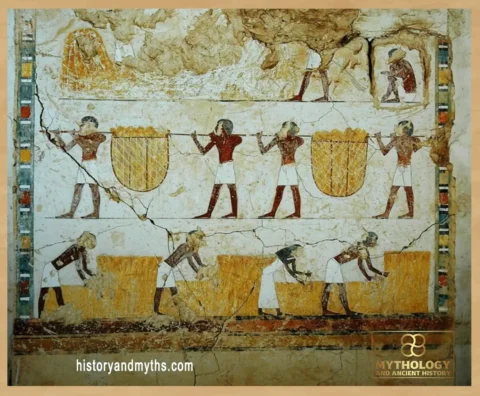
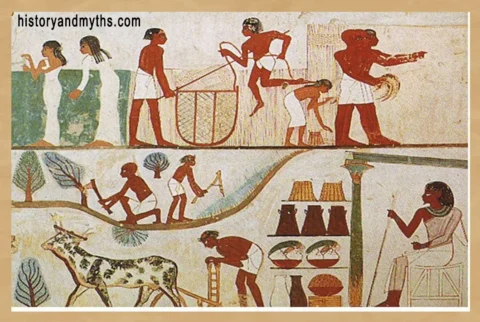
For peasant families, the household was centered around survival. Family members worked together in agriculture, animal care, and food production. Homes were small, daily routines were physically demanding, and children were expected to contribute early. Family life was practical and collective, with little separation between work and home. Stability depended on cooperation and the ability of the family to endure hardship together.
Among craftsmen and scribes, family life was more structured and specialized. Education became important, especially for sons who might inherit administrative or skilled professions. Homes were slightly larger, workspaces were sometimes attached to the house, and daily life followed a more predictable rhythm. These families relied on both physical labor and intellectual skill, creating a balance between tradition and social mobility.
Elite families lived very differently. Their households often included servants, assistants, and extended dependents. Women in elite families focused more on household management than physical labor, while men held administrative, religious, or political positions. Children were prepared for status and inheritance rather than manual work. Education, lineage, and social reputation shaped every aspect of family life.
Despite these differences, all families—regardless of class—shared the same underlying goal: continuity. Each household sought to preserve its name, property, and legacy across generations. Social class defined how this goal was pursued, but the family remained the foundation through which Egyptian society sustained itself.
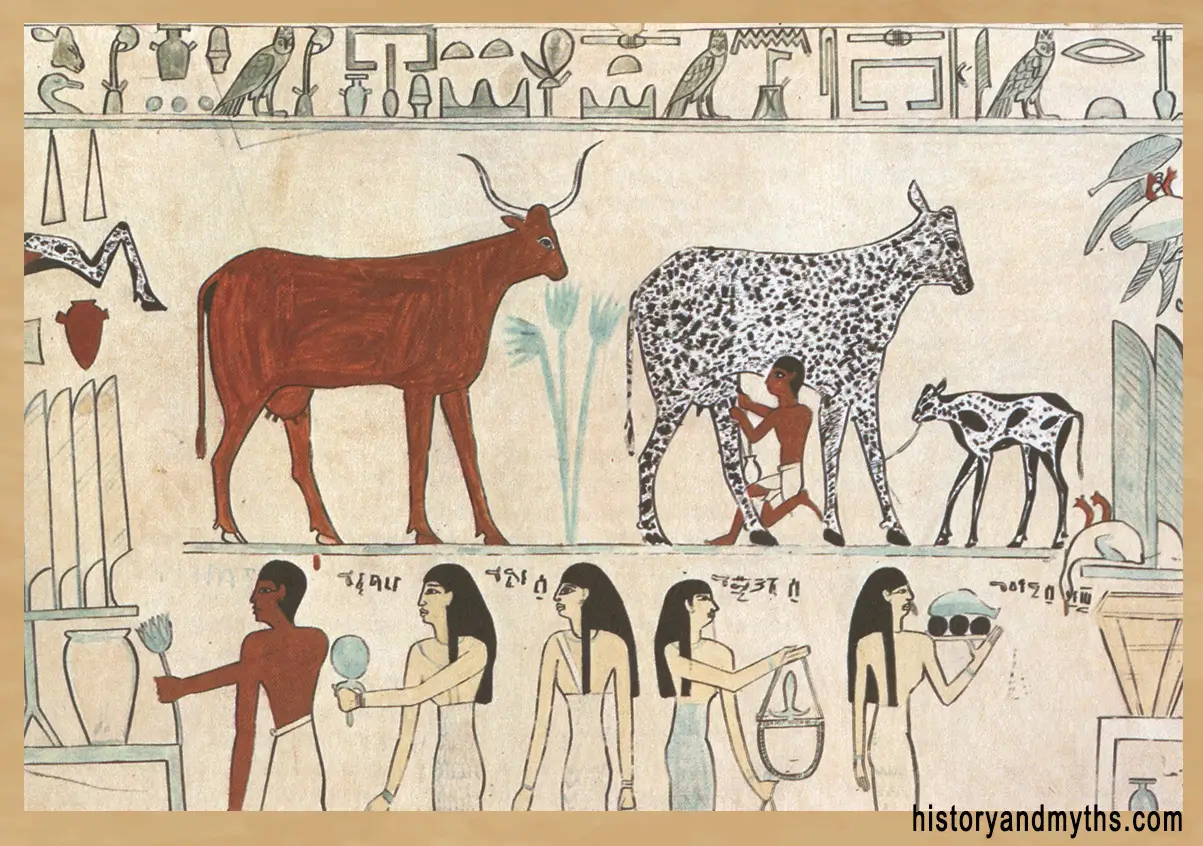
Family, Property, and Inheritance
In ancient Egypt, the family was inseparable from property and inheritance. Ownership of land, tools, and household goods shaped the stability of the family and defined its future. Unlike many ancient societies, Egyptian families operated within a legal system that clearly recognized private property, making inheritance a central concern of family life.
Property was usually managed within the household and passed down across generations. While men often controlled agricultural land and professional assets, women retained legal ownership of their personal property, including dowries, jewelry, and inherited goods. This balance helped maintain family continuity while protecting individual rights. Marriage did not erase a woman’s identity or possessions; instead, it created a partnership in which assets were clearly defined.
Inheritance practices varied depending on social class. In peasant families, land and tools were typically passed to children who continued working the family plot, ensuring survival rather than wealth. Among craftsmen and scribes, inheritance often included professional knowledge, access to education, and administrative connections. For elite families, inheritance was carefully planned through legal documents, emphasizing status, titles, and long-term family reputation.
Family disputes over property were not uncommon, which is why written contracts and wills became increasingly important. These documents reveal that Egyptian families valued order and fairness, seeking to prevent conflict among heirs. In many cases, parents distributed property during their lifetime to avoid disputes after death.
Inheritance also extended beyond material wealth. The family name, social standing, and ancestral memory were considered forms of legacy. Tombs, funerary offerings, and commemorative inscriptions served as reminders that the family continued beyond death. In this way, inheritance in ancient Egypt was not merely about possessions—it was about preserving identity, stability, and continuity across generations.
Family Life in Ancient Egypt — At a Glance
- The family was the basic social and economic unit of Egyptian society.
- Most households followed a nuclear structure centered on marriage.
- Social class strongly influenced family size, roles, and daily routines.
- Men and women shared responsibilities essential for household survival.
- Children were raised as future workers, heirs, and caretakers.
- Family bonds extended beyond life through ancestor worship and funerary beliefs.
© historyandmyths.com — Educational use
Family and Religion: Ancestors and the Afterlife
Religion was deeply woven into the structure of the ancient Egyptian family. Belief did not stop at the boundaries of life; instead, the family was understood as a unit that continued into the afterlife. Ancestors were not forgotten figures of the past but active members of the family’s spiritual world, capable of offering protection, guidance, and blessing.
Egyptians believed that maintaining harmony within the family was essential for divine favor. Daily household rituals often included small offerings, prayers, or spoken remembrances directed toward deceased relatives. These acts were not elaborate temple ceremonies but simple domestic practices meant to sustain a bond between the living and the dead. In this sense, religion began inside the home long before it reached the temple.
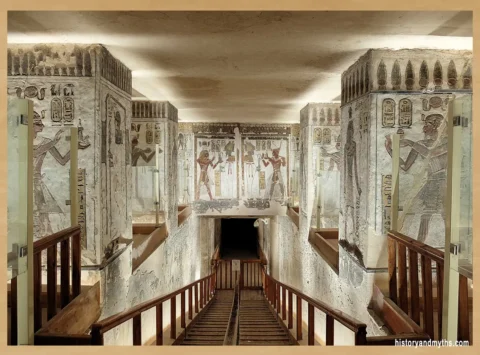
The tomb itself was viewed as an extension of the household. Just as the living family required food, shelter, and care, so too did the deceased. Families provided offerings, maintained burial sites, and preserved names through inscriptions to ensure that their relatives continued to exist in the next world. To be remembered by one’s family was considered a form of immortality.
This belief strengthened family loyalty and responsibility. Children were expected to honor their parents not only during life but also after death. Failure to care for ancestral tombs was seen as a moral and spiritual neglect, potentially bringing misfortune upon the household. In return, ancestors were believed to intercede on behalf of the family, protecting them from illness, hardship, and injustice.
Through religion, the family became a timeless institution. Birth, life, death, and rebirth were all connected within the same familial cycle. This spiritual continuity explains why family bonds in ancient Egypt were so strong and why maintaining order within the household was seen as essential to maintaining order in the universe itself.
Conclusion
The family in ancient Egypt was more than a private relationship—it was the foundation upon which society stood. Through shared work, mutual responsibility, and strong emotional bonds, families ensured stability in a world shaped by nature, labor, and belief. Whether among peasants, craftsmen, or elites, the household remained the space where values were taught, roles were formed, and continuity was secured.
By understanding how Egyptian families lived, worked, and believed together, we gain a clearer picture of the civilization itself. Long before laws, monuments, or royal power defined Egypt, it was the strength of the family that sustained its people and allowed the society to endure for thousands of years.
Key Takeaways
- The family was the foundation of social stability in ancient Egypt.
- Most Egyptian households followed a nuclear family structure.
- Social class strongly influenced daily life, roles, and family size.
- Men, women, and children all contributed to household survival.
- Property and inheritance reinforced family continuity across generations.
- Family bonds extended beyond death through ancestor worship.
Frequently Asked Questions
What was the typical family structure in ancient Egypt?
Most ancient Egyptian families followed a nuclear structure consisting of a husband, wife, and children living together in one household.
Did social class affect family life in ancient Egypt?
Yes, social class influenced family size, daily routines, work responsibilities, and access to education and property.
What roles did men and women play within the family?
Men usually worked outside the home, while women managed household life and often contributed to economic activities such as agriculture or crafts.
Were children expected to work in ancient Egyptian families?
Children were gradually introduced to work at an early age, helping their families and learning skills needed for adulthood.
Did women have legal rights within the family?
Yes, women could own property, inherit goods, and retain their personal possessions after marriage.
How important was inheritance in Egyptian family life?
Inheritance was central to family stability, ensuring the transfer of property, professions, and social status across generations.
Did family bonds continue after death in ancient Egypt?
Egyptians believed family relationships extended into the afterlife through ancestor worship and funerary rituals.
Sources & Rights
- Baines, John. Religion and Society in Ancient Egypt. Chicago: University of Chicago Press, 1987.
- Brewer, Douglas J., and Emily Teeter. Egypt and the Egyptians. Cambridge: Cambridge University Press, 2007.
- Ikram, Salima. Ancient Egypt: An Introduction. Cairo: American University in Cairo Press, 2010.
- Meskell, Lynn. Private Life in New Kingdom Egypt. Princeton: Princeton University Press, 2002.
- Shaw, Ian. The Oxford History of Ancient Egypt. Oxford: Oxford University Press, 2000.
- Trigger, Bruce G., Barry J. Kemp, David O’Connor, and Alan B. Lloyd. Ancient Egypt: A Social History. Cambridge: Cambridge University Press, 1983.
Written by H. Moses — All rights reserved © Mythology and History