Daily Prayer in Ancient Egypt: How Ordinary People Worshipped
Daily prayer in ancient Egypt was not a formal ritual confined to temples or priests. It was a practical, personal response to uncertainty—spoken quietly at home, murmured during work, or invoked in moments of fear, illness, and hope. For ordinary Egyptians, prayer was less about theology and more about access: immediate communication with the divine without mediation.
This article examines daily prayer as it was actually practiced by non-elite Egyptians. It focuses on where prayers took place, how they were spoken or written, who performed them, and why they mattered in everyday life. Rather than repeating temple liturgy or state ideology, the analysis follows lived behavior—household devotion, personal appeals to familiar gods, and the overlap between prayer and protective practice.
By treating prayer as a daily tool rather than a ceremonial act, the article shows how religion functioned at ground level. The aim is to clarify how ordinary people prayed, when prayer replaced ritual, and why personal devotion remained central to Egyptian religious life outside official worship.
What “Prayer” Meant in Ancient Egypt
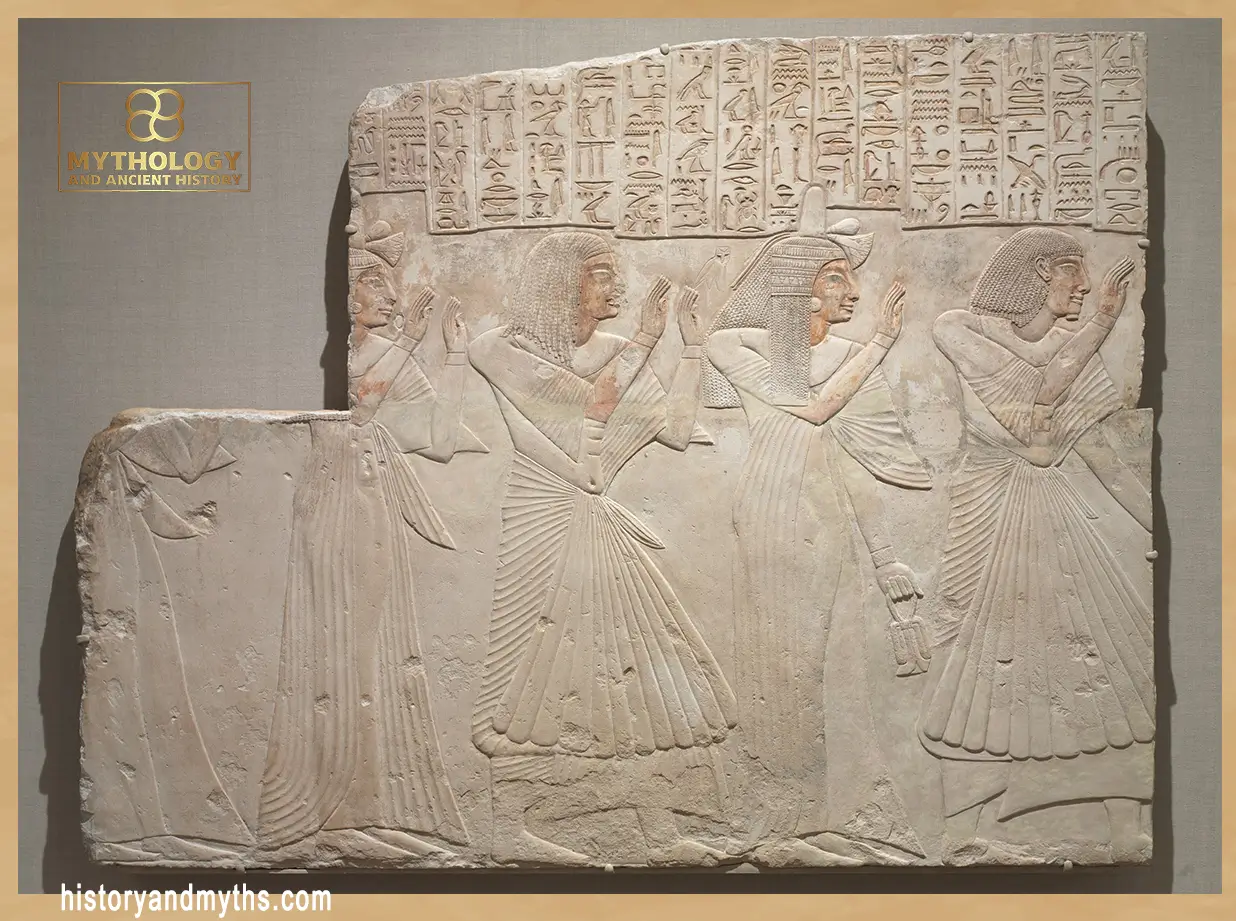
Prayer in ancient Egypt was not a fixed ritual with prescribed times or formulas. It was a flexible act of address—speaking to a god when the need arose. Ordinary people prayed to ask, to complain, to thank, or to seek protection. The act itself mattered more than formality or location.
Unlike temple rituals, daily prayer required no priestly mediation. A person could speak directly to a god by name, invoke a familiar epithet, or appeal to divine power in general terms. Short spoken appeals were common, especially during work, travel, illness, or emotional distress. Prayer was immediate and situational, shaped by circumstance rather than doctrine.
This flexibility explains why prayer appears unevenly in sources. It left few monumental traces because it was embedded in daily behavior, not institutional record. When prayer was written—on ostraca, amulets, or small stelae—it usually reflected personal need rather than public worship.
In practice, prayer functioned as a daily coping mechanism. It bridged the gap between human vulnerability and divine power without requiring ritual complexity. To pray was not to perform religion—it was to use it.
| Aspect | Everyday Practice | Meaning in Daily Life |
|---|---|---|
| Nature of Prayer | Short, flexible, spoken or written appeals. | Prayer used as an immediate response to need. |
| Location | Homes, workplaces, roads, temple gates. | Divine access not limited to sacred buildings. |
| Who Prayed | Men, women, and children. | Prayer embedded in family and daily routine. |
| Spoken vs. Written | Spoken for immediacy; written for continuity. | Different formats served different needs. |
| Prayer & Magic | Combined with charms, gestures, and amulets. | Protection valued over ritual distinction. |
| Prayer vs. Ritual | Prayer replaced ritual when access was limited. | Religion remained usable in daily life. |
Where Daily Prayers Took Place
Daily prayer in ancient Egypt was not tied to a single sacred space. It happened wherever need arose. Homes were the most common setting: near household altars, doorways, or simple niches where images or symbols offered a focal point. These prayers were informal, spoken aloud or silently, and directed to gods believed to be attentive to domestic life.
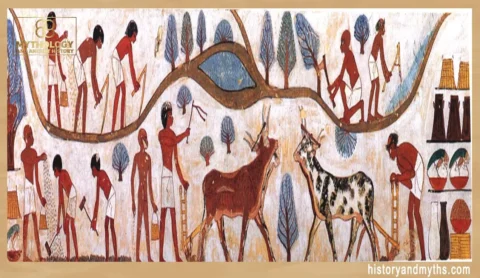
Workplaces were another key setting. Farmers prayed in fields, craftsmen in workshops, and travelers on roads or riverbanks. Short invocations accompanied labor, danger, or uncertainty. The absence of ritual paraphernalia did not diminish legitimacy; presence and intent were enough.
Public spaces also mattered. People prayed at temple gates, along processional routes, or near local shrines without entering formal cult areas. This allowed access to divine power without priestly mediation. The temple remained important, but daily prayer circulated around it rather than within it.
The pattern is consistent: prayer followed life’s pressures, not architecture. By detaching devotion from fixed spaces, Egyptians made prayer portable—usable wherever vulnerability was felt.
Spoken vs. Written Prayers
Most daily prayers in ancient Egypt were spoken, not written. They were brief, situational appeals—names of gods invoked, requests stated plainly, and emotions expressed without formal structure. Speech allowed immediacy: a prayer could be uttered at the exact moment of fear, illness, or uncertainty.
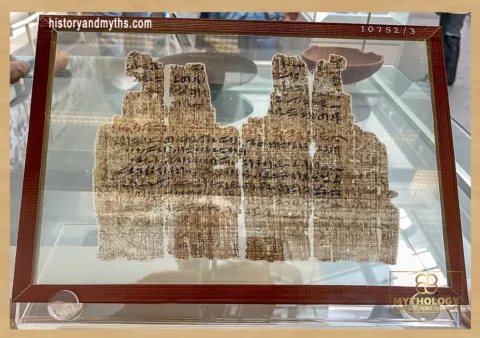
Written prayers served a different purpose. When people wrote prayers on ostraca, small stelae, amulets, or personal objects, they aimed for persistence, not performance. Writing fixed the request in material form, allowing the appeal to remain active beyond the moment of speech. These texts were often short, personal, and focused on protection, healing, or justice.
The choice between speech and writing reflected need. Spoken prayer addressed the now. Written prayer addressed duration—sleep, travel, ongoing danger. Neither required priestly approval. Both relied on the same assumption: gods were accessible and responsive to individual voices.
This dual practice shows how flexible daily devotion was. Prayer adapted to circumstance, using voice for immediacy and writing for continuity—two tools serving the same everyday religious purpose.
Prayer at Home: Women, Family, and Daily Devotion
The home was the core space of daily prayer, and women played a central role in maintaining this routine. Household devotion focused on protection, health, fertility, and stability—concerns tied directly to daily survival. Prayer here was informal, repetitive, and woven into ordinary actions such as cooking, childcare, and caring for the sick.
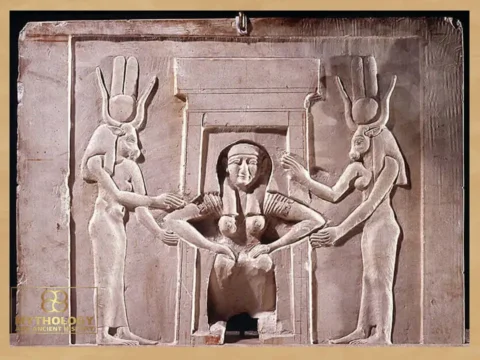
Women often acted as the primary transmitters of domestic prayer practices. They invoked gods associated with birth, protection, and healing, teaching children short prayers and gestures rather than formal hymns. This transmission was practical, not doctrinal. Children learned when to pray by observing moments of fear, illness, or uncertainty, not by following schedules.
Family prayer did not require fixed liturgy. A spoken appeal at a doorway, a whispered request near a bed, or a brief invocation over food was sufficient. These acts reinforced the idea that divine attention extended into private life, not just public ritual.
Domestic prayer reveals how religion functioned below the level of institutions. It was gendered but not exclusive, collective but not formal. Through households—especially through women—daily prayer remained continuous, adaptive, and deeply embedded in everyday life.
Personal Gods and Everyday Appeals
Daily prayer in ancient Egypt was often directed not to the entire pantheon, but to specific gods felt to be personally accessible. These were deities associated with protection, justice, healing, or local presence—gods believed to listen to individual concerns rather than state ritual. Personal preference and experience shaped devotion more than official theology.
People appealed to gods who matched their immediate needs. A sick person prayed to a healing deity; someone facing injustice addressed a god known for hearing complaints; a parent invoked protective powers over children. This practice created a personal religious geography, where certain gods became familiar listeners in daily life.
These appeals were direct and informal. Titles were simplified, requests were concrete, and expectations were practical. The relationship was transactional but intimate: help was sought in exchange for loyalty, offerings, or continued remembrance. Prayer functioned as ongoing communication rather than isolated ritual.
The prominence of personal gods explains why daily prayer remained resilient outside temples. Devotion did not depend on access to cult centers or priests. It depended on belief in divine attentiveness. Through personal appeal, religion became usable on demand, integrated into everyday decision-making and emotional life.
Why Did Egyptians Believe the Gods Heard Personal Prayers?
Ancient Egyptians did not believe that the gods listened only inside temples. Divine power was thought to extend throughout the world, making it possible for ordinary people to speak directly to a deity in moments of fear, gratitude, illness, or uncertainty. A prayer did not require a sacred building to become meaningful. It required the belief that the gods remained present beyond formal ritual.
This idea helped explain why personal devotion became such an important part of everyday religion. While priests maintained the official cults inside temples, ordinary people maintained their own relationship with the divine through private prayer, household offerings, and personal acts of devotion. These two forms of worship complemented rather than replaced one another.
The result was a religious system that operated on two levels at once. State ritual sustained cosmic order, while personal prayer allowed individuals to seek protection and guidance in everyday life. This balance made Egyptian religion both highly organized and deeply personal.
Prayer, Magic, and Protection
In daily life, prayer and magic were not separate practices. For ordinary Egyptians, both were tools used to manage risk, fear, and uncertainty. Prayer addressed divine will through words; magic reinforced that appeal through actions, objects, or written formulas. Together, they formed a single protective strategy.
Short prayers were often combined with gestures, amulets, or spoken charms. A person might invoke a god’s name while wearing a protective object or reciting a brief formula learned at home. This was not seen as improper or contradictory. Prayer expressed trust in divine power; magic helped activate and sustain that power in everyday situations.
This overlap explains why daily prayer appears practical rather than ceremonial. It was used when danger felt immediate—illness, childbirth, travel, or conflict. Protection mattered more than theological distinction. What worked was repeated; what failed was adjusted.
By blending prayer and magic, Egyptians created a flexible religious response to daily anxiety. The goal was not ritual purity, but effectiveness. Prayer was powerful because it could be reinforced, adapted, and used alongside other protective practices without restriction.
Daily Prayer in Ancient Egypt — At a Glance
- Prayer was informal, flexible, and need-driven.
- It took place mostly outside temples, especially at home.
- No priest was required for daily prayer.
- Spoken and written prayers served different purposes.
- Prayer and magic worked together as protection.
- Prayer often replaced ritual in moments of crisis.
© historyandmyths.com — Educational use
When Prayer Replaced Ritual
Daily prayer often functioned as a substitute for formal ritual when access to temples, priests, or offerings was limited. Ordinary Egyptians did not wait for ceremonial occasions to engage the divine. When time, distance, cost, or circumstance made ritual impractical, prayer filled the gap.
This replacement was not seen as inferior. A spoken appeal, a written request, or a combined prayer–charm was considered effective because it addressed the same goal: divine attention. What mattered was urgency and sincerity, not ceremonial completeness. In moments of illness, danger, or emotional distress, prayer was faster and more responsive than ritual.
The flexibility of prayer explains its centrality in everyday religion. It allowed individuals to act religiously without institutional dependency, preserving a sense of control in uncertain situations. Ritual remained important at the state and temple level, but daily life relied on prayer as its primary religious tool.
In practice, prayer was the most accessible form of devotion. It adapted to circumstance, replaced ritual when necessary, and ensured that religion remained active at the level of daily experience rather than confined to sacred spaces.
Daily prayer in ancient Egypt was a practical religious habit, not a formal obligation. It allowed ordinary people to address fear, illness, and uncertainty directly, without priests or ritual complexity. Spoken words, written appeals, and protective practices worked together to keep religion active in everyday life.
What sustained daily prayer was its accessibility. It followed people into homes, workplaces, and moments of crisis, adapting to circumstance rather than demanding ceremony. By functioning as an alternative to ritual when needed, prayer ensured that divine communication remained personal, immediate, and usable.
In this way, religion in ancient Egypt was lived as much as it was performed. Daily prayer kept belief grounded in experience, making the divine present not only in temples, but in the ordinary rhythm of life.
Key Takeaways
- Daily prayer was a practical response to fear and uncertainty.
- Ordinary Egyptians prayed without priests or formal ritual.
- Homes and workplaces were central spaces of devotion.
- Prayer adapted easily through speech, writing, and magic.
- Its flexibility kept religion active in everyday life.
Frequently Asked Questions (FAQ)
Did ancient Egyptians pray every day?
Many did, especially in response to daily needs like health, protection, and uncertainty, even without formal ritual.
How did ordinary Egyptians pray outside temples?
They used short spoken invocations or personal appeals at home, during work, or while traveling, without priestly mediation.
Where did daily prayers usually take place?
Mostly at home, but also in workplaces, on roads, and near temple gates or local shrines rather than inside formal cult areas.
Were prayers spoken or written?
Most were spoken for immediacy. Written prayers appeared on small objects to keep protection or requests active over time.
Could women and children pray in ancient Egypt?
Yes. Domestic prayer was often maintained within the family, and children learned short invocations through household practice.
Which gods were most common in daily prayer?
People often prayed to accessible protective, healing, or justice-related deities, frequently shaped by local and personal preference.
Did prayer require a priest?
No. Daily prayer was typically direct and personal, unlike temple ritual that depended on priestly service.
How did prayer relate to magic?
In everyday life, prayer and protective magic often worked together through words, gestures, and amulets to manage risk.
Did daily prayer replace temple ritual?
Often, yes—especially when ritual access was limited by distance, cost, or urgency. Prayer functioned as a portable alternative.
What is the main takeaway about prayer in ancient Egypt?
Prayer was flexible and need-driven, keeping religion active in homes and daily life rather than confined to temples.
Sources & Rights
- Assmann, Jan. The Search for God in Ancient Egypt. Cornell University Press, 2001.
- Assmann, Jan. Death and Salvation in Ancient Egypt. Cornell University Press, 2005.
- Baines, John. “Practical Religion and Piety.” In Religion in Ancient Egypt, edited by Byron E. Shafer, Cornell University Press, 1991.
- Bard, Kathryn A. An Introduction to the Archaeology of Ancient Egypt. 2nd ed. Wiley-Blackwell, 2015.
- David, Rosalie. Religion and Magic in Ancient Egypt. Penguin Books, 2002.
- Hornung, Erik. Conceptions of God in Ancient Egypt: The One and the Many. Cornell University Press, 1996.
- Ikram, Salima. Ancient Egypt: An Introduction. Cambridge University Press, 2011.
- Kemp, Barry J. Ancient Egypt: Anatomy of a Civilization. 2nd ed. Routledge, 2006.
- Pinch, Geraldine. Magic in Ancient Egypt. University of Texas Press, 2006.
- Pinch, Geraldine. Egyptian Mythology: A Guide to the Gods, Goddesses, and Traditions of Ancient Egypt. Oxford University Press, 2004.
- Quirke, Stephen. Exploring Religion in Ancient Egypt. Wiley-Blackwell, 2015.
- Redford, Donald B., ed. The Oxford Encyclopedia of Ancient Egypt. Oxford University Press, 2001.
- Ritner, Robert K. The Mechanics of Ancient Egyptian Magical Practice. Oriental Institute, University of Chicago, 1993.
- Shafer, Byron E., ed. Religion in Ancient Egypt: Gods, Myths, and Personal Practice. Cornell University Press, 1991.
- Teeter, Emily. Religion and Ritual in Ancient Egypt. Cambridge University Press, 2011.
- Wilkinson, Richard H. The Complete Gods and Goddesses of Ancient Egypt. Thames & Hudson, 2003.
- The British Museum. Collection Online: Ancient Egypt.
- The Metropolitan Museum of Art. Heilbrunn Timeline of Art History: Ancient Egypt.
- UCLA Encyclopedia of Egyptology. Religion, Magic, Personal Piety, and Household Cult in Ancient Egypt.
- Griffith Institute, University of Oxford. Ancient Egyptian Religion Resources.
Written by H. Moses — All rights reserved © History and Myths