Draugar: The Restless Dead in Norse Folklore
Draugar (singular draugr) are restless dead in Old Norse and Icelandic tradition. Unlike purely disembodied ghosts, many retain a physical presence, leaving their graves to attack people, haunt farms, or disturb the living. Yet the sagas do not describe one fixed type of undead, and the terms used for returning dead vary.
In Grettis saga, the dead shepherd Glámr terrorizes a farm and curses the man who defeats him. Eyrbyggja saga describes the violent return of Þórólfr Twist-Foot and a separate haunting at Fróðá, where the dead are confronted through legal and religious rites. These accounts reveal different explanations for why the dead returned, how they could be stopped, and what their presence meant to medieval Icelandic communities.
What Is a Draugr in Norse Folklore?
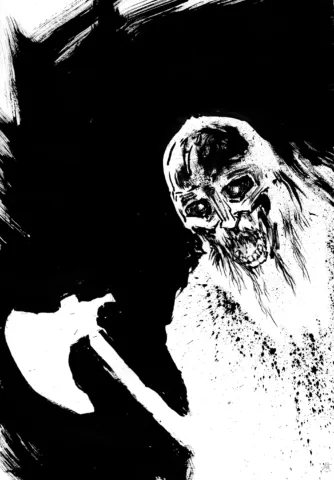
The Old Norse word draugr (plural draugar) is often translated as “ghost,” but the English term can be misleading. In Icelandic saga literature, the returning dead may possess substantial bodies that can be touched, fought, or physically restrained. They are not necessarily the invisible spirits familiar from modern ghost stories.
Medieval writers used several terms for such beings. Aptrganga, literally “walking again,” refers to someone who returns after death, while haugbúi means “mound-dweller,” describing a dead person inhabiting a burial mound. These expressions emphasize different aspects of the dead person’s presence rather than defining three rigid categories of supernatural creatures.
The terminology is less consistent than modern descriptions suggest. Medieval literature scholar Ármann Jakobsson notes that Grettis saga does not actually call Glámr a draugr, while Eyrbyggja saga does not use the word for Þórólfr Twist-Foot. Both are nevertheless prominent examples of the returning dead. The distinction matters because the sagas describe a range of encounters with the deceased, not a single species of monster governed by fixed rules.
What Did Draugar Look Like, and What Could They Do?
The sagas give the returning dead no single appearance, although several are described as swollen, darkened, or unnaturally heavy. In Grettis saga, Glámr’s corpse is found dark blue and as large as an ox. Eyrbyggja saga describes Þórólfr Twist-Foot’s body as undecayed and hideous. When his grave is opened, moving him proves extraordinarily difficult.
Their physical strength makes them dangerous to the living. Glámr damages buildings, kills livestock, and wrestles Grettir with almost overwhelming force. Þórólfr attacks people and animals, while his repeated appearances eventually force nearby farms to be abandoned.
Some revenants possess powers beyond physical violence. Glámr pronounces a curse that shapes Grettir’s future, leaving him troubled by darkness and solitude. Þórólfr’s haunting is associated with disturbed livestock, while some of his dead victims are reportedly seen accompanying him.
These powers are not shared by every revenant. Glámr’s curse, for example, is a distinctive feature of his story rather than an ability attributed to all returning dead.
Why Did the Dead Return?
The Icelandic sagas offer no single explanation for why the dead returned. Anger, attachment to property, and unresolved conflicts appear in different accounts, but the stories rarely establish what actually causes a corpse to become restless.
In Eyrbyggja saga, Þórólfr Twist-Foot dies after a series of bitter disputes. His subsequent violence seems consistent with his temperament during life, although the saga never explicitly identifies anger as the cause of his return.
Kárr the Old in Grettis saga presents a different pattern. He haunts farmland beyond his burial mound and attacks Grettir when the hero enters it to recover treasure. His connection with land and possessions is clear, but whether greed or a desire to protect his property drives him remains uncertain.
The hauntings at Fróðá are more difficult to explain through individual motives. Several deceased household members return, following Þórgunna’s death and the household’s failure to obey her final instructions. Yet the saga does not establish that this disobedience alone accounts for every apparition.
Kárr and Glámr: Two Restless Dead in Grettis Saga
Grettis saga describes two encounters with the undead that leave its hero with very different rewards. In Norway, Grettir learns that Kárr the Old, buried on Haramsey, has driven farmers from their land, leaving his son Þorfinnr in possession of the island.
In Chapter 18, Grettir breaks into Kárr’s burial mound and finds the corpse seated among gold and silver. As he gathers the treasure, the dead man attacks. After a fierce struggle, Grettir throws Kárr onto his back, beheads him with his own sword Jökulsnautr, and places the severed head beside his thigh. Among the treasures is a valuable short sword, a family heirloom that Þorfinnr initially refuses to surrender. He eventually gives it to Grettir after the hero protects his household from a band of berserkers.
Glámr, introduced in Chapter 32, is a Swedish shepherd employed at Þórhall’s haunted farm in Iceland. He rejects Christian observances and disappears during a violent storm on Yule Eve. His body is found near disturbed earth, bloodstains, and enormous footprints. The locals conclude that an earlier supernatural creature killed him, apparently suffering fatal wounds itself. Glámr subsequently becomes a greater menace, killing livestock and people and making the surrounding farms dangerous.
Read Also:
Hel: The Norse Ruler of the Dead and Her Underworld
Grettir confronts him in Chapter 35. Their wrestling match wrecks the farmhouse as Glámr struggles to drag Grettir outside. At the doorway, Grettir manages to throw the revenant backward, and both fall into the moonlight. Glámr’s terrifying gaze leaves Grettir temporarily unable to draw his sword. The dead shepherd then curses him, declaring that he will never become stronger, that outlawry and misfortune await him, and that the memory of his eyes will make solitude unbearable. When Grettir regains control, he beheads Glámr with the short sword recovered from Kárr’s mound. The corpse is burned, and its ashes are buried away from inhabited places.
The short sword links the two episodes, but their consequences differ. Defeating Kárr eventually earns Grettir a prized weapon and Þorfinnr’s respect. His victory over Glámr brings further fame, yet leaves him afraid of darkness and unable to endure solitude. Grettir destroys the revenant’s body, but cannot escape his curse.
Þórólfr Twist-Foot in Eyrbyggja Saga
In Eyrbyggja saga, Þórólfr bægifótr (Thorolf Twist-Foot) is a wealthy but increasingly quarrelsome landowner whose hostility continues after death. In Chapter 33, a dispute over woodland brings him into conflict with Snorri goði. When his son Arnkell refuses to support him, Þórólfr returns home furious, sits silently in his high seat, and refuses food. The next morning, he is found dead in the same position.
Arnkell takes unusual precautions with the corpse. He approaches from behind, warns others not to face his father, and covers the dead man’s head. Rather than carry him through the doorway, he breaks an opening in the wall and has the body dragged outside. Þórólfr is then taken to a burial mound in Þórsárdalr.
The precautions fail. Þórólfr begins roaming after sunset, killing livestock and attacking people. A shepherd is found near his grave with every bone broken, while the woman managing his former household dies after repeated disturbances. Farms are abandoned, and some of those who die are reportedly seen accompanying him.
Arnkell organizes a second burial. The body is found undecayed and extraordinarily difficult to transport. When the oxen pulling it become uncontrollable, the men bury Þórólfr on a nearby headland. Arnkell orders a high wall built across the approach, and the haunting ceases for the remainder of his life.
Read Also:
Rán: The Norse Sea Goddess Who Claimed the Drowned
After Arnkell’s death, Þórólfr returns. Chapter 63 describes renewed attacks that force local inhabitants to seek help from Þóroddr Þorbrandsson. His men reopen the grave and find the corpse swollen, darkened, and almost impossible to move. Using levers, they drag it to the shore and burn it. The wind scatters much of the ash, but they throw what they can recover into the sea.
The story continues with a strange incident. A cow begins licking stones where ashes from the pyre have settled. She later gives birth to an unusually powerful bull named Glæsir (Glossy). An elderly woman with a reputation for foresight warns that the animal will bring disaster. The sequence suggests a connection between Þórólfr’s remains and the bull, although the saga never explicitly identifies Glæsir as the dead man’s reincarnation.
The Fróðá Hauntings: Why Were the Dead Put on Trial?
The hauntings at Fróðá, described in Chapters 50–55 of Eyrbyggja saga, follow the death of Þórgunna, a wealthy woman from the Hebrides. Before dying, she orders her valuable bedding to be burned, warning that keeping it will bring trouble. The household’s mistress, Þuríðr, persuades her husband to preserve some of it. Strange omens follow, including an unnatural moon appearing inside the house. Later, a seal’s head rises through the floor and turns toward Þórgunna’s belongings.
The disturbances soon become deadly. A deceased shepherd attacks Þórir Wooden-Leg, who falls ill, dies, and begins appearing alongside him. Then Þóroddr, the head of the household, drowns with five companions. All six return during their funeral feast, dripping wet, and take their places beside the fire. Their arrival is initially regarded as a favorable omen, but their nightly visits continue after the feast. More dead household members appear, and the saga reports that eighteen of the thirty servants have died by late winter.
Kjartan, who grew up in Þóroddr’s household, seeks advice from Snorri goði, who proposes three measures: burn Þórgunna’s remaining bedding, summon the returning dead before a door-court (duradómr), and bring in a priest to perform Christian rites.
The court is held at the farmhouse doorway, following procedures resembling those of Icelandic legal assemblies. The dead are charged with entering the household without permission and depriving its inhabitants of life and good fortune. As each judgment is delivered, the accused rise and leave, reluctantly protesting their dismissal. Þóroddr is the last to depart.
Read Also:
Poetic Edda vs. Prose Edda: How Norse Myths Survived
A priest then carries holy water through the house, and religious services follow the next day. The hauntings cease, and Þuríðr recovers from her illness.
The unusual trial treats the dead as intruders subject to legal authority rather than enemies requiring physical destruction. The saga shows how familiar legal procedures could be extended into a supernatural story, although the episode is not evidence that medieval Icelanders regularly put revenants on trial.
Were All Returning Dead Malevolent?
Not every appearance of the dead in Icelandic sagas involves violence or a threatening corpse. In Njáls saga, Gunnar Hámundarson appears after his death in a scene that contrasts sharply with the attacks of Glámr and Þórólfr.
A shepherd and a servant woman first hear Gunnar reciting poetry inside his burial mound. Later, his son Högni and Njáll’s son Skarphéðinn witness the mound opening beneath the moonlight. Four lights burn inside without casting shadows, while Gunnar sits upright, looking cheerful. He recites a verse celebrating his courage and his willingness to die rather than surrender.
Skarphéðinn interprets the apparition as a message urging Högni to avenge his father. Yet Gunnar never directly addresses the witnesses or explicitly commands revenge. Scholars have therefore questioned whether the dead man intended to communicate with his son or whether Skarphéðinn gives the vision a meaning that serves the living.
Gunnar remains within his burial mound and harms no one. His appearance demonstrates that the supernatural dead could also preserve family memory, heroic reputation, and obligations between generations. It does not, however, make him a typical example of a physically roaming draugr. The distinction matters when examining the different forms of posthumous activity preserved in Norse literature.
How Were Draugar Stopped?
The Icelandic sagas offer no single method for stopping the restless dead. What works in one account may fail in another, and even destroying a revenant’s body does not necessarily end its influence over the living.
In Grettis saga, decapitation is used against both Kárr and Glámr. Grettir also places their severed heads beside their thighs, a repeated detail that suggests the positioning mattered beyond simply defeating them in combat. Glámr’s corpse receives further treatment through cremation and the burial of its ashes far from inhabited places. These measures end his physical attacks, but cannot undo the curse he has already pronounced.
Þórólfr’s case in Eyrbyggja saga demonstrates the limitations of burial precautions. Removing his body through a wall and relocating his grave do not prevent his return. A barrier across the headland appears effective while Arnkell lives, but the haunting resumes after his death. Cremation finally ends Þórólfr’s appearances, although the later story of the bull Glæsir suggests that the consequences of his death may not be entirely resolved.
At Fróðá, the dead are treated as unlawful occupants rather than bodies requiring destruction. The door-court orders them to leave, while the burning of Þórgunna’s bedding and subsequent Christian rites complete the household’s cleansing. The saga presents these measures together, without establishing which was independently responsible for ending the haunting.
The contrast is significant: physical force could disable a revenant, burial measures could restrict its movements, and legal or religious authority could compel the dead to depart. These were different responses within medieval Icelandic narratives, not a documented universal procedure for eliminating draugar.
What Did Draugar Represent in Medieval Iceland?
Kirsi Kanerva argues that some revenants in Icelandic sagas retain the authority they exercised during life, particularly individuals known for their strong wills. Their influence could extend beyond physical violence, affecting the health, emotions, and decisions of the living. In Eyrbyggja saga, Arnkell’s efforts to contain his dead father Þórólfr can be understood partly as a struggle to establish authority independent of him.
The hauntings at Fróðá invite a more complex interpretation. Kanerva connects them with disputed relationships, uncertain paternity, and inheritance. Kjartan, who organizes the expulsion of the dead, grows up in Þóroddr’s household, although the saga identifies Björn Breiðvíkingakappi as his biological father. His position within the family is therefore complicated by questions of parentage and social recognition.
Kanerva suggests that Kjartan’s successful intervention allows him to strengthen his standing as the future head of the household. Later in the saga, Björn sends him a valuable sword, which she interprets as a form of paternal acknowledgment. These details give the haunting a significance extending beyond the immediate danger posed by the dead.
In this reading, the revenants paradoxically act as agents of social order. Their disturbances bring unresolved conflicts into focus, while their expulsion allows the living to reassert authority through family relationships, law, and Christian ritual.
This is a scholarly interpretation, not an explanation explicitly supplied by the saga. Medieval readers could understand the hauntings as supernatural events while also recognizing the social tensions surrounding them.
Do the Sagas Preserve Viking Age Beliefs?
The stories of draugar often take place during the Viking Age, but most Icelandic family sagas were written in the thirteenth and fourteenth centuries, long after Iceland’s conversion to Christianity around 1000 CE. They may preserve older traditions, yet their descriptions of the dead also reflect the beliefs and literary interests of medieval authors.
Christian influence is visible within the stories themselves. Glámr’s refusal to observe Christian practices helps establish his troubling character in Grettis saga. At Fróðá, legal proceedings are followed by prayers, holy water, and a priest’s intervention. These details do not prove that the entire tradition of bodily revenants originated with Christianity. They show how inherited supernatural stories could be presented within a Christian society.
Archaeology offers another kind of evidence, though it requires caution. Some Viking Age graves contain decapitated bodies, stones placed over corpses, or unusual burial positions. Such discoveries have sometimes been interpreted as precautions against the returning dead. Archaeologist Leszek Gardeła argues that these burials cannot be explained by a single belief: violence, punishment, social exclusion, and other funerary practices must also be considered.
The sagas are therefore valuable evidence for how medieval Icelanders portrayed and understood the restless dead, but they cannot establish exactly what all Viking Age Scandinavians believed. Nor can an unusual grave, without further evidence, be identified as the burial of a feared draugr.
From Draugr to Draugen: The Sea Ghost of Norwegian Folklore
In later Norwegian folklore, draugen became closely associated with the sea. Often described as the spirit of a drowned fisherman who had never received a Christian burial, it haunted coastlines, boats, and fishing settlements. Encountering the creature could foretell a storm, shipwreck, or death.
Descriptions varied. Some traditions portrayed draugen as a headless sailor, sometimes with seaweed in place of a head, dressed in fishing clothes and sailing a half-boat with a ragged sail. Its terrifying cries warned fishermen of approaching danger, while other accounts described it entering boathouses or attempting to drag people into the water.
The regional differences were already documented by Norwegian folklorist Andreas Faye in Norske Folke-Sagn (1844). South of the mountains, draug could describe a white apparition or a supernatural warning of death. Farther north, particularly in Nordland, the creature was more strongly associated with the sea.
One northern Norwegian legend, preserved in a collection of folklore recorded in 1935, tells of a draug climbing aboard a fishing boat and testing the rowing places. When the crew’s leader attacks it, the creature escapes into the water, only to return that night and drag him into the sea. Here, the draug both foreshadows death and brings it about.
These maritime traditions share their name and association with the returning dead found in Old Norse literature. Their distinctive features, however, belong to later Norwegian folklore and should not be treated as established characteristics of the revenants in medieval Icelandic sagas.
Conclusion
The restless dead of Norse tradition followed no single pattern. Some guarded possessions, others threatened entire households, and their removal could require violence, burial measures, or legal and religious rites. These differences reveal how medieval Icelandic stories connected the dead with unresolved conflicts and the authority of the living.
The sagas cannot be treated as direct records of Viking Age beliefs. Norway’s later sea-draug shows how traditions surrounding the returning dead continued to develop in different communities and historical settings.
Sources & Primary Texts
Primary Saga Texts
- Grettis saga.
Icelandic Saga Database, English translation by Eiríkr Magnússon and William Morris. Chapters 18, 20, and 32–35. - Eyrbyggja saga.
Icelandic Saga Database, English translation by William Morris and Eiríkr Magnússon. Chapters 33–34, 50–55, and 63. - Brennu-Njáls saga.
Icelandic Saga Database, English translation by George W. Dasent. Gunnar’s posthumous appearance.
Academic Studies
- Jakobsson, Ármann (2011).
Vampires and Watchmen: Categorizing the Mediaeval Icelandic Undead.
Journal of English and Germanic Philology, 110(3), 281–300. - Kanerva, Kirsi (2011).
The Role of the Dead in Medieval Iceland: A Case Study of Eyrbyggja saga.
Collegium Medievale, 24, 23–48. - Kanerva, Kirsi (2013).
Rituals for the Restless Dead: The Authority of the Deceased in Medieval Iceland.
De Gruyter, pp. 205–227. - Gardeła, Leszek (2013).
The Dangerous Dead? Rethinking Viking-Age Deviant Burials.
In Conversions: Looking for Ideological Change in the Early Middle Ages. Verlag Fassbaender.
Norwegian Folklore
- Faye, Andreas (1844).
Draugen.
Norske Folke-Sagn, pp. 72–73. - Kvideland, Reimund, and Henning K. Sehmsdorf (1988).
Scandinavian Folk Belief and Legend.
University of Minnesota Press, linked 1991 edition. - Draug.
Store norske leksikon, Norwegian scholarly reference encyclopedia.
Copyright & Credits
© 2026 History & Myths.
Written by H. Moses. All rights reserved.
This article presents original historical and literary analysis based on the primary texts and academic research cited above. The interpretations of individual scholars are attributed to their respective authors.
Third-party images and historical source materials remain subject to their respective copyright and licensing terms. Image credits and applicable licenses are provided separately where required.