Deirdre of the Sorrows: The Tragic Legend of Irish Mythology
Deirdre of the Sorrows is one of the most tragic figures in Irish mythology, known for her relationship with Naoise and the betrayal that led to the deaths of the three Sons of Uisliu. Her story belongs to the Ulster Cycle and survives in several medieval Irish accounts, beginning with Longes mac nUislenn (The Exile of the Sons of Uisliu).
Before Deirdre was born, the druid Cathbad foretold that she would bring bloodshed and division to Ulster. King Conchobar kept her secluded, intending to claim her as his wife, but Deirdre chose Naoise instead. She fled with him and his brothers, Ainnle and Ardan, eventually reaching Scotland. At the urging of Ulster’s nobles, Conchobar agreed to let them return under promises of protection. The brothers were nevertheless killed, leaving Deirdre at the mercy of the king.
The earliest surviving account centres on exile, broken promises, and the consequences of Conchobar’s betrayal. Later retellings developed Deirdre’s relationship with Naoise into a more elaborate tragedy, changing important details of her life and death.
Who Was Deirdre of the Sorrows?
Deirdre, called Derdriu in early Irish texts, was the daughter of Feidlimid mac Daill, a storyteller in the service of Conchobar mac Nessa, king of Ulster. Her mother is unnamed in the earliest surviving account. Although celebrated for her extraordinary beauty, Deirdre was a human figure of the Ulster Cycle, not a goddess.
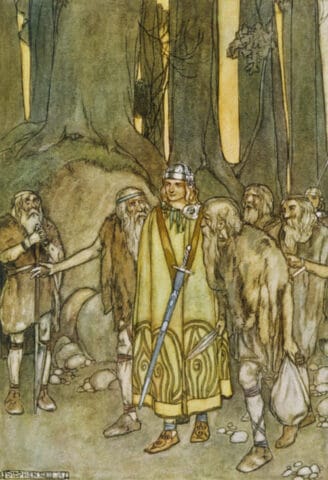
Her story unfolds around Emain Macha, Conchobar’s royal stronghold, where the loyalty of warriors to their king played a central role. Among those warriors were the three sons of Uisliu: Naoise, Ainnle, and Ardan. The brothers were renowned for their fighting ability and remarkable singing voices, which the tale describes as having an almost supernatural effect on listeners.
The familiar name Deirdre of the Sorrows reflects her later literary reputation. The oldest surviving version instead bears the title Longes mac nUislenn (The Exile of the Sons of Uisliu), placing the brothers and their fate at the centre of the narrative.
Read Also
Cú Chulainn in Irish Mythology: Hero of the Ulster Cycle
The Pursuit of Diarmuid and Gráinne: A Tragic Irish Love Legend
Cathbad’s Prophecy and Conchobar’s Claim
Deirdre’s story begins at a feast in the house of her father, Feidlimid mac Daill. As the guests prepared to retire, his pregnant wife crossed the hall and the unborn child cried out so loudly that everyone heard it. Alarmed by the sound, the woman sought an explanation from the druid Cathbad.
Cathbad foretold the birth of a beautiful girl whose life would bring bloodshed among Ulster’s warriors. His prophecy specifically mentioned the exile of the three sons of Uisliu, violence at Emain Macha, and Fergus’s departure from Ulster.
When Deirdre was born, the warriors demanded her death to prevent the predicted disasters. Conchobar overruled them and ordered that she be raised under his authority, intending to take her as his wife when she grew older.
Deirdre grew up in a separate enclosure, hidden from the men of Ulster. Only her foster father, foster mother, and Leborcham had access to her. The tale explains that Leborcham could not be excluded because she was a female satirist. Deirdre remained secluded until the time Conchobar intended to claim her.
How Deirdre Met Naoise
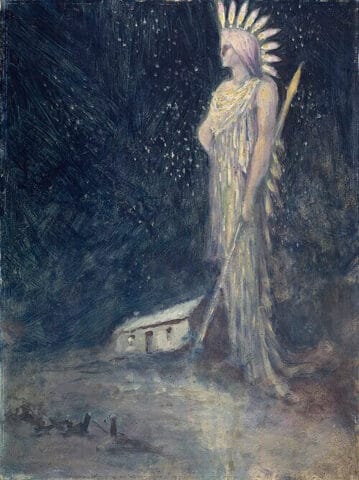
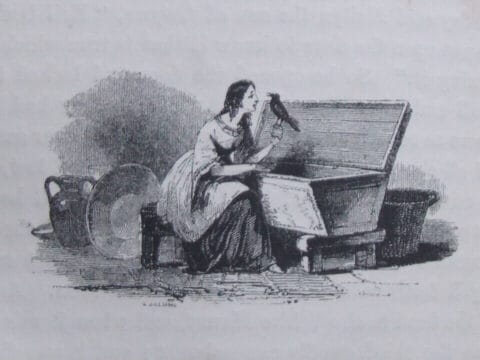
One winter day, while Deirdre’s foster father was skinning a calf outside, a raven landed on the snow and began drinking its blood. Deirdre told Leborcham that she wanted a man with the three colours before her: hair as black as the raven, cheeks as red as the blood, and skin as white as the snow. Leborcham knew someone who matched her description: Naoise, son of Uisliu.
Deirdre later found Naoise singing alone on the rampart at Emain Macha. She approached him, and their conversation turned to marriage. Naoise reminded her that Conchobar intended to claim her as his wife. Deirdre replied that she would rather choose a younger man like him.
Naoise refused, recalling Cathbad’s prophecy. Deirdre seized both his ears and threatened to shame him unless he took her away. Naoise then raised his voice in song, drawing the attention of his brothers, Ainnle and Ardan.
When Naoise explained what had happened, his brothers warned that it would bring trouble to Ulster. Nevertheless, they refused to leave him exposed to disgrace. They agreed to stand by him and leave Ulster with Deirdre.
Deirdre and the Sons of Uisliu in Exile
Deirdre left Ulster with Naoise and his brothers, Ainnle and Ardan. According to Longes mac nUislenn, they travelled with 150 warriors and equal numbers of women, servants, and dogs. They spent a long period moving through Ireland under the protection of various rulers, while Conchobar repeatedly attempted to kill them through ambushes and deception. Eventually, they were driven across the sea to Scotland.
The exiles initially survived by hunting in remote country. When game became scarce, they began taking cattle from the local inhabitants, who gathered to attack them. The brothers sought protection from the Scottish king, who accepted them into his service as mercenary warriors. They arranged their houses to conceal Deirdre, fearing that anyone who saw her might seek to possess her and kill them.
Their precautions failed when the king’s steward discovered Deirdre sleeping beside Naoise. He reported her beauty to the king and suggested killing Naoise. The king refused to act immediately, instead instructing the steward to approach Deirdre secretly on his behalf. She rejected his advances and told Naoise about each encounter.
The king then sent the brothers into dangerous battles, hoping they would be killed. When they survived every attempt, the men of Scotland assembled to attack them. Deirdre learned of the plan and warned Naoise that they would die unless they left that night. The exiles escaped to an island at sea.
Why Did Conchobar Invite Them Back?
News of the brothers’ troubles in Scotland eventually reached Ulster. Fearing that three of their finest warriors might die in a foreign land, the Ulstermen urged Conchobar to forgive them and allow their return. The king agreed and offered to send men to guarantee their safety.
The Sons of Uisliu accepted on the condition that three men serve as their protectors: Fergus mac Róich, Dubthach Dóeltengae, and Cormac, Conchobar’s son. The three agreed to act as guarantors and travelled to bring the exiles home.
Conchobar, however, arranged for Fergus to be drawn into feasting. The brothers had sworn that the first food they ate upon returning to Ireland would be provided by Conchobar himself. Unable to remain with Fergus without breaking their oath, they continued toward Emain Macha.
Fergus and Dubthach stayed behind, while Fergus’s son Fiachu accompanied Deirdre and the brothers in his father’s place. They reached the green outside Emain Macha without two of the men who had promised to protect them.
The Betrayal and Death of Naoise
When the Sons of Uisliu reached Emain Macha, Conchobar had already arranged their deaths. He entrusted the killing to Eogan mac Durthacht, king of Fernmag, who had recently come to make peace with him after a long period of hostility. Conchobar’s mercenaries surrounded the king to prevent the brothers from approaching him.
Naoise, Ainnle, and Ardan stood on the green outside Emain Macha, while Deirdre and the other women sat on the rampart. Eogan approached with his warriors, and Fiachu, Fergus’s son, moved to Naoise’s side.
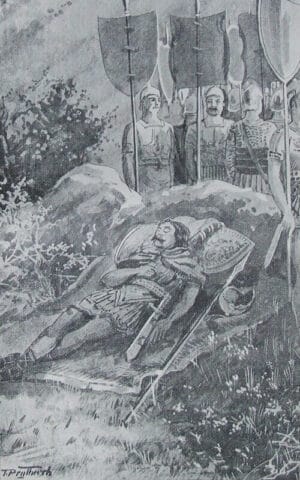
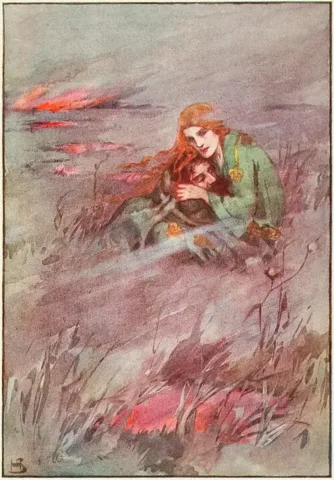
Eogan greeted Naoise with a thrust of his great spear, breaking his back. Fiachu immediately threw himself over the wounded warrior, wrapping both arms around him. The attackers struck Naoise again, this time through Fiachu’s body. Fighting spread across the green, and Ainnle and Ardan were also killed. None of the three brothers escaped.
Deirdre was taken to Conchobar with her hands bound behind her back. The murder of the brothers violated the protection guaranteed by Fergus, Dubthach, and Cormac, setting off a violent conflict among the warriors of Ulster.
Fergus’s Revenge and Exile
When Fergus, Dubthach Dóeltengae, and Cormac learned that the Sons of Uisliu had been murdered, they turned against Conchobar. The king had broken the guarantees of protection they had given the brothers, and the dispute led to further bloodshed in Ulster.
Dubthach killed Mane, Conchobar’s son, and Fiachna, the son of Conchobar’s daughter Feidelm. Fergus killed Traigthren, son of Traiglethan, and his brother. Fighting then broke out between the guarantors and Conchobar’s supporters, leaving three hundred Ulstermen dead. Before morning, according to the tale, Dubthach also killed the maidens of Ulster, while Fergus burned Emain Macha.
Fergus, Dubthach, and Cormac then left Ulster and sought refuge with King Ailill and Queen Medb in Connacht. Longes mac nUislenn gives the number of exiles as three thousand and describes sixteen years during which weeping and fear continued among the Ulstermen.
Fergus’s exile also connects Deirdre’s story with the wider Ulster Cycle. In the Táin Bó Cúailnge, he appears among Medb’s allies, fighting against the people he had once served.
How Did Deirdre Die?
In Longes mac nUislenn, Deirdre lived with Conchobar for a year after Naoise’s murder. Throughout that time, she never smiled, barely ate or slept, and rarely lifted her head from her knees. When musicians performed for her, she responded with poems mourning Naoise and his brothers. She recalled their voices, their life together in exile, and the happiness she had lost.
Conchobar tried to win her affection, but Deirdre openly blamed him for Naoise’s death. When he asked whom she hated most, she named Conchobar himself and Eogan mac Durthacht, Naoise’s killer. The king responded by declaring that she would spend the following year with Eogan.
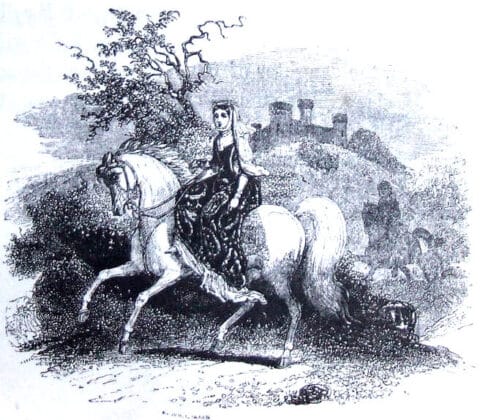
The next day, Deirdre travelled in a chariot with Eogan to an assembly at Macha. She had vowed never to look upon the two men she hated together. Conchobar mocked her position between them, comparing her to a sheep caught between two rams. Seeing a large boulder in the road, Deirdre struck her head against it and died.
The later Oidheadh Chloinne hUisneach preserves a different ending, in which Deirdre dies at the brothers’ grave soon after their murder.
How the Legend of Deirdre Changed Over Time
The oldest surviving account of Deirdre’s story, Longes mac nUislenn, is preserved in the twelfth-century Book of Leinster, although the tale was probably composed earlier. Its title, The Exile of the Sons of Uisliu, reflects its concern with loyalty, kingship, and the consequences of Conchobar’s betrayal. Deirdre’s choices set the tragedy in motion, but the breakdown of trust between a king and his warriors shapes the narrative.
Later medieval storytellers gave Deirdre a more prominent role. Oidheadh Chloinne hUisneach, probably composed in the fourteenth or fifteenth century, develops her relationship with Naoise through extended conversations, poetry, and laments. The fifteenth-century Glenmasan manuscript preserves an incomplete version of this later tradition, while the earliest surviving complete copy dates to 1671.
Deirdre’s story continued to inspire Irish writers, including J. M. Synge, whose play Deirdre of the Sorrows premiered at Dublin’s Abbey Theatre in 1910. Across these retellings, a tale concerned with broken allegiance and the destruction of three brothers became increasingly associated with Deirdre’s personal tragedy.
Academic & Primary Sources
This article draws primarily on the early Irish tale Longes mac nUislenn, with later literary traditions and academic studies used to examine how Deirdre’s story changed over time.
- Hull, Vernam, ed. and trans.
Longes mac n-Uislenn: The Exile of the Sons of Uisliu.
New York: Modern Language Association of America, 1949.
The principal edition and translation used for Deirdre’s prophecy, her relationship with Naoise, the brothers’ exile, Conchobar’s betrayal, and the early account of her death.
Irish text and English translation, University College Cork. - Mac Giolla Léith, Caoimhín, ed. and trans.
Oidheadh Chloinne hUisneach: The Violent Death of the Children of Uisneach.
Irish Texts Society, vol. 56. London: Irish Texts Society, 1993.
A critical edition of the later tradition, used to distinguish its expanded treatment of Deirdre and Naoise from the earlier saga.
Bibliographic reference, University College Cork. - Mathis, Kate Louise.
Evolution of Deirdriu in the Ulster Cycle.
PhD diss., University of Edinburgh, 2011.
A study of the changing characterization of Deirdre, the manuscript traditions, and the relationships between Deirdre, Conchobar, Fergus, and the Sons of Uisliu.
Edinburgh Research Archive. - Johnston, Elva.
“Deirdre (Derdriu).”
Dictionary of Irish Biography.
Royal Irish Academy.
A scholarly overview of Deirdre’s place in the Ulster Cycle and her development from the early saga into later romantic and dramatic retellings.
Dictionary of Irish Biography.
Copyright Notice
Copyright © 2026 History & Myths. Original article text, analysis, and editorial presentation are protected by copyright. All rights reserved. Ancient Irish narratives, published translations, scholarly works, and third-party images remain subject to their respective rights and licenses. Image credits are provided separately where applicable.