Animal Symbolism in Greek Mythology: Wisdom, Power, Divine Meaning
In Greek mythology, animals are rarely included as decorative details or simple companions of the gods. When an owl appears beside Athena, an eagle accompanies Zeus, or a serpent is linked to healing and prophecy, the animal usually represents a specific idea that Greek audiences would immediately recognize. These creatures function as symbols, helping transform abstract concepts such as wisdom, authority, renewal, and power into visible and memorable images.
This symbolic role explains why certain animals appear repeatedly across myths, religious art, and sacred traditions. The Greeks did not choose them at random. Each animal possessed characteristics that reflected qualities associated with particular gods, forces of nature, or aspects of human experience. Through these associations, animals became a visual language capable of communicating complex ideas without lengthy explanation.
By examining the symbolism of animals in Greek mythology, a deeper pattern emerges. The owl, eagle, serpent, bull, and dolphin are not important because they are animals. They are important because they reveal how the Greeks understood intelligence, divine authority, transformation, strength, and guidance. Their symbolic meanings provide insight into the values, fears, and beliefs that shaped the mythological world.
Why Animals Became Symbols in Greek Mythology
Greek mythology frequently uses animals to express ideas that are difficult to represent in human form alone. Wisdom, authority, renewal, strength, and divine guidance are abstract qualities, but an animal can embody them through recognizable traits. As a result, animals became a symbolic language that helped communicate the nature of gods, cosmic forces, and human values.
This symbolism was based on observation as much as imagination. The Greeks paid attention to the behavior of animals and associated particular characteristics with specific creatures. An eagle’s ability to soar high above the earth suggested dominance and divine perspective. A serpent’s periodic shedding of its skin suggested renewal and transformation. These natural qualities made animals effective symbols within mythological narratives.
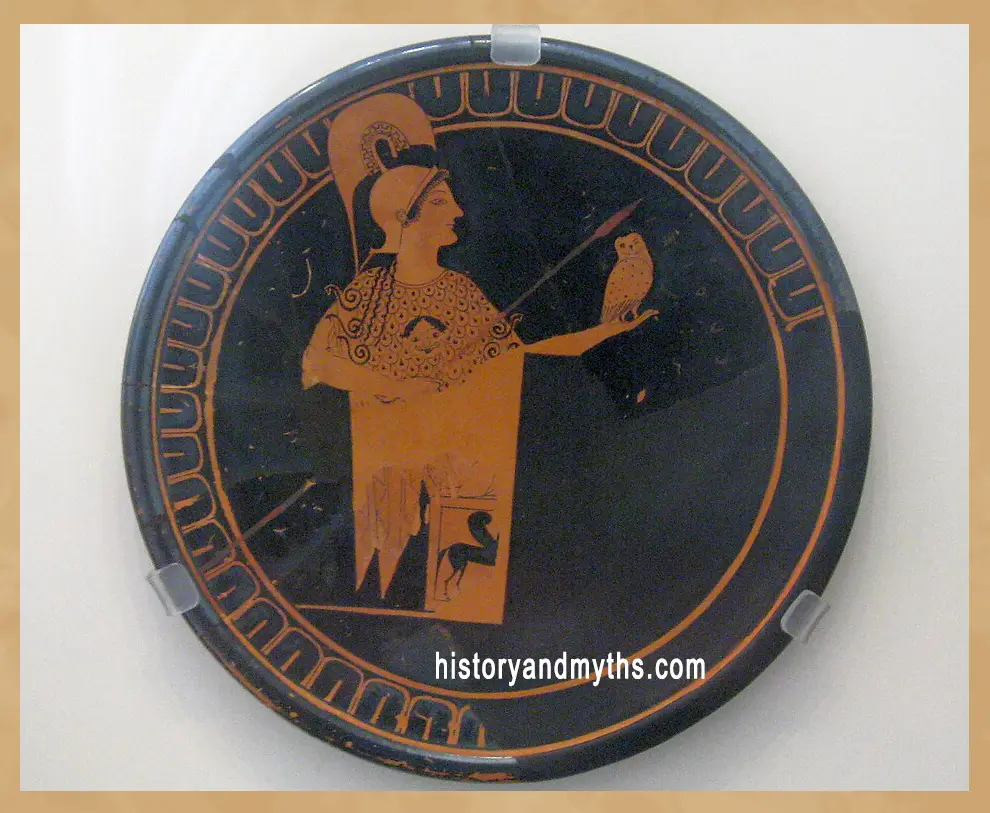
The connection between animals and gods developed from this symbolic logic. The owl was linked to Athena not because the bird itself was sacred in isolation, but because its perceived qualities reflected the goddess’s association with wisdom and insight. Similar relationships appear throughout Greek mythology, where animals function as visible expressions of divine attributes.
Importantly, these creatures were not usually worshipped as independent sacred beings. Unlike some other ancient traditions, Greek mythology generally used animals as symbolic representatives rather than as primary objects of religious devotion. Their value lay in what they communicated rather than in the animals themselves.
For the Greeks, animals provided a bridge between the natural world and abstract ideas. Through them, mythology transformed complex concepts into images that could be immediately understood, remembered, and recognized across stories, rituals, and works of art.
| Animal | Symbolic Meaning | Associated Deity |
|---|---|---|
| Owl | Wisdom and insight | Athena |
| Eagle | Authority and sovereignty | Zeus |
| Serpent | Renewal and healing | Asclepius |
| Bull | Strength and fertility | Zeus / Poseidon |
| Dolphin | Guidance and protection | Apollo |
The Owl and the Symbolism of Wisdom
The owl became one of the most recognizable symbols in Greek mythology because it represented a form of knowledge that goes beyond ordinary perception. Unlike many birds, the owl can see and hunt effectively in darkness. This unusual ability made it a natural symbol of insight, intelligence, and the capacity to recognize what remains hidden from others.
These qualities explain its close association with Athena, the goddess of wisdom, strategy, and rational thought. The connection was not arbitrary. The owl reflected the kind of understanding Athena embodied—not merely the accumulation of information, but the ability to see clearly, judge wisely, and act with foresight. In Greek art and mythology, the presence of an owl often signaled intelligence and careful judgment rather than physical power.
The symbolism is especially significant because Greek wisdom was not defined solely by knowledge. True wisdom involved recognizing patterns, understanding consequences, and perceiving truths that were not immediately obvious. The owl’s ability to navigate darkness made it an effective metaphor for this deeper form of insight.
As a result, the owl became more than an animal associated with a particular goddess. It evolved into a broader symbol of intellectual clarity and hidden understanding. Through the owl, Greek mythology expressed the idea that wisdom is the ability to perceive what others fail to notice, even when surrounded by uncertainty or darkness.
The Eagle and the Symbolism of Divine Authority
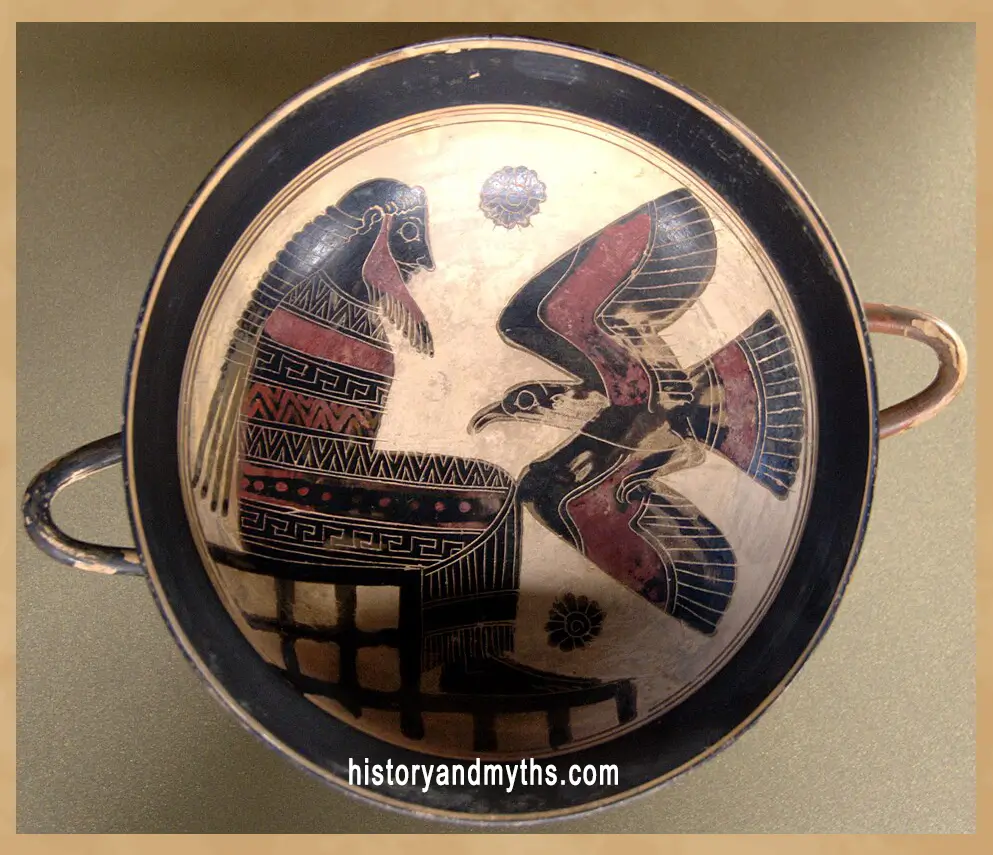
Among all animals in Greek mythology, the eagle most clearly symbolizes power, authority, and divine rule. Its ability to soar higher than other birds and dominate the sky made it an ideal representation of supremacy. For Greek audiences, the eagle embodied the commanding perspective and elevated status associated with the highest forms of authority.
These qualities explain its strong connection to Zeus. As king of the gods, Zeus governed the cosmic order from above, and the eagle reflected that position perfectly. The bird’s association with the sky, storms, and unmatched freedom of movement reinforced its role as a visible symbol of divine sovereignty. In mythological art, an eagle often signals the presence or influence of Zeus even when the god himself does not appear.
The symbolism extends beyond physical strength. Eagles are predators that observe from great heights before acting with precision. This characteristic aligned well with Greek ideas about leadership and control. True authority was not simply force; it involved oversight, judgment, and the ability to maintain order across a wide domain.
Because of these associations, the eagle became one of the most enduring symbols of kingship and divine power in the Greek world. It represented the capacity to rule from above, to see beyond ordinary limits, and to exercise authority over forces that others could not control.
Through the eagle, Greek mythology transformed the concept of power into a recognizable image. The bird’s dominance of the sky made it a natural symbol of the authority that Zeus and the divine order were believed to possess.
The Serpent and the Symbolism of Renewal
Few animals carried as many symbolic meanings in Greek mythology as the serpent. While modern interpretations often focus on danger or deception, Greek traditions frequently associated serpents with renewal, healing, hidden knowledge, and the mysterious forces operating beneath the visible world.
One reason for this symbolism was the serpent’s ability to shed its skin. To Greek observers, this process appeared as a form of rebirth. The animal seemed to renew itself repeatedly without losing its identity, making it a powerful symbol of transformation and regeneration. This association explains why serpents became linked to healing and recovery rather than destruction alone.
The connection is particularly visible in the traditions surrounding Asclepius, the god of medicine. Serpents appeared in his sanctuaries and eventually became one of the most recognizable symbols of healing in the ancient world. Their association with recovery reflected the idea that illness could be overcome and that life could be restored after decline.
Serpents also occupied a unique position between different realms. They moved across the earth, disappeared into hidden spaces, and emerged again unexpectedly. These characteristics linked them to secret knowledge, prophecy, and the unseen powers believed to exist beneath the surface of ordinary life.
Because of these associations, the serpent became one of Greek mythology’s most complex symbols. Rather than representing evil, it often symbolized the possibility of renewal, the recovery of strength, and access to forms of knowledge that remained hidden from ordinary sight.
The Bull and the Symbolism of Power
The bull symbolized strength more consistently than almost any other animal in Greek mythology. Its physical power, aggressive presence, and importance in agriculture made it an obvious representation of force, vitality, and dominance. Whenever a bull appeared in mythological narratives, it often signaled an encounter with overwhelming energy that could not be easily controlled.
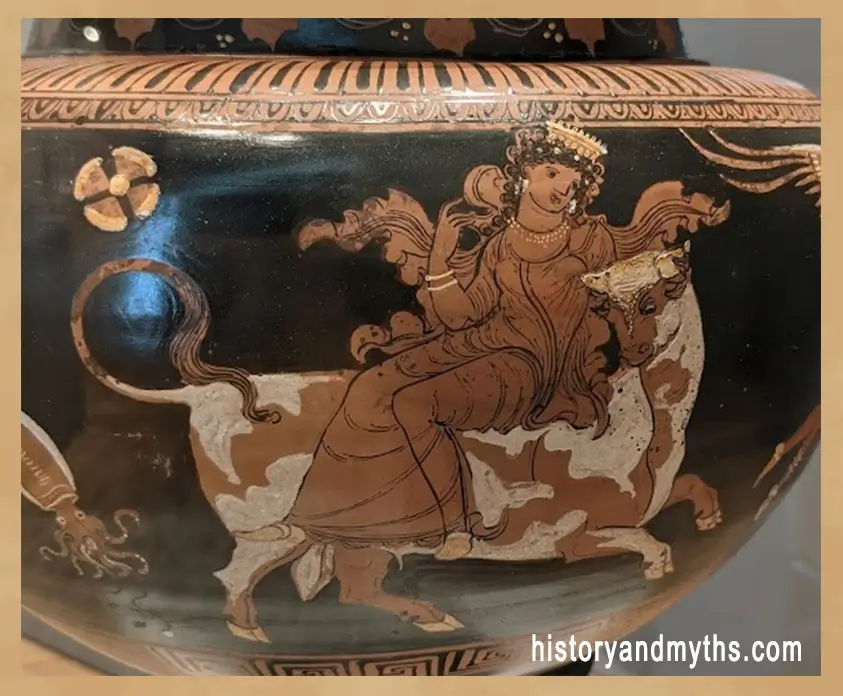
This symbolism explains the animal’s repeated connection to major gods, particularly Zeus and Poseidon. Zeus famously assumed the form of a bull in the story of Europa, while Poseidon frequently sent or manifested sacred bulls as expressions of divine power. In both cases, the animal represented a force that exceeded ordinary human limits.
The symbolic meaning of the bull extended beyond raw strength. Because bulls played a central role in breeding and agricultural prosperity, they also became associated with fertility, abundance, and the continuation of life. Their power was therefore understood as productive as well as destructive, capable of creating growth when properly directed.
Greek mythology often uses the bull to illustrate a broader lesson about power itself. Strength is valuable, but it can also become dangerous when uncontrolled. Many myths involving bulls revolve around the tension between human attempts to manage powerful forces and the reality that some forms of power resist domination.
For the Greeks, the bull became a symbol of concentrated strength in all its forms. Whether associated with divine authority, fertility, or overwhelming natural force, it represented energies that commanded respect and could dramatically shape the world around them.
Animals as a Symbolic Language
Greek mythology used animals to communicate ideas that were difficult to express directly. Rather than serving as sacred creatures in their own right, animals often functioned as visual representations of divine qualities. Through the owl, eagle, serpent, bull, and dolphin, the Greeks symbolized wisdom, authority, renewal, power, and guidance.
© historyandmyths.com — Educational Use
The Dolphin and the Symbolism of Guidance
Unlike the eagle, bull, or serpent, the dolphin was not primarily associated with dominance or power. In Greek mythology, it became a symbol of guidance, protection, and safe passage. Its reputation developed from its behavior at sea, where dolphins were often viewed as intelligent creatures that assisted sailors and appeared unexpectedly in moments of danger.
This symbolism explains the dolphin’s connection to Apollo. In the Homeric Hymn to Apollo, the god took the form of a dolphin to guide Cretan sailors to the future site of his sanctuary at Delphi. The story is significant because the dolphin does not act as a symbol of strength or authority. Instead, it represents direction, leadership, and the ability to guide others toward a sacred destination.
The dolphin’s association with safe travel also reflects the importance of the sea in Greek life. For a civilization connected by maritime trade and travel, the ocean could be both essential and dangerous. Dolphins became reassuring figures within this environment, symbolizing successful journeys and protection from uncertainty.
At a deeper level, the dolphin represents guidance through transition. Just as rivers symbolized movement between worlds, dolphins often appear in contexts involving passage from one place or condition to another. Their role is not to overcome obstacles through force but to help navigate them successfully.
For the Greeks, the dolphin became a symbol of intelligent guidance and benevolent assistance. It represented the idea that not all forms of power are expressed through domination; some are expressed through the ability to lead others safely through unfamiliar waters.
What Animal Symbols Revealed About the Greek Gods
The animals associated with Greek gods were not chosen randomly. Each one highlighted a particular quality that the Greeks believed defined a deity’s nature or sphere of influence. By examining these symbols together, a broader pattern becomes visible: animals served as a visual language for expressing divine attributes that could not easily be represented through human appearance alone.
The owl emphasized Athena’s wisdom and insight. The eagle reflected Zeus’s authority and command over the cosmos. The serpent expressed renewal, hidden knowledge, and healing. The bull symbolized strength, fertility, and overwhelming power. The dolphin represented guidance and safe passage. In every case, the animal communicated a core idea about the divine force it accompanied.
This symbolic system helped make complex religious concepts easier to understand and remember. A single image could convey qualities that might otherwise require lengthy explanation. The presence of a particular animal immediately suggested specific characteristics, allowing myths, artworks, and rituals to communicate meaning with remarkable efficiency.
The pattern also reveals how closely Greek mythology connected the natural world to human understanding. Animals were observed, interpreted, and transformed into symbols that reflected broader ideas about wisdom, power, transformation, and protection. Rather than separating nature from religion, Greek mythology used nature as one of its primary symbolic languages.
These associations explain why animal symbols remained important for centuries. They were not merely decorative companions of the gods. They acted as visual expressions of divine qualities, helping Greek audiences recognize and understand the forces that shaped both the mythological world and human life.
Animal symbolism occupies an important place in Greek mythology because it transforms abstract ideas into recognizable images. Through animals, the Greeks expressed concepts such as wisdom, authority, renewal, strength, and guidance in ways that could be immediately understood across myths, religious traditions, and works of art.
The owl, eagle, serpent, bull, and dolphin each represented qualities that extended far beyond the animals themselves. Their significance came from the meanings attached to them and the divine powers they helped illustrate. These symbols provided insight into how the Greeks understood both their gods and the world around them.
Viewed together, these animal symbols reveal a consistent pattern within Greek mythology. Nature was not separate from divine meaning. Instead, characteristics observed in the natural world became a language through which complex religious and philosophical ideas could be communicated. This symbolic approach helped shape some of the most enduring images in Greek mythological tradition and explains why these animals continue to be recognized as powerful symbols today.
Key Takeaways
- Animals in Greek mythology symbolized ideas rather than serving as decorative companions.
- The owl represented wisdom and became associated with Athena.
- The eagle symbolized divine authority and the power of Zeus.
- The serpent reflected renewal, healing, and hidden knowledge.
- The bull represented strength, fertility, and overwhelming force.
- The dolphin symbolized guidance, protection, and safe passage.
- Animal symbols helped the Greeks communicate complex religious ideas through familiar images.
Frequently Asked Questions
What do animals symbolize in Greek mythology?
Animals often symbolize divine qualities such as wisdom, authority, renewal, strength, guidance, and protection.
Why is the owl associated with Athena?
The owl’s ability to see in darkness made it a symbol of wisdom, insight, and clear judgment.
What does the eagle symbolize in Greek mythology?
The eagle represents divine authority, leadership, and the sovereignty of Zeus.
Why are serpents linked to healing?
Their shedding of skin made them symbols of renewal, recovery, and regeneration.
What does the bull represent in Greek mythology?
The bull symbolizes strength, fertility, power, and the forces that shape both nature and human life.
How is the dolphin connected to Apollo?
According to myth, Apollo took the form of a dolphin to guide sailors to Delphi, making the animal a symbol of guidance and safe passage.
Were animals worshipped in Greek religion?
Generally, animals were valued for their symbolic meanings rather than being worshipped as independent sacred beings.
What is the most important role of animal symbols?
They helped communicate complex religious and mythological ideas through recognizable images from the natural world.
Sources & Rights
- Homer. Iliad.
- Homeric Hymn to Apollo.
- Hesiod. Theogony.
- Apollodorus. Bibliotheca.
- Pausanias. Description of Greece.
- Aeschylus. Eumenides.
- Walter Burkert. Greek Religion.
- Richard Buxton. The Complete World of Greek Mythology.
- Robin Hard. The Routledge Handbook of Greek Mythology.
- Sarah Iles Johnston. Ancient Greek Religion.
- Timothy Gantz. Early Greek Myth.
- Jennifer Larson. Greek Nymphs: Myth, Cult, Lore.
- Fritz Graf. Greek Mythology.
- Oxford Classical Dictionary. Entries on Athena, Zeus, Apollo, Asclepius, and Greek Religion.
- Jean-Pierre Vernant. Myth and Thought Among the Greeks.
Written by H. Moses — All rights reserved © Mythology and History