Reincarnation in Greek Mythology: Could the Soul Be Reborn?
In Greek mythology, death was not always viewed as the final destination of the soul. While many Greek traditions imagined the dead entering the underworld and remaining there, other religious and philosophical movements developed a very different idea: the soul could return to life, experience multiple existences, and continue a journey that extended far beyond a single lifetime.
These beliefs did not represent the standard view found in every Greek myth. Instead, they emerged through traditions such as Orphism and Pythagoreanism, which treated the soul as something immortal, capable of moving through a cycle of rebirths. In this view, death was not an ending but a transition between one life and the next.
Understanding reincarnation in Greek mythology therefore requires looking beyond the familiar images of Hades, Tartarus, and Elysium. It involves exploring why some Greeks believed souls returned to the mortal world, what determined the cycle of rebirth, and whether it was possible for a soul to escape that cycle altogether. These ideas reveal one of the most fascinating and influential theories about the human soul to emerge from the ancient Greek world.
Did Greeks Believe in Reincarnation?
The answer depends on which Greek tradition is being discussed. There was never a single Greek belief shared by everyone across all periods. Many early Greek myths describe the dead entering the underworld after death, where they continued an existence separate from the world of the living. In these traditions, the soul’s journey generally moved in one direction rather than through repeated lives.
At the same time, other religious and philosophical movements developed a different understanding of the soul. Groups associated with Orphic and Pythagorean teachings argued that the soul was immortal and could return to the mortal world after death. According to these beliefs, a single human life represented only one stage in a much longer journey.
This distinction is important because it explains why Greek sources sometimes appear to contradict one another. The idea of reincarnation existed within the Greek world, but it was not universally accepted. Instead, it emerged alongside older beliefs about the underworld, creating multiple explanations for what happened to the soul after death.
For this reason, reincarnation should not be viewed as the standard Greek belief but as one of the most influential alternative visions of the soul’s destiny. Its importance lies not in how many people accepted it, but in how deeply it shaped later Greek religious and philosophical thought.
| Belief | Traditional Greek Afterlife | Reincarnation Traditions |
|---|---|---|
| Soul’s Fate | Remains in the afterlife | Returns to new lives |
| View of Death | Final transition | Stage in a larger cycle |
| Ultimate Goal | Afterlife destination | Liberation from rebirth |
| Main Supporters | Wider Greek tradition | Orphics, Pythagoreans, Plato |
The Traditional Greek View of the Soul
Before ideas of reincarnation became influential, most Greek traditions imagined the soul following a different path after death. The dead were believed to leave the world of the living and enter the realm of the underworld, where they continued an existence separate from mortal life. The focus was on where the soul went, not whether it would return.
In early Greek literature, particularly the works attributed to Homer, the souls of the dead are often portrayed as shadow-like beings who retain memories of their former lives but no longer participate in the human world. Death marked a permanent separation between the two realms. Once a soul crossed that boundary, it was generally expected to remain there.
This older view helps explain why later theories of reincarnation attracted attention. They challenged a long-established understanding of the afterlife by proposing that the soul’s story did not end in the underworld. Instead of a one-way journey, they suggested a cycle in which death could become the beginning of another life.
Understanding the traditional Greek view is therefore essential because it provides the contrast that made reincarnation such a significant and unusual idea. The belief was not simply adding another destination to the afterlife—it was redefining the entire purpose of the soul’s journey.
How Reincarnation Entered Greek Thought
The idea of reincarnation did not emerge from the oldest layers of Greek mythology. It became more prominent through religious and philosophical movements that viewed the soul as something far greater than the physical body. These traditions argued that a human life was only one chapter in a much longer spiritual journey.
Among the most influential were the Orphics and the followers of Pythagoras. Both groups taught that the soul was immortal and that death did not end its existence. Instead, the soul could pass through multiple lives, moving from one body to another over time. This belief transformed the meaning of death from a final destination into a stage within a larger cycle.
What made these ideas appealing was their attempt to answer difficult questions about justice and human suffering. Why do some people experience hardship while others enjoy prosperity? Why do individuals seem born into very different circumstances? Reincarnation offered one possible explanation by suggesting that a soul’s condition might be connected to experiences that stretched beyond a single lifetime.
Although these beliefs never replaced traditional Greek views of the afterlife, they introduced a new way of thinking about the soul. Rather than seeing life and death as separate events, they treated both as parts of an ongoing process that could continue across many generations.
Why Souls Were Reborn
In traditions that accepted reincarnation, rebirth was not usually viewed as a random event. The soul returned because its journey was unfinished. A single lifetime was considered insufficient to achieve the purity, wisdom, or spiritual development necessary to reach its highest state.
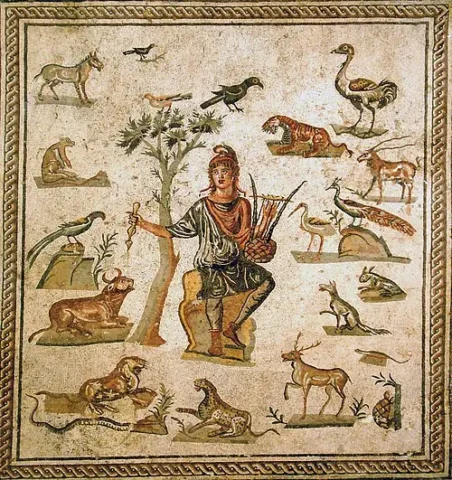
Many Orphic teachings described earthly life as part of a cycle from which the soul sought release. Human existence was not always seen as a reward. In some accounts, repeated rebirths were a consequence of the soul’s condition and its continued attachment to the material world. The soul returned again and again until it completed a process of purification.
This idea gave human actions greater significance. Choices made during life could influence the soul’s future path, affecting whether it remained trapped in the cycle or moved closer to liberation. Life was therefore not an isolated episode but one stage in a much longer progression.
The concept of rebirth also changed how death itself was understood. Instead of marking a final conclusion, death became a transition between different phases of the soul’s existence. What mattered most was not the end of a particular life but the ongoing development of the soul across many lives.
The Cycle of Rebirth
Ancient Greek traditions that embraced reincarnation imagined the soul moving through a continuous cycle of lives, deaths, and rebirths. The exact details varied, but the central idea remained the same: death did not end the soul’s existence. Instead, it marked the transition to another stage in a much longer journey.
Between incarnations, the soul was believed to pass through the afterlife before eventually returning to the mortal world. The new life did not necessarily resemble the previous one. A soul could be reborn under different circumstances, facing new experiences and challenges that contributed to its ongoing development.
What makes this cycle significant is that it gave a larger meaning to individual lives. A person’s current existence was only one part of a much broader story. Successes, failures, lessons, and struggles all became elements of a process extending beyond a single lifetime.
Unlike the traditional view of the afterlife as a permanent destination, the cycle of rebirth presented existence as movement rather than arrival. The soul was not simply waiting in the underworld forever. It was traveling through a sequence of lives, each bringing it closer to its ultimate goal.
Why Reincarnation Was Different
Most Greek myths describe the soul entering the underworld after death. Reincarnation traditions introduced a radically different idea: the soul could return to life, pass through multiple existences, and eventually escape the cycle altogether.
- The soul was viewed as immortal and capable of rebirth.
- Death became a transition rather than a final destination.
- Multiple lives formed part of a larger spiritual journey.
- Purification played a central role in achieving freedom.
- Orphic and Pythagorean traditions promoted these beliefs.
- Plato helped spread reincarnation into mainstream philosophy.
© historyandmyths.com
Can a Soul Escape Reincarnation?
For many Greek thinkers who accepted reincarnation, the ultimate goal was not endless rebirth but freedom from the cycle itself. Repeated lives were seen as a temporary condition rather than the soul’s final destiny. The journey continued only because the soul had not yet reached the state required for release.
Orphic traditions, in particular, taught that purification played a central role in this process. Through proper conduct, spiritual understanding, and liberation from harmful influences, the soul could gradually move closer to a higher existence. Rebirth was not the objective; it was the obstacle that had to be overcome.
This belief gave the cycle a clear direction. The soul was not wandering through lives without purpose. Each existence offered an opportunity to progress toward a state where further rebirth would no longer be necessary. In that sense, reincarnation was viewed as a path of development rather than an endless loop.
The possibility of escape also distinguished Greek reincarnation beliefs from a simple theory of repeated lives. What mattered was not how many times the soul returned, but whether it could eventually achieve the wisdom and purification needed to complete its journey and leave the cycle behind.
Orphic Gold Tablets and Evidence for Rebirth
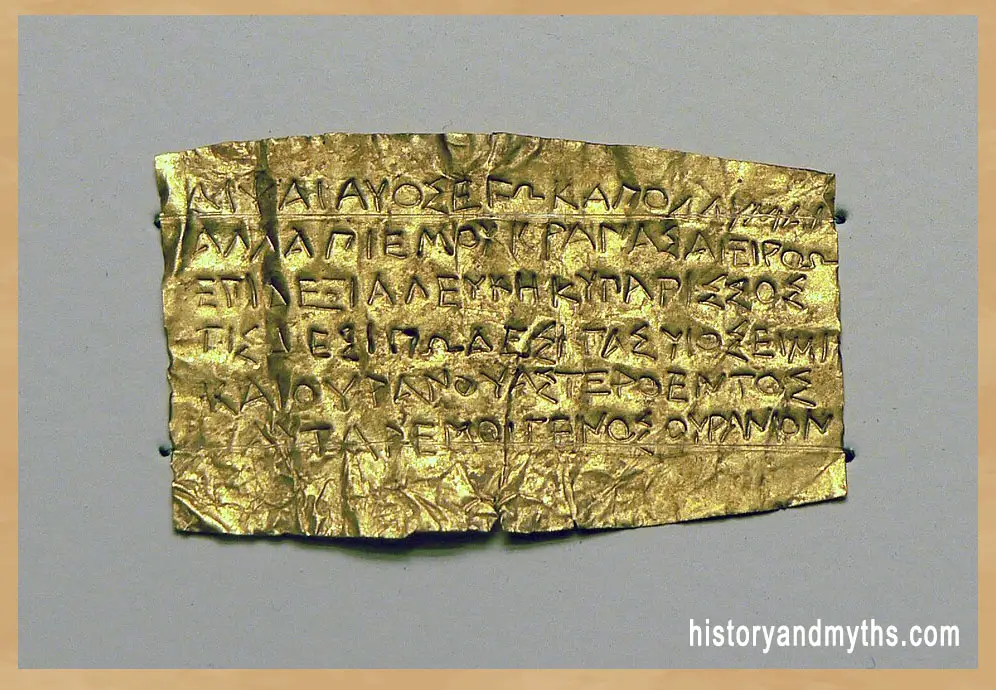
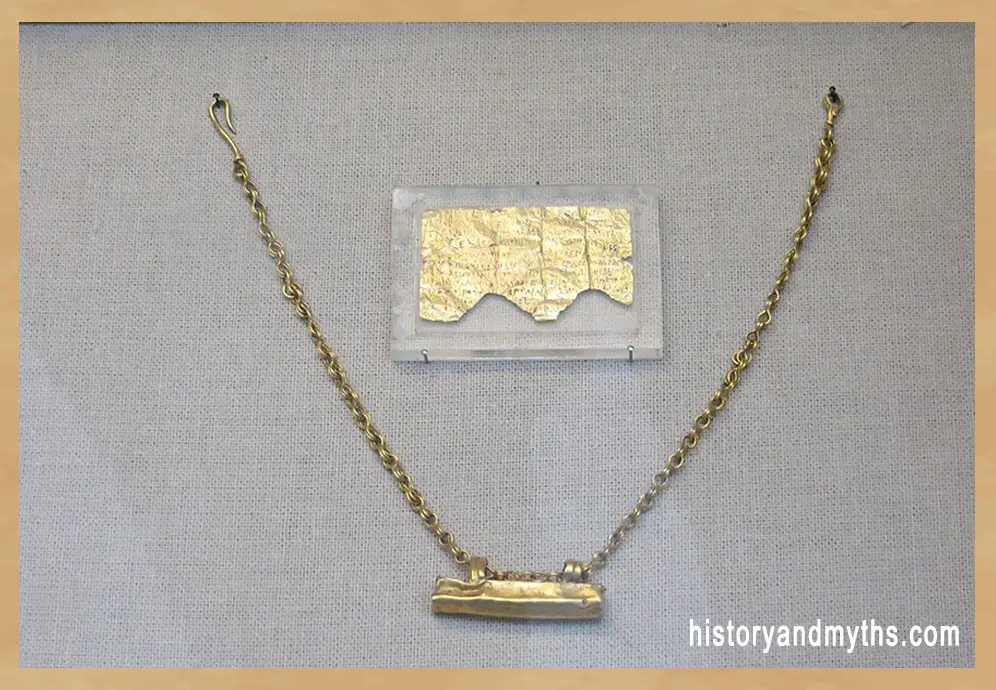
One of the most important pieces of evidence for Greek beliefs about reincarnation comes from a group of small inscribed objects known as the Orphic Gold Tablets. These thin sheets of gold were buried with the dead and contained instructions intended to guide the soul after death.
The texts suggest that the soul’s journey continued beyond a single lifetime and that special knowledge could help it navigate the afterlife successfully. Some tablets describe the soul as having endured suffering and wandering before reaching a better state, reflecting ideas associated with purification and eventual release from the cycle of rebirth.
What makes these tablets especially valuable is that they provide direct evidence rather than later summaries. Instead of relying solely on philosophers or mythographers, historians can examine texts that were actually placed in graves by people who accepted these beliefs.
For modern readers, the tablets reveal that reincarnation was not merely an abstract theory discussed by intellectuals. For at least some communities in the Greek world, it formed part of a living religious tradition that influenced how people prepared for death and understood the destiny of the soul.
Continue Reading
- Judgment of Souls in Greek Mythology: How Fate Was Decided
- Orphism: The Secret Greek Religion of Orpheus
- Elysium in Greek Mythology: The Greek Vision of Paradise
- Charon in Greek Mythology: Why the Dead Paid for Passage
- Eternal Punishment in Greek Mythology: Crimes That Defied the Gods
- Tartarus in Greek Mythology: Prison of the Cosmic Enemies
Reincarnation vs the Ordinary Greek Afterlife
Reincarnation and the traditional Greek afterlife offered two very different answers to the same question: what happens to the soul after death? In the older and more widespread view, the soul entered the underworld and remained there. Death marked a permanent transition from the world of the living to the realm of the dead.
Beliefs in reincarnation rejected this finality. Instead of remaining in the afterlife forever, the soul could return to the mortal world and begin another life. The underworld became a stage within a larger journey rather than the journey’s endpoint.
This difference also changed the meaning of the soul’s destiny. In the traditional model, the most important question was where a soul would spend eternity. In reincarnation traditions, the more important question was whether the soul would continue the cycle or eventually escape it. The focus shifted from destination to transformation.
Understanding this distinction helps explain why reincarnation occupied a unique place in Greek thought. It did not simply add another region to the afterlife or introduce a new punishment or reward. It challenged the assumption that death produced a final and permanent outcome, offering instead a vision of the soul as something constantly moving toward a higher state of existence.
What Reincarnation Reveals About Greek Ideas of the Soul
The belief in reincarnation reflects one of the most profound shifts in Greek thinking about human existence. Instead of treating the soul as a shadow that simply survives death, these traditions viewed it as an immortal and evolving entity capable of growth across multiple lives.
This perspective gave the soul a significance that extended far beyond any single lifetime. A person’s identity was no longer defined solely by birth, status, or achievements in one life. What mattered was the condition of the soul itself and its progress through a much longer journey.
The idea also introduced a more personal understanding of spiritual responsibility. If the soul carried consequences, experiences, and lessons from one existence to another, then human actions gained a lasting importance that extended beyond death. Life became part of a continuous process rather than an isolated event.
For this reason, reincarnation occupies a unique place in Greek thought. It transformed the soul from a passive inhabitant of the afterlife into the central character of an ongoing story. Whether or not most Greeks accepted the idea, it reveals how some of the ancient world’s most influential thinkers grappled with questions about identity, mortality, and the possibility that the soul’s journey was far larger than a single human life.
How Plato Helped Spread the Idea of Reincarnation
Although reincarnation is often associated with Orphic and Pythagorean traditions, the idea gained wider influence through the writings of Plato. In several dialogues, Plato described souls surviving death, facing judgment, and eventually returning to new lives. These accounts helped bring concepts of rebirth into mainstream Greek philosophical discussion.
Plato was not simply repeating older religious beliefs. He used reincarnation to explore questions about justice, knowledge, and human behavior. If souls experienced multiple lives, then the consequences of actions could extend far beyond a single lifetime. This idea allowed him to explain how moral order might exist even when justice seemed absent in the present world.
His writings also introduced the notion that souls could influence their future destinies through the choices they made. Rebirth was not portrayed as a random process but as part of a larger system connecting character, responsibility, and personal development.
For this reason, Plato became one of the most important figures in the history of Greek beliefs about the soul. Even readers who never encountered Orphic teachings often encountered reincarnation through his philosophical works, helping the concept survive long after the classical age.
Why Reincarnation Never Became the Main Greek Belief
Despite its influence, reincarnation never replaced the traditional Greek view of the afterlife. Most Greeks continued to think of the soul as entering the underworld after death rather than returning to live new lives. The familiar world of Hades, heroes, judges, and the dead remained central to Greek religious imagination.
One reason was that reincarnation was closely associated with specific religious and philosophical groups rather than public religion as a whole. While Orphic and Pythagorean teachings attracted followers, they did not become universal beliefs across the Greek world.
The idea was also more demanding than traditional views of the afterlife. It required people to think about the soul as part of a long spiritual journey extending across multiple lives. For many Greeks, the older picture of the underworld was simpler, more familiar, and more deeply rooted in myth and tradition.
As a result, both views existed side by side for centuries. The traditional afterlife remained the dominant belief, while reincarnation survived as an alternative explanation that appealed to those seeking a deeper understanding of the soul and its destiny.
Reincarnation occupied a unique place within Greek mythology and religious thought because it offered an alternative to the traditional vision of the afterlife. Rather than seeing death as a final transition into the underworld, these beliefs imagined the soul continuing its journey through multiple lives, gradually moving toward purification and eventual freedom.
Although the idea never became the dominant Greek belief, it played a significant role in Orphic, Pythagorean, and later philosophical traditions. These movements transformed the soul from a passive inhabitant of the afterlife into an active participant in a long process of growth and development that extended beyond a single lifetime.
The concept of rebirth also reveals how diverse Greek ideas about death could be. Alongside familiar myths about Hades, judgment, Elysium, and Tartarus existed another vision—one in which the soul was not defined by a single life but by a journey that could continue across many generations.
By exploring reincarnation and the soul in Greek mythology, we gain a deeper understanding of how ancient Greeks wrestled with questions that remain relevant today: what happens after death, whether the soul survives, and whether human existence is part of a larger story that extends beyond the limits of one lifetime.
Key Takeaways
- Reincarnation existed in some Greek religious and philosophical traditions.
- It was never the dominant belief across the entire Greek world.
- Orphics and Pythagoreans viewed the soul as immortal and reborn.
- Rebirth was usually seen as part of a process of purification.
- The ultimate goal was to escape the cycle of reincarnation.
- Orphic Gold Tablets provide evidence for these beliefs.
- Plato played a major role in preserving and spreading ideas about rebirth.
Frequently Asked Questions
Did the ancient Greeks believe in reincarnation?
Some Greek religious and philosophical traditions did, especially Orphic and Pythagorean groups, though it was not the dominant belief.
What was reincarnation in Greek mythology?
It was the belief that the soul could return to life in a new body after death and continue a cycle of rebirths.
Why were souls reborn according to Greek traditions?
Many traditions viewed rebirth as part of a process of purification and spiritual development.
Could a soul escape reincarnation?
Yes. Some beliefs taught that a purified soul could eventually leave the cycle of rebirth behind.
Who promoted the idea of reincarnation in Greece?
Orphics, Pythagoreans, and later philosophers such as Plato were among its most influential supporters.
What are the Orphic Gold Tablets?
They are small inscribed gold sheets buried with the dead that provide evidence for beliefs about the soul and the afterlife.
How was reincarnation different from the traditional Greek afterlife?
Traditional beliefs focused on a permanent afterlife, while reincarnation traditions viewed death as part of an ongoing cycle.
Did Homer describe reincarnation?
No. Homeric traditions generally present the dead as remaining in the underworld rather than returning to new lives.
Sources & Rights
- Plato. Phaedo. Oxford World’s Classics.
- Plato. Republic, Book X (Myth of Er). Oxford World’s Classics.
- Plato. Phaedrus. Penguin Classics.
- Burkert, Walter. Greek Religion. Harvard University Press.
- Graf, Fritz, and Sarah Iles Johnston. Ritual Texts for the Afterlife: Orpheus and the Bacchic Gold Tablets. Routledge.
- Edmonds, Radcliffe G. Redefining Ancient Orphism. Cambridge University Press.
- Kingsley, Peter. Ancient Philosophy, Mystery, and Magic. Oxford University Press.
- Bremmer, Jan N. The Rise and Fall of the Afterlife. Routledge.
- Dodds, E. R. The Greeks and the Irrational. University of California Press.
- Johnston, Sarah Iles. Ancient Greek Divination. Wiley-Blackwell.
- Guthrie, W. K. C. Orpheus and Greek Religion. Princeton University Press.
- Kirk, G. S. The Nature of Greek Myths. Penguin Books.
- Nilsson, Martin P. A History of Greek Religion. Oxford University Press.
- Rohde, Erwin. Psyche: The Cult of Souls and Belief in Immortality Among the Greeks. Routledge.
- Buxton, Richard. The Complete World of Greek Mythology. Thames & Hudson.
Written by H. Moses — All rights reserved © Mythology and History