Fire Symbolism in Greek Mythology: Power, Knowledge, and Punishment
In Greek mythology, fire is rarely presented as a simple natural element. It appears in myths about divine authority, human progress, craftsmanship, punishment, and the fragile boundary separating mortals from the gods. Whenever fire enters a story, it usually carries a meaning that extends far beyond warmth or light.
This symbolic importance explains why fire appears in some of the most influential Greek myths. It can represent knowledge, creative power, technological advancement, and civilization itself. At the same time, it can become a tool of destruction, divine anger, or punishment. The same force that allows humanity to prosper can also bring suffering when used improperly or acquired without permission.
By examining how fire functions across Greek mythology, a clear pattern emerges. The Greeks viewed fire as a source of power that could transform individuals and societies, but they also understood that power as dangerous. Fire was therefore both a gift and a threat—a symbol of humanity’s greatest achievements and a reminder of the limits imposed by the divine order.
Why Fire Was Sacred in Greek Mythology
Fire occupied a special position in Greek mythology because it stood at the intersection of the divine and human worlds. Unlike ordinary resources such as water, stone, or wood, fire was viewed as a force that transformed whatever it touched. It could provide light, produce tools, prepare food, and reshape raw materials into something entirely new. This transformative power gave it a significance that extended beyond everyday life.
The sacred status of fire is reflected in Greek religious practice. Flames burned on altars during sacrifices, carrying offerings from humans to the gods. In this context, fire functioned as a bridge between mortal and divine realms. It consumed physical offerings and converted them into smoke that ascended toward the heavens, making it an essential part of communication with the gods.
Fire also represented access to abilities that distinguished civilization from a primitive existence. Through fire, humans could forge metal, build more effectively, and exercise greater control over their environment. Because these capabilities appeared extraordinary, mythology often treated fire as something that originally belonged to the divine sphere rather than to humanity.
This connection between fire and transformation explains why the Greeks regarded it with both respect and caution. Fire could create, but it could also destroy. It brought prosperity, yet it remained difficult to control. Its sacred nature came not from being inherently good or evil, but from possessing a power capable of fundamentally changing the world around it.
For Greek audiences, fire symbolized a force that linked humanity to the gods while simultaneously reminding mortals that some forms of power carried responsibilities and dangers of their own.
| Symbolic Meaning | Role in Mythology | Associated Figure |
|---|---|---|
| Divine Power | Authority and sacred control | Zeus |
| Forbidden Knowledge | Human access to divine abilities | Prometheus |
| Civilization | Technology and social development | Humanity |
| Creative Force | Craftsmanship and invention | Hephaestus |
| Punishment | Divine consequences and destruction | Various myths |
Fire as Divine Power
Before fire became associated with human civilization, Greek mythology often treated it as a form of divine power. Its connection to the gods was not based simply on its usefulness but on its ability to create change. Fire could illuminate darkness, transform materials, and unleash destruction on a scale beyond ordinary human capabilities. These qualities made it a natural symbol of authority and control.
In mythological thought, power was frequently expressed through mastery over forces that shaped the world. Fire belonged among those forces. It was unpredictable, difficult to contain, and capable of producing outcomes that seemed almost miraculous. The ability to command such a force distinguished gods from mortals and reinforced the idea that certain forms of knowledge and power originated in the divine realm.
This perspective helps explain why myths often portray access to fire as something significant rather than ordinary. Fire represented more than a practical tool. It symbolized participation in powers that had previously belonged to the gods alone. To possess fire was to possess a measure of control over nature itself.
The divine dimension of fire also appears in its role within ritual and sacrifice. Sacred flames transformed offerings and carried them toward the gods, reinforcing the idea that fire functioned as an intermediary between different levels of existence. Its presence signaled contact with forces greater than those available in everyday life.
For the Greeks, fire was therefore not merely an element of the natural world. It was a visible expression of power—creative, transformative, and potentially destructive—making it one of the clearest symbols of divine authority in mythology.
Fire as Forbidden Knowledge
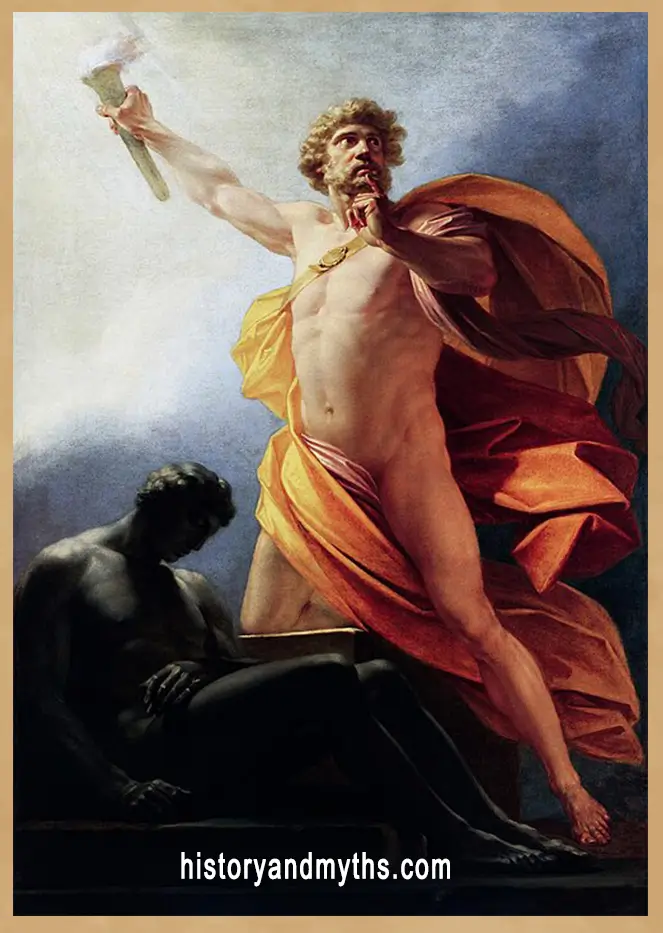
One of the most influential ideas in Greek mythology is that fire represents knowledge that was not originally meant for humanity. The myth of Prometheus illustrates this concept, but its deeper significance lies not in the act of theft itself. The story focuses on what fire symbolizes and why access to it mattered so profoundly.
In Greek thought, fire was closely connected to the abilities that separated civilized life from a primitive existence. Through fire, humans could forge metal, create tools, improve agriculture, prepare food more effectively, and develop specialized crafts. Possessing fire meant gaining the capacity to reshape the world rather than simply adapt to it.
This explains why the acquisition of fire appears as a transformative moment in mythology. Fire is presented as a form of knowledge that expands human potential. It grants capabilities that were previously restricted, reducing the distance between human limitations and divine power. The symbolic importance of fire therefore extends far beyond heat or light.
The idea of forbidden knowledge also introduces an important tension. Knowledge can improve human life, but it can also disrupt established boundaries. Greek myths frequently explore the consequences of crossing limits, and fire becomes one of the clearest examples of this theme. The issue is not whether knowledge is valuable, but whether access to certain forms of power changes the balance between mortals and gods.
As a result, fire emerges as a symbol of intellectual and technological advancement. It represents humanity’s ability to learn, create, and transform its environment while simultaneously reminding audiences that every increase in power brings new responsibilities and risks.
Why Zeus Feared Human Access to Fire
The severity of Zeus’s reaction to the acquisition of fire has long attracted attention because it appears disproportionate if fire is viewed merely as a practical tool. Within Greek mythology, however, the issue is not the flame itself but what the flame represents. Fire symbolizes access to power, knowledge, and capabilities that narrow the gap between mortals and the divine.
Greek myths often emphasize the importance of boundaries. Gods and humans occupy different positions within the cosmic order, and stability depends on maintaining that distinction. Fire threatens that balance because it gives humanity abilities that increase independence and reduce reliance on natural limitations. The more humans can create, build, and transform their surroundings, the more they approach powers once associated primarily with the gods.
From this perspective, Zeus’s response reflects a concern with preserving order rather than simple anger. The myth presents fire as a force capable of altering the relationship between mortals and immortals. By controlling access to it, the gods maintain their unique position within the universe. When that control is challenged, the established hierarchy comes under pressure.
The story therefore explores a broader theme found throughout Greek mythology: powerful gifts often carry consequences. Access to knowledge and capability can bring progress, but it can also create tension, responsibility, and conflict. Fire becomes a symbol of this dilemma because it improves human life while simultaneously disrupting existing boundaries.
For ancient audiences, the myth helped explain why power is rarely distributed without limits. Fire represented one of the greatest advantages humanity could possess, and the controversy surrounding it reflects Greek concerns about authority, balance, and the consequences of acquiring abilities once reserved for the divine realm.
Fire Was Never Just Fire
In Greek mythology, fire symbolized far more than heat or light. It represented divine authority, knowledge, craftsmanship, technological progress, and the dangerous consequences of crossing cosmic boundaries. The same force that helped create civilization could also bring punishment and destruction.
© historyandmyths.com — Educational Use
Fire as Knowledge and Civilization
In Greek mythology, fire is closely associated with the emergence of civilization because it enables humans to move beyond mere survival. The symbolic importance of fire lies not in the flame itself but in the possibilities it creates. It transforms knowledge into action and allows societies to develop skills that would otherwise remain impossible.
Through fire, raw materials can be reshaped into tools, weapons, pottery, and countless other products. Agriculture becomes more efficient, food becomes easier to preserve and prepare, and technological innovation becomes possible. As a result, fire functions as a symbol of progress and human ingenuity rather than simply a source of heat.
This connection explains why myths often treat fire as one of the defining features of civilized life. Possessing fire means possessing the ability to alter the environment instead of merely adapting to it. The symbolic leap is significant: humans become creators and builders rather than passive participants in nature.
Fire also represents the transmission of knowledge across generations. Skills such as metalworking, craftsmanship, and specialized trades depend upon mastering its use. In this sense, fire symbolizes accumulated learning and the growth of human capability over time. It is a force that expands what people are able to achieve collectively.
For the Greeks, fire therefore stood as one of the clearest symbols of civilization itself. It embodied the knowledge, creativity, and technical ability that distinguished organized society from a more primitive state, making it a powerful metaphor for human advancement throughout mythology.
➜
What If Prometheus Never Stole Fire from Zeus? Greek Myth Reimagined
Fire as a Creative Force
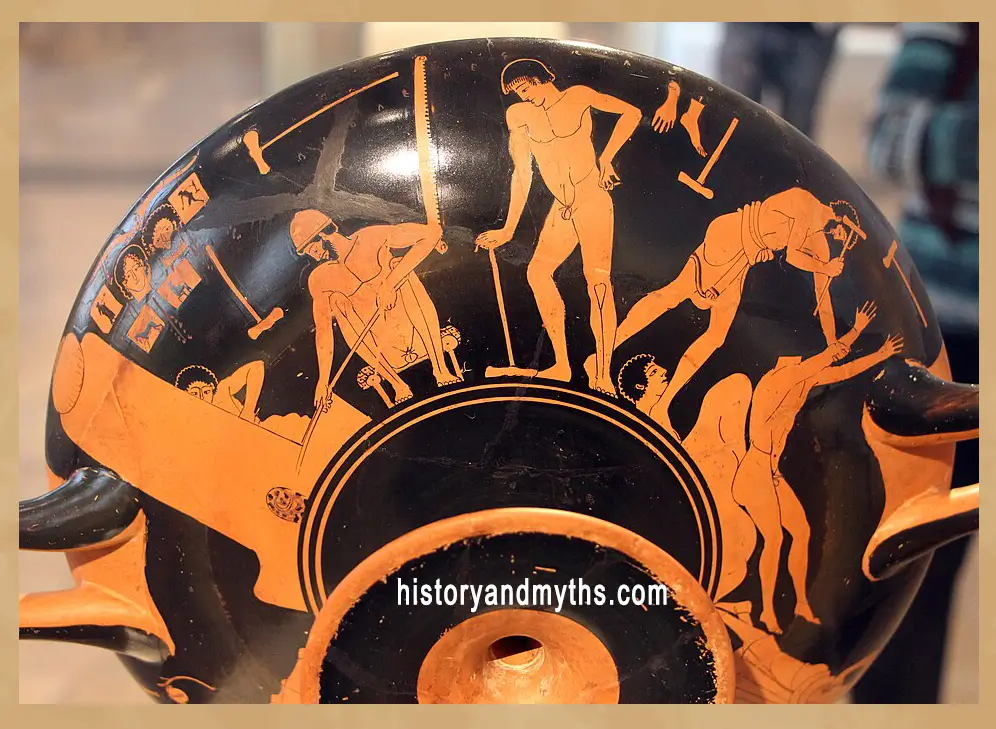
Greek mythology does not portray fire solely as a source of power or knowledge. It is also a force of creation. This aspect appears most clearly through the association between fire and craftsmanship, where flames transform raw materials into objects of value and purpose.
Unlike destructive fire, creative fire produces rather than consumes. It allows metal to be shaped, tools to be forged, and artistic works to emerge from otherwise ordinary materials. In mythological symbolism, this process reflects a broader idea: creation often requires transformation. Nothing new can be made without altering what already exists.
The connection between fire and craftsmanship gave the element a unique place within Greek thought. Fire was not merely a natural phenomenon but an active participant in acts of invention. It enabled skills that distinguished craftsmen from ordinary laborers and made technological progress possible.
This symbolic role also explains why fire became associated with intelligence and practical expertise. The ability to control fire demonstrated knowledge, discipline, and technical mastery. Creative achievements depended not only on possessing fire but on understanding how to use it effectively.
For Greek audiences, fire therefore represented one of the essential forces behind human creativity. It symbolized the capacity to transform ideas into reality, turning raw materials into works that reflected both skill and imagination.
Fire as Punishment and Destruction
Although fire often symbolizes knowledge, creativity, and progress, Greek mythology also presents it as a force of punishment. The same element that enables civilization can become an instrument of suffering when associated with divine anger, imbalance, or the misuse of power.
This dual role reflects a broader pattern within Greek mythological thought. Powerful forces are rarely portrayed as entirely beneficial. Their value depends on how they are used and whether they remain within proper limits. Fire follows this principle closely. When controlled, it creates; when uncontrolled, it destroys.
The destructive aspect of fire appears in myths where divine authority is challenged or where natural and cosmic boundaries are violated. In such contexts, fire becomes a visible expression of consequences. It represents the capacity of the gods to restore order through force when balance has been disrupted.
Fire also carries a symbolic connection to purification. Destruction in Greek thought is not always meaningless devastation. Burning can remove corruption, erase what is harmful, or mark the end of one condition before the beginning of another. Because of this, fire occupies a complex position between punishment and renewal.
For Greek audiences, the destructive power of fire served as a reminder that the forces responsible for human advancement could also become sources of danger. Its symbolism reflects the belief that every form of power contains both creative and destructive potential, depending on how that power is exercised.
Why Fire Was Both a Blessing and a Curse
Few symbols in Greek mythology embody contradiction as clearly as fire. It brings knowledge, fuels creativity, supports civilization, and enables human progress. Yet the same force can cause destruction, invite punishment, and disrupt the balance between mortals and gods. This dual nature explains why fire occupies such a central place in Greek mythological thought.
The Greeks did not view power as inherently good or evil. Instead, they often focused on the consequences of possessing and using power. Fire reflects this perspective perfectly. It expands human possibilities while simultaneously increasing the risks that accompany greater capability. Every benefit carries a potential cost.
This tension appears repeatedly throughout mythology. Fire allows humanity to advance beyond basic survival, but it also becomes a source of conflict, responsibility, and danger. The element symbolizes a truth that extends beyond the myths themselves: transformative powers rarely produce only positive outcomes. They create opportunities while introducing new challenges.
The symbolic complexity of fire also helps explain its lasting importance. Unlike many mythological objects that serve a single purpose, fire can represent civilization, knowledge, authority, creativity, destruction, and punishment at the same time. Its meaning changes according to context while remaining connected to the broader idea of transformative power.
For the ancient Greeks, fire was ultimately neither a gift nor a curse alone. It was both. That ambiguity made it one of the most effective symbols in mythology, capable of expressing the opportunities and dangers that arise whenever humans gain access to extraordinary forms of power.
Conclusion
Understanding the role of fire in Greek mythology therefore provides insight into broader Greek ideas about knowledge, authority, creativity, and limitation. Fire was not simply something people used. It was a symbol through which the Greeks explored one of their most enduring questions: what happens when humans gain access to powers capable of transforming the world around them?
Key Takeaways
- Fire was one of the most powerful symbols in Greek mythology.
- It represented divine authority before becoming available to humanity.
- The myth of Prometheus linked fire with knowledge and civilization.
- Fire symbolized technological progress and human advancement.
- Through Hephaestus, fire became a symbol of creativity and craftsmanship.
- Greek myths also associated fire with punishment, destruction, and divine justice.
- The dual nature of fire made it both a blessing and a curse.
Frequently Asked Questions
What does fire symbolize in Greek mythology?
Fire symbolizes power, knowledge, civilization, creativity, transformation, punishment, and divine authority.
Why is fire important in the myth of Prometheus?
Fire represents knowledge and human progress rather than merely a physical flame.
Why did Zeus punish the theft of fire?
The myth suggests that fire narrowed the gap between humans and the gods, challenging the established cosmic order.
How is fire connected to civilization?
Fire enabled metalworking, craftsmanship, food preparation, and many technologies associated with civilized life.
What role does Hephaestus play in the symbolism of fire?
Hephaestus represents fire as a creative force used in invention, craftsmanship, and artistic production.
Does fire always have a positive meaning in Greek myths?
No. Fire can symbolize destruction, punishment, danger, and the consequences of misused power.
Why is fire considered sacred in Greek mythology?
Because it was associated with divine power, ritual sacrifice, and the transformation of both materials and human society.
Was fire viewed as a blessing or a curse?
Greek mythology presents it as both—a source of progress and a source of danger.
Sources & Rights
- Hesiod. Theogony.
- Hesiod. Works and Days.
- Aeschylus. Prometheus Bound.
- Apollodorus. Bibliotheca.
- Homer. Iliad.
- Homer. Odyssey.
- Pausanias. Description of Greece.
- Walter Burkert. Greek Religion.
- Richard Buxton. The Complete World of Greek Mythology.
- Robin Hard. The Routledge Handbook of Greek Mythology.
- Sarah Iles Johnston. Ancient Greek Religion.
- Timothy Gantz. Early Greek Myth.
- Fritz Graf. Greek Mythology.
- Oxford Classical Dictionary. Entries on Fire, Prometheus, Zeus, and Hephaestus.
- Jean-Pierre Vernant. Myth and Thought Among the Greeks.
Written by H. Moses — All rights reserved © Mythology and History