The Symbolism of Wings in Greek Mythology Explained
Wings appear throughout Greek mythology, yet they rarely serve the same purpose from one myth to another. They are found on messengers, personifications of victory, gods of desire, transformed souls, and even tragic human figures. This widespread presence raises an important question: why did the Greeks repeatedly use wings as a symbolic feature in their myths?
The answer goes far beyond the ability to fly. In Greek mythology, wings often represent movement between worlds, the speed of divine action, spiritual transformation, victory, freedom, and the crossing of boundaries that separate ordinary human life from something greater. Different winged figures embody different aspects of these ideas, giving the symbol a much richer meaning than simple physical flight.
By examining figures such as Hermes, Nike, Eros, Psyche, and Icarus, it becomes clear that wings formed part of a larger symbolic language. They helped the Greeks express concepts that were difficult to describe directly, from the power of desire to the dangers of ambition. Understanding that symbolism reveals why winged beings occupy such an important place in Greek mythology and why the image of wings remained meaningful long after the myths themselves were first told.
Why Wings Became an Important Symbol in Greek Mythology
Wings appear so frequently in Greek mythology because they offered a visual way to represent abilities and forces that ordinary humans did not possess. The Greeks associated wings with movement beyond normal limitations, making them an ideal symbol for gods, supernatural beings, and individuals connected to powers greater than themselves.
Unlike modern interpretations, wings did not simply signify flight. Many winged figures rarely use them for physical travel within mythological narratives. Instead, wings communicate speed, access, transformation, freedom from earthly restrictions, or the ability to move between different realms of existence. The symbol itself often matters more than the act of flying.
This explains why wings appear on very different figures. Hermes uses them as a sign of divine mobility and communication. Nike represents victory arriving swiftly and decisively. Eros embodies the sudden and uncontrollable nature of desire. Psyche’s wings reflect spiritual transformation, while the story of Icarus uses wings to explore ambition and human limitations.
The symbol also reflects a broader Greek fascination with boundaries. Many myths revolve around the distance between mortals and immortals, the human world and the divine world, or the physical and spiritual realms. Wings provide a visual expression of crossing those boundaries, whether successfully or disastrously.
For this reason, wings became one of the most flexible symbols in Greek mythology. A single image could communicate power, movement, transcendence, desire, victory, or transformation depending on the figure who possessed it. Their repeated appearance across different myths reveals not a shared function, but a shared symbolic language understood by ancient Greek audiences.
| Figure | Meaning of Wings | Symbolic Theme | Function in Myth |
|---|---|---|---|
| Hermes | Movement between worlds | Communication | Messenger of the gods |
| Nike | Swift victory | Success and power | Personification of victory |
| Eros | Sudden desire | Emotion and attraction | Power of love |
| Psyche | Spiritual transformation | Soul and renewal | Journey toward immortality |
| Icarus | Human ambition | Risk and limitation | Warning against excess |
Wings as Divine Movement and Communication
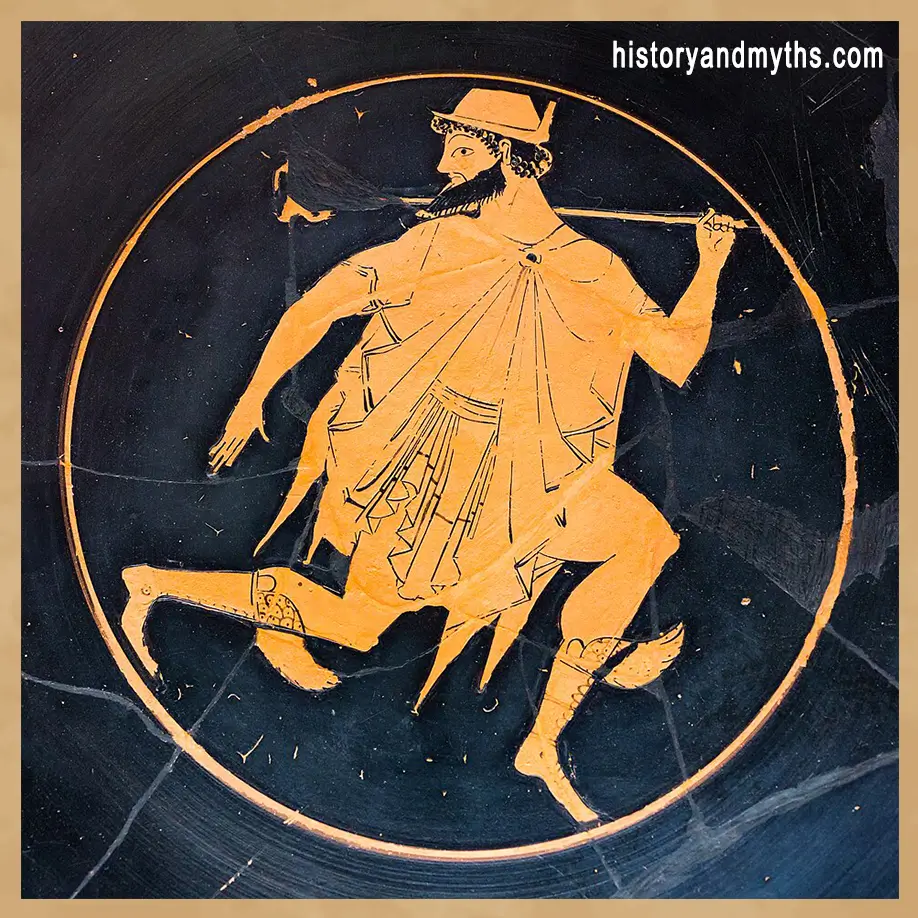
One of the oldest meanings of wings in Greek mythology is movement beyond ordinary human limits. This symbolism appears most clearly in Hermes, the divine messenger whose winged sandals and sometimes winged cap distinguish him from other Olympian gods.
Hermes was responsible for carrying messages between Olympus, the mortal world, and even the Underworld. His wings symbolize the ability to cross boundaries that normally separate different realms of existence. They represent access, mobility, and communication rather than physical power or military strength.
This symbolism helps explain why the messenger god required wings in the first place. A messenger’s value lies in speed and freedom of movement. The wings visually communicate these qualities, allowing audiences to recognize Hermes’s role immediately. They signify a figure who is not restricted by distance, geography, or the divisions that constrain ordinary mortals.
More broadly, the wings of Hermes reflect a recurring Greek idea that divine beings possess forms of movement unavailable to humans. Gods can appear suddenly, travel effortlessly, and connect places that would otherwise remain separated. Wings become a visual shorthand for this supernatural freedom.
For Greek audiences, winged imagery therefore carried meanings that extended beyond flight itself. In the case of Hermes, wings symbolized the power to move between worlds, transmit divine knowledge, and overcome boundaries that define ordinary human experience.
Wings as Victory and Power
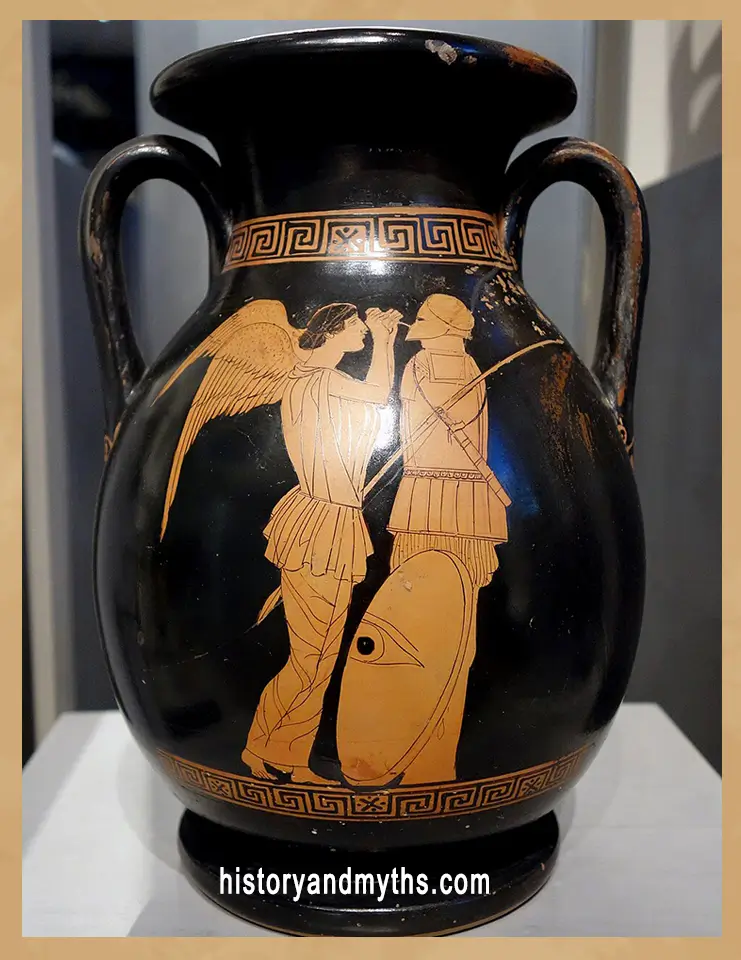
While Hermes connects wings with movement and communication, Nike gives the symbol a different meaning. As the personification of victory, Nike’s wings represent the speed and certainty with which success arrives. They mark her as a force that moves across battlefields, athletic contests, and political struggles, bringing triumph to those favored by the gods.
The association between wings and victory reflects a practical observation. Success can appear suddenly and disappear just as quickly. By giving Victory wings, Greek artists and storytellers expressed the idea that fortune is mobile rather than fixed. No individual or city possesses it permanently.
This symbolism helps explain why images of Nike became so widespread in the Greek world. Winged statues, reliefs, and coins presented victory as an active power rather than an abstract concept. The wings emphasized movement, suggesting that triumph travels, arrives, and departs according to circumstances and divine favor.
Unlike the wings of Hermes, which connect different realms, Nike’s wings focus on achievement and status. They symbolize the moment when effort, skill, or divine support produces a visible outcome. The image communicates not merely success itself but the dynamic nature of success.
For Greek audiences, winged Victory served as a reminder that power and achievement were never guaranteed. Like Nike herself, victory could move from one person, army, or city to another, making wings a fitting symbol for one of the most desired yet unstable forces in human life.
Wings as Desire and Emotional Force
The wings of Eros introduce another dimension of wing symbolism in Greek mythology. Unlike Hermes or Nike, Eros is not associated with travel, communication, or victory. His wings represent the speed and unpredictability of desire, a force capable of altering lives in an instant.
Greek myths frequently portray love as something that arrives without warning and resists rational control. The winged form of Eros visually expresses this idea. Desire moves quickly, crosses social boundaries, and affects gods and mortals alike. Like a winged being, it cannot easily be restrained or anticipated.
This symbolism also reflects the Greek understanding of emotional forces as powerful external influences rather than purely personal choices. Love often appears in myth as something that acts upon individuals rather than something they deliberately pursue. The wings of Eros reinforce this sense of sudden movement and uncontrollable impact.
Because of this association, wings become a symbol of emotional transformation. A single encounter, attraction, or divine intervention can completely alter a person’s decisions, loyalties, or future. The physical speed suggested by wings mirrors the rapid changes produced by desire itself.
For Greek audiences, the image of a winged Eros captured an important truth about human experience. Love could appear unexpectedly, move with remarkable force, and reshape lives in ways that reason alone could not predict. Wings therefore symbolized not only movement through space but also the swift movement of emotions through the human world.
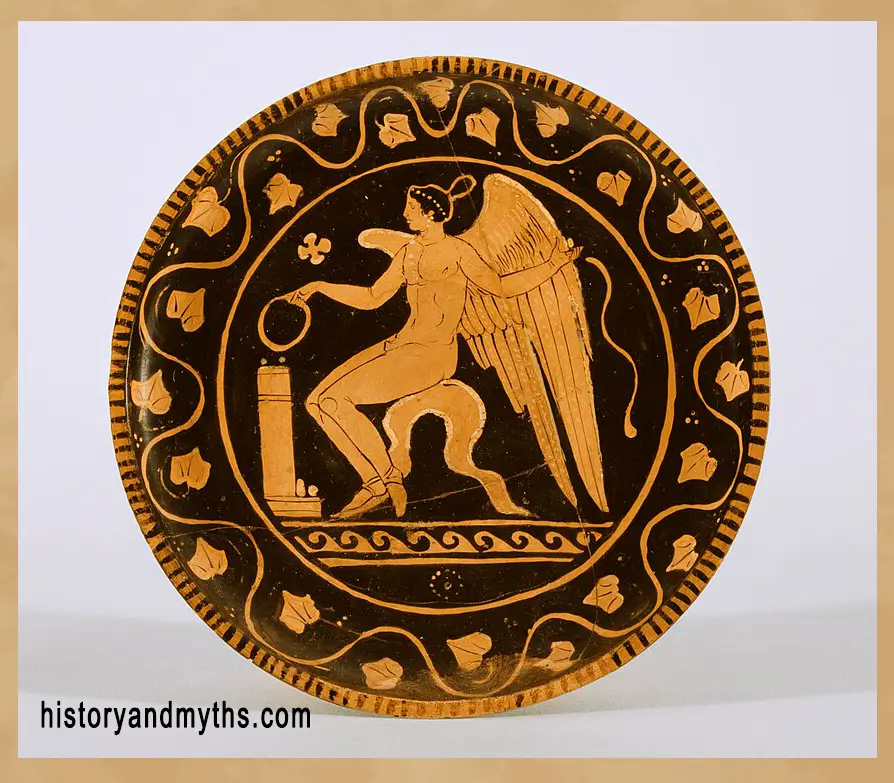
Wings Meant More Than Flight
In Greek mythology, wings rarely function as simple tools for flying. They symbolize movement across boundaries, divine power, emotional influence, spiritual transformation, and the ability to transcend ordinary human limitations. Their meaning changes from one figure to another, but they consistently represent access to something beyond normal experience.
© historyandmyths.com — Educational Use
Wings as the Soul and Transformation
Among all winged figures in Greek mythology, Psyche gives wings one of their most profound meanings. In Greek, the word psyche can refer to both the soul and the breath of life, and later artistic traditions frequently portrayed Psyche with butterfly-like wings. These wings symbolize transformation rather than movement, marking a journey of inner change rather than physical travel.
The myth of Psyche centers on trials, suffering, and eventual immortality. Her story is not about crossing geographical distances but about moving from a mortal condition to a higher state of existence. The wings associated with her image reflect this transition, representing growth, renewal, and spiritual development.
This symbolism differs significantly from the wings of Hermes or Nike. Those figures embody action in the external world. Psyche’s wings point inward, toward changes in identity and consciousness. They suggest that transformation can occur within a person just as dramatically as it can occur in the surrounding world.
The connection between wings and the soul also helps explain why winged imagery remained influential long after the classical period. Wings became a natural symbol for transcendence, survival beyond death, and the possibility of moving beyond ordinary human limitations. These meanings were already present in the symbolic role played by Psyche.
For Greek audiences, wings could therefore represent more than speed, victory, or desire. Through Psyche, they became a symbol of transformation itself—the idea that suffering, experience, and knowledge could fundamentally change what a person becomes.
Wings as Human Ambition and Risk
The myth of Icarus gives wings a meaning that differs sharply from those associated with gods and divine beings. In this story, wings symbolize human ambition and the desire to overcome natural limits. They represent possibility, but they also reveal the dangers that accompany unchecked aspiration.
Unlike Hermes or Nike, Icarus does not possess wings as an inherent part of his nature. They are artificial creations designed to achieve something humans cannot ordinarily do. This distinction is important because the myth focuses on what happens when mortals attempt to claim abilities that belong outside the normal human condition.
The tragedy of Icarus is often remembered as a warning against recklessness, but the symbolism is broader than simple disobedience. The wings embody a tension that appears throughout Greek mythology: the desire to rise beyond established limits and the risks that arise when those limits are ignored. The same object that enables freedom also creates vulnerability.
This theme reflects a recurring Greek concern with balance and moderation. Extraordinary abilities are not necessarily condemned, but they require wisdom and self-control. The failure of Icarus lies not in possessing wings but in misunderstanding the responsibilities that come with them.
Through this myth, wings become a symbol of both achievement and danger. They express humanity’s capacity to imagine possibilities beyond ordinary experience while reminding audiences that ambition without restraint can lead to consequences as dramatic as the ascent itself.
Why Winged Figures Appear Across Greek Mythology
The repeated appearance of winged figures across Greek mythology is not a coincidence. Hermes, Nike, Eros, Psyche, Iris, Thanatos, and Icarus belong to very different myths, yet they share a common visual feature because wings communicate a set of ideas that the Greeks considered fundamentally important.
At their most basic level, wings symbolize the ability to move beyond ordinary human limitations. The exact form of that movement varies from one figure to another. Hermes moves between worlds, Nike moves across battlefields, Eros moves through human emotions, and Psyche moves through spiritual transformation. In each case, the wings indicate access to something that lies beyond normal experience.
This shared symbolism allowed Greek artists and storytellers to communicate complex meanings quickly. A winged figure immediately suggested speed, transition, power, transcendence, or freedom from ordinary constraints. The symbol worked across different myths because it was flexible enough to express many related ideas.
The widespread use of wings also reflects a recurring Greek fascination with boundaries. Mythology repeatedly explores the divisions between gods and mortals, life and death, body and soul, success and failure. Winged beings often occupy positions near these boundaries, acting as messengers, guides, personifications, or symbols of transformation.
Seen together, these figures reveal that wings formed part of a broader symbolic language rather than a single mythological tradition. Their importance lies not in the ability to fly, but in what flight represents: movement beyond limits, access to hidden realms, and the possibility of crossing boundaries that define the human condition.
What Wings Symbolized to the Ancient Greeks
To the ancient Greeks, wings were not merely physical features attached to gods, spirits, or mythical beings. They functioned as symbols that communicated ideas about movement, power, transformation, desire, victory, and transcendence. Their meaning changed according to context, but the underlying concept remained remarkably consistent: wings represented freedom from ordinary limitations.
This explains why the same symbol could appear on such different figures. The wings of Hermes expressed divine mobility, the wings of Nike represented victory, the wings of Eros reflected the sudden force of desire, and the wings of Psyche symbolized spiritual transformation. Each example highlights a different aspect of the same symbolic language.
The Greeks frequently used visual symbols to communicate abstract ideas, and wings were among the most effective. They transformed invisible concepts into recognizable images that could be understood in art, literature, and religious thought. Rather than describing complex ideas directly, mythology often embodied them in winged figures.
As a result, wings became one of the most enduring symbols in Greek mythology. They represented the ability to cross boundaries, whether between worlds, emotional states, levels of existence, or human limitations themselves. Their continued presence across myths reflects the importance of movement, change, and transformation within the Greek understanding of the cosmos.
Wings occupy a unique place in Greek mythology because they carry meanings that extend far beyond flight. Across different myths, they symbolize communication, victory, desire, transformation, ambition, and the ability to move beyond ordinary human limits. Their repeated appearance reveals a symbolic system rather than a simple artistic convention.
The examples of Hermes, Nike, Eros, Psyche, and Icarus demonstrate how a single image could express very different ideas depending on its context. Yet all of these meanings remain connected by a common theme: the crossing of boundaries. Whether moving between worlds, influencing emotions, achieving victory, transforming the soul, or reaching beyond human limitations, winged figures represent forms of movement that ordinary mortals cannot easily achieve.
Understanding this symbolism helps explain why wings became such a powerful and enduring feature of Greek mythology. They allowed ancient storytellers to express abstract ideas through a simple visual image, creating a symbolic language that remained meaningful across generations. In Greek myth, wings are ultimately less about flight than about transformation, freedom, and the pursuit of what lies beyond the limits of ordinary human experience.
Key Takeaways
- Wings were one of the most important symbols in Greek mythology.
- Hermes used wings to represent movement and communication between worlds.
- Nike’s wings symbolized victory, success, and divine favor.
- Eros used wings to express the sudden and uncontrollable force of desire.
- Psyche’s wings became a symbol of the soul and spiritual transformation.
- The wings of Icarus represented ambition, freedom, and the dangers of excess.
- Winged figures shared a common connection to crossing boundaries beyond ordinary human limits.
Frequently Asked Questions
What do wings symbolize in Greek mythology?
Wings symbolize movement, freedom, transformation, victory, desire, and the ability to cross boundaries beyond ordinary human limits.
Why did Hermes have wings?
Hermes’ wings represented his role as the messenger of the gods and his ability to travel between different worlds.
What do Nike’s wings represent?
They symbolize victory, success, and the swift arrival of divine favor.
Why is Eros depicted with wings?
Eros’ wings symbolize the sudden and unpredictable nature of love and desire.
What do Psyche’s wings mean?
They represent the soul, spiritual growth, and transformation through experience and suffering.
What is the meaning of Icarus’ wings?
Icarus’ wings symbolize ambition, freedom, innovation, and the dangers of ignoring limits.
Were wings always associated with flight?
No. In Greek mythology, wings often symbolized abstract concepts such as victory, divine communication, and transcendence rather than physical flight.
Why do so many Greek mythological figures have wings?
Because wings formed part of a symbolic language that expressed movement beyond ordinary human limitations.
Sources & Rights
- Homer. Iliad.
- Homer. Odyssey.
- Hesiod. Theogony.
- Apollodorus. Bibliotheca.
- Ovid. Metamorphoses.
- Pausanias. Description of Greece.
- Pindar. Olympian Odes.
- Walter Burkert. Greek Religion.
- Richard Buxton. The Complete World of Greek Mythology.
- Robin Hard. The Routledge Handbook of Greek Mythology.
- Sarah Iles Johnston. Ancient Greek Religion.
- Timothy Gantz. Early Greek Myth.
- Fritz Graf. Greek Mythology.
- Jennifer Larson. Greek Nymphs: Myth, Cult, Lore.
- Oxford Classical Dictionary. Entries on Hermes, Nike, Eros, Psyche, and Symbolism.
Written by H. Moses — All rights reserved © Mythology and History