Trees and Sacred Plants in Greek Mythology: Symbolism and Meaning
In Greek mythology, certain trees and plants carried meanings that extended far beyond the natural world. The laurel, olive, oak, and cypress were not important simply because they appeared in myths. They became symbols of ideas that the Greeks considered fundamental to life, including victory, wisdom, divine authority, memory, and the relationship between humans and the gods. Their presence in stories, sanctuaries, and religious traditions reflects a symbolic language that connected nature to deeper cultural and spiritual beliefs.
Many of these associations developed through myths involving gods and heroes, but the lasting importance of sacred plants came from what they represented rather than the stories themselves. A laurel branch could signify divine favor, an olive tree could symbolize prosperity and civilization, and an oak could serve as a sign of sacred authority. Over time, these meanings became embedded in Greek religious and cultural life, appearing in rituals, sanctuaries, and works of art.
By examining the symbolism of sacred trees and plants, it becomes clear that nature played an important role in how the Greeks understood power, memory, protection, and divine presence. These plants were not merely elements of the landscape; they functioned as enduring symbols that helped explain how the mythological world was believed to operate.
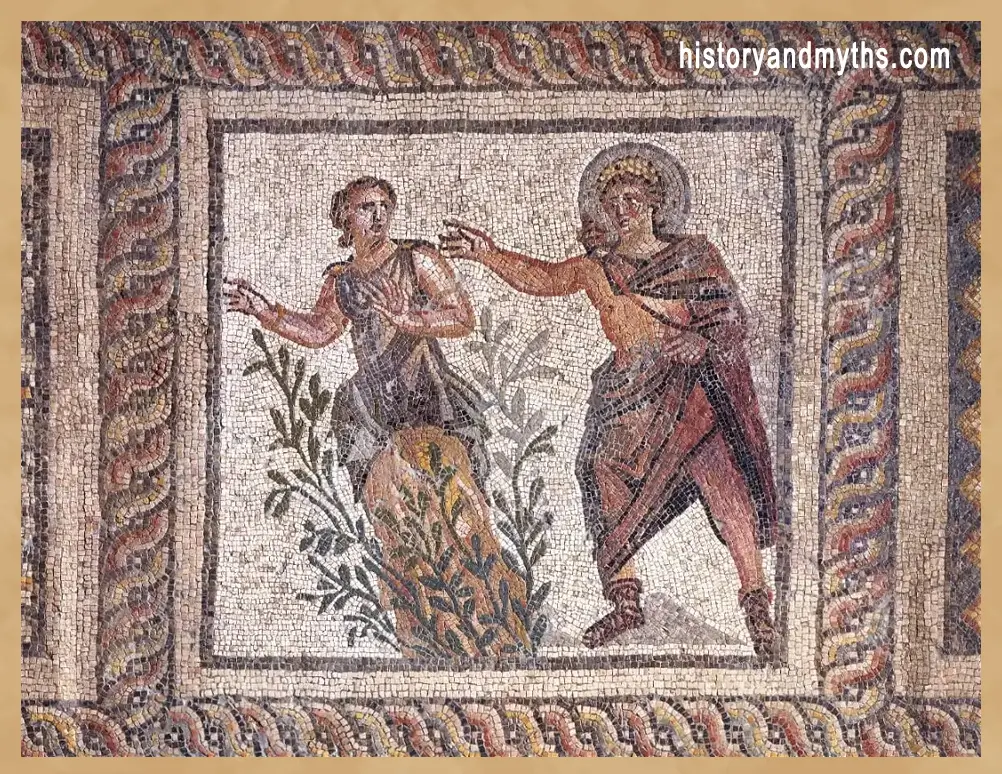
Why Trees Became Sacred in Greek Mythology
Trees occupied a unique position in Greek mythology because they stood at the intersection of nature, religion, and symbolism. Unlike animals, which could move between different places and situations, trees remained rooted in a single location for generations. Their longevity, stability, and continual renewal made them powerful symbols of forces that seemed larger and more permanent than individual human lives.
Many sacred sites in the Greek world were associated with particular trees or groves. These locations were not revered because the trees themselves were believed to be gods. Rather, they were seen as places where divine presence could be felt more strongly. A sacred tree could mark a sanctuary, preserve a mythological memory, or symbolize the influence of a deity connected to that location.
The physical characteristics of trees also contributed to their symbolic importance. Their roots extended into the earth while their branches reached toward the sky, creating a natural image of connection between different realms. This position made trees effective symbols of communication between the human and divine worlds. In mythology, they often appear at moments involving revelation, transformation, prophecy, or divine intervention.
Perhaps most importantly, trees represented continuity. They survived beyond the lifetimes of individuals, witnessed the passage of generations, and returned to life each year through cycles of growth and renewal. For the Greeks, these qualities made certain trees ideal symbols for concepts such as divine favor, authority, memory, and the enduring presence of the gods.
As a result, sacred trees became more than elements of the landscape. They formed part of a symbolic language through which Greek mythology expressed some of its most important religious and cultural ideas.
| Tree / Plant | Primary Symbolism | Associated Figure |
|---|---|---|
| Laurel | Victory, inspiration, divine favor | Apollo |
| Olive | Peace, prosperity, civilization | Athena |
| Oak | Authority, stability, sacred order | Zeus |
| Cypress | Death, mourning, remembrance | Cyparissus Tradition |
The Laurel and the Symbolism of Divine Favor
No tree became more closely associated with divine recognition in Greek mythology than the laurel. Although its connection began with the story of Daphne and Apollo, the symbolic importance of the laurel ultimately extended far beyond that myth. Over time, it came to represent victory, sacred authority, inspiration, and the special favor of the gods.
The association developed largely through Apollo’s role as a god of prophecy, music, and intellectual excellence. Laurel branches became connected to his sanctuaries, particularly at Delphi, where they were linked to divine knowledge and religious ritual. The plant therefore symbolized not only success but also access to higher wisdom and inspiration.
This symbolism explains why victors, poets, and distinguished individuals were often crowned with laurel wreaths. The honor was not simply a reward for achievement. It signified that excellence had been recognized and validated by a higher order. In this sense, the laurel represented legitimacy as much as victory.
Unlike symbols of military strength or political power, the laurel conveyed a more refined form of prestige. It suggested accomplishment earned through talent, wisdom, skill, or divine approval. For that reason, the tree became one of the most enduring symbols of honor in the Greek world.
Through the laurel, Greek mythology expressed the idea that true achievement was not measured solely by success itself, but by whether that success reflected qualities worthy of divine recognition.
The Olive Tree and the Symbolism of Civilization
The olive tree occupied a unique place in Greek mythology because it symbolized far more than a natural resource. It represented stability, prosperity, peace, and the foundations of civilized life. While many sacred symbols were associated with divine power or heroic achievement, the olive tree reflected the qualities that allowed communities to endure and flourish over time.
Its connection to Athena played an important role in shaping this symbolism. According to tradition, Athena’s gift of the olive tree secured her patronage over Athens because it offered lasting benefits rather than immediate displays of power. The story highlights a recurring Greek idea: wisdom is often more valuable than force because it creates sustainable prosperity.
The practical importance of olives reinforced these meanings. Olive oil was used in food, trade, religious rituals, athletic competitions, and daily life. As a result, the tree became closely associated with economic stability and cultural development. It symbolized a society capable of producing wealth, maintaining order, and supporting long-term growth.
The olive branch also emerged as a symbol of peace and reconciliation. Unlike weapons or trophies, it represented cooperation and the restoration of harmony. This association reflected the broader role of the olive tree as a force that preserved rather than disrupted human communities.
Through the olive tree, Greek mythology expressed an important principle: the greatest achievements of civilization are often built not through conquest, but through wisdom, stability, and the careful cultivation of resources that sustain life across generations.
Sacred Trees as Symbols, Not Decorations
In Greek mythology, sacred trees were not important because they appeared in myths. They were important because they carried meanings that connected the natural world to religious and cultural ideas. The laurel represented divine recognition, the olive symbolized civilization, the oak reflected sacred authority, and the cypress embodied memory after death. Together, they formed part of a symbolic language through which the Greeks interpreted the world around them.
© historyandmyths.com — Educational Use
The Oak and the Symbolism of Divine Authority
Among sacred trees in Greek mythology, the oak became the strongest symbol of divine authority and permanence. Its size, durability, and ability to withstand storms made it a natural representation of strength that could not be easily challenged. For the Greeks, the oak embodied stability in a world often marked by uncertainty and change.
This symbolism is most clearly reflected in its association with Zeus. The sacred oak grove of Dodona, one of the oldest religious sites in Greece, was believed to communicate the will of the king of the gods. Priests interpreted messages from the rustling leaves and branches, turning the oak into a living symbol of divine judgment and guidance.
Unlike the laurel, which represented honor, or the olive, which symbolized prosperity, the oak conveyed legitimacy and authority. Its importance came not from achievement or wealth but from its connection to enduring power. The tree suggested a form of rule grounded in permanence rather than temporary success.
The oak’s deep roots and massive trunk also reinforced ideas of order and continuity. Just as the tree remained firmly anchored despite changing seasons, divine authority was viewed as a force that maintained stability within the cosmos. This made the oak an ideal symbol for Zeus’s role as guardian of cosmic order.
Through the oak, Greek mythology expressed the idea that true authority is not merely the ability to command. It is the ability to endure, provide stability, and preserve order across time.
The Cypress and the Symbolism of Death and Memory
The cypress occupied a very different symbolic role from the laurel, olive, and oak. While those trees were associated with victory, prosperity, or authority, the cypress became closely linked to death, mourning, and remembrance. Its dark appearance and evergreen nature made it a powerful symbol of loss that endures beyond a single lifetime.
This symbolism was strengthened by the myth of Cyparissus, a youth who was transformed into a cypress after being overwhelmed by grief. Although the story helped explain the tree’s sacred status, the cypress became important because of what it represented rather than because of the transformation itself. It came to symbolize the lasting presence of memory after death.
The evergreen character of the tree played a significant role in this meaning. Unlike plants that wither and disappear with the seasons, the cypress remains green throughout the year. For the Greeks, this persistence made it an appropriate symbol for remembrance. The dead were gone, but memory continued to endure.
As a result, cypress trees often became associated with tombs, funerary spaces, and places connected to mourning. Their presence did not simply signify death. They reflected the relationship between loss and memory, reminding the living that remembrance survives even when life has ended.
Through the cypress, Greek mythology expressed a more reflective understanding of mortality. Death was not only an ending; it was also the beginning of memory. The tree became a symbol of the human desire to preserve connections with those who had passed away and to ensure that their stories would not be forgotten.
What Sacred Trees Revealed About Greek Beliefs
When viewed together, the laurel, olive, oak, and cypress reveal a broader pattern within Greek mythology. Each tree represented a different aspect of the relationship between humans, society, and the divine. Rather than functioning as simple decorative elements in myths, they served as symbols through which important cultural and religious values could be expressed.
The laurel symbolized achievement recognized by divine favor. The olive represented prosperity, peace, and the foundations of civilization. The oak reflected authority, stability, and sacred order. The cypress embodied memory, mourning, and the enduring presence of the past. Together, these symbols formed a framework that connected everyday experience to larger mythological ideas.
The variety of meanings attached to these trees also demonstrates that Greek mythology viewed nature as a source of symbolic knowledge. Natural features were not interpreted solely for their practical uses. They became vehicles for understanding concepts such as wisdom, legitimacy, continuity, and mortality.
This symbolic approach helps explain why sacred groves, ritual plants, and mythological trees remained important throughout Greek religious life. They provided visible reminders of values that myths sought to preserve and communicate across generations.
In this sense, sacred trees were more than parts of the natural landscape. They functioned as living symbols that helped translate abstract beliefs into forms that could be seen, remembered, and understood.
Trees and sacred plants occupied a distinctive place in Greek mythology because they connected the natural world to some of the most important ideas in Greek religious thought. Through the laurel, olive, oak, and cypress, concepts such as divine favor, civilization, authority, memory, and mortality were given visible and enduring form.
Their significance did not depend solely on the myths associated with them. Rather, these plants became important because of the meanings they carried within Greek culture. They appeared in sanctuaries, rituals, public life, and mythology because they expressed values that remained relevant across generations.
By examining the symbolism of sacred trees, it becomes clear that Greek mythology used nature as a language of ideas. Trees were not merely part of the setting in which myths occurred; they were symbols that helped explain how the Greeks understood power, wisdom, remembrance, and the presence of the divine in the world around them.
Key Takeaways
- Sacred trees in Greek mythology symbolized major religious and cultural values.
- The laurel represented victory, inspiration, and divine favor through its association with Apollo.
- The olive tree symbolized peace, prosperity, and the foundations of civilized life.
- The oak became a symbol of authority and sacred order through its connection with Zeus and Dodona.
- The cypress represented mourning, remembrance, and the enduring nature of memory.
- Greek mythology used trees as a symbolic language for expressing abstract ideas through nature.
- Sacred groves and ritual plants helped connect religious belief with the physical landscape.
Frequently Asked Questions
What trees were considered sacred in Greek mythology?
The most important sacred trees included the laurel, olive, oak, and cypress, each associated with different symbolic meanings and divine figures.
Why was the laurel sacred to Apollo?
The laurel became associated with Apollo through the myth of Daphne and later symbolized victory, inspiration, and divine favor.
What did the olive tree symbolize?
The olive tree represented peace, prosperity, wisdom, and the stability of civilized life.
Why was the oak associated with Zeus?
The oak was linked to Zeus because of its connection to the sacred oracle of Dodona and its symbolism of authority and permanence.
What does the cypress symbolize in Greek mythology?
The cypress symbolizes mourning, remembrance, and the enduring presence of memory after death.
Were sacred trees worshipped by the Greeks?
Generally, the trees themselves were not worshipped as gods. Instead, they were respected as symbols connected to divine powers and sacred places.
Why are trees important in Greek mythology?
Trees helped express ideas about power, wisdom, memory, prosperity, and the relationship between humans and the divine.
What role did sacred groves play in Greek religion?
Sacred groves served as religious spaces where divine presence was believed to be especially strong and where rituals could be performed.
Sources & Rights
- Homer. Iliad.
- Homeric Hymn to Apollo.
- Hesiod. Theogony.
- Ovid. Metamorphoses.
- Pausanias. Description of Greece.
- Apollodorus. Bibliotheca.
- Walter Burkert. Greek Religion.
- Robert Parker. On Greek Religion.
- Jennifer Larson. Ancient Greek Cults.
- Richard Buxton. The Complete World of Greek Mythology.
- Sarah Iles Johnston. Ancient Greek Religion.
- Fritz Graf. Greek Mythology.
- Robin Hard. The Routledge Handbook of Greek Mythology.
- Timothy Gantz. Early Greek Myth.
- Oxford Classical Dictionary. Entries on Apollo, Athena, Zeus, Dodona, and Greek Religion.
Written by H. Moses — All rights reserved © Mythology and History