Intellectual Centers in Ancient Greece and the Rise of Philosophy
Intellectual centers in Ancient Greece became influential because philosophy, public debate, education, and the exchange of ideas transformed certain cities into major centers of learning and cultural prestige. Cities such as Athens and Miletus attracted teachers, students, thinkers, and political discussion that shaped Greek intellectual life far beyond local boundaries.
These cities were shaped by more than education alone. Debate culture, philosophical schools, knowledge networks, and civic discussion influenced urban identity, political reputation, and cultural influence across the Greek world. Intellectual activity became part of how certain cities defined themselves, creating environments where ideas, teaching, and public argument played a central role in daily urban life.
What Made a Greek City an Intellectual Center?
Greek intellectual centers developed environments where education, public debate, philosophical discussion, and the exchange of ideas became central parts of urban life. These cities attracted teachers, students, thinkers, and political discussion that strengthened their reputation as places associated with learning and intellectual activity.
Intellectual influence also depended on social and civic conditions that encouraged discussion and participation in public life. Cities known for active debate culture and educational communities often became important centers for philosophical schools, rhetorical training, and the circulation of new ideas across the Greek world.
Unlike cities defined primarily by military power or commercial dominance, intellectual centers gained prestige through cultural influence, reputation, and their ability to attract people interested in knowledge, education, and public argument.
Intellectual Centers in Ancient Greece
| Intellectual City Feature | Impact on Urban Influence |
|---|---|
| Public Debate Culture | Encouraged political and philosophical discussion |
| Philosophical Schools | Created organized intellectual communities |
| Education Networks | Connected teachers, students, and ideas across regions |
| Knowledge Exchange | Expanded cultural and scientific influence |
| Intellectual Prestige | Strengthened long-term urban reputation |
Athens and the Culture of Public Debate
Athens became the most influential intellectual center in Ancient Greece because public discussion, political participation, and philosophical activity were deeply connected to urban life. Debate culture extended beyond formal schools into assemblies, marketplaces, and social gatherings where argument and persuasion carried significant civic importance.
This environment encouraged the growth of philosophical communities and rhetorical education that attracted students and thinkers from different parts of the Greek world. Intellectual reputation therefore became part of the broader identity of Athens as a city associated with discussion, education, and cultural influence.
Philosophical Schools and Urban Identity
Philosophical schools influenced the identity of certain Greek cities by creating organized communities centered on teaching, discussion, and intellectual training. Schools associated with figures such as Plato and Aristotle helped transform cities like Athens into long-term centers of philosophical activity and advanced learning.
These institutions also strengthened urban prestige by attracting students, teachers, and educated elites from different regions. Intellectual reputation therefore became tied not only to individual thinkers, but also to the city environments that supported sustained philosophical communities and public engagement with ideas.
Miletus and Early Scientific Thinking
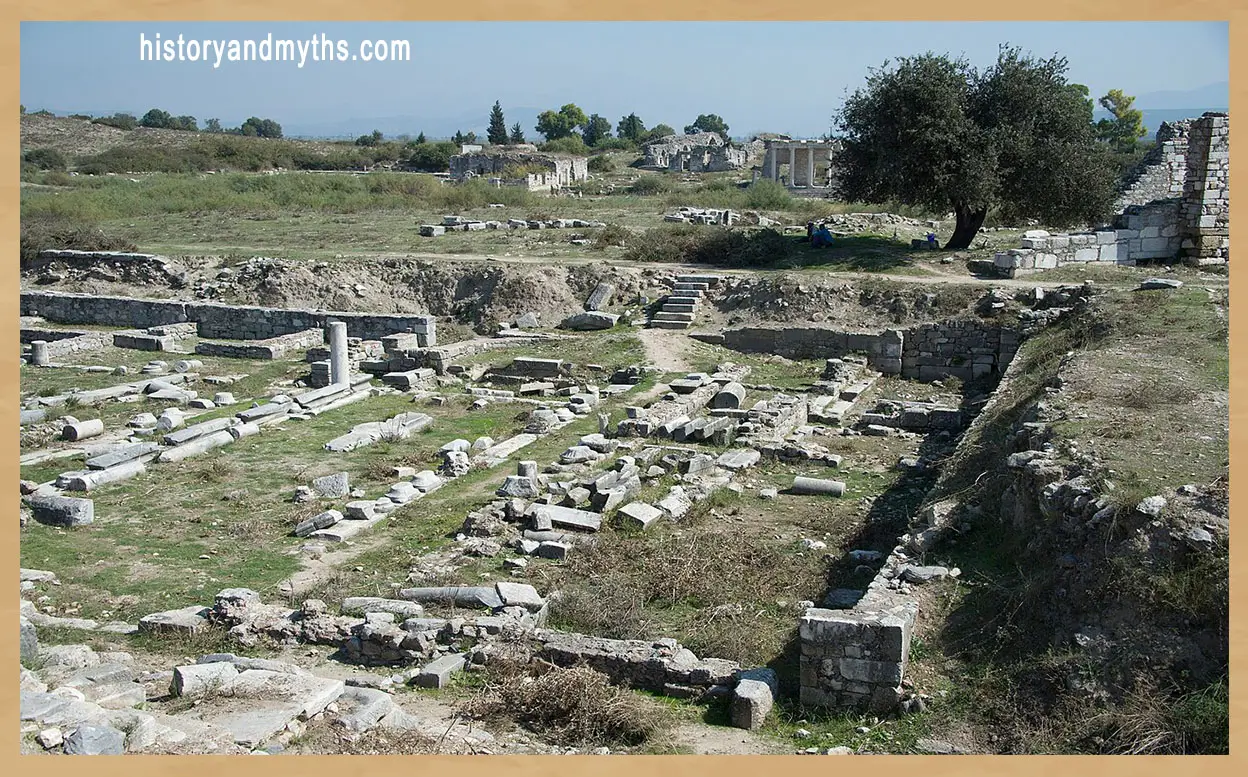
Miletus became one of the earliest intellectual centers in the Greek world because thinkers associated with the city began exploring natural explanations for the structure of the world instead of relying entirely on mythological interpretation. This shift helped establish traditions of inquiry connected to observation, reasoning, and early scientific thought.
The city’s maritime connections also exposed it to broader networks of travel, trade, and cultural exchange that supported the movement of knowledge between different regions. Intellectual development in Miletus therefore emerged within an urban environment strongly connected to external ideas and communication across the eastern Mediterranean.
Knowledge Became a Source of Urban Influence
Some cities in Ancient Greece gained influence through education, philosophical schools, public debate, and the movement of ideas. Intellectual activity shaped urban identity and transformed certain poleis into respected centers of learning and cultural prestige.
© historyandmyths.com — Educational use
Education Networks and the Movement of Knowledge
Knowledge spread across the Greek world through networks of teachers, students, travelers, and intellectual communities moving between different cities. Philosophers, rhetoricians, and educators often traveled to places known for debate culture and advanced learning, helping certain urban centers maintain long-term intellectual influence.
This movement of ideas connected intellectual cities to wider regional discussions about politics, ethics, science, rhetoric, and public life. Cities recognized for education and philosophical activity therefore became important destinations for ambitious students seeking cultural prestige and advanced training.
The circulation of knowledge also strengthened competition between intellectual centers because reputation depended heavily on attracting influential teachers, successful students, and respected schools of thought.
Why Intellectual Cities Became Prestigious
Intellectual cities gained prestige because education, philosophical activity, and public debate increased their cultural influence across the Greek world. Cities known for respected schools, famous teachers, or advanced rhetorical training often attracted elites, political figures, and ambitious students seeking intellectual recognition.
This reputation strengthened long-term urban influence beyond military or economic power alone. Intellectual authority allowed certain cities to shape broader discussions about politics, ethics, science, and civic life within Greek civilization.
Prestige also reinforced itself over time. Once a city became associated with learning and philosophical activity, it attracted more intellectual communities, helping preserve its status as a center of knowledge and cultural leadership.
Continue Reading
- Religious Cities in Ancient Greece and Sacred Power
- Ancient Greek Libraries: How Greeks Stored and Used Knowledge
- How Greek Students Learned in Ancient Greece Step by Step
- Ancient Greek Education: How Citizens and Thinkers Were Formed
- Greek Philosophy: How Socrates, Plato, and Aristotle Changed Thinking
Risks and Tensions Inside Intellectual Centers
Intellectual centers often faced political tension because public debate, philosophical criticism, and independent thinking could challenge existing authority or social expectations. Thinkers associated with controversial ideas sometimes attracted suspicion, hostility, or legal pressure within highly competitive political environments.
Rivalries between schools, teachers, and intellectual traditions also created competition inside major learning centers. Reputation depended heavily on influence, students, and public recognition, making intellectual life both prestigious and politically sensitive.
Periods of instability or conflict could further weaken intellectual communities by disrupting education networks, reducing patronage, or limiting the movement of scholars between cities connected through Greek cultural exchange.
How Knowledge Shaped Urban Identity
Knowledge shaped the identity of certain Greek cities by making education, debate, and intellectual reputation central to how those communities were perceived across the Greek world. Some cities became associated less with military strength or commercial dominance and more with philosophical activity, rhetorical training, and cultural influence.
This intellectual identity influenced urban life by encouraging environments where public discussion, teaching, and the exchange of ideas held unusual social importance. Schools, debate culture, and educational communities became part of the broader character of cities recognized for learning and intellectual prestige.
Over time, these reputations helped distinguish intellectual centers from other Greek poleis and reinforced their influence within wider networks of education, politics, and cultural leadership.
Key Takeaways
- Greek intellectual centers developed through debate culture, education, and philosophical activity.
- Athens became closely associated with public discussion and advanced learning.
- Philosophical schools strengthened urban prestige and attracted students from different regions.
- Miletus contributed to early scientific and rational inquiry.
- Knowledge networks connected cities through traveling teachers and intellectual exchange.
- Intellectual reputation increased long-term cultural and political influence.
- Debate culture and independent thinking sometimes created political tension.
Frequently Asked Questions
What were intellectual centers in Ancient Greece?
Intellectual centers were Greek cities known for philosophy, education, public debate, and the exchange of ideas across the Greek world.
Why was Athens considered an intellectual center?
Athens developed a strong culture of public debate, philosophical schools, rhetorical education, and civic discussion that attracted thinkers and students from many regions.
How did philosophical schools influence Greek cities?
Philosophical schools created organized communities of teaching and discussion that increased the cultural prestige of cities such as Athens.
Why was Miletus important for early Greek thought?
Miletus became associated with early scientific and rational inquiry that explored natural explanations for the world beyond mythological interpretation.
How did knowledge spread between Greek cities?
Teachers, students, travelers, and intellectual communities carried ideas between cities through education networks and cultural exchange.
Why did intellectual cities gain prestige?
Reputation for education, debate, and philosophical activity increased cultural influence and attracted ambitious students and educated elites.
Did intellectual centers face political tension?
Yes. Public debate and controversial ideas sometimes created conflict with political authorities or social expectations inside Greek cities.
How did intellectual activity shape urban identity?
Some Greek cities became known primarily for learning, philosophy, and debate culture rather than military or commercial dominance.
Sources & Rights
- Ober, Josiah. The Rise and Fall of Classical Greece. Princeton University Press, 2015.
- Cartledge, Paul. Ancient Greece: A History in Eleven Cities. Oxford University Press, 2009.
- Nails, Debra. The People of Plato. Hackett Publishing, 2002.
- Waterfield, Robin. Athens: A History. Basic Books, 2004.
- Murray, Oswyn. Early Greece. Harvard University Press, 1993.
- Hansen, Mogens Herman. An Inventory of Archaic and Classical Poleis. Oxford University Press, 2004.
- Barnes, Jonathan. Early Greek Philosophy. Penguin Classics, 2001.
- Lloyd, G. E. R. Early Greek Science. W. W. Norton & Company, 1974.
- Frede, Michael. A Free Will: Origins of the Notion in Ancient Thought. University of California Press, 2011.
- Osborne, Robin. Greece in the Making: 1200–479 BC. Routledge, 2009.
- Finley, Moses I. The Ancient Economy. University of California Press, 1999.
- Rhodes, P. J. The Greek City States: A Source Book. Cambridge University Press, 2007.
- Hornblower, Simon. The Greek World: 479–323 BC. Routledge, 2011.
- Boardman, John. The Greeks Overseas. Thames & Hudson, 1999.
- Malkin, Irad. A Small Greek World: Networks in the Ancient Mediterranean. Oxford University Press, 2011.
- Burford, Alison. Land and Labor in the Greek World. Johns Hopkins University Press, 1993.
- Plato. The Republic. Academic translated editions.
- Aristotle. Politics. Academic translated editions.
- Diogenes Laërtius. Lives of Eminent Philosophers. Academic translated editions.
- Thucydides. History of the Peloponnesian War. Academic translated editions.
Written by H. Moses — All rights reserved © Mythology and History