What Ancient Greek Cities Were Like at Night
Nighttime in Ancient Greek cities operated very differently from daytime because urban life depended heavily on sunlight, limited artificial lighting, and reduced movement after dark. Most streets had no permanent public lighting, so residents relied on oil lamps, torches, moonlight, and familiar routes to move through cities at night.
Markets, workshops, and many public activities slowed or closed after sunset, while households gathered indoors around controlled sources of light and heat. Darkness also increased the risk of accidents, fires, theft, and confusion inside narrow urban streets, which meant most daily routines in Greek cities were organized around daylight rather than nighttime activity.
Why Night Changed Urban Life in Greek Cities
Night changed the operation of Greek cities because most urban activity depended on natural daylight for movement, trade, construction, transport, and communication. Once sunlight disappeared, visibility dropped sharply inside narrow streets and crowded districts that lacked permanent public lighting.
This limited how far people could travel safely after dark and reduced the speed of ordinary urban activity. Tasks that required precision, heavy labor, or commercial exchange became more difficult under weak lamp light or torchlight, especially in areas with uneven roads or dense building layouts.
As a result, Greek cities followed a daily rhythm strongly controlled by sunrise and sunset. Public movement slowed at night, while households concentrated activity indoors around controlled light sources and familiar spaces.
| Nighttime System | How Greek Cities Functioned After Dark |
|---|---|
| Urban Lighting | Greek cities relied on oil lamps, torches, and small indoor flames instead of large public lighting systems. |
| Night Movement | Residents moved more cautiously after dark because narrow streets and weak lighting reduced visibility. |
| Markets at Night | Most commercial activity slowed or closed after sunset as markets and workshops reduced operation. |
| Nighttime Risks | Darkness increased the risk of fires, accidents, theft, and confusion inside crowded urban districts. |
| Daily Urban Rhythm | Greek cities organized most work, trade, and public activity around daylight hours. |
How Greeks Lit Streets and Homes at Night
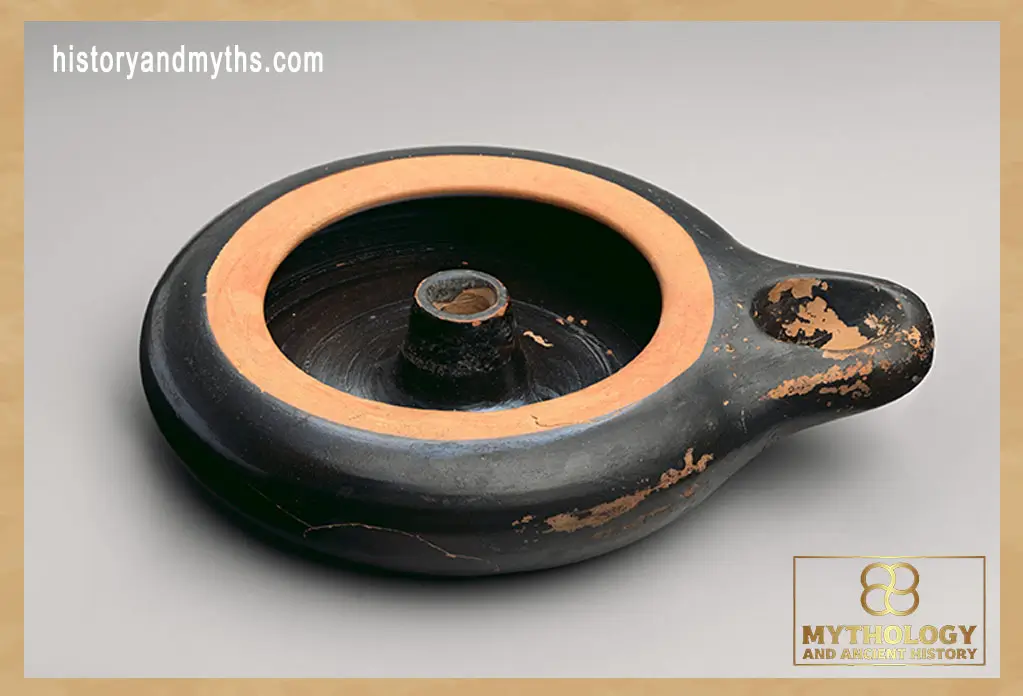
Most nighttime lighting in Greek cities came from small oil lamps, handheld torches, and controlled indoor flames rather than large public lighting systems. Homes used ceramic lamps fueled by olive oil to provide limited illumination for eating, conversation, household work, and movement after sunset.
Outdoor visibility remained weak in many areas because cities did not maintain continuous street lighting across entire urban districts. People moving through streets at night often carried their own light sources or relied partly on moonlight and memory of familiar routes.
Public spaces with activity after dark, including some taverns, religious areas, or guarded locations, could contain stronger lighting than ordinary residential streets. Even there, illumination remained uneven and far weaker than daytime conditions.
How People Moved Through Cities After Dark
Movement through Greek cities became slower and more cautious after sunset because darkness reduced visibility across streets, stairways, and crowded neighborhoods. Residents usually avoided unnecessary travel at night unless work, emergencies, religious activity, or social obligations required movement outside the home.
People who traveled after dark often stayed on familiar routes near populated areas instead of moving through isolated streets or poorly visible sections of the city. Carrying a lamp or torch helped navigation, but small light sources illuminated only short distances and could not fully remove the risks created by uneven roads and limited visibility.
Night movement also depended heavily on sound and local familiarity. Residents recognized districts, entrances, and pathways through repeated daily use, which made knowledge of the urban environment especially important once daylight disappeared.
What Happened to Markets and Public Activity at Night
Most commercial activity in Greek cities declined sharply after sunset because trade, transport, and public exchange worked more effectively during daylight hours. Marketplaces that remained crowded and noisy during the day became quieter once merchants closed stalls, removed goods, and reduced movement through commercial districts.
Workshops also slowed or stopped many forms of production at night, especially tasks requiring strong visibility or constant supervision around tools, furnaces, and open flames. Reduced lighting increased both accident risk and operational difficulty inside busy urban work areas.
Public life did not disappear entirely after dark, but it changed in character. Social gatherings moved into homes, taverns, or smaller indoor spaces where controlled light and familiar surroundings made nighttime activity easier to manage.
Why Nighttime Changed Greek Urban Life
Ancient Greek cities operated under conditions where darkness dramatically reduced visibility, movement, and public activity after sunset. Without permanent street lighting, urban life depended heavily on oil lamps, torches, familiar routes, and daylight-based routines that shaped how residents moved, worked, and interacted inside the city.
© historyandmyths.com — Educational use
Why Night Could Be Dangerous in Greek Cities
Darkness increased the possibility of accidents and confusion inside Greek cities because limited lighting made it harder to identify obstacles, moving people, animals, or damaged sections of streets. Uneven roads, stairways, and crowded building layouts became more difficult to navigate safely after sunset.
Fire also remained a serious nighttime danger. Oil lamps, torches, and indoor flames continued operating inside homes and workshops while visibility decreased, which made early detection of uncontrolled fires more difficult in densely built neighborhoods.
Nighttime conditions could also create opportunities for theft or suspicious activity in areas with reduced public movement and fewer witnesses. For this reason, many residents preferred to remain near familiar spaces and avoid unnecessary travel after dark whenever possible.
How Daylight Controlled Greek Urban Routine
Daily schedules in Greek cities were shaped largely by the availability of natural light rather than fixed mechanical time systems. Trade, construction, transportation, public meetings, and most forms of labor operated most efficiently during daylight hours when visibility supported movement and communication across the city.
Sunrise marked the beginning of major urban activity, while sunset gradually reduced outdoor work, commercial exchange, and long-distance movement. Seasonal changes also affected routine because shorter winter days limited the amount of usable working time available inside cities and surrounding agricultural areas.
This dependence on daylight created a city rhythm very different from modern urban life. Greek cities remained active after dark in limited ways, but the practical center of economic and public activity still belonged overwhelmingly to daytime hours.
Nighttime in Ancient Greek cities operated under conditions shaped by darkness, limited lighting, and reduced visibility rather than continuous public activity. Oil lamps, torches, and familiar routes allowed residents to move and function after sunset, but most urban systems still depended heavily on daylight for trade, work, transportation, and public interaction.
As a result, Greek cities followed a daily rhythm controlled by the transition between day and night. Movement slowed, markets quieted, and households shifted activity indoors once sunlight disappeared, making nighttime a distinct phase of urban life with its own practical limitations and risks.
Key Takeaways
- Nighttime movement in Greek cities depended on lamps, torches, moonlight, and familiar routes.
- Most markets and workshops reduced activity or closed after sunset.
- Greek cities lacked large permanent public lighting systems.
- Darkness increased the risk of fires, accidents, theft, and confusion in crowded districts.
- Households shifted most nighttime activity indoors around controlled light sources.
- Daily urban routines in Ancient Greece were organized primarily around daylight hours.
FAQ
How were Greek cities lit at night?
Greek cities relied mainly on oil lamps, torches, and small indoor flames rather than large public lighting systems.
Did Ancient Greek cities have street lights?
No permanent city-wide street lighting existed in most Greek cities, so nighttime visibility remained limited.
Was it dangerous to travel at night in Ancient Greece?
Yes. Darkness increased the risk of accidents, fires, theft, and confusion inside narrow urban streets.
What happened to Greek markets after sunset?
Most markets and workshops slowed or closed after dark because trade and labor depended heavily on daylight.
How did people move through Greek cities at night?
Residents carried lamps or torches and often stayed on familiar routes near populated areas.
Did people stay active after dark in Ancient Greece?
Some social, religious, and household activities continued at night, but overall urban activity declined after sunset.
Why did Greek cities depend so much on daylight?
Most work, transportation, trade, and communication required natural light because artificial lighting remained limited.
Were nighttime fires a problem in Greek cities?
Yes. Oil lamps, torches, and indoor flames increased fire risk inside crowded urban neighborhoods after dark.
Sources & Rights
- Garland, Robert. Daily Life of the Ancient Greeks. Westport: Greenwood Press, 2009.
- Owens, E. J. The City in the Greek and Roman World. London: Routledge, 1991.
- Wycherley, R. E. How the Greeks Built Cities. London: Macmillan, 1962.
- Camp, John McK. The Athenian Agora. London: Thames & Hudson, 1986.
- Morris, Ian. Archaeology as Cultural History. Oxford: Blackwell, 2000.
- Waterfield, Robin. Athens: A History. London: Macmillan, 2004.
- Tomlinson, R. A. Greek Architecture. London: Bristol Classical Press, 1991.
- Cartledge, Paul. Ancient Greece: A History in Eleven Cities. Oxford: Oxford University Press, 2009.
- Foxhall, Lin. Studying Gender in Classical Antiquity. Cambridge: Cambridge University Press, 2013.
- Vlassopoulos, Kostas. Unthinking the Greek Polis. Cambridge: Cambridge University Press, 2007.
- Travlos, John. Pictorial Dictionary of Ancient Athens. London: Thames & Hudson, 1971.
- Boardman, John. The Greeks Overseas. London: Thames & Hudson, 1999.
- Osborne, Robin. Greece in the Making. London: Routledge, 1996.
- Hansen, Mogens Herman. An Inventory of Archaic and Classical Poleis. Oxford: Oxford University Press, 2004.
- Pedley, John Griffiths. Sanctuaries and the Sacred in the Ancient Greek World. Cambridge: Cambridge University Press, 2005.
- Burford, Alison. Land and Labor in the Greek World. Baltimore: Johns Hopkins University Press, 1993.
- Longfellow, Brenda. Roman Imperialism and Civic Patronage. Cambridge: Cambridge University Press, 2011.
- Wilson, Andrew. Water Management and Hydraulic Engineering in the Ancient World. Oxford: Oxford University Press, 2008.
- Amemiya, Toru. Economy and Economics in Ancient Greece. London: Routledge, 2007.
- Hodge, A. Trevor. Roman Aqueducts & Water Supply. London: Duckworth, 2002.
Written by H. Moses — All rights reserved © Mythology and History