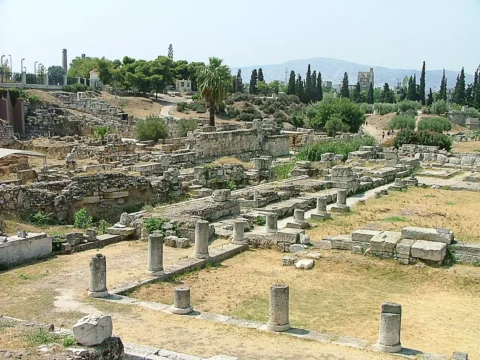
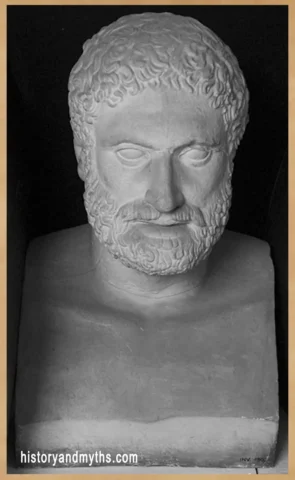
Ancient Greek Libraries: How Greeks Stored and Used Knowledge
Ancient Greek libraries were not designed as public spaces for reading. They were controlled environments for storing and organizing knowledge, used by a limited group of scholars and institutions. Their function was not access for everyone, but preservation and structured use of written material.
This marks a shift. Greek culture had long relied on memory, performance, and oral transmission. As written texts became more central, the need to collect, manage, and stabilize information increased. Libraries emerged as part of that response. They did not replace earlier forms of learning, but they changed how knowledge could be stored and reused over time.
What matters is not the buildings themselves, but the system behind them. Libraries supported education, influenced intellectual work, and shaped who could interact with knowledge at a deeper level. Access was selective. Organization mattered. Control was built into the structure.
So the real question is not “what libraries existed,” but how libraries transformed the way knowledge was preserved, accessed, and used within Greek intellectual life.
What Greek Libraries Actually Were
Greek libraries were not public institutions in the modern sense. They did not operate as open spaces where anyone could walk in and read. Instead, they functioned as restricted collections of texts, maintained for specific purposes and specific users.
The key point is control. Texts were gathered, stored, and organized, but access to them was limited by design. These collections were often connected to scholars, rulers, or institutions that had both the resources to maintain them and the authority to regulate their use. The library was not a neutral space. It was part of a structured environment where knowledge was managed deliberately.
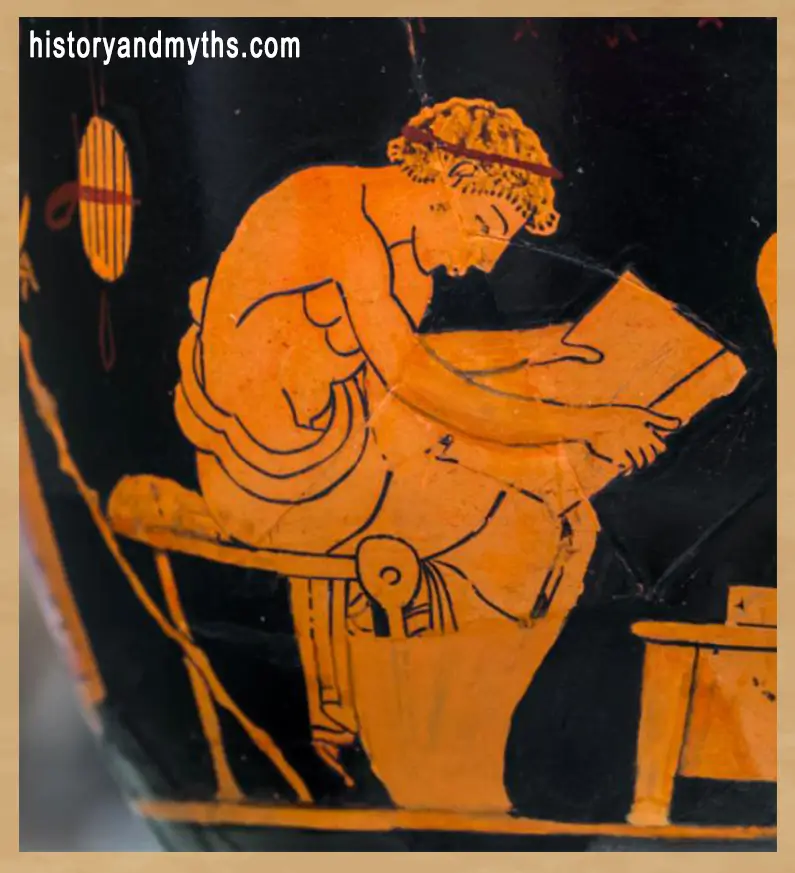
Another important detail is form. What these libraries held were not “books” in the modern sense, but scrolls that required careful handling, copying, and preservation. This made storage more than a physical issue. It required systems—classification, arrangement, and ongoing maintenance—to ensure that texts remained usable over time.
This also explains their scale. Even the largest collections were selective. They aimed to gather what was considered valuable or necessary, not everything available. The result was not completeness, but curated concentration of knowledge.
Seen clearly, Greek libraries were not places of general access. They were controlled systems for preserving, organizing, and maintaining written knowledge, designed to support a specific intellectual environment rather than a broad public audience.
| Element | Function | Outcome |
|---|---|---|
| Text Collection | Gathering and selecting scrolls | Curated knowledge base |
| Storage System | Preservation and organization | Long-term continuity |
| Access Control | Restricted usage | Layered knowledge access |
| Intellectual Use | Study and comparison | Refined thinking |
| Transmission | Copying and reuse | Knowledge expansion |
Why Libraries Appeared (The Need for Storage)
Greek libraries did not appear by chance. They emerged when existing methods of handling knowledge were no longer sufficient. As the volume of written material increased, reliance on memory and scattered texts became unstable. Information could be lost, altered, or simply become inaccessible.
The shift from oral transmission to written form created a new problem. Writing allowed ideas to persist beyond a single performance, but it also required systems to manage accumulation. Texts needed to be stored, located, and preserved. Without that, writing would not achieve its purpose.
Another factor was concentration of intellectual activity. As scholars began to work with multiple texts—comparing, interpreting, and building on them—the need for a centralized collection became clear. Knowledge could not develop efficiently if it remained fragmented across different locations.
There was also a practical issue of durability. Scrolls were fragile. They required controlled environments and ongoing copying to survive. Libraries provided continuity, ensuring that texts remained usable across time rather than disappearing with use or neglect.
In practical terms, libraries appeared because knowledge had reached a point where it could not sustain itself without structured storage. They were a response to accumulation, not an invention for convenience.
Libraries and Education
Greek libraries did not replace education. They extended it. Learning had always relied on interaction, observation, and discussion. Libraries added a new layer—stable access to texts that could be revisited, compared, and analyzed over time.
This changed how learning worked at higher levels. Instead of relying only on what could be heard or remembered, individuals could engage with multiple versions of an idea, examine differences, and refine their understanding. Education became less dependent on immediate presence and more dependent on available material.
Another shift was depth. With access to stored texts, learning could move beyond basic transmission into systematic study. A subject could be explored across different sources, not just through a single explanation. This allowed for more structured forms of inquiry, even without a formal institutional framework.
Access, however, remained selective. Not everyone interacted with these collections in the same way. Those with proximity to libraries—scholars, students within specific circles—had a different level of engagement with knowledge than the broader population. This created variation in how education was experienced.
Seen clearly, libraries did not change the purpose of education. They changed its capacity—allowing learning to become more cumulative, more comparative, and more sustained over time.
Libraries and Intellectual Life
Libraries did not generate intellectual activity on their own, but they changed its scale and method. Once texts were gathered in one place, scholars could move beyond isolated ideas and begin working with multiple sources at the same time. That shift matters. It made comparison possible.
With comparison came refinement. A claim could be checked against earlier writings. Variations could be identified. Contradictions had to be addressed. Intellectual work became less about producing a single argument and more about positioning that argument within a wider body of knowledge.
This also encouraged continuity. Instead of starting from the beginning, thinkers could build on what already existed. Ideas accumulated. They did not disappear after a single use. Over time, this created a layered form of thinking where new work depended on earlier material, not just immediate reasoning.
Another effect was specialization. When large collections were available, individuals could focus on narrower areas, knowing that related material was accessible when needed. Intellectual life became more structured and differentiated, even without formal boundaries.
In practice, libraries reshaped intellectual activity by making it cumulative, comparative, and sustained. They did not create new ideas directly, but they changed how ideas could be developed and connected over time.
- Libraries stored knowledge in structured, controlled environments
- They supported advanced learning and intellectual work
- Access to knowledge was limited and regulated
- Written texts enabled comparison and long-term use
- Libraries connected storage with intellectual development
© historyandmyths.com — Educational use
Knowledge Control and Access
Greek libraries were not open systems. They were built around controlled access, and that control shaped how knowledge functioned within society. The question was not only what was stored, but who could reach it and under what conditions.
Access depended on proximity and position. Scholars, teachers, and those connected to intellectual or political centers had a direct path to these collections. Others did not. This created a layered structure of knowledge, where different groups interacted with information at different levels.
Control also extended to selection. Libraries did not aim to preserve everything. They chose what to include, which meant that some ideas were maintained and others were left outside the system. Over time, this influenced what could be studied, referenced, or expanded upon.
Another dimension is use. Even when texts were available, they were not consumed freely. Working with scrolls required time, training, and familiarity with the material. Access, therefore, was not just physical. It was functional—only those prepared to engage with the texts could use them effectively.
In practical terms, libraries did not simply store knowledge. They structured its availability, shaping who could engage with it and how it could develop within the intellectual system.
From Memory to Text (The Shift in Learning)
Before libraries, knowledge in Greek society depended heavily on memory and performance. Information was carried, repeated, and preserved through recitation and shared practice. This system worked, but it had limits. What could not be remembered or consistently transmitted risked disappearing.
The move to written texts changed that dynamic. Once ideas were recorded, they no longer depended entirely on recall. They could be stored, revisited, and examined outside the moment of performance. This gave knowledge a form of stability it did not have before.
But the shift was not only about preservation. It changed how people thought. When ideas exist in written form, they can be broken down, reorganized, and compared across different contexts. Learning becomes less about retaining a sequence and more about working with material in a flexible way.
This also introduced distance. A reader could engage with a text without direct contact with its original source. Knowledge became transferable across time and place, not tied to a single interaction. That allowed for accumulation at a level that oral systems could not sustain.
In practice, the shift from memory to text did not eliminate earlier methods. It rebalanced them. Memory remained important, but written material became the anchor that allowed knowledge to persist, expand, and be reworked over time.
Libraries as a System (Not Buildings)
Greek libraries are best understood not as physical spaces, but as part of a broader system that managed how knowledge was preserved, accessed, and used. The building itself was only one element. What mattered was the structure surrounding it.
That structure connected storage with learning. Texts were collected and maintained, but they gained value only when they were integrated into intellectual activity—studied, compared, and applied. Libraries did not stand apart from education or scholarship. They supported and extended both.
Another key feature is coordination. Even without a central authority, the system aligned different functions—collection, preservation, and use—into a continuous process. Knowledge moved from being produced to being stored, then back into use, without breaking the chain.
This also explains durability. Because the system was not dependent on a single location or form, it could adapt. Collections could expand, shrink, or shift, but the underlying function remained the same: to maintain knowledge in a usable state over time.
Seen clearly, Greek libraries were not defined by their walls. They were defined by how they organized knowledge into a stable, accessible, and reusable system within the intellectual life of the society.
- Greek libraries were controlled systems, not public institutions
- They emerged from the need to store growing written knowledge
- Libraries extended education by enabling deeper study
- Intellectual life became more comparative and cumulative
- Access to knowledge was limited and socially structured
- The shift from memory to text changed how knowledge worked
- Libraries functioned as part of a broader knowledge system
Frequently Asked Questions
What were Greek libraries used for?
They were used to store, organize, and support the study of written knowledge.
Were Greek libraries open to the public?
No. Access was limited to scholars and specific groups.
Why did Greek libraries develop?
They emerged due to the growing need to manage and preserve written texts.
How did libraries affect education?
They allowed for deeper, more structured learning through access to multiple texts.
What kind of materials did they contain?
Mainly scrolls containing literature, philosophy, and scholarly works.
Did libraries influence intellectual life?
Yes. They enabled comparison, accumulation, and refinement of ideas.
How did writing change Greek learning?
It made knowledge stable, reusable, and transferable across time.
Sources & Rights
- Casson, Lionel. Libraries in the Ancient World. New Haven: Yale University Press, 2001.
- Harris, William V. Ancient Literacy. Cambridge, MA: Harvard University Press, 1989.
- Johnson, William A., and Holt N. Parker, eds. Ancient Literacies: The Culture of Reading in Greece and Rome. Oxford: Oxford University Press, 2009.
- Too, Yun Lee. The Idea of the Library in the Ancient World. Oxford: Oxford University Press, 2010.
- Canfora, Luciano. The Vanished Library: A Wonder of the Ancient World. Berkeley: University of California Press, 1989.
- Thomas, Rosalind. Literacy and Orality in Ancient Greece. Cambridge: Cambridge University Press, 1992.
- Ober, Josiah. Democracy and Knowledge: Innovation and Learning in Classical Athens. Princeton: Princeton University Press, 2008.
- Cartledge, Paul. Ancient Greece: A Very Short Introduction. Oxford: Oxford University Press, 2011.
- Osborne, Robin. Greece in the Making: 1200–479 BC. London: Routledge, 1996.
- Hornblower, Simon, and Antony Spawforth, eds. The Oxford Classical Dictionary. 4th ed. Oxford: Oxford University Press, 2012.
Written by H. Moses — All rights reserved © Mythology and History