How Honor Shaped Ancient Greek Society and Public Life
Honor shaped nearly every part of life in Ancient Greece. Reputation affected political influence, social status, family expectations, military behavior, and the way individuals were judged inside their communities. Respect was not treated as a private feeling but as a public measure of personal value recognized by other people.
This made honor a powerful form of social pressure. Citizens were expected to protect their reputation through courage, self-control, public behavior, and loyalty to social expectations. In many situations, losing honor meant more than embarrassment — it could damage a person’s position within society itself.
What Honor Meant in Ancient Greek Society
Honor in Ancient Greece depended heavily on public recognition. A person’s value was measured not only by wealth or birth, but by how others viewed their behavior, reliability, courage, and conduct within the community. Reputation existed socially, which meant honor could rise or collapse through public judgment.
This made honor closely connected to visibility. Actions performed in war, politics, family life, religion, or public gatherings affected how individuals were remembered and discussed by others. Praise increased status, while disgrace could damage social standing for long periods.
Honor also worked differently across social groups. Political leaders, soldiers, household heads, and citizens faced different expectations, but all depended on maintaining respect within their social environment. Public recognition therefore became one of the forces that organized relationships inside Greek society.
How Honor Influenced Ancient Greek Society
| Area of Life | How Honor Shaped Behavior |
|---|---|
| Politics | Public reputation affected credibility and influence |
| Warfare | Courage and discipline influenced military reputation |
| Family Life | Household behavior affected collective social standing |
| Public Interaction | Citizens managed conduct under constant social observation |
| Competition | Recognition and prestige encouraged public achievement |
Why Public Reputation Was So Important
Ancient Greek society placed enormous weight on how individuals were perceived by others. Reputation affected trust, influence, marriage prospects, political credibility, and a person’s ability to participate confidently in public life. A damaged reputation could weaken social connections even when no formal punishment existed.
Because communities were tightly connected, behavior rarely remained private for long. Public actions, arguments, failures, or displays of courage became part of how others judged an individual over time. Citizens lived inside systems of observation where social memory carried real consequences.
This pressure encouraged people to manage their conduct carefully in visible settings such as assemblies, markets, festivals, and military service. Reputation was not simply a reflection of character. It shaped practical opportunities and determined how seriously others treated a person inside the polis.
How Honor Shaped Male Behavior
Greek ideals of honor strongly influenced expectations placed on men in public life. Courage, discipline, self-control, and willingness to face risk were often treated as signs of respectable behavior. Men were expected to defend their status through visible actions rather than private claims about personal worth.
Competition also played an important role. Athletic contests, warfare, political debate, and public speaking all created opportunities to gain recognition from others. Success increased prestige, while cowardice or public failure could damage a man’s standing within the community.
These expectations affected everyday behavior as well. Men were pressured to appear capable, reliable, and socially composed in front of peers, relatives, and fellow citizens. Honor therefore operated not only during major events, but throughout ordinary public interaction.
Honor Inside Family and Social Life
Honor affected family relationships as much as public reputation. Households were expected to maintain respectability through behavior, marriage arrangements, discipline, and the public conduct of family members. Actions viewed as shameful could damage the standing of an entire household rather than only one individual.
Marriage carried social importance partly because it reflected family reputation. Alliances between households depended on trust, status, and perceptions of proper behavior. Families therefore paid close attention to conduct that could strengthen or weaken their social image within the community.
Honor also shaped everyday interaction between neighbors, relatives, and social groups. Respectful behavior reinforced social stability, while insults, humiliation, or public disrespect could create long-lasting tension. Social life inside Greek cities depended heavily on maintaining visible forms of mutual recognition and status.
Honor, Politics, and Public Life
Public reputation played a major role in Greek political culture. Citizens were more likely to trust leaders who appeared disciplined, capable, and respected by the community. Political influence therefore depended partly on maintaining an honorable public image over time.
This pressure shaped behavior inside assemblies, courts, and civic gatherings. Public speech, personal conduct, and responses to criticism could all affect how a citizen was judged politically. A damaged reputation weakened credibility, while visible respect from others increased authority and influence.
Honor also encouraged participation in civic life. Public activity allowed individuals to demonstrate loyalty, competence, and commitment to the polis in front of other citizens. Political life in many Greek cities therefore operated within systems of public recognition as much as formal institutions.
Honor Worked as Social Pressure
In Ancient Greece, honor functioned as more than personal pride. Public reputation influenced political influence, military respect, family standing, and social trust. Communities used praise, recognition, and fear of disgrace to shape behavior long before formal punishment became necessary.
© historyandmyths.com — Educational use
Why Shame Was Closely Connected to Honor
Honor and shame operated together inside Greek society because public respect could not exist without the possibility of public disgrace. Individuals who failed to meet social expectations risked criticism, humiliation, or loss of standing within their communities.
Shame worked as a form of pressure that encouraged conformity to accepted behavior. Fear of ridicule, dishonor, or damaged reputation often influenced decisions involving courage, loyalty, family conduct, and public responsibility. Social judgment therefore became a powerful method of control even without direct legal punishment.
Because reputation depended on collective opinion, shame rarely remained personal. Public failure could affect how families, allies, and political supporters were viewed by others. This connection between honor and disgrace helped reinforce social expectations across different areas of Greek life.
How Honor Helped Control Greek Society
Greek governments were not the only force maintaining order inside the polis. Social pressure played a constant role in shaping behavior, and honor became one of the mechanisms through which communities regulated themselves. Citizens often adjusted their actions because they understood how public judgment could affect their standing.
This system reduced reliance on formal enforcement in many areas of daily life. Respect, reputation, and fear of disgrace encouraged people to follow social expectations even when no official authority was immediately present. Public opinion therefore acted as an informal layer of regulation inside Greek society.
Honor also strengthened collective identity by linking personal behavior to community standards. Individuals were judged not only as private persons, but as members of families, social groups, and the polis itself. In this way, honor helped connect personal reputation with broader social stability.
Continue Reading
Honor in Warfare and Military Culture
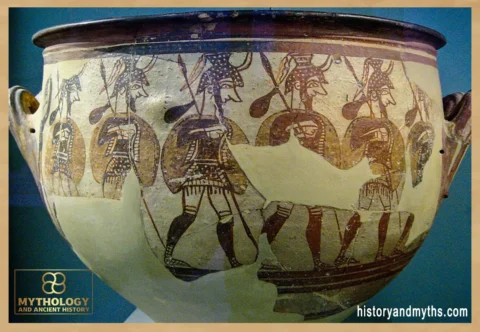
Military service exposed honor to public judgment more directly than most areas of Greek life. Courage during battle affected how soldiers were remembered by fellow citizens, while cowardice could damage a person’s reputation long after a conflict ended. Public memory of military behavior often shaped social standing inside the community.
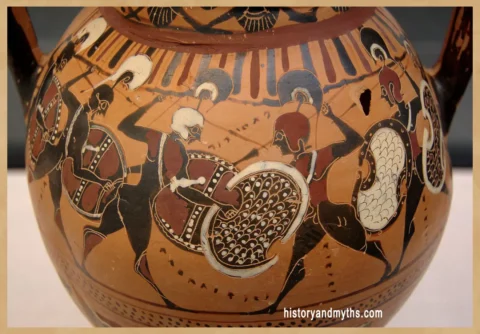
This pressure encouraged men to maintain discipline and remain committed to collective action during warfare. In tightly organized formations such as the phalanx, individual behavior affected the safety and effectiveness of others nearby. Honor therefore became connected not only to personal bravery, but also to reliability within the group.
Military reputation could also influence political and social influence after war. Successful commanders and respected veterans often carried greater authority because military conduct remained highly visible within Greek public life.
Competition and the Desire for Recognition
Greek society rewarded visible achievement in many forms. Athletic contests, public speaking, political debate, religious festivals, and military success all created opportunities for individuals to gain recognition from others. Honor was strengthened through comparison because reputation depended partly on standing above rivals.
This competitive environment encouraged people to seek distinction in public settings where success could be witnessed by the wider community. Victories, praise, and public admiration increased social value, while repeated failure weakened status and influence.
The desire for recognition also reinforced participation in civic life. Citizens pursued honor through activities that connected them more closely to the public world of the polis rather than through private achievement alone.
Why Honor Varied Between Different Greek Communities
Greek ideas about honor were not completely identical across every city-state. Different communities emphasized different forms of respectable behavior depending on their political structure, military priorities, and social traditions.
In Sparta, honor was strongly connected to military discipline, endurance, and loyalty to the collective order of the state. Public reputation depended heavily on fulfilling expected social and military duties. In Athens, political participation, public speech, and civic influence played a larger role in shaping honorable status within society.
These differences show that honor was not a fixed moral code shared equally across Greece. It adapted to the values and pressures of individual communities while continuing to function as a major force in public life.
Key Takeaways
- Honor in Ancient Greece depended heavily on public reputation and social recognition.
- Greek communities judged individuals through visible behavior and public conduct.
- Honor influenced politics, warfare, family life, and social relationships.
- Military courage and public discipline strongly affected male reputation.
- Competition and public achievement increased social prestige inside the polis.
- Honor and shame worked together as systems of informal social control.
- Different Greek city-states emphasized different forms of honorable behavior.
Frequently Asked Questions
What did honor mean in Ancient Greece?
Honor in Ancient Greece referred to public respect, reputation, and social recognition within the community.
Why was reputation important in Ancient Greek society?
Reputation affected political influence, social trust, family standing, and a person’s overall status inside the polis.
How did honor influence Greek politics?
Citizens and leaders depended heavily on public credibility, reputation, and visible respect from others.
Was honor connected to warfare in Ancient Greece?
Yes. Courage, discipline, and military behavior strongly affected public reputation and social standing.
How did shame relate to honor?
Shame acted as a social pressure system that punished behavior seen as dishonorable or socially damaging.
Did different Greek city-states view honor differently?
Yes. Sparta emphasized military discipline and collective duty, while Athens placed greater value on civic participation and public influence.
How did honor affect family life in Ancient Greece?
Family reputation depended on public behavior, marriage arrangements, discipline, and social respectability.
Why did competition matter in Greek society?
Competition allowed individuals to gain recognition, prestige, and higher social status through visible achievement.
Sources & Rights
- Cairns, Douglas L. Aidos: The Psychology and Ethics of Honour and Shame in Ancient Greek Literature. Oxford University Press, 1993.
- Adkins, Arthur W. H. Merit and Responsibility: A Study in Greek Values. Oxford University Press, 1960.
- Cohen, David. Law, Violence, and Community in Classical Athens. Cambridge University Press, 1995.
- Ober, Josiah. Mass and Elite in Democratic Athens. Princeton University Press, 1989.
- Cartledge, Paul. The Spartans: The World of the Warrior-Heroes of Ancient Greece. Vintage Books, 2003.
- Hansen, Mogens Herman. Polis: An Introduction to the Ancient Greek City-State. Oxford University Press, 2006.
- Pomeroy, Sarah B. Families in Classical and Hellenistic Greece. Oxford University Press, 1997.
- Finley, Moses I. The World of Odysseus. New York Review Books, 2002.
- Konstan, David. The Emotions of the Ancient Greeks: Studies in Aristotle and Classical Literature. University of Toronto Press, 2006.
- Fisher, Nick. Hybris: A Study in the Values of Honour and Shame in Ancient Greece. Aris & Phillips, 1992.
- Dover, K. J. Greek Popular Morality in the Time of Plato and Aristotle. Hackett Publishing, 1994.
- Golden, Mark. Children and Childhood in Classical Athens. Johns Hopkins University Press, 1990.
- Foxhall, Lin. Studying Gender in Classical Antiquity. Cambridge University Press, 2013.
- Kurke, Leslie. The Traffic in Praise: Pindar and the Poetics of Social Economy. Cornell University Press, 1991.
- Lateiner, Donald. Sardonic Smile: Nonverbal Behavior in Homeric Epic. University of Michigan Press, 1995.
- Lendon, J. E. Soldiers and Ghosts: A History of Battle in Classical Antiquity. Yale University Press, 2005.
- Halperin, David M. One Hundred Years of Homosexuality and Other Essays on Greek Love. Routledge, 1990.
- Rhodes, P. J. A History of the Classical Greek World: 478–323 BC. Wiley-Blackwell, 2010.
- Osborne, Robin. Greece in the Making: 1200–479 BC. Routledge, 2009.
- Blundell, Sue. Women in Ancient Greece. Harvard University Press, 1995.
Written by H. Moses — All rights reserved © Mythology and History