Ancient Greek Education: How Citizens and Thinkers Were Formed
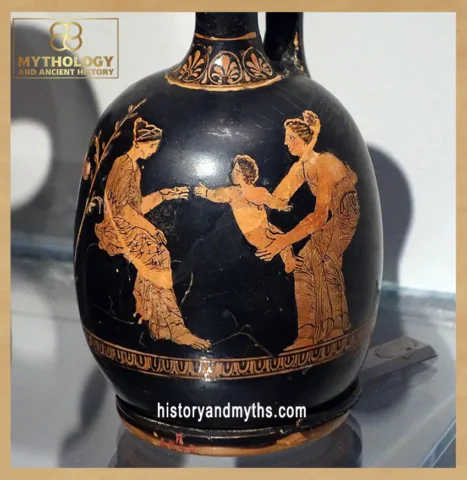
Ancient Greek education was not designed to deliver knowledge in a structured, institutional way. It was built to shape individuals into active participants within the city—people who could speak, compete, decide, and act in public life.
This is the key point. Education was not separate from society; it was embedded inside it. A young person did not simply “learn subjects.” They were trained—formally and informally—to take on a role. In some cities, that meant discipline and collective loyalty. In others, it meant argument, persuasion, and civic involvement. The difference was not educational style. It was purpose.
There were no standardized systems. No universal curriculum. Yet the outcome was consistent. Greek education produced individuals who understood how to operate within their community, not just how to accumulate knowledge. It combined physical training, social interaction, mentorship, and exposure to public life into a continuous process rather than a fixed institution.
So the real question is not what the Greeks studied. It is what their education was designed to produce—and how that shaped both intellectual life and the structure of the city itself.
What Greek Education Actually Was
Greek education was not a centralized system with fixed institutions. It had no universal structure, no standardized curriculum, and no single authority controlling it. What existed instead was a distributed process shaped by family, society, and the expectations of the city.
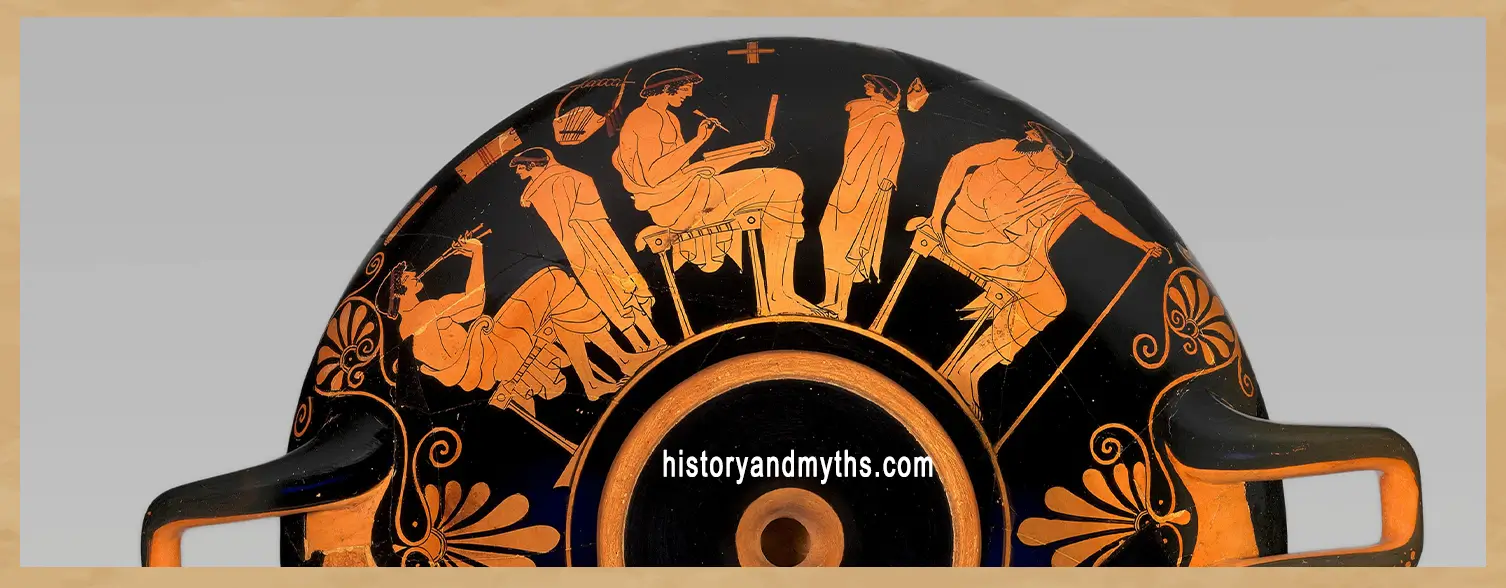
It started early. The household introduced basic skills and behavior. But that was only the beginning. As individuals grew, learning shifted outward—into public spaces, social interactions, and guided mentorship. Education moved with the person. It was not confined to a classroom because, in most cases, there was no classroom to begin with.
This matters. Without rigid institutions, education remained flexible and responsive to context. Different cities emphasized different outcomes. What counted as “being educated” depended on what the community needed. The system adjusted without requiring formal redesign.
Seen clearly, Greek education was not a system of schooling. It was a social process that shaped individuals through interaction, expectation, and participation, producing outcomes aligned with the needs of the city.
| Element | Function | Outcome |
|---|---|---|
| Household Training | Introduces behavior and basic skills | Early social alignment |
| Public Participation | Exposure to real situations | Practical competence |
| Mentorship | Guided development | Refined skills |
| Intellectual Life | Debate and argument | Analytical thinking |
| Social Structure | Shapes access and opportunity | Role-based outcomes |
Education as Citizen Formation
Greek education was designed to answer a practical question: what kind of person does the city need? Everything else followed from that. Knowledge mattered, but only insofar as it helped the individual operate within the civic structure.
In cities like Athens, this meant preparing individuals to speak, argue, and participate in decision-making. The ability to persuade was not optional. It was a requirement. Education therefore emphasized language, rhetoric, and exposure to public debate. You learned by listening. Then by responding. Then by defending your position in front of others.
Sparta followed a different logic. The goal was not participation through speech, but coordination through discipline. Education trained the body first, then behavior. Obedience, endurance, and group cohesion were not side effects—they were the objective. The individual mattered, but only as part of a larger unit.
Two cities. Two systems. Same principle.
What connects them is function. Education did not aim to produce “well-rounded individuals” in the abstract. It produced citizens fitted to a specific role within a specific environment. The content changed. The structure adapted. The goal stayed fixed.
The Role of Intellectual Life
Intellectual life in Greece was not a separate layer added after education. It was its continuation in public space. What began as training—listening, speaking, testing ideas—moved into everyday practice where those skills were used, challenged, and refined.
The core mechanism was exposure. Ideas were not kept private or confined to small groups. They were presented, debated, and contested in front of others. This made thinking visible. It also made it accountable. An argument had to stand up to response, not just exist in isolation.
That environment produced a specific habit: questioning as a normal activity. Not as rebellion, but as method. Positions were examined, reworked, and sometimes replaced. The value was not in holding a fixed answer, but in being able to engage with competing views and respond effectively.
Another important element is continuity. Intellectual activity did not belong to a single stage of life. It extended through participation—through discussion in gatherings, observation of public decisions, and ongoing engagement with others. Learning and thinking were not separate phases; they were part of the same process.
This also explains why intellectual life could influence broader structures. When debate and argument are part of daily interaction, they shape how decisions are made, how authority is challenged, and how ideas evolve. The effect is gradual but consistent.
Seen clearly, Greek intellectual life was not about producing isolated thinkers. It was about maintaining a system where ideas were constantly tested in public, reinforcing the same skills that education was designed to create.
- Education was a distributed system, not centralized schooling
- It was designed to produce citizens, not just knowledge
- Public life acted as a continuous learning environment
- Different cities shaped different outcomes
- Informal learning was the core mechanism
© historyandmyths.com — Educational use
Education and Social Class
Access to education in Greek society was not evenly distributed. The system was open in structure, but limited in practice. What an individual could learn—and how far they could go—depended largely on their position within the social hierarchy.
For the elite, education was extended and continuous. They had the time, resources, and connections to engage deeply with training, discussion, and mentorship. This allowed them to develop the skills required for public influence and participation at higher levels. Education, in this context, reinforced their ability to remain visible and effective within the civic system.
For others, the situation was different. Basic skills and social behavior were still learned, but access to advanced forms of training—especially those linked to rhetoric and intellectual engagement—was more limited. Participation existed, but it was constrained by opportunity rather than formally restricted by a single rule.
Short point: access shaped outcome.
Another important factor is that education did not operate independently from social structure. It reflected and reproduced existing roles. Those already positioned for influence received the preparation needed to maintain it. Those outside that position were less likely to acquire the same tools at the same level.
This does not mean the system was rigid in every case, but the pattern is clear. Education was not a neutral process distributing knowledge equally. It was a mechanism that aligned individuals with the roles they were expected to occupy.
In practical terms, Greek education was shaped by social class because it was designed to produce function. And function, in turn, depended on where an individual stood within the structure of the city.
Informal Education (The Hidden System)
Most Greek education did not happen in structured settings. It happened in interaction, observation, and repeated exposure to public life. This is the part that rarely appears in descriptions, but it explains how the system actually worked.
Learning through participation was constant. Individuals absorbed behavior by watching how others spoke, acted, and responded in real situations. There was no clear boundary between “learning” and “doing.” The two overlapped. You learned by entering the environment and adjusting to it over time.
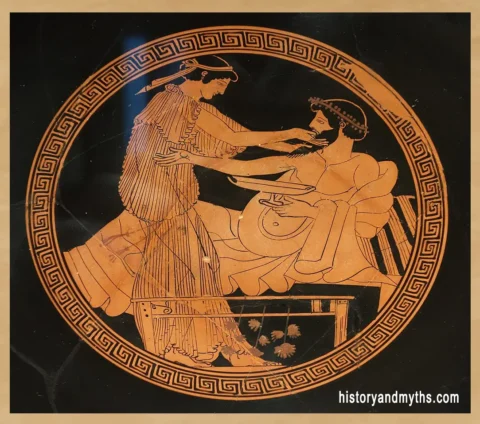
Another mechanism was guided association. Younger individuals spent time around more experienced ones, not in formal lessons, but in shared spaces—discussions, gatherings, daily activity. Knowledge moved through proximity. It was not delivered in a fixed format; it was picked up, corrected, and refined through interaction.
Short point: presence replaced instruction.
Public settings played a major role. Spaces where people gathered—whether for discussion, decision-making, or social exchange—acted as continuous learning environments. They exposed individuals to argument, disagreement, and negotiation, all of which were essential for functioning within the city.
This informal structure also explains adaptability. Without rigid frameworks, learning could respond to immediate needs and situations. It was not limited to predefined content. It expanded with experience.
In practice, informal education was not secondary—it was the core. It ensured that individuals did not just acquire knowledge, but learned how to operate within the living system of the city itself.
Why Greek Education Produced Innovation
Greek education generated innovation because it was built on use, pressure, and constant evaluation, not on memorization alone. Ideas were not preserved as fixed content. They were exposed to response, challenged, and adjusted in real time.
The first driver was argument as method. Individuals were trained to present positions and defend them. That process forced clarity. Weak ideas did not hold. Strong ones survived—but often in modified form. Over time, this created a habit of refining rather than repeating.
The second factor was competition. Intellectual activity did not occur in isolation. It unfolded in environments where others were present, listening, and responding. This introduced pressure. To stand out, an argument had to be sharper, clearer, or more effective than what came before. The result was continuous improvement under scrutiny.
Another element is cross-exposure. Because learning was not confined to a single structure, individuals encountered different perspectives through interaction. This made it harder for ideas to remain static. They were reframed when placed in new contexts, which opened space for variation and development.
Finally, there was lack of rigid authority over knowledge. No single institution controlled what could or could not be thought. This allowed for experimentation within the limits of social acceptance. It did not guarantee accuracy, but it enabled movement.
In practical terms, innovation emerged because the system required individuals to test ideas publicly, adapt them under pressure, and refine them through interaction. The process itself produced change.
Education as a System (Not Schools)
Greek education functioned as a connected system rather than a set of institutions. There was no central authority organizing it, yet its outcomes were consistent because its parts—family, public life, mentorship, and social expectation—worked together toward the same goal.
The system held because each element reinforced the others. Early training in the household introduced behavior and basic skills. Public interaction exposed individuals to real situations. Intellectual life tested their ability to think and respond. None of these stages stood alone. They formed a continuous process that shaped how a person operated within the city.
Another key feature is alignment. Education did not exist for its own sake. It was tied directly to what the community required from its members. This kept the system focused. Knowledge, behavior, and participation were not separate tracks—they were integrated into a single outcome.
This also explains durability. Because the system was distributed, it did not depend on a single institution to function. It could persist across time and variation, adapting to different conditions while maintaining its core purpose. Change in one area did not break the whole structure.
Seen clearly, Greek education was not defined by schools. It was defined by how a society organized learning, behavior, and participation into a unified system that produced individuals capable of functioning within it.
- Greek education was a social system, not an institutional one
- Its primary goal was citizen formation
- Athens and Sparta followed different functional models
- Intellectual life extended education into public space
- Access to education varied by social class
- Informal learning played a central role
- The system encouraged innovation through debate and competition
Frequently Asked Questions
What was Greek education like?
It was a social system focused on preparing individuals for roles within the city rather than formal schooling.
Did ancient Greece have schools?
Some structured teaching existed, but most education occurred through social interaction and public life.
What was the goal of Greek education?
To produce citizens capable of participating in civic, social, or military roles.
How did Athens and Sparta differ in education?
Athens emphasized debate and participation, while Sparta focused on discipline and cohesion.
Was education available to everyone?
No. Access and depth of education depended largely on social class.
How did Greeks learn outside formal settings?
Through mentorship, observation, discussion, and participation in public life.
Why was Greek education important?
It shaped how individuals functioned within the city and supported social stability.
Sources & Rights
- Marrou, Henri-Irénée. A History of Education in Antiquity. Madison: University of Wisconsin Press, 1956.
- Beck, Frederick A. G. Greek Education, 450–350 B.C. London: Methuen, 1964.
- Too, Yun Lee. Education in Greek and Roman Antiquity. Leiden: Brill, 2001.
- Cartledge, Paul. Ancient Greece: A Very Short Introduction. Oxford: Oxford University Press, 2011.
- Osborne, Robin. Greece in the Making: 1200–479 BC. London: Routledge, 1996.
- Golden, Mark. Sport and Society in Ancient Greece. Cambridge: Cambridge University Press, 1998.
- Kennedy, George A. Classical Rhetoric and Its Christian and Secular Tradition. Chapel Hill: University of North Carolina Press, 1999.
- Ober, Josiah. Mass and Elite in Democratic Athens. Princeton: Princeton University Press, 1989.
- Ober, Josiah. Democracy and Knowledge: Innovation and Learning in Classical Athens. Princeton: Princeton University Press, 2008.
- Hansen, Mogens Herman. The Athenian Democracy in the Age of Demosthenes. Norman: University of Oklahoma Press, 1991.
- Finley, M. I. Ancient Greece: Economy and Society. London: Penguin, 1981.
- Snodgrass, Anthony. Archaeology and the Emergence of Greece. Ithaca: Cornell University Press, 2006.
- Whitley, James. The Archaeology of Ancient Greece. Cambridge: Cambridge University Press, 2001.
- Coldstream, J. N. Geometric Greece: 900–700 BC. London: Routledge, 2003.
- Hornblower, Simon, and Antony Spawforth, eds. The Oxford Classical Dictionary. 4th ed. Oxford: Oxford University Press, 2012.
- Plato. The Republic. Translated by G. M. A. Grube. Indianapolis: Hackett Publishing, 1992.
- Aristotle. Politics. Translated by C. D. C. Reeve. Indianapolis: Hackett Publishing, 1998.
- Xenophon. Constitution of the Lacedaemonians. Translated by E. C. Marchant. Cambridge, MA: Harvard University Press, 1925.
- Jaeger, Werner. Paideia: The Ideals of Greek Culture. Oxford: Oxford University Press, 1945.
- Freeman, Charles. The Greek Achievement: The Foundation of the Western World. London: Penguin, 1999.
Written by H. Moses — All rights reserved © Mythology and History