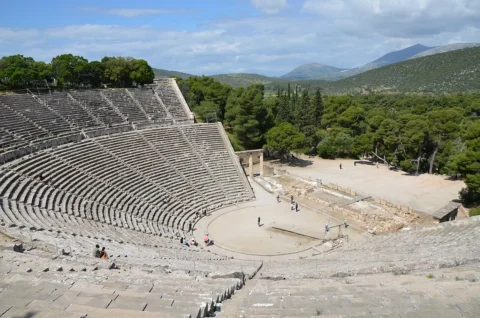
How Geography Shaped Ancient Greek Cities and Power
Geography shaped Greek cities by influencing where people could travel, trade, farm, defend territory, and build long-term urban communities. Mountains divided regions into isolated political centers, narrow plains supported agricultural development, and extensive coastlines encouraged the rise of maritime cities connected through trade and naval movement.
These geographic conditions affected far more than settlement location alone. Defensive hills produced fortified cities, strategic land corridors shaped regional influence, and natural harbors strengthened commercial expansion across the Mediterranean. Many Greek cities developed distinct political and economic identities because their surrounding geography pushed them toward different forms of survival, interaction, and urban growth.
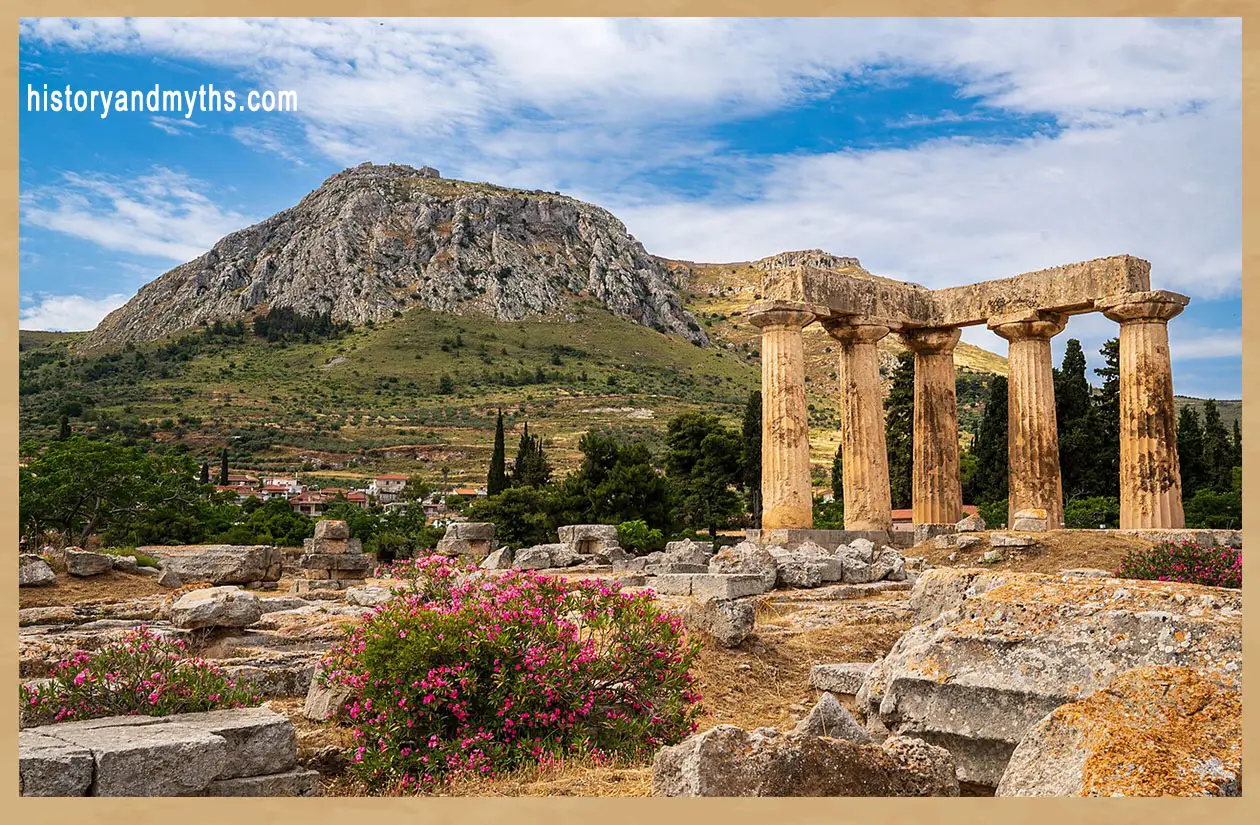
Why Geography Mattered in Ancient Greece
Geography shaped nearly every aspect of Greek urban development because mountains, coastlines, islands, and limited plains affected movement, communication, agriculture, and political organization across the Greek world. Natural barriers separated communities from one another, making local independence and regional identity more common than large-scale territorial unity.
These geographic conditions also influenced how cities survived and expanded. Coastal access encouraged maritime trade and naval activity, fertile plains supported agricultural production, and elevated terrain strengthened defensive security in vulnerable regions.
As a result, Greek cities developed different urban functions based largely on their surrounding environment. Geography influenced whether a city became commercial, defensive, agricultural, or maritime in character long before political systems or military ambitions fully shaped its identity.
How Geography Shaped Greek Cities
| Geographic Feature | Impact on Greek Cities |
|---|---|
| Mountains | Created isolated and independent city-states |
| Coastlines | Encouraged maritime trade and naval development |
| Fertile Plains | Supported agriculture and population stability |
| Defensive Terrain | Strengthened fortress cities and protected settlements |
| Mountain Passes and Corridors | Controlled regional movement and strategic access |
Mountains and the Isolation of Greek Cities
Mountains played a major role in shaping the Greek world because rugged terrain separated many communities into relatively independent regions with limited overland communication. Travel between neighboring areas could become difficult, slow, and politically sensitive due to narrow passes and restricted movement corridors.
This geographic fragmentation encouraged the rise of independent city-states rather than large centralized kingdoms controlling the entire region. Many Greek cities developed separate political systems, military priorities, and economic identities because natural barriers reduced direct integration with surrounding territories.
Mountainous landscapes also strengthened local autonomy by limiting outside influence and reinforcing regional distinctions between different parts of Greece.
Coastlines and the Rise of Maritime Cities
Extensive coastlines encouraged many Greek cities to develop around harbors, naval movement, and maritime trade because sea travel often provided faster and more reliable connections than difficult inland routes. Coastal access allowed cities to expand commercial networks and maintain contact with distant regions across the Mediterranean.
Natural harbors also strengthened urban growth by supporting ship movement, trade activity, and economic exchange connected to imported goods and regional commerce. Cities positioned near secure coastal zones often gained advantages in communication, transportation, and political influence.
In many regions, maritime geography pushed urban communities toward sea-based economies and stronger naval identities that differed significantly from isolated inland cities.
Fertile Plains and Agricultural Development
Limited fertile plains became highly important in Ancient Greece because productive farmland was unevenly distributed across the region. Cities located near cultivable land gained stronger access to food production, rural labor systems, and long-term population support compared to communities surrounded by difficult terrain.
Agricultural geography also influenced economic priorities inside many Greek cities. Regions with reliable farmland often focused on grain production, olive cultivation, livestock, and rural resource management as foundations of urban stability and regional survival.
These agricultural advantages shaped different forms of urban development across the Greek world, separating fertile inland centers from coastal or mountainous cities dependent on trade or maritime activity.
Defensive Geography and Fortress Cities
Defensive geography shaped many Greek cities by encouraging settlement on elevated terrain, rocky hills, and naturally protected locations that reduced vulnerability during warfare. Cities built near defensible landscapes could strengthen security while improving visibility over surrounding territory and important movement routes.
These conditions supported the development of fortress cities organized around walls, acropolises, and controlled access points designed to protect populations during regional conflict. Defensive positioning often became a central part of urban planning in unstable areas exposed to military pressure or territorial rivalry.
Natural barriers also reduced the need for large defensive expansion in some regions by allowing geography itself to function as part of long-term urban protection.
Geography Defined the Greek Urban World
Mountains, coastlines, islands, fertile plains, and defensive terrain shaped how Greek cities developed across the ancient Mediterranean. Geography influenced trade, warfare, agriculture, communication, and the rise of distinct urban identities throughout the Greek world.
© historyandmyths.com — Educational use
Geography and Strategic Roads
Greek geography shaped road systems by forcing movement through valleys, coastal corridors, and mountain passes that connected otherwise separated regions. Because large parts of Greece were difficult to cross directly, certain land routes became strategically valuable for communication, trade movement, and territorial coordination.
Cities positioned near these corridors could supervise access between important regions and strengthen their influence over nearby transportation networks. Geographic control over movement routes therefore became an important source of political and economic advantage.
This dependence on restricted land connections also explains why some Greek cities gained regional importance despite limited territory or population size. Their influence often came from location rather than scale alone.
Continue Reading
- Port Cities in Ancient Greece and Maritime Trade Networks
- Agricultural Greek Cities and Their Farming Economy
- Fortress Cities in Ancient Greece and Defensive Urban Systems
- How Greek Cities Controlled Strategic Roads and Trade Routes
- Intellectual Centers in Ancient Greece and the Rise of Philosophy
- Religious Cities in Ancient Greece and Sacred Power
Islands, Harbors, and Communication Networks
The large number of islands across the Aegean Sea pushed many Greek communities toward maritime interaction because sea travel often connected regions more efficiently than inland movement across mountainous terrain. Islands depended heavily on harbors, shipping routes, and coastal communication to maintain economic and political relationships with the wider Greek world.
Natural harbors became especially valuable because they provided protected access for trade ships, military fleets, and regional exchange networks. Cities with reliable harbor systems could maintain stronger communication and commercial activity even when inland travel remained difficult or fragmented.
This island geography encouraged the growth of interconnected maritime networks that linked distant Greek communities through regular sea movement rather than direct territorial unity.
How Geography Limited Political Unity
Geographic fragmentation made large-scale political unity difficult in Ancient Greece because mountains, isolated valleys, and separated coastlines reduced direct control between regions. Many cities developed independently with their own governments, military systems, and local priorities instead of forming a single centralized state.
Communication and coordination across difficult terrain also remained slower and less reliable than in regions connected by broad river systems or open plains. This limited the ability of powerful cities to maintain permanent authority over distant territories for long periods.
As a result, the Greek world evolved through networks of competing city-states rather than through stable territorial unification. Geography helped preserve local autonomy while encouraging regional rivalry and political diversity across different parts of Greece.
How Geography Shaped Urban Identity
Geography shaped the identity of Greek cities by influencing how communities survived, interacted, and organized economic life within their surrounding environment. Coastal cities developed stronger maritime connections, inland agricultural centers focused on land production, and fortified settlements prioritized security and territorial defense.
These environmental conditions affected more than economic activity alone. They influenced political priorities, patterns of communication, military organization, and the daily relationship between cities and surrounding landscapes.
Over time, many Greek cities became closely associated with geographic functions created by their environment. Some were recognized as naval powers, others as defensive strongholds or agricultural centers, showing how geography helped define the role each city played inside the wider Greek world.
Key Takeaways
- Greek geography strongly influenced the development and function of ancient cities.
- Mountains encouraged political fragmentation and local independence.
- Coastlines and natural harbors supported maritime trade and naval expansion.
- Fertile plains strengthened agricultural economies and population growth.
- Defensive terrain contributed to the rise of fortress cities and acropolises.
- Strategic corridors and mountain passes shaped movement and regional influence.
- Geographic conditions helped create distinct urban identities across the Greek world.
Frequently Asked Questions
How did geography shape Greek cities?
Geography influenced trade, defense, agriculture, communication, and political organization by shaping where and how Greek cities developed.
Why were Greek city-states politically independent?
Mountains and fragmented terrain separated many regions, making centralized political control difficult across the Greek world.
How did coastlines affect Greek urban development?
Coastlines encouraged maritime trade, naval activity, and communication between cities connected through the Mediterranean and Aegean Seas.
Why were fertile plains important in Ancient Greece?
Fertile plains supported agriculture, food production, population stability, and long-term economic development.
How did geography influence fortress cities?
Elevated terrain, hills, and natural barriers strengthened urban defense and encouraged the development of fortified settlements.
Why were mountain passes strategically important?
Mountain passes concentrated movement through narrow corridors that cities could supervise, defend, or control during periods of conflict.
How did islands affect Greek communication networks?
Greek islands depended heavily on maritime routes, harbors, and sea travel to maintain trade and regional interaction.
Did geography prevent Greek political unity?
Fragmented terrain limited communication and territorial integration, encouraging independent city-states instead of a unified centralized kingdom.
Sources & Rights
- Osborne, Robin. Greece in the Making: 1200–479 BC. Routledge, 2009.
- Cartledge, Paul. Ancient Greece: A History in Eleven Cities. Oxford University Press, 2009.
- Hansen, Mogens Herman. An Inventory of Archaic and Classical Poleis. Oxford University Press, 2004.
- Snodgrass, Anthony. Archaic Greece: The Age of Experiment. University of California Press, 1980.
- Murray, Oswyn. Early Greece. Harvard University Press, 1993.
- Hornblower, Simon. The Greek World: 479–323 BC. Routledge, 2011.
- Boardman, John. The Greeks Overseas. Thames & Hudson, 1999.
- Bresson, Alain. The Making of the Ancient Greek Economy. Princeton University Press, 2016.
- Finley, Moses I. The Ancient Economy. University of California Press, 1999.
- de Polignac, François. Cults, Territory, and the Origins of the Greek City-State. University of Chicago Press, 1995.
- Thucydides. History of the Peloponnesian War. Academic translated editions.
- Strabo. Geographica. Academic translated editions.
- Pausanias. Description of Greece. Academic translated editions.
- Xenophon. Hellenica. Academic translated editions.
- Lawrence, A. W. Greek Architecture. Yale University Press, 1996.
- Ober, Josiah. The Rise and Fall of Classical Greece. Princeton University Press, 2015.
- McInerney, Jeremy. The Folds of Parnassos: Land and Ethnicity in Ancient Phokis. University of Texas Press, 1999.
- Bintliff, John. Natural Environment and Human Settlement in Prehistoric Greece. British Archaeological Reports.
- Morris, Ian. Archaeology as Cultural History. Blackwell Publishing, 2000.
- Pedley, John Griffiths. Greek Art and Archaeology. Pearson, 2011.
Written by H. Moses — All rights reserved © Mythology and History