Ancient Greek Tyrants: Rise, Power, and Role Before Democracy
Ancient Greek tyrants were not simply oppressive rulers—they were a structural response to a failing political system. In many city-states, power had become concentrated in the hands of narrow elites, creating instability, inequality, and internal conflict. Tyrants emerged from this pressure, often gaining support by breaking elite control and redistributing influence within the system.
What matters is not the label, but the function. Tyranny in ancient Greece was a mechanism of power shift—a phase where authority moved from closed aristocratic control toward new political structures. This article explains how tyrants rose, how they ruled, and why their role was critical in reshaping Greek political systems rather than simply opposing them.
What “Tyrant” Actually Meant in Ancient Greece
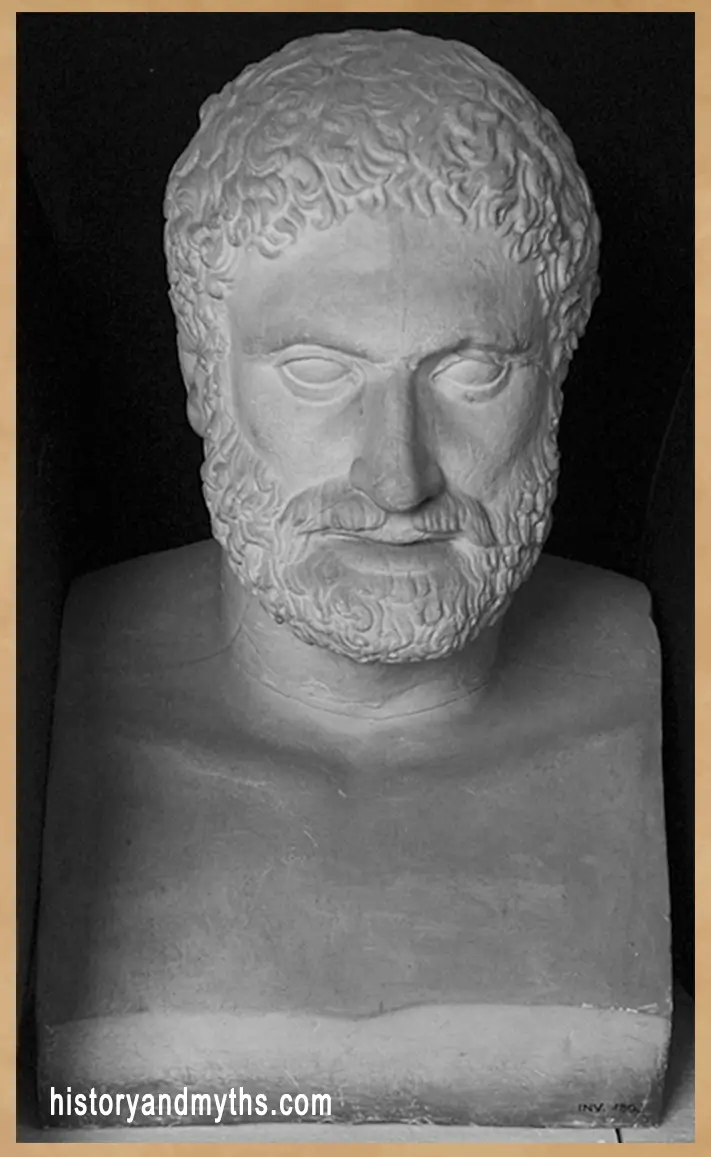
In ancient Greece, the term “tyrant” did not originally carry the negative meaning it has today. It referred to a ruler who held power outside the traditional aristocratic system, not necessarily a cruel or oppressive leader.
A tyrant was defined by how he came to power, not by how he ruled. Unlike kings, who inherited authority, or oligarchs, who governed through elite structures, tyrants typically seized control by bypassing established institutions. This made them outsiders to the existing system, even if they later governed in structured ways.
Importantly, many tyrants maintained parts of the political framework rather than destroying it. Assemblies, councils, and officials often continued to exist, but their influence was reduced or controlled. The system was not removed—it was re-centered around a single authority.
The modern association of tyranny with extreme oppression comes from later interpretations, especially in classical and post-classical writings. In the early Greek context, tyranny could be seen as a practical form of rule during instability, not inherently worse than other systems.
From a system perspective, a tyrant was not simply a ruler with power, but a disruption in how power was normally distributed—a shift from institutional control to centralized authority.
| Stage | Process | System Effect |
|---|---|---|
| Rise | Support building + elite breakdown | Shift from oligarchic control |
| Power Seizure | Force + alliances | Centralization of authority |
| Consolidation | Control elites + stabilize system | Temporary balance |
| Maintenance | Public support + controlled institutions | Short-term stability |
| Decline | Loss of support + elite return | System transition |
| Aftermath | New power balance | Foundation for new systems |
Why Tyrants Emerged: The Breakdown of Elite Control
Tyrants did not appear randomly. They emerged when the existing political system—usually controlled by a small aristocratic elite—stopped functioning effectively.
In many city-states, power was concentrated among a few wealthy families who dominated land, resources, and decision-making. Over time, this created imbalance. Large segments of the population, especially small farmers and non-elite citizens, had limited influence despite contributing to the economy and military.
This imbalance produced tension. Economic pressure, debt, and unequal access to power weakened the legitimacy of the ruling elite. At the same time, internal rivalries within the elite made the system unstable from the inside. It was not just a conflict between rich and poor—it was also a struggle among elites competing for dominance.
Tyrants emerged at this point of breakdown. They positioned themselves as alternatives to elite control, often gaining support from groups that were excluded from power. This support was not always ideological—it was practical. People backed individuals who could challenge the existing structure and offer a different distribution of power.
The key factor was opportunity. When the traditional system could no longer maintain control or balance competing interests, it created space for a single figure to take power by stepping outside established rules.
From a system perspective, tyranny was not an anomaly—it was a response to structural failure, where centralized authority replaced a weakened and fragmented elite system.
The Mechanism of Power: How Tyrants Took Control
Tyrants did not take power through a single method. Their rise followed a repeatable mechanism built on timing, support, and control of force.
The first step was positioning. A potential tyrant had to present himself as an alternative to the existing elite. This often meant aligning with groups that felt excluded—small landowners, traders, or citizens with limited political access. The goal was not mass ideology, but building enough support to challenge the current balance of power.
The second step was leveraging instability. Tyrants rose during moments of internal conflict—economic crisis, elite rivalry, or political deadlock. These conditions weakened coordinated resistance and made decisive action possible.
The third step was securing force. Support alone was not enough. Tyrants relied on personal guards, loyal followers, or segments of the military to enforce their position. Control of force ensured that once power was taken, it could be maintained.
The final step was neutralizing the elite. This did not always mean direct elimination. It could involve exile, redistribution of influence, or restructuring institutions so that traditional elites lost their control over decision-making.
What matters is that this process was not chaotic. It followed a clear pattern:
build support → exploit instability → secure force → consolidate control
From a system perspective, tyranny was not just a seizure of power—it was a reconfiguration of the political system, where authority shifted from distributed elite control to centralized leadership.
How Tyrants Ruled in Practice
Once in power, tyrants did not govern through constant force alone. Their priority was stabilizing the system they had disrupted, not keeping it in permanent crisis.
In most cases, tyrants preserved existing institutions—assemblies, councils, and administrative roles—but reduced their independence. Instead of removing the system, they redirected it, ensuring that decisions ultimately flowed through them.
Control was maintained through a combination of measures:
- Limiting elite influence: traditional aristocratic families were weakened, either by exclusion from power or by reducing their economic dominance.
- Maintaining public support: tyrants often implemented policies that benefited broader groups—such as easing economic pressure or supporting public projects—to sustain legitimacy.
- Centralizing decision-making: major political and military decisions were no longer negotiated across competing elites but controlled from a single point.
Importantly, many tyrants invested in visible projects—construction, infrastructure, or religious activity—not just for development, but to reinforce authority and public presence. Stability depended on being seen as effective, not just powerful.
The system under a tyrant was therefore not lawless. It was simplified. Decision-making became faster and more direct, but also more dependent on one individual.
From a system perspective, tyrants ruled by compressing the political structure—reducing competing power centers into a single, controlled axis while keeping enough of the system intact to function.
How Greek Tyranny Actually Worked
- Tyrants emerged from elite failure, not random ambition
- They gained support by challenging aristocratic control
- Power was centralized but institutions were often preserved
- Rule depended on balancing control and legitimacy
- Tyranny functioned as a transitional phase, not a final system
- Its collapse forced political systems to evolve
© historyandmyths.com — Educational use
Case Patterns: What Most Tyrannies Had in Common
Despite differences between city-states, tyrannies in ancient Greece followed a consistent pattern. This pattern explains how they functioned as a political phase rather than isolated events.
The first stage was rise. A single figure emerged during instability, building support outside the traditional elite and using that support to break existing control.
The second stage was consolidation. Once in power, the tyrant stabilized the system by weakening rival elites, securing loyalty, and centralizing decision-making. Institutions were not removed, but they were redirected.
The third stage was maintenance. Tyrants had to balance control and legitimacy. Too much reliance on force created resistance, while too little control risked losing power. This stage depended on maintaining enough support while preventing organized opposition.
The final stage was decline. Over time, the system became vulnerable again—either because support weakened, internal conflicts re-emerged, or succession problems appeared. Since power was centralized, there was no stable mechanism for transition, which made collapse likely.
What matters is that this pattern was structural, not accidental. It repeated across different regions because the underlying conditions were similar.
From a system perspective, tyranny operated as a cycle—emerging from instability, restoring temporary balance, and eventually giving way to a new configuration of power.
Continue Reading
Tyranny as a Transitional Phase
Tyranny in ancient Greece was not an endpoint—it was a transition between systems. It emerged from the failure of elite-controlled oligarchies and, in many cases, created the conditions for broader political participation afterward.
When tyrants broke the power of aristocratic families, they did more than centralize authority. They disrupted long-standing control networks—land ownership, political influence, and access to decision-making. This weakened the monopoly elites had over the system.
At the same time, by relying on wider support to gain power, tyrants indirectly expanded the political role of groups that had been excluded. Even if they did not create democratic systems themselves, they shifted expectations about who could influence power.
This created a structural opening. Once tyranny ended—whether through removal, death, or internal collapse—the old elite system could not always be restored in its original form. The balance had changed. New arrangements, often more inclusive, became possible.
The key point is that tyranny did not replace the system—it reset it. It broke existing control, redistributed influence, and left behind a different starting point for the next phase.
From a system perspective, tyranny functioned as a bridge between concentrated elite control and more distributed political systems, rather than simply opposing them.
Why Tyrannies Failed or Ended
Tyrannies were effective in the short term, but structurally unstable over time. The same features that allowed tyrants to take power made it difficult to sustain that power.
The first issue was dependency on a single ruler. Because authority was centralized, the system lacked internal balance. If the ruler weakened, lost support, or faced opposition, there were no strong institutions to stabilize the system.
The second issue was loss of legitimacy. Tyrants often began with support by challenging elite control, but maintaining that support was harder. Over time, decisions could become more self-serving, and public backing declined. Once support weakened, resistance became more likely.
The third issue was elite recovery. Displaced aristocratic groups did not disappear—they adapted. Many worked to regain influence, forming alliances or waiting for opportunities to reassert control. Tyranny did not eliminate elite power; it temporarily disrupted it.
Another critical factor was succession. Tyrannies rarely had stable systems for transferring power. When a ruler died or was removed, the system often collapsed because authority was tied to the individual, not the structure.
What this produced was a predictable outcome: tyranny could stabilize a system temporarily, but it could not sustain itself long-term without transforming into a different model.
From a system perspective, tyrannies ended because they lacked durable structures. Once the conditions that supported centralized control disappeared, the system reverted to a new balance of power.
The Real Impact of Tyrants on Greek Political Systems
Tyrants did not just interrupt the political system—they reshaped it in ways that outlasted their rule.
Their most immediate impact was breaking the monopoly of the aristocracy. By removing or weakening elite control, tyrants disrupted long-standing power structures that had been resistant to change. This alone altered the balance inside the system, even after tyranny ended.
They also redefined how power could be accessed. Before tyranny, political authority was largely tied to lineage and elite networks. Tyrants demonstrated that power could be taken through strategy, support, and control—not just inherited. This shifted the logic of political competition.
In practical terms, tyranny forced systems to adapt. When centralized rule collapsed, the old structure could not simply return to its previous form. The system had already been altered—new groups had gained influence, and expectations around participation had changed.
Another key effect was institutional adjustment. To prevent the return of unchecked individual rule, some city-states strengthened their political frameworks—clarifying roles, distributing authority more carefully, and creating mechanisms to limit concentration of power.
What emerges from this is not a story of disruption, but of transformation. Tyranny acted as a pressure point that forced Greek political systems to evolve.
From a system perspective, tyrants were not outside the political process—they were part of how it changed, accelerating shifts that led to more structured and, in some cases, more inclusive forms of governance.
Key Takeaways
- Greek tyrants were not defined by cruelty but by how they took power.
- They emerged from instability and breakdown of elite-controlled systems.
- Tyranny centralized authority while preserving parts of the system.
- It acted as a transitional phase between oligarchy and broader systems.
- Most tyrannies followed a repeatable cycle from rise to collapse.
- Their long-term impact reshaped political structures in Greece.
Frequently Asked Questions
What was a tyrant in ancient Greece?
A tyrant was a ruler who took power outside the traditional elite system, not necessarily a cruel or oppressive leader.
Why did tyrants appear in Greek city-states?
They emerged due to instability, elite conflicts, and unequal distribution of power within oligarchic systems.
How did Greek tyrants gain power?
They built support, used instability, secured force, and weakened existing elites to take control.
Were Greek tyrants always oppressive?
No. Some maintained stability and implemented policies that benefited wider groups.
Did tyranny lead to democracy?
In some cases, tyranny disrupted elite control and helped create conditions for broader participation later.
Why did Greek tyrannies collapse?
They lacked stable structures, depended on individuals, and faced resistance from elites and the public.
Sources & Rights
- Andrewes, A. The Greek Tyrants. Hutchinson University Library.
- McGlew, James F. Tyranny and Political Culture in Ancient Greece. Cornell University Press.
- Lewis, Sian. Greek Tyranny. Bristol Classical Press.
- Osborne, Robin. Greece in the Making 1200–479 BC. Routledge.
- Cartledge, Paul. Ancient Greece: A Very Short Introduction. Oxford University Press.
- Finley, M. I. Politics in the Ancient World. Cambridge University Press.
- Hansen, Mogens Herman. Polis: An Introduction to the Ancient Greek City-State. Oxford University Press.
- Rhodes, P. J. A History of the Classical Greek World. Wiley-Blackwell.
- Ober, Josiah. Political Dissent in Democratic Athens. Princeton University Press.
- Sealey, Raphael. A History of the Greek City States. University of California Press.
- Hornblower, Simon. The Greek World 479–323 BC. Routledge.
- Pomeroy, Sarah B. Ancient Greece: A Political, Social, and Cultural History. Oxford University Press.
- Robinson, Eric W. Democracy Beyond Athens. Cambridge University Press.
- Raaflaub, Kurt A. The Discovery of Freedom in Ancient Greece. University of Chicago Press.
- Morris, Ian. Archaeology as Cultural History. Blackwell.
Written by H. Moses — All rights reserved © Mythology and History