How Greek Cities Controlled Strategic Roads and Trade Routes
Greek cities controlled strategic roads by securing mountain passes, supervising land corridors, and managing access routes connected to trade, military movement, and territorial influence. In a landscape dominated by mountains and narrow passages, control over movement became an important source of political and economic power across the Greek world.
Cities such as Corinth gained influence not only through trade or naval strength, but also through their ability to regulate movement between major regions and protect important transportation corridors. Strategic roads shaped military coordination, commercial exchange, and regional communication while allowing powerful cities to monitor access, control resources, and strengthen territorial authority.
Why Strategic Roads Mattered in Ancient Greece
Strategic roads played a major role in the Greek world because mountainous geography limited movement and concentrated travel through narrow land corridors, passes, and regional access points. Cities capable of controlling these routes gained influence over trade, communication, military coordination, and territorial movement.
Road control also affected economic stability because merchants, travelers, and transport networks often depended on secure passage between important regions and urban centers. Cities positioned near critical land routes could supervise movement and strengthen their regional importance through geographic advantage.
In many areas, strategic roads became essential political assets rather than simple transportation links. Control over movement corridors allowed powerful cities to influence access, monitor neighboring territories, and respond more effectively during periods of conflict or instability.
Strategic Roads in Ancient Greece
| Strategic Road Element | Role in Urban Influence |
|---|---|
| Mountain Passes | Restricted movement through narrow corridors |
| Land Corridors | Connected regions through controlled access routes |
| Road Supervision | Strengthened political and territorial authority |
| Trade Movement | Supported economic exchange and regional commerce |
| Military Access | Improved troop coordination and defensive response |
Geography and Road Control
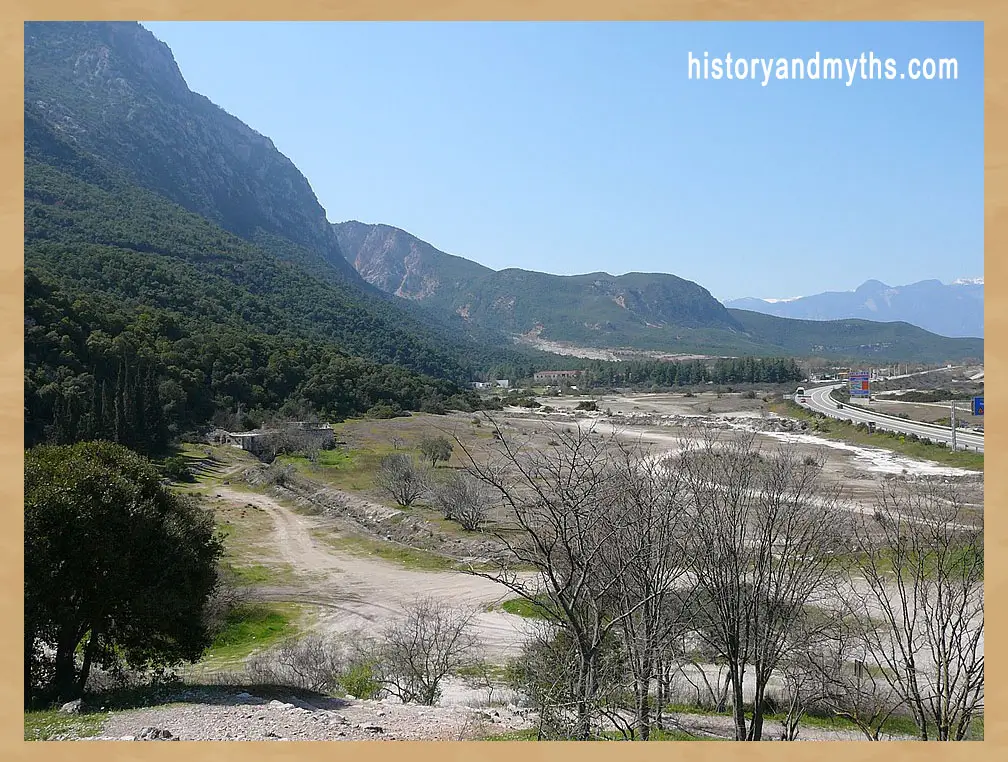
Greek geography strongly influenced road control because mountains, valleys, and narrow passes restricted movement across many regions. Travel between major areas often depended on limited land corridors that could be monitored or defended by nearby cities positioned along strategic routes.
Natural bottlenecks increased the importance of certain locations by forcing merchants, armies, and travelers through predictable paths connected to regional movement systems. Cities controlling these access points gained advantages that extended beyond simple transportation oversight.
Terrain also affected how roads were protected and maintained. Difficult landscapes reduced movement speed, limited large-scale transport, and made secure passage especially valuable during periods of instability or military tension.
Corinth and Control of Land Movement
Corinth gained strategic importance because its position near the Isthmus of Corinth allowed the city to supervise movement between mainland Greece and the Peloponnese. Control over this narrow land corridor increased Corinthian influence across trade routes, military movement, and regional communication networks.
Its geographic location also reduced the number of alternative passage routes available to travelers and merchants moving through southern Greece. This concentration of movement strengthened Corinth’s economic and political position without relying entirely on naval power.
By controlling a major land connection between important regions, Corinth transformed geographic advantage into long-term urban influence within the Greek world.
Roads, Trade, and Economic Supervision
Strategic roads influenced economic activity because the movement of goods depended heavily on secure access between cities, agricultural regions, ports, and marketplaces. Cities positioned along important land corridors could supervise commercial traffic and strengthen their role inside regional exchange systems.
Control over movement routes also increased opportunities to monitor merchants, regulate access, and protect valuable transport networks during periods of instability. Reliable road access became especially important for the movement of grain, olive oil, livestock, and imported goods traveling between different parts of Greece.
Economic influence therefore depended not only on maritime trade, but also on the ability of certain cities to manage critical land connections tied to regional commerce and supply movement.
Road Control Increased Greek Urban Influence
Some Greek cities strengthened their regional influence by controlling strategic land corridors, mountain passes, and movement routes connected to trade, communication, and military coordination. Geographic control over movement became an important source of political and economic power across the Greek world.
© historyandmyths.com — Educational use
Military Movement and Strategic Roads
Strategic roads were essential for military coordination because armies depended on reliable land routes to move troops, transport supplies, and respond quickly to regional threats. Cities controlling major corridors could improve defensive communication and strengthen their ability to organize military movement across nearby territories.
Mountain passes and narrow access routes also carried major strategic value during conflict because they could delay enemy movement or protect vulnerable regions from direct invasion. Control over these areas often influenced the balance of power between rival Greek states.
Military mobility therefore depended not only on army strength, but also on geographic access and the ability to secure important movement corridors connected to defensive planning and territorial control.
Checkpoints, Access, and Political Authority
Control over strategic roads also allowed Greek cities to supervise access into important territories and regulate movement through politically sensitive regions. Cities positioned near major corridors could monitor who entered, who traded, and who moved across nearby land routes connected to urban influence.
Checkpoints and controlled passages strengthened political authority by linking territorial oversight to geographic control. Strategic access points became valuable because they allowed cities to protect resources, secure communication, and reduce vulnerability during periods of instability.
In many regions, road supervision reinforced the relationship between movement control and urban power. Cities that managed important land corridors often gained influence beyond their immediate territory because access itself became a source of political leverage.
Why Mountain Passes Became Strategic Assets
Mountain passes became some of the most valuable strategic locations in Ancient Greece because difficult terrain concentrated movement into narrow and predictable routes. Cities controlling these passages could influence regional access, protect nearby territory, and limit the mobility of rival forces during conflict.
These routes also connected important economic and political regions separated by mountainous landscapes. Secure passage through difficult terrain improved communication, trade movement, and coordination between urban centers that depended on reliable land connections.
In many cases, the value of a city depended partly on its relationship to nearby mountain corridors. Geographic control over restricted movement routes strengthened regional influence even when a city lacked major naval or territorial dominance.
Limits and Vulnerabilities of Road Control
Control over strategic roads still carried important limitations because difficult terrain, seasonal conditions, and geographic isolation could disrupt movement across many regions of Greece. Heavy rain, damaged paths, or unstable mountain routes often reduced travel efficiency and weakened communication between cities.
Strategic corridors also became vulnerable during warfare because rival forces could block passes, disrupt transport, or cut access to important supply routes connected to trade and military coordination. Dependence on narrow movement corridors therefore created risks alongside geographic advantages.
In some cases, cities relying heavily on controlled routes faced economic and political pressure when alternative paths emerged or regional instability reduced movement through important corridors.
How Road Control Strengthened Urban Influence
Control over strategic roads strengthened the influence of many Greek cities by allowing them to manage movement between regions, protect economic connections, and maintain stronger territorial coordination. Cities positioned near important land corridors often gained political advantages that extended beyond their immediate urban boundaries.
Road supervision also increased regional importance because trade networks, military movement, and communication systems depended on stable access through controlled routes. Geographic positioning therefore became a major source of long-term urban influence in parts of the Greek world shaped by difficult terrain and restricted mobility.
Over time, some cities developed reputations closely tied to their ability to regulate movement and secure critical land connections, making transportation control an important part of regional power and urban stability.
Key Takeaways
- Greek cities controlled strategic roads through geographic positioning and territorial supervision.
- Mountain passes and narrow corridors concentrated movement across many Greek regions.
- Corinth gained major influence through its control of land access between mainland Greece and the Peloponnese.
- Strategic roads supported trade movement, communication, and economic coordination.
- Military mobility depended heavily on secure land corridors and protected access routes.
- Road supervision strengthened political authority and regional influence.
- Difficult terrain and blocked passages created major vulnerabilities for controlled road systems.
Frequently Asked Questions
Why were strategic roads important in Ancient Greece?
Strategic roads connected regions through mountain passes and controlled land corridors that supported trade, communication, military movement, and political influence.
How did Greek geography affect road systems?
Mountains, valleys, and narrow passes restricted movement and concentrated travel through limited routes that became strategically valuable.
Why was Corinth important for land movement?
Corinth controlled a narrow land connection between mainland Greece and the Peloponnese, giving the city influence over regional movement and trade.
How did strategic roads support trade?
Road systems allowed goods, merchants, and supply networks to move between cities, agricultural regions, and marketplaces across the Greek world.
What role did roads play in military coordination?
Armies depended on secure land routes to transport troops, supplies, and communication during warfare and territorial conflict.
Why were mountain passes considered strategic assets?
Mountain passes concentrated movement through predictable routes that cities could supervise, defend, or restrict during periods of instability.
How did road control strengthen political authority?
Cities controlling important movement corridors could supervise access, influence trade, and maintain stronger territorial coordination.
What weaknesses affected strategic road systems?
Difficult terrain, blocked passages, seasonal conditions, and military disruption could weaken movement and reduce regional connectivity.
Sources & Rights
- Chevallier, Raymond. Roman Roads. University of California Press, 1976.
- Talbert, Richard J. A. Barrington Atlas of the Greek and Roman World. Princeton University Press, 2000.
- Hansen, Mogens Herman. An Inventory of Archaic and Classical Poleis. Oxford University Press, 2004.
- Osborne, Robin. Greece in the Making: 1200–479 BC. Routledge, 2009.
- Cartledge, Paul. Ancient Greece: A History in Eleven Cities. Oxford University Press, 2009.
- Hornblower, Simon. The Greek World: 479–323 BC. Routledge, 2011.
- Bresson, Alain. The Making of the Ancient Greek Economy. Princeton University Press, 2016.
- Murray, Oswyn. Early Greece. Harvard University Press, 1993.
- Thucydides. History of the Peloponnesian War. Academic translated editions.
- Xenophon. Hellenica. Academic translated editions.
- Strabo. Geographica. Academic translated editions.
- Pausanias. Description of Greece. Academic translated editions.
- Ober, Josiah. The Rise and Fall of Classical Greece. Princeton University Press, 2015.
- de Polignac, François. Cults, Territory, and the Origins of the Greek City-State. University of Chicago Press, 1995.
- Snodgrass, Anthony. Archaic Greece: The Age of Experiment. University of California Press, 1980.
- Salway, Benet. Travel, Roads, and Communication in Ancient Greece. Classical Studies publications.
- Laurence, Ray. The Roads of Roman Italy. Routledge, 1999.
- Davies, John K. Democracy and Classical Greece. Harvard University Press, 1993.
- Finley, Moses I. The Ancient Economy. University of California Press, 1999.
- Boardman, John. The Greeks Overseas. Thames & Hudson, 1999.
Written by H. Moses — All rights reserved © Mythology and History