Economic Contracts in Ancient Egypt: How Business Agreements Worked
Economic life in ancient Egypt depended on binding agreements, not informal trust alone. Farmers, craftsmen, traders, and officials relied on contracts to regulate sales, loans, labor, and services in a society where written law was limited but legal enforcement was real. These agreements formed the backbone of everyday commerce and allowed economic activity to function across villages, temples, and state institutions.
This article explains how economic and business contracts actually worked in ancient Egypt. It focuses on what made a contract legally valid, the types of agreements commonly used, the role of scribes and witnesses, and what happened when one party failed to honor its obligations. By examining contracts as legal tools rather than abstract economic practices, the article shows how Egyptians maintained order, fairness, and predictability in their economic relationships.
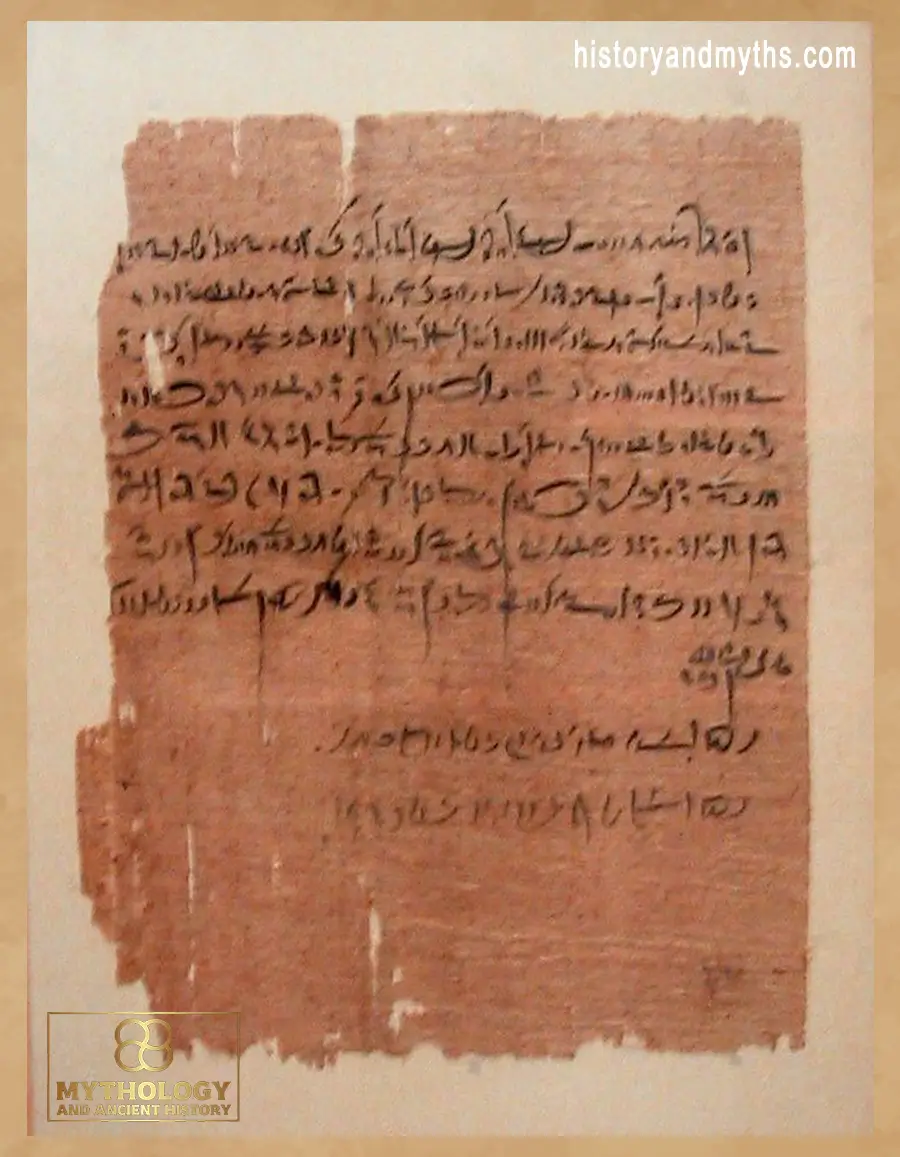
What Made a Contract Legally Binding?
In ancient Egypt, a contract became legally binding through form, documentation, and public acknowledgment, not through a centralized legal code. What mattered was not the complexity of the agreement, but whether it followed recognized legal conventions that allowed it to be enforced if challenged.
The foundation of any valid contract was written documentation. Agreements were recorded by trained scribes using standardized formulas that identified the parties involved, the subject of the contract, and the obligations each side accepted. This written form transformed a private agreement into a legally defensible claim.
Witnesses were equally essential. Their presence confirmed that the agreement had been entered voluntarily and transparently. Witness lists appear consistently in surviving contracts, serving as social and legal guarantees. In the event of a dispute, witnesses could testify to the authenticity of the agreement, reinforcing its enforceability.
Contracts also relied on clear obligation and consent. Terms had to be explicit—what was exchanged, when payment was due, and what consequences followed non-compliance. Vague promises held little legal weight. By requiring clarity, Egyptian law reduced ambiguity and limited opportunistic disputes.
Finally, enforceability depended on the broader legal framework. Contracts were not isolated private documents; they could be presented before courts or officials when violated. This possibility gave contracts real authority and discouraged breach. In this way, ancient Egyptian contract law functioned as a practical system grounded in documentation, reputation, and legal recourse.
| Aspect | Economic and Business Contracts in Ancient Egypt |
|---|---|
| Purpose of Contracts | To regulate economic exchanges and ensure legal enforcement |
| Legal Validity | Written documentation, consent, and public acknowledgment |
| Main Contract Types | Sales, loans, labor, and service agreements |
| Forms of Payment | Silver by weight, grain, goods, or services |
| Guarantees and Collateral | Property, produce, labor, or third-party guarantors |
| Role of Scribes | Drafting contracts using standardized legal formulas |
| Role of Witnesses | Public validation and testimony in case of dispute |
| Dispute Resolution | Presentation before courts or officials using contracts and testimony |
| Legal Objective | Stability, predictability, and trust in economic transactions |
Types of Economic and Business Contracts
Economic contracts in ancient Egypt covered a wide range of everyday transactions, allowing commerce to function with predictability and legal security. These agreements were practical in scope and adapted to the needs of a mixed economy based on agriculture, craft production, and exchange.
Sales and exchange contracts regulated the transfer of goods such as land produce, livestock, tools, textiles, and sometimes real estate. These contracts specified the item exchanged, its condition, the agreed price, and the method of payment—often in silver by weight, grain, or other commodities. Once recorded and witnessed, the transaction was treated as final and enforceable.
Loan and debt contracts were equally common. Individuals borrowed grain, silver, or goods to cover seasonal shortages, taxes, or personal needs. Contracts defined repayment terms, deadlines, and penalties for default. Interest could be applied, usually in the form of increased repayment rather than abstract percentages. These agreements protected lenders while offering borrowers clear expectations.
Labor and service contracts governed employment relationships, including agricultural work, craftsmanship, and specialized services. Such contracts outlined the duration of service, compensation, and duties involved. In state or temple contexts, labor agreements ensured accountability and reduced disputes over obligations.
Across all contract types, the emphasis remained consistent: clarity, documentation, and enforceability. By formalizing economic relationships through contracts, ancient Egyptian law provided stability in transactions that might otherwise depend solely on personal trust.
Guarantees, Collateral, and Penalties
To reduce risk and ensure compliance, economic contracts in ancient Egypt often included guarantees and penalties. These provisions protected the injured party if obligations were not met and reinforced the seriousness of contractual promises.
Collateral and guarantees were commonly used in loan agreements. A borrower might pledge property, produce, or future labor as security for repayment. In some cases, a third party acted as a guarantor, accepting responsibility if the borrower defaulted. These mechanisms shifted risk away from the lender and encouraged timely fulfillment of obligations.
Contracts also specified penalties for non-compliance. Late repayment, failure to deliver goods, or abandonment of service could trigger additional payments, forfeiture of collateral, or compulsory labor. Penalties were designed to be corrective rather than excessive, aiming to restore balance rather than punish harshly.
Enforcement relied on legal presentation. When disputes arose, the contract could be brought before officials or local courts, where scribal records and witness testimony determined the outcome. The presence of predefined penalties simplified judgments and reduced prolonged conflict.
By combining guarantees with clear consequences, Egyptian contract law created a predictable economic environment. Parties entered agreements knowing both their rights and the costs of breach, which stabilized trade and reduced uncertainty across everyday transactions.
The Role of Scribes and Witnesses
Scribes and witnesses were central to the credibility and enforceability of economic contracts in ancient Egypt. In a system without notaries or centralized registries, these human safeguards ensured that agreements could be trusted and upheld.
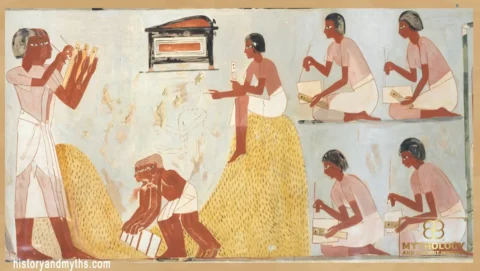
Scribes transformed verbal agreements into legally usable documents. Trained in standardized formulas and legal language, they recorded the identities of the parties, the subject of the contract, the obligations involved, and any penalties or guarantees. Their professional status lent authority to the document; a contract written by a recognized scribe carried weight precisely because it followed accepted legal conventions.
Witnesses provided public validation. Listed by name in contracts, they confirmed that the agreement was entered freely and with full awareness. Their presence discouraged fraud and later denial. If a dispute arose, witnesses could testify to the authenticity of the document and the circumstances of its creation, reinforcing the contract’s legal force.
Together, scribes and witnesses created a system of social proof. Contracts were not private promises but public acts embedded within the community. This visibility reduced conflict and increased compliance, as breaking a contract risked legal consequences and damage to reputation.
By relying on documentation and testimony rather than centralized bureaucracy, ancient Egypt maintained a flexible yet effective framework for enforcing economic agreements—one that balanced legal formality with social accountability.
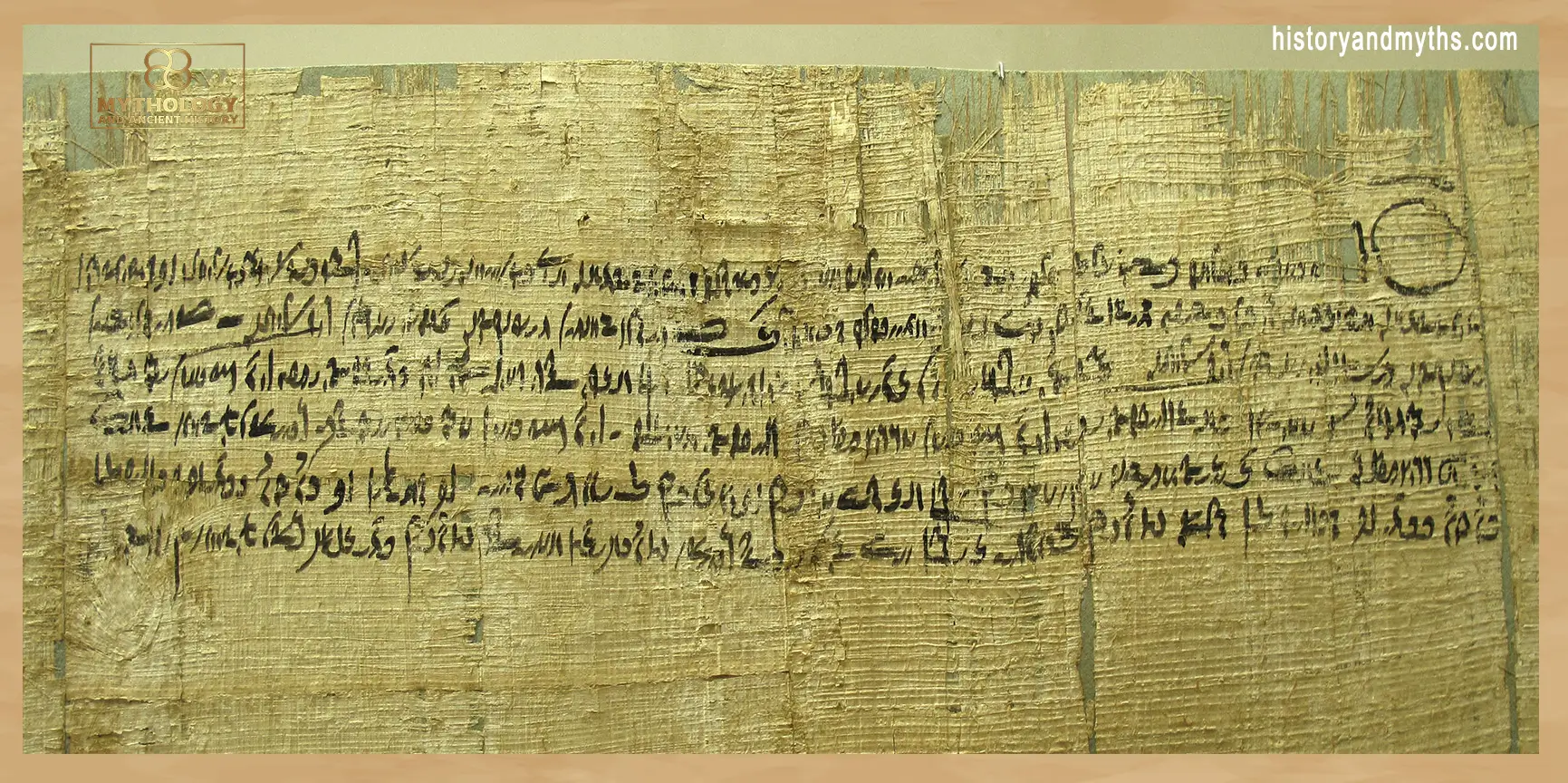
Economic and Business Contracts in Ancient Egypt
- Contracts as legal tools: Economic agreements were binding documents, not informal promises.
- Written proof mattered: Scribal documentation replaced modern registries and ensured enforceability.
- Wide range of contracts: Sales, loans, labor, and services were all regulated by law.
- Risk management: Guarantees, collateral, and penalties protected both parties.
- Public validation: Witnesses ensured transparency and discouraged denial.
- Legal enforcement: Courts resolved disputes by enforcing documented terms.
© historyandmyths.com — Educational use
Commercial Disputes and Legal Enforcement
When economic contracts were breached, ancient Egyptian law provided clear mechanisms for dispute resolution. Enforcement did not depend on private retaliation but on legal procedures that emphasized restoration and accountability.
Disputes typically began with a formal complaint presented to local officials or courts. The injured party produced the contract, supported by witness testimony and scribal records. Judges examined whether obligations had been fulfilled according to the documented terms, paying close attention to deadlines, quantities, and agreed penalties.
Courts favored documentary proof. A properly written contract often carried decisive weight, especially when corroborated by witnesses. If a breach was confirmed, judges ordered enforcement of the original terms—repayment of debt, delivery of goods, or fulfillment of service—along with any penalties specified in the agreement. This approach minimized uncertainty and discouraged opportunistic challenges.
In cases where parties disputed authenticity or intent, testimony played a crucial role. Witnesses and scribes clarified the circumstances of the agreement, helping courts distinguish genuine disputes from attempts to evade responsibility. Officials could also impose additional corrective measures, such as compulsory labor or seizure of pledged collateral, to ensure compliance.
Legal enforcement aimed to restore economic balance, not to punish excessively. By providing predictable outcomes for contract violations, Egyptian law strengthened trust in commercial exchange. Merchants, farmers, and laborers could engage in economic activity knowing that agreements were backed by legal authority and that breaches would be addressed through established channels.
Key Takeaways: Economic and Business Contracts in Ancient Egypt
- Economic life relied on legally binding contracts, not informal trust.
- Written documentation and witnesses made agreements enforceable.
- Sales, loans, and labor contracts covered most economic activity.
- Guarantees and collateral reduced risk and encouraged compliance.
- Courts enforced contracts by restoring obligations, not punishing harshly.
- Contract law created stability and predictability in everyday commerce.
Frequently Asked Questions about Economic and Business Contracts in Ancient Egypt
Were contracts legally binding in ancient Egypt?
Yes. Contracts were legally binding when documented by scribes and confirmed by witnesses, making them enforceable in court.
What types of economic contracts existed?
Common contracts included sales and exchange agreements, loans and debt contracts, and labor or service contracts.
How were payments made in contracts?
Payments were usually made in silver by weight, grain, goods, or services rather than coinage.
Were guarantees or collateral used?
Yes. Borrowers could pledge property, produce, labor, or use third-party guarantors to secure obligations.
What happened if a contract was violated?
The injured party could present the contract to officials or courts, which enforced repayment, delivery, or agreed penalties.
What role did scribes play?
Scribes drafted contracts using standardized legal language, ensuring clarity and legal validity.
Did the state control all economic contracts?
No. Contracts were private agreements, but they operated within a legal framework that allowed state enforcement when disputes arose.
Sources & Rights
- Breasted, James Henry. Ancient Records of Egypt, Vols. I–V. Chicago: University of Chicago Press, 1906–1907.
- Breasted, James Henry. A History of Egypt from the Earliest Times to the Persian Conquest. New York: Charles Scribner’s Sons, 1905.
- Gardiner, Alan H. Egypt of the Pharaohs: An Introduction. Oxford: Oxford University Press, 1961.
- Kemp, Barry J. Ancient Egypt: Anatomy of a Civilization. London: Routledge, 1989.
- Johnson, Janet H. The Legal System of Ancient Egypt. Chicago: Oriental Institute of the University of Chicago, 1992.
- McDowell, Andrea G. Village Life in Ancient Egypt: Laundry Lists and Love Songs. Oxford: Oxford University Press, 1999.
- Menu, Bernadette. Recherches sur l’histoire juridique, économique et sociale de l’Égypte ancienne. Cairo: Institut Français d’Archéologie Orientale, 2001.
- Menu, Bernadette. “Les contrats économiques dans l’Égypte pharaonique.” In Études sur le droit égyptien ancien. Paris: CNRS, 2004.
- Trigger, Bruce G., Barry J. Kemp, David O’Connor, and Alan B. Lloyd. Ancient Egypt: A Social History. Cambridge: Cambridge University Press, 1983.
- Allam, Schafik. Beiträge zum ägyptischen Recht. Wiesbaden: Harrassowitz, 1976.
- Allam, Schafik. Strafrecht und Vertragsrecht im alten Ägypten. Wiesbaden: Harrassowitz, 1975.
- Goedicke, Hans. Studies in the Hekanakhte Papers. Baltimore: Johns Hopkins University Press, 1959.
- Haring, Ben J. J. Divine Households: Administrative and Economic Aspects of the New Kingdom Royal Memorial Temples. Leiden: Brill, 1997.
- Van Blerk, Nicolaas Johannes. The Concept of Law and Justice in Ancient Egypt. PhD diss., University of South Africa, 2018.
- Quirke, Stephen. The Administration of Egypt in the Late Middle Kingdom. London: British Museum Press, 1990.
- Redford, Donald B., ed. The Oxford Encyclopedia of Ancient Egypt. Oxford: Oxford University Press, 2001.
- Shaw, Ian, ed. The Oxford History of Ancient Egypt. Oxford: Oxford University Press, 2000.
- VerSteeg, Russ. “Contract Law in Ancient Egypt.” In Law and Legal Theory in Ancient Civilizations. New York: Routledge, 2002.
- Lorton, David. The Juridical Terminology of International Relations in Egyptian Texts through Dyn. XVIII. Baltimore: Johns Hopkins University Press, 1974.
- Assmann, Jan. The Mind of Egypt: History and Meaning in the Time of the Pharaohs. Cambridge, MA: Harvard University Press, 2002.
- Wilson, John A. The Culture of Ancient Egypt. Chicago: University of Chicago Press, 1951.
Written by H. Moses — All rights reserved © Mythology and History