Ancestor Worship in Ancient Egypt: Family, Memory, Power After Death
Did ancient Egyptians worship their ancestors as gods? Why did families write to deceased relatives, ask for their help, and continue treating them as part of everyday life long after death?
Ancestor veneration in ancient Egypt was not the worship of the dead. Instead, it was a continuing relationship between the living and deceased family members who were believed to remain socially active. Ancestors could protect relatives, intervene in disputes, and help preserve justice because they still belonged to the family, even after entering the afterlife.
This article explains who qualified as an ancestor, how Egyptians communicated with deceased relatives, why ancestors were approached instead of gods in many personal situations, and what this tradition reveals about family, memory, and social continuity in ancient Egyptian civilization.
Who Qualified as an Ancestor?
Not every dead person became an ancestor. In Egyptian thought, an ancestor was defined by completion, not simply by death. The individual had lived long enough to establish identity, fulfill social roles, and leave behind recognized relationships. Only then could they function as a stable presence beyond death.
Children, the socially incomplete, and those without descendants rarely appear as ancestors in evidence. This reinforces an important point: ancestor worship was not about honoring all the dead equally. It focused on individuals whose lives had achieved social coherence. Their authority after death came from experience, not sanctity.
This explains why ancestors were trusted intermediaries. They understood the living world because they had belonged to it fully. Their death did not erase their role; it relocated it.
| Aspect | Ancestors | Gods | Ordinary Dead |
|---|---|---|---|
| Status | Completed human lives | Divine beings | Deceased individuals |
| Sphere of Influence | Family and local matters | Cosmic and state order | Limited or passive |
| Form of Interaction | Appeals and remembrance | Prayer and cult ritual | Funerary maintenance |
| Place of Contact | Household, tomb vicinity | Temples | Tomb |
| Purpose | Protection and mediation | Order and balance | Afterlife continuity |
Worship or Veneration? A Critical Distinction
The term ancestor worship is misleading if taken literally. Egyptians did not worship ancestors as gods, nor did they treat them as divine beings with independent cults. What existed instead was veneration a relationship based on respect, obligation, and expectation of assistance, not submission or sacrifice.
Ancestors did not replace gods, and they did not receive temples or priesthoods. They operated on a different level of authority. While gods governed cosmic order, ancestors handled personal and local matters. This distinction explains why people often turned to ancestors first: they were closer, more accessible, and more directly invested in family outcomes.
Mislabeling this practice as “worship” collapses an important boundary in Egyptian religion. Ancestors were powerful not because they were divine, but because they remained socially embedded. Their influence came from proximity and shared history, not transcendence.
How Did Egyptians Communicate with Their Ancestors?
Communication with ancestors was direct, practical, and informal. Egyptians did not rely on priests or temples to reach deceased family members. Instead, they addressed them through spoken appeals, written messages, and household offerings, treating ancestors as still-listening participants in family life.
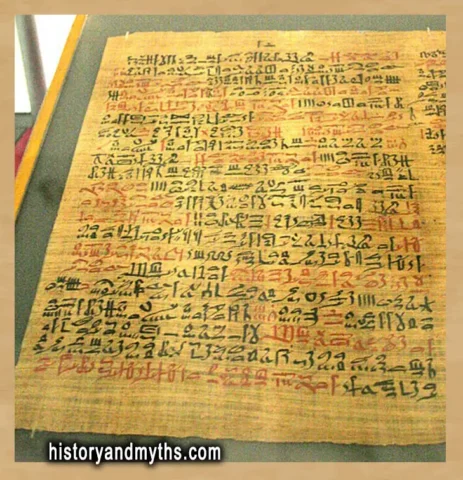
The clearest evidence comes from the so-called Letters to the Dead. These texts show people writing to deceased parents, spouses, or relatives to ask for help with disputes, illness, infertility, or injustice. The tone is revealing: not reverent like prayer, but familiar and sometimes urgent. Ancestors were expected to act, not merely to be honored.
This form of communication confirms that ancestor veneration functioned outside formal religion. It belonged to the domestic sphere, where problems were personal and solutions required someone who understood family history. Ancestors were contacted not because they were sacred, but because they were still socially accountable.
What Did Egyptians Ask Their Ancestors For?
The surviving Letters to the Dead show that Egyptians turned to their ancestors for practical help rather than abstract blessings. Most requests concerned problems that affected everyday family life, including illness, inheritance disputes, infertility, broken promises, legal conflicts, and unexplained misfortune. Ancestors were expected to understand these situations because they had lived within the same family and knew its history.
Many appeals also asked ancestors to defend the living against injustice. A deceased parent or spouse might be asked to intervene when someone had acted unfairly or failed to fulfill an obligation. These requests reveal that ancestor veneration was closely connected to justice, reputation, and family responsibility rather than supernatural fear.
This practical focus explains why communication with ancestors remained a domestic tradition. People sought advice, protection, and support from those who had shared their lives, making ancestor veneration an extension of family relationships rather than a separate religious cult.
Why Ancestors Were Approached Instead of Gods
Ancestors were often approached before gods because they operated within a different scale of responsibility. Gods governed universal order; ancestors dealt with specific people and specific problems. This made them more effective in situations that required familiarity rather than cosmic authority.
An ancestor knew the family’s history, internal conflicts, and unresolved obligations. They understood who had wronged whom and where injustice had occurred. This contextual knowledge gave them credibility as mediators. Appealing directly to a god for such matters could be excessive or inefficient, while an ancestor’s intervention felt proportionate and immediate.
This hierarchy of access reveals a pragmatic religious mindset. Egyptians did not abandon the gods; they delegated. Ancestors occupied an intermediate level, closer than gods but more capable than the living. Their value lay in this position near enough to care, far enough to act.
Ancestors were respected as socially complete humans whose authority continued after death.
They were approached as intermediaries, not gods, and valued for proximity, memory, and shared obligation.
© historyandmyths.com — Educational use
Household Cults and Daily Presence of the Ancestors
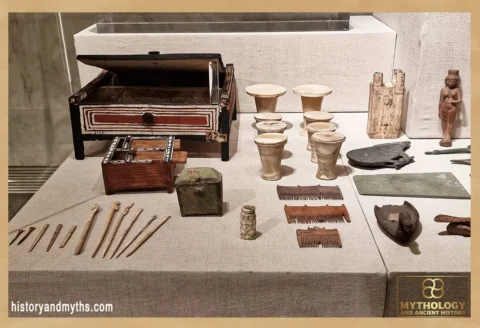
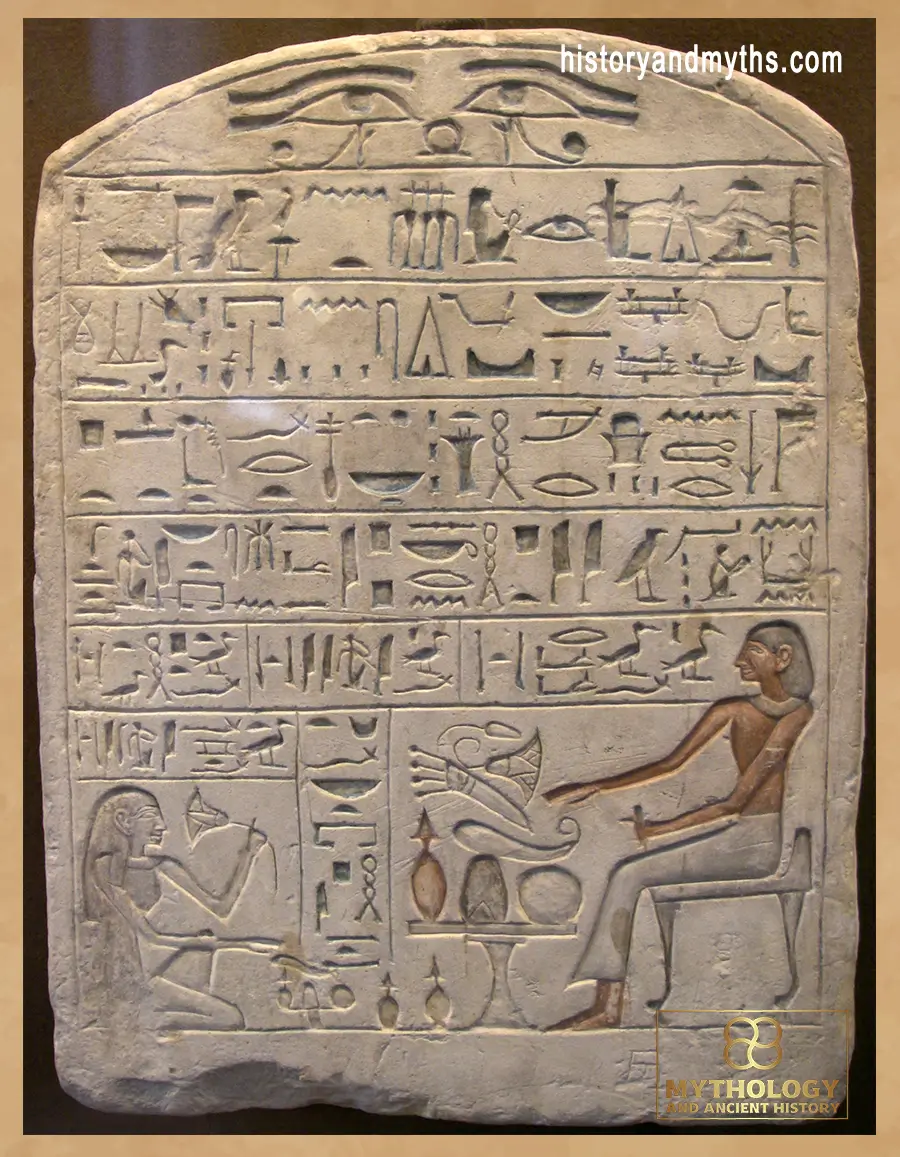
Ancestor veneration was embedded in the household, not confined to tombs or cemeteries. Evidence suggests that remembrance and appeal took place within domestic space, where ancestors were treated as ongoing members of the family rather than distant dead. Small stelae, offering tables, and remembered names anchored their presence in daily routines.
This domestic setting matters. It shows that ancestor veneration was continuous, not occasional. Ancestors were acknowledged during meals, disputes, and moments of crisis, reinforcing family cohesion across generations. The practice did not require elaborate ritual; its power came from repetition and familiarity.
By keeping ancestors close, households maintained a sense of continuity that death did not interrupt. Memory functioned as a social technology: it preserved authority, reinforced obligations, and stabilized identity. Ancestors remained present not because of belief alone, but because everyday life made room for them.
Social Control, Justice, and the Authority of the Ancestors
Ancestor veneration also functioned as a mechanism of social control. Because ancestors were believed to observe family behavior and intervene when wronged, they reinforced moral conduct without formal enforcement. Disputes, broken promises, and unfair treatment were not only social issues; they became matters that ancestors could correct.
Appeals to ancestors often referenced injustice directly—accusations against relatives, neighbors, or officials. This reveals a belief that ancestors cared about fairness within the family and community, not abstract morality. Their authority came from shared lineage and obligation, making their judgment harder to ignore than distant divine law.
In this sense, ancestors acted as moral witnesses. They did not replace courts or officials, but they pressured individuals to act correctly by extending accountability beyond death. Social order was maintained not only through institutions, but through remembered relationships that continued to matter after life ended.
Ancestors, Memory, and the Construction of Identity
Ancestor veneration was ultimately about memory as power. Remembering an ancestor was not passive recollection; it was an active process that shaped identity, status, and legitimacy. To invoke an ancestor was to anchor oneself in a recognized lineage and to claim continuity with a completed life.
Names mattered. Being remembered by name allowed ancestors to remain effective, and it allowed the living to situate themselves within a chain of obligation and inheritance. Forgetting weakened authority on both sides. This is why remembrance was sustained through repetition rather than ceremony: memory had to stay functional.
Through ancestors, Egyptians constructed identity across time. Individuals were not isolated units but extensions of earlier lives. Death did not sever belonging; it redistributed it. Ancestor veneration thus linked past achievement to present action, ensuring that family identity remained coherent even as generations changed.
- Ancestors were not gods but socially complete humans.
- Veneration focused on respect and expectation, not sacrifice.
- Communication occurred through letters, appeals, and remembrance.
- Ancestors handled personal and family-level problems.
- The household was the primary space of ancestor presence.
- Memory sustained authority across generations.
Did ancient Egyptians worship their ancestors as gods?
No. Ancestors were venerated as respected humans, not worshiped as deities.
Who could become an ancestor?
Only individuals with completed social identities and descendants.
How did Egyptians communicate with ancestors?
Through spoken appeals, offerings, and written letters.
What problems were ancestors asked to solve?
Family disputes, illness, injustice, and personal hardship.
Where did ancestor veneration take place?
Mainly within the household, not in temples.
Why were ancestors approached before gods?
They were closer, more familiar, and socially accountable.
Was ancestor veneration part of funerary religion?
No. It functioned alongside funerary practices but served daily life.
Sources & Rights
- Assmann, Jan. Death and Salvation in Ancient Egypt. Ithaca: Cornell University Press, 2005.
- Baines, John. Religion in Ancient Egypt: Gods, Myths, and Personal Practice. Ithaca: Cornell University Press, 1991.
- Ikram, Salima. Death and Burial in Ancient Egypt. Harlow: Pearson Longman, 2003.
- Lichtheim, Miriam. Ancient Egyptian Literature, Volume II: The New Kingdom. Berkeley: University of California Press, 1976.
- Meskell, Lynn. Private Life in New Kingdom Egypt. Princeton: Princeton University Press, 2002.
- Morenz, Siegfried. Egyptian Religion. Ithaca: Cornell University Press, 1992.
- Quirke, Stephen. Exploring Religion in Ancient Egypt. Chichester: Wiley-Blackwell, 2015.
- Teeter, Emily. Religion and Ritual in Ancient Egypt. Cambridge: Cambridge University Press, 2011.
- British Museum. Letters to the Dead and Household Religion in Ancient Egypt.
- University College London, Petrie Museum. Ancestor Veneration and Domestic Religion in Ancient Egypt.
Written by H. Moses — All rights reserved © Mythology and History