Daily Life of Farmers in Ancient Egypt: Work, Control, and Survival
In ancient Egypt, farming was not simply an occupation shaped by the Nile and the seasons. It was a regulated condition of life. Farmers worked land they did not own, produced grain they did not fully control, and operated within an administrative system that defined their obligations as precisely as their labor. Agriculture functioned as the foundation of the state economy, but for the farmer, it meant constant oversight rather than independence.
This article examines the daily life of Egyptian farmers not as agricultural workers in isolation, but as participants in a centralized economic structure. It asks how farmers lived within this system-how their work was organized, what portion of their labor they retained, and where state authority determined the limits of their autonomy.
Who Were Egypt’s Farmers?
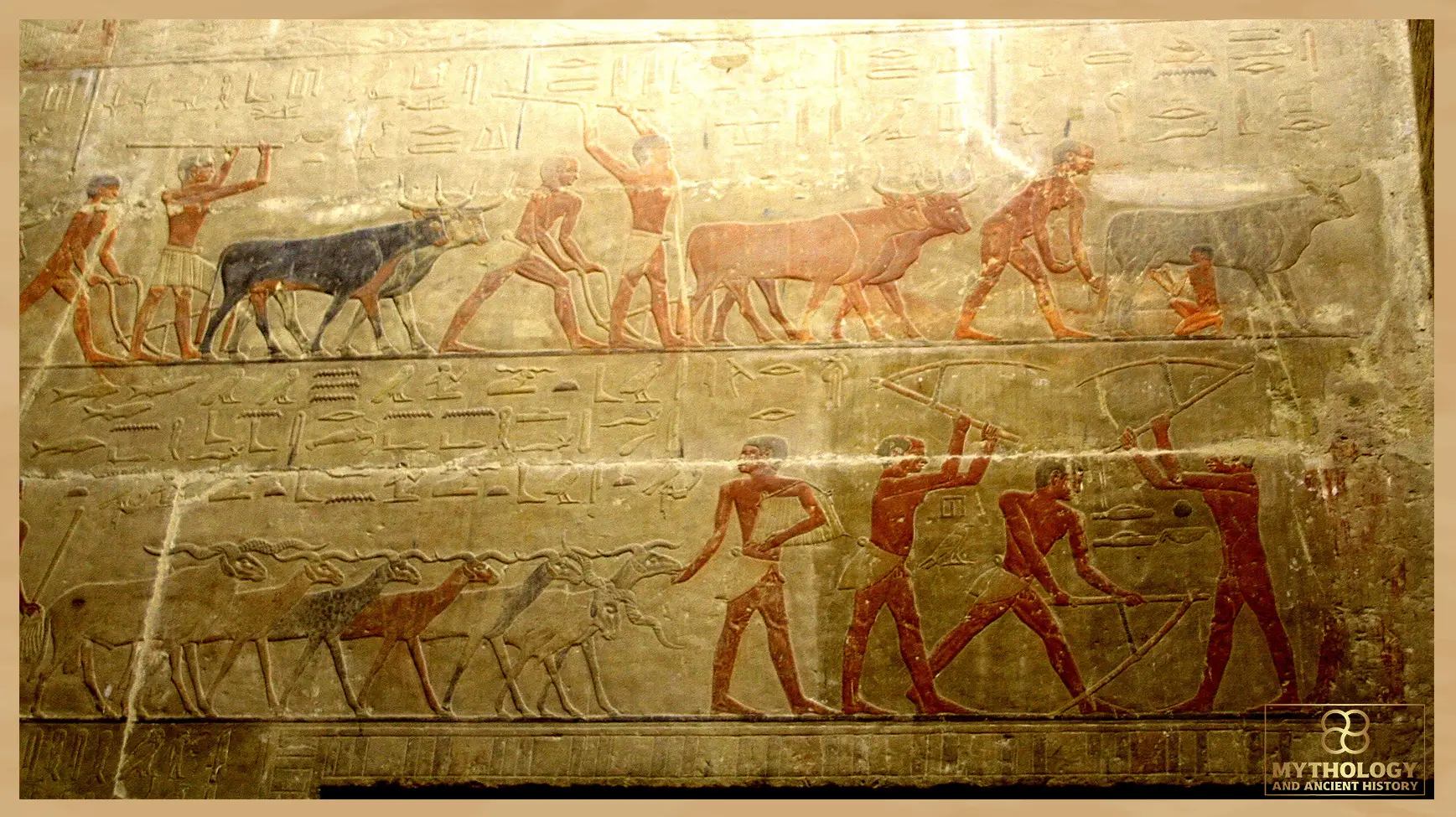
Farmers formed the largest productive group in ancient Egyptian society, yet they occupied a clearly defined and limited economic position. They were not landowners in the modern sense, nor were they enslaved laborers. Instead, they worked land that was formally owned by the crown, temples, or elite institutions and assigned for cultivation through local administration.
Most farmers lived in village communities tied to specific tracts of land. Their relationship to that land was functional rather than proprietary: they were responsible for cultivating it efficiently, not for controlling it. Rights to farm a plot could be reassigned, expanded, or reduced depending on administrative decisions, productivity, and state needs.
Socially, farmers ranked below officials, scribes, and skilled craftsmen, but above unfree laborers and prisoners. Their value to the state lay in output, not status. Written records emphasize yield, quotas, and compliance, rarely individual identity. A farmer was measured by what his land produced, not by personal wealth or lineage.
This position created a stable but restrictive way of life. Farmers had predictable roles and access to subsistence, yet little opportunity for upward mobility. Their daily existence was shaped by obligation-cultivation, delivery, and service-rather than choice. To understand the farmer in ancient Egypt is therefore to understand a role defined by productivity within a controlled economic system.
| Aspect of Daily Life | Practical Reality | Economic Meaning |
|---|---|---|
| Land Use | Cultivated state- or temple-owned land | Farmers produced without owning the means of production |
| Labor Obligations | Cultivation, transport, and compulsory public service | Labor tied directly to state needs, not individual profit |
| Taxation | Grain quotas assessed by scribes | Agricultural output fed central redistribution |
| Household Share | Limited subsistence portion retained | Minimal surplus and restricted economic mobility |
| Storage System | Centralized granaries under state control | Stability at state level, dependency at household level |
| Risk Exposure | Vulnerability to low floods and high demands | Farmers bore immediate consequences of system failure |
Farming as an Administrative Obligation
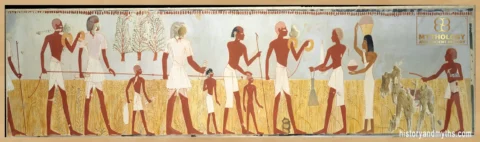
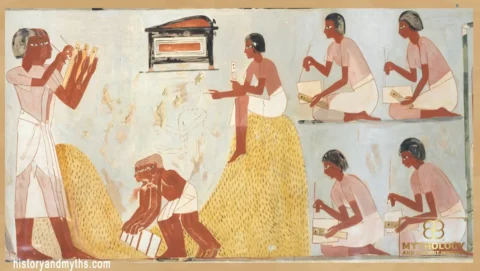
Agricultural labor in ancient Egypt was inseparable from administration. Farming was not organized at the level of individual choice, but through a bureaucratic system that measured land, assessed output, and enforced obligations. Scribes played a central role in this process, recording field sizes after the flood and calculating expected yields based on established norms.
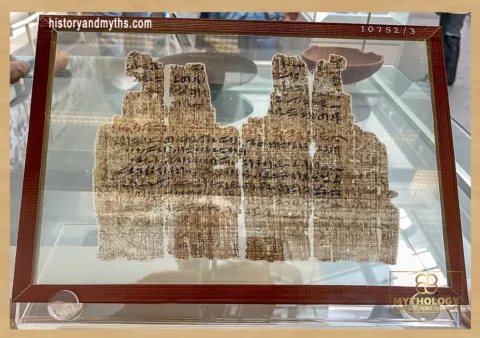
Farmers were required to deliver a fixed portion of their harvest as tax, usually in grain. These assessments were not negotiable and were tied to land surveys rather than actual conditions on the ground. A poor harvest did not automatically reduce expectations, which meant that farmers carried much of the risk in years of low yield. Administrative texts make clear that failure to meet quotas could result in penalties, including reassignment of land or additional labor demands.
Beyond cultivation and taxation, farmers were subject to compulsory service for state projects. Canal maintenance, dike repair, and transport work were common obligations, especially during periods when fields were not actively cultivated. This corvée labor further limited the farmer’s control over time and reinforced the idea that agricultural work served the state before the household.
In this system, farming was less an economic choice than a civic duty. The farmer’s daily life was structured around compliance-meeting quotas, responding to summons, and adapting labor to administrative schedules. Productivity ensured survival, but it did not grant independence. The field, the harvest, and the farmer himself remained under continuous institutional oversight.
A Farmer’s Year Beyond the Harvest
The agricultural year of an Egyptian farmer did not revolve solely around planting and harvest. While these moments were critical, much of daily labor occurred outside the narrow window of crop production. After the Nile flood receded, farmers were required to restore field boundaries, repair irrigation channels, and prepare land for cultivation under official supervision.
During the growing season, work focused on maintaining fields and managing water distribution. These tasks demanded coordination rather than individual initiative, as irrigation systems served multiple plots and were monitored by local authorities. Farmers worked collectively, responding to environmental conditions but within administratively defined schedules.
After harvest, labor intensified rather than declined. Grain had to be transported to state granaries, weighed, inspected, and recorded. Farmers remained involved in this process until storage was complete, at which point their obligations shifted toward maintenance work or state service. Periods when fields lay fallow did not translate into rest; they marked a transition to other forms of compulsory labor.
As a result, farming was a continuous cycle rather than a seasonal occupation. The farmer’s time was structured by administrative demand as much as by agricultural necessity. Daily life followed a rhythm imposed from above, ensuring that labor remained productive even when crops were not actively being grown.
What Did Farmers Keep?
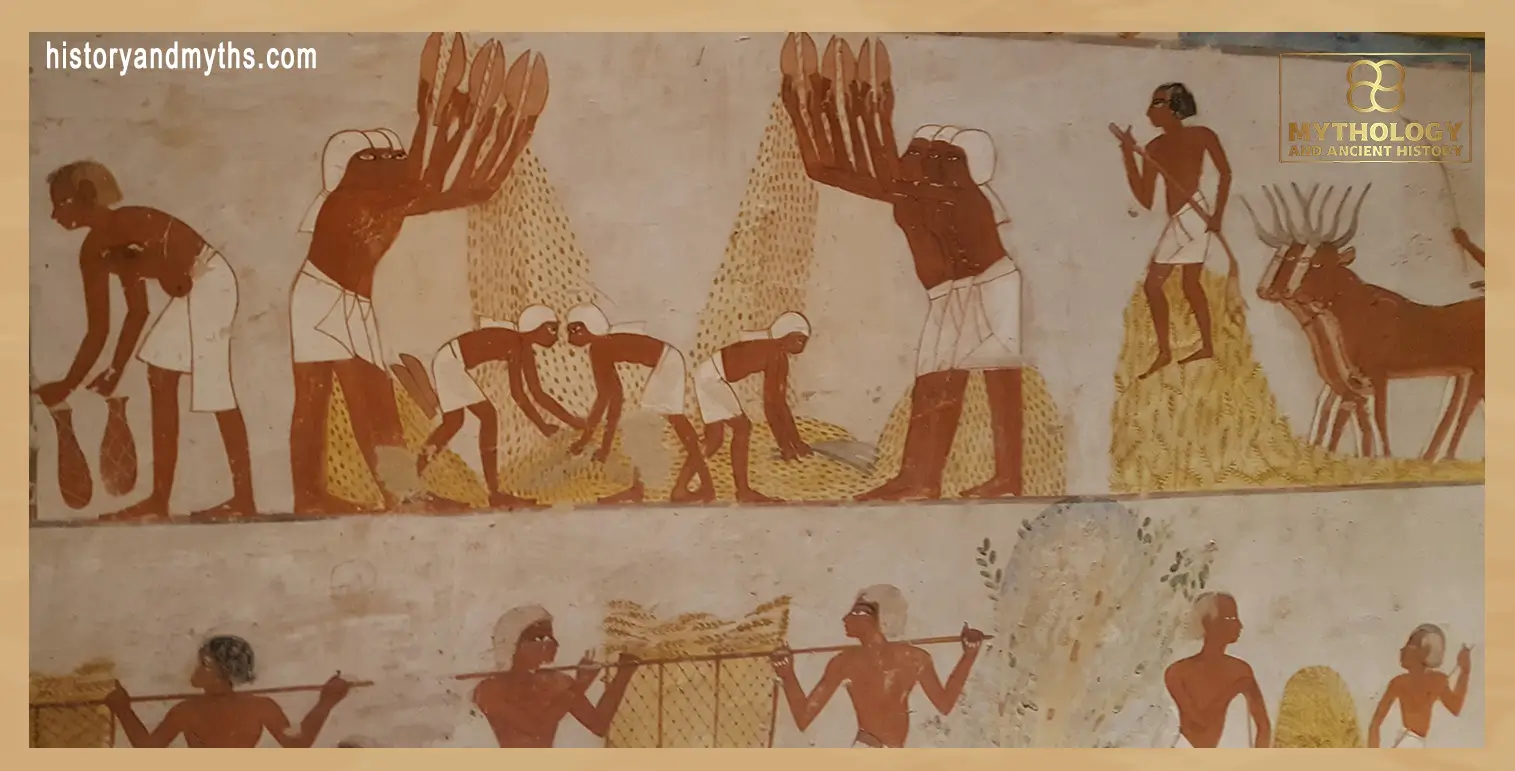
Farmers in ancient Egypt did not retain full control over what they produced. A substantial portion of the harvest was claimed by the state as tax and transferred to centralized storage facilities. This obligation was calculated according to land assessments rather than actual household needs, which meant that subsistence came after compliance.
What remained from the harvest supported the farming household through the year. This share was typically modest and left little room for accumulation or surplus exchange. Farmers rarely operated beyond subsistence level, and long-term storage at the household level was limited. Grain was both food and liability: necessary for survival, yet continuously subject to assessment and collection.
This system restricted economic mobility. Farmers could not easily convert labor into wealth, nor could they expand production independently. Good harvests did not translate into lasting advantage, while poor yields exposed households to immediate risk. The farmer’s relationship to produce was therefore defined by obligation first and consumption second.
By structuring agricultural output this way, the state ensured a steady flow of resources into central granaries while keeping farming communities dependent. For the farmer, daily life involved managing scarcity rather than building surplus, reinforcing a cycle of productivity without autonomy.
Daily Life of Farmers — Core Framework
- Not landowners: Farmers cultivated land owned by the state, temples, or elites.
- Administration first: Labor, time, and output were regulated through surveys, quotas, and records.
- Grain as tax and food: Produce functioned simultaneously as subsistence and state revenue.
- Central storage: Granaries controlled redistribution, limiting household autonomy.
- Continuous obligation: Farming extended beyond seasons to include transport and public labor.
- Built-in vulnerability: Fixed demands exposed farmers to risk during poor harvests.
© historyandmyths.com — Educational use
Farmers, Storage, and Redistribution
Central grain storage was the point at which agricultural labor fully entered the state economy. Once grain left the fields, it passed under administrative control. Farmers delivered produce to local or regional granaries, where officials measured, recorded, and sealed it for redistribution. At this stage, the harvest no longer belonged to the farming household in any practical sense.
Granaries functioned as logistical centers rather than marketplaces. Grain was redistributed to support scribes, craftsmen, soldiers, temple personnel, and large construction projects. Farmers did not participate in this exchange as traders; they were contributors to a managed supply system designed to sustain the state and its institutions.
This structure offered limited security. In years of shortage, stored grain could be released to prevent collapse, but access depended on administrative decision rather than entitlement. Farmers benefited indirectly from the system’s stability, yet remained vulnerable to mismanagement or increased demands.
Daily life was shaped by this dependency. Agricultural success did not guarantee household security unless redistribution functioned effectively. Storage and redistribution ensured continuity at the state level, but for farmers, they reinforced a reality in which survival was mediated by central control rather than personal reserve.
Stability, Risk, and the Limits of Security
The agricultural system of ancient Egypt was designed to create stability at the level of the state, not at the level of individual farmers. In years of normal inundation, the system functioned predictably: production targets were met, grain flowed into storage, and redistribution sustained the wider economy. For farmers, this predictability offered continuity but little flexibility.
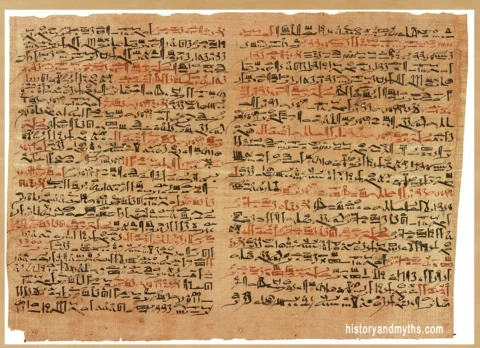
Risk emerged when environmental conditions or administrative pressure disrupted the balance. Low Nile floods, poor harvests, or excessive demands exposed the vulnerability of farming households. Because farmers operated close to subsistence and held limited reserves, even short-term disruption could have severe consequences. Administrative records and famine texts indicate that when shortages occurred, farmers were the first to experience hardship.
The system provided no structural buffer for individual households. Obligations remained fixed even when yields declined, and relief depended on decisions made beyond the village level. While centralized storage reduced the likelihood of total collapse, it did not eliminate local suffering. Security was collective and conditional, not personal.
This tension defines the daily life of farmers in ancient Egypt. They sustained one of the most stable civilizations of the ancient world, yet their own lives remained constrained by limited autonomy and constant exposure to risk. Farming offered continuity but not control. Stability existed—but it was a stability that served the system before the individual.
Key Takeaways
- Farming in ancient Egypt was a regulated economic role, not an independent livelihood.
- Farmers worked land they did not own and delivered fixed grain quotas as tax.
- Agricultural labor extended beyond harvest to transport and compulsory public service.
- Central granaries ensured state stability while limiting household autonomy.
- Farmers lived close to subsistence and faced high risk during poor harvests.
Frequently Asked Questions
Were ancient Egyptian farmers landowners?
No. Most farmers cultivated land owned by the state, temples, or elite institutions rather than owning it themselves.
How was a farmer’s work controlled?
Work was regulated through land surveys, production quotas, and administrative records managed by scribes.
Did farmers keep most of their harvest?
No. A fixed portion of the harvest was taken as tax, leaving farmers with limited subsistence-level reserves.
Was farming seasonal or year-round?
Farming was continuous. Beyond planting and harvest, farmers performed transport, maintenance, and compulsory public labor.
What role did granaries play in farmers’ lives?
Granaries centralized grain storage and redistribution, providing state stability while limiting household autonomy.
Were farmers free or forced laborers?
Farmers were neither slaves nor fully free. They occupied a dependent role within a regulated economic system.
Why were farmers vulnerable to famine?
Fixed obligations, limited reserves, and reliance on central redistribution exposed farmers to high risk during poor harvests.
Sources & Rights
- Tyldesley, Joyce. Daily Life in Ancient Egypt. Penguin Books.
- Kemp, Barry J. Ancient Egypt: Anatomy of a Civilization. Routledge.
- Shaw, Ian (ed.). The Oxford History of Ancient Egypt. Oxford University Press.
- Brewer, Douglas J., and Emily Teeter. Egypt and the Egyptians. Cambridge University Press.
- Trigger, Bruce G. et al. Ancient Egypt: A Social History. Cambridge University Press.
- Baines, John, and Jaromír Málek. Atlas of Ancient Egypt. Facts On File.
- Wilkinson, Richard H. The Complete Gods and Goddesses of Ancient Egypt. Thames & Hudson.
- Lesko, Leonard H. (ed.). Pharaoh’s Workers: The Villagers of Deir el-Medina. Cornell University Press.
- Butzer, Karl W. Early Hydraulic Civilization in Egypt. University of Chicago Press.
- Allen, James P. The Heqanakht Papyri. Metropolitan Museum of Art.
- Janssen, Jac. J. Commodity Prices from the Ramessid Period. Brill.
- Davies, Norman de Garis. The Tomb of Rekh-mi-Rē at Thebes. Metropolitan Museum of Art.
Written by H. Moses — All rights reserved © Mythology and History