Intelligence and Spies in Ancient Egypt: How Pharaohs Stopped Threats
Ancient Egypt did use intelligence and espionage, but not as a modern “spy agency.” Pharaohs relied on scouts, informants, written reports, interrogations, and court investigations to detect threats early. Egyptian intelligence mattered because it reduced surprises, protected the throne, and allowed the state to act before enemies or conspiracies became disasters.
Most people imagine spies as hidden individuals, but Egyptian intelligence was often a system. It worked through information flowing into the state, being filtered by officials, and turning into orders. Sometimes it stopped wars. Sometimes it exposed plots inside the palace itself.
Intelligence in Ancient Egypt Was About Early Warning, Not Secret Drama
The purpose of intelligence in Ancient Egypt was simple: prevent the shock. A surprise attack, a sudden rebellion, or a palace coup could cost the king more than a battlefield defeat, because it could break the state’s authority from the inside. Intelligence existed to make threats visible early enough that the regime could control them.
This is why Egyptian intelligence should be understood as risk management. It was not a separate world of cinematic spies. It was part of how government functioned. The state collected information because it needed to decide where to send soldiers, whom to trust, which officials were failing, and which rumors were actually warnings.
The core advantage of intelligence is time. A warning received early turns chaos into planning. It allows the state to prepare a response, isolate suspects, strengthen security, or negotiate from strength. Without early warning, power becomes reactive, and reactive power is weak power.
This also explains why intelligence was both external and internal. Egypt needed to watch borders, foreign rivals, and desert routes, but it also needed to watch its own elite environment. In a centralized monarchy, the most dangerous enemy is often not the one outside the kingdom, but the one close enough to touch the throne.
If we reduce the topic to “did they have spies,” we miss the real point. The important question is: how did the state make threats measurable? Ancient Egypt’s answer was to build information pathways that turned movement, rumors, and suspicion into action.
Intelligence in Ancient Egypt (Quick Framework)
| Intelligence Layer | What It Collected | Where It Operated | State Benefit |
|---|---|---|---|
| Scouting | Movement, numbers, routes, threats | Campaign zones and vulnerable corridors | Early warning and tactical planning |
| Messaging | Updates, alerts, decisions | Between posts, officials, and the center | Speed that prevents surprise |
| Local informants | Rumors, suspicious behavior, tensions | Towns, work communities, elite networks | Detect unrest before it spreads |
| Written reporting | Recorded observations and events | Administrative channels | Institutional memory and accountability |
| Investigation | Networks, suspects, motives | Court and internal security | Targeted control and regime stability |
Scouts, Messengers, and Informants: The Human Network Behind Intelligence
Ancient Egyptian intelligence depended first on people, not technology. The state gathered information through scouts who observed movement, messengers who carried updates, and informants who noticed unusual behavior before officials did. This was not a separate profession with a single title. It was a practical network built into daily administration.
Scouts mattered because distance creates blindness. A king in the capital cannot see what is happening on a route, near a foreign border, or inside a tense region. A scout’s job was to reduce that blindness by confirming facts. Who is moving? How many? From where? With what intention? Even basic answers could prevent catastrophic miscalculation.
Messengers were part of intelligence because information is useless if it arrives late. Speed was a strategic resource. A report delivered quickly could trigger a patrol, a defensive preparation, or a political decision. In this sense, communication was already a form of control.
Informants filled the gaps the state could not patrol constantly. Local awareness often detects danger earlier than official structures do. A rumor of rebellion, a suspicious gathering, or a shift in loyalty is usually visible first at the ground level. The state benefited when such observations traveled upward instead of staying trapped inside fear or silence.
This human network explains why intelligence could exist without a modern agency. Egypt did not need a single building called “intelligence.” It needed reliable channels that moved information toward power. When those channels worked, the state could act early. When they failed, the state was forced to react after damage was already done.
Written Reports Made Intelligence Powerful: Information That Could Be Stored and Used
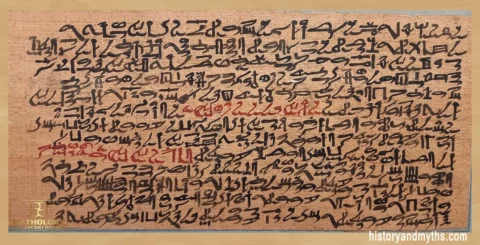
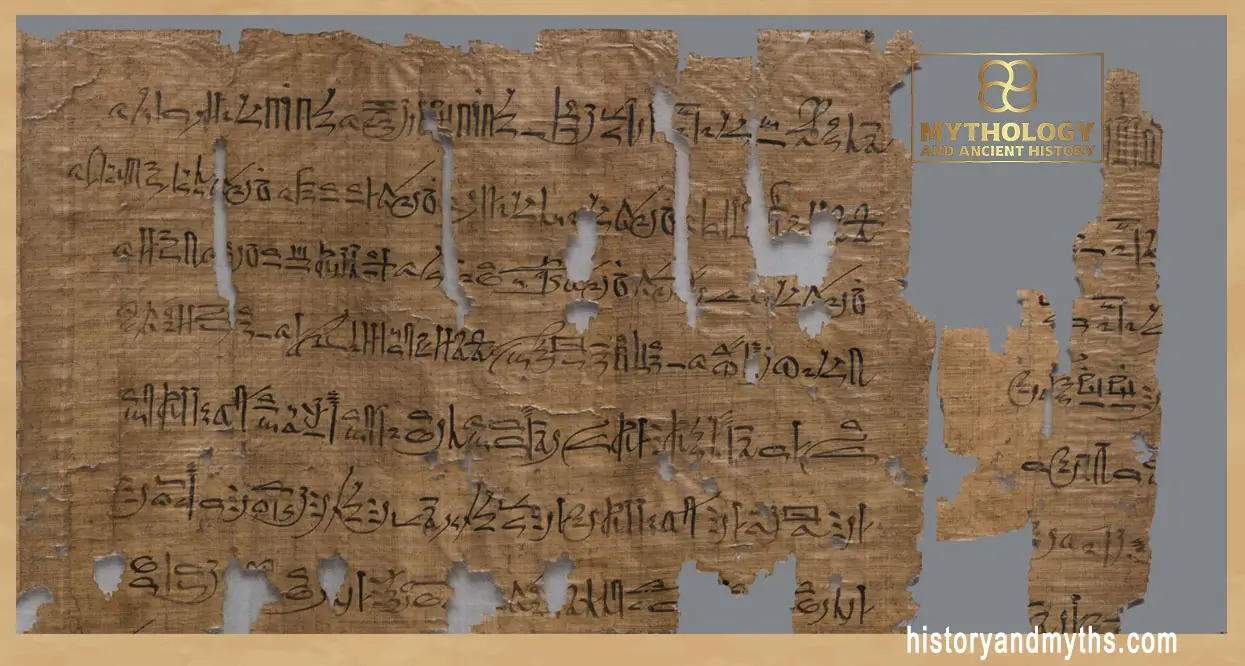
The most effective intelligence is not just collected. It is recorded. Ancient Egypt had a major advantage here because it was a writing state. Reports could be written, stored, reviewed, and compared over time. That turned intelligence into something durable, not a one-time rumor.
Written reporting gave the state memory. An oral message can be denied, misunderstood, or forgotten. A written note creates accountability. It can be forwarded, copied, and used as evidence when decisions are questioned. This is where intelligence becomes administrative power rather than personal opinion.
Reports also made patterns visible. A single movement near a frontier might not matter. Repeated movements do. A single complaint about an official might be noise. Repeated complaints are a warning. Writing allows the state to connect dots across time, which is impossible if information stays informal.
This is how intelligence becomes strategic without being mysterious. The state is not guessing. It is observing and tracking. Even when Egypt could not stop every threat, written intelligence reduced uncertainty and improved the quality of decisions. In a monarchy, better decisions often matter more than brute strength.
So the real breakthrough is not the existence of spies. It is the existence of documentation. When information is written, it can shape policy rather than vanish after a conversation.
Intelligence Inside the Palace: Detecting Plots and Controlling Loyalty
External threats are visible on maps. Internal threats are visible in behavior. For pharaohs, the most dangerous intelligence problem was not always an invading army. It was the possibility of betrayal close to the throne.
Palace intelligence was about loyalty management. The state needed to know whether officials were reliable, whether factions were forming, and whether personal rivalries were turning into political plans. In a court environment, ambition is normal. The risk appears when ambition becomes coordinated.
This is why investigation mattered as much as surveillance. When suspicion rose, the state could not respond only with force. It needed identification: who is involved, how deep the network goes, and what the goal is. Without that clarity, punishment could create more instability than it prevents.
The clearest historical proof that intelligence existed in this environment is that Egypt documented conspiracy cases rather than pretending they never happened. When a plot threatened the ruler, the state produced procedures: inquiry, questioning, and legal action. That is intelligence functioning as protection of the regime.
Palace intelligence also explains why punishment in conspiracy cases could be severe. The state was not only responding to crime. It was sending a signal: the throne is not vulnerable, and betrayal will be exposed. Intelligence and justice were linked because both served the same goal, preserving authority.
A Concrete Example: The Harem Conspiracy Against Ramesses III
If you want one case that proves intelligence and internal security mattered at the highest level, the conspiracy against Ramesses III is the strongest example. It shows that threats could emerge inside the royal environment, involving people close enough to the court to plan an attack on the king’s position.
What makes this case valuable is not the drama. It is the structure. The state treated the plot as something that could be investigated, documented, and prosecuted. That tells us two things. First, the regime expected that conspiracies were possible. Second, it had mechanisms to respond through inquiry and controlled punishment rather than uncontrolled panic.
The conspiracy also reveals how intelligence overlaps with legitimacy. A plot is not only an attempt to remove a king. It is an attempt to replace the political order. That is why the response was not limited to stopping individuals. It was aimed at restoring confidence that the throne remained in control.
Scouts, reports, informants, and surveillance are not theoretical ideas. They existed because the state needed early detection and internal stability. When the threat is close enough to be personal, intelligence becomes a survival tool for the monarchy, not a luxury.
Continue Reading
Intelligence as State Power: What Egypt Could Do with Information
Information only becomes intelligence when it changes outcomes. Ancient Egypt used intelligence to convert uncertainty into action, and action into control. That control could be military, political, or administrative, but the logic was the same: the first side to understand a threat clearly has the advantage.
One use of intelligence was prevention. A warning about suspicious movement or rising tension could trigger early measures before a crisis became public. This might mean reinforcing a vulnerable area, isolating an unstable official, or tightening supervision in a sensitive region. The key was to act early enough that the state appeared strong rather than reactive.
Another use was selection. The regime needed to know whom to trust. Appointments, promotions, and command roles were not only about talent. They were about reliability. In a centralized monarchy, a competent but disloyal official is more dangerous than an average but loyal one. Intelligence supported the filtering of people.
Intelligence also shaped punishment. When the state could identify networks rather than random suspects, it could punish strategically instead of blindly. That protected stability. A careless purge can create more enemies than it removes. A targeted response removes threats while signaling competence.
The final use was narrative control. When the state manages information, it also manages perception. Authority depends on public confidence. If civilians believe the palace is blind, rumors spread faster than orders. Intelligence helped the regime stay ahead of instability by keeping the center informed and responsive.
So intelligence in Ancient Egypt should be understood as a tool of governance. It made state power sharper, faster, and more selective. In a world where delay could turn into disaster, that difference was decisive.
Egyptian Intelligence Was a Governance Tool
In Ancient Egypt, intelligence was less about secrecy for its own sake and more about controlling risk. Reports, scouts, and investigations gave the state time to act early, isolate threats, and protect the throne before crises became public disasters.
The Bottom Line: Ancient Egypt Used Intelligence to Reduce Surprise
Ancient Egypt did not run intelligence as a modern secret service with fixed departments and formal job titles. But it did practice intelligence as a real function of the state. It relied on scouts, messengers, local informants, written reporting, and internal investigation to detect danger early and protect authority.
The core value of intelligence was time. It allowed the regime to prepare instead of panic, to target responses instead of guessing, and to manage loyalty before instability became rebellion. That is why intelligence mattered as much inside the palace as it did outside it.
In the end, Egyptian intelligence was not defined by secrecy for its own sake. It was defined by control. The state wanted to see threats early enough to stay in charge of events, and it built information pathways that turned warning signs into decisions.
Key Takeaways
- Egyptian intelligence worked as a network, not a modern agency.
- Scouts and messengers turned distance into manageable information.
- Written reports made intelligence durable and usable over time.
- Internal security focused on loyalty and threat detection within the elite.
- Investigations allowed targeted responses instead of blind punishment.
FAQ
What made intelligence believable in an ancient state without modern technology?
Consistency. Regular observation, repeated reporting, and recorded patterns made information reliable enough for decisions.
Why would the royal court need intelligence in times of peace?
Because power creates competition. Peace does not remove ambition, and internal rivals can be more dangerous than foreign enemies.
How did writing change intelligence outcomes in Ancient Egypt?
Writing preserved details, created accountability, and allowed officials to compare events over time instead of relying on memory.
Could intelligence reduce the need for constant warfare?
Yes. Early detection and targeted action could prevent threats from turning into large-scale conflicts.
What is the difference between intelligence and ordinary rumors?
Intelligence is filtered, verified, and turned into action. Rumors stay untested and often spread without control.
Why were conspiracy investigations politically important?
They protected legitimacy. A controlled investigation restored confidence that the throne was still governing events.
What is the biggest mistake when writing about ancient spies?
Treating intelligence as entertainment. The real story is how information strengthened governance and reduced surprise.
Sources & Rights
- Assmann, Jan. The Mind of Egypt: History and Meaning in the Time of the Pharaohs. Cambridge, MA: Harvard University Press, 2002.
- Bard, Kathryn A. An Introduction to the Archaeology of Ancient Egypt. 2nd ed. Oxford: Wiley-Blackwell, 2015.
- Cerný, Jaroslav. A Community of Workmen at Thebes in the Ramesside Period. Cairo: IFAO, 2004.
- Dodson, Aidan. Afterglow of Empire: Egypt from the Fall of the New Kingdom to the Saite Renaissance. Cairo: The American University in Cairo Press, 2012.
- Kitchen, Kenneth A. Pharaoh Triumphant: The Life and Times of Ramesses II. Warminster: Aris & Phillips, 1982.
- Morris, Ellen Fowles. The Architecture of Imperialism: Military Bases and the Evolution of Foreign Policy in Egypt’s New Kingdom. Leiden: Brill, 2005.
- Redford, Donald B. Egypt, Canaan, and Israel in Ancient Times. Princeton: Princeton University Press, 1992.
Written by H. Moses — All rights reserved © Mythology and History