Coronation Rituals in Ancient Egypt and Royal Legitimacy
In Ancient Egypt, coronation rituals were not ceremonial traditions, but political mechanisms designed to end uncertainty and secure authority. This article explains how coronation transformed succession into legitimacy, closed the door to dispute, and publicly activated royal power through ritual, timing, and controlled consensus.
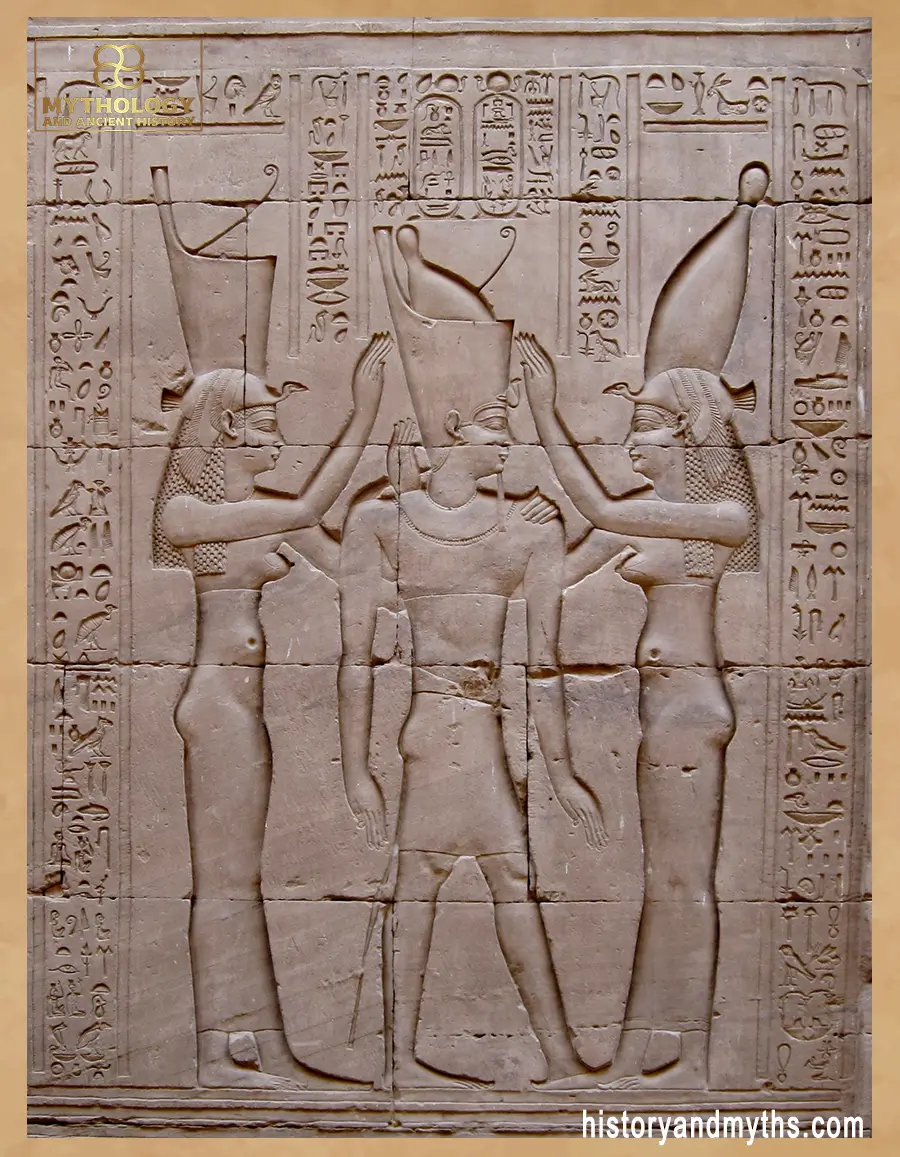
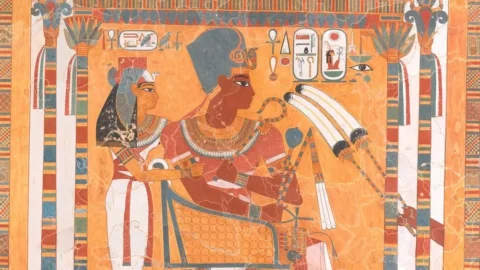
Source: Wikimedia Commons — Photo by Olaf Tausch, GNU Free Documentation License (GFDL 1.2 or later).
Why Succession Was the Most Dangerous Moment
In Ancient Egypt, the moment between a king’s death and a new king’s public installation was the most politically fragile phase of rule. Authority existed in theory, but not yet in practice. Without a crowned ruler, commands lacked final legitimacy, loyalties were uncertain, and rival claims—whether from royal family members, elites, or regional powers—could quietly take shape.
This danger did not come from chaos alone, but from ambiguity. Until succession was formally resolved, power remained negotiable. Coronation rituals were designed to eliminate this uncertainty as quickly as possible. By transforming succession into a visible, irreversible event, the state prevented debate before it could turn into conflict.
The urgency of coronation explains why legitimacy was not assumed through bloodline alone. Descent could be argued; ritual could not. Once the ritual was performed, authority ceased to be hypothetical and became operative. The coronation did not celebrate power—it terminated the moment when power could still be contested.
| Aspect | Political Risk Before Coronation | Function of the Coronation Ritual |
|---|---|---|
| Succession | Authority is uncertain; multiple claims remain possible. | Transforms succession into an irreversible political fact. |
| Legitimacy | Power exists only by lineage or expectation. | Publicly activates legitimacy through recognized ritual authority. |
| Political Debate | Succession remains open to negotiation and challenge. | Declares the end of dispute and closes political discussion. |
| Audience & Witnesses | No shared acknowledgment of authority. | Creates consensus through public witnessing and participation. |
| Time & Space | Delay increases instability and opportunity for rivals. | Controls timing and setting to minimize uncertainty. |
| Authority After Ritual | Power remains provisional and contestable. | Authority becomes operative, enforceable, and socially binding. |
Coronation as Political Closure
Coronation rituals functioned as acts of closure, not celebration. Their primary purpose was to declare that the period of uncertainty had ended and that political reality had been settled. Once the ritual was completed, questions of succession were no longer legitimate topics of discussion. The state used ceremony to transform a potentially unstable transition into a resolved fact.
This closure worked because the coronation was public and authoritative. It took place in controlled spaces, involved recognized religious officials, and followed established forms that were difficult to challenge. By embedding the transition within ritual, the state converted a political decision into a seemingly natural and unquestionable outcome. Disagreement became not merely political opposition, but resistance to order itself.
Importantly, coronation did not persuade by argument; it persuaded by finality. The ritual’s power lay in its ability to make succession appear complete and irreversible. Once enacted, authority was no longer something to negotiate—it was something to acknowledge. That transformation was essential for maintaining continuity in a system where even brief uncertainty could threaten stability.
Ritual, Witnesses, and Consensus
Coronation rituals were effective because they were witnessed, not merely performed. Authority in Ancient Egypt required recognition, and recognition required an audience. The presence of priests, officials, military figures, and representatives of the elite transformed the ritual into a collective acknowledgment of power. What mattered was not private belief, but public acceptance.
Witnesses served a political function. By seeing the ritual, they became participants in its outcome. Their presence created shared responsibility: once authority was publicly enacted, those who had witnessed it were bound to uphold it. Dissent after coronation was no longer a personal disagreement—it was a challenge to a consensus that had already been publicly affirmed.
This dynamic explains why coronation rituals were carefully staged and controlled. The audience was selected, the sequence was fixed, and the symbolism was unmistakable. The ritual produced legitimacy not by convincing skeptics, but by ensuring that enough people had seen the same authority enacted at the same moment. Consensus was not debated; it was manufactured through visibility and repetition.
Time, Space, and Control
Coronation rituals were precisely managed in time and space because legitimacy depended on control. The ritual was not performed at a random moment or location; it was staged where authority was already recognized and at a time chosen to minimize uncertainty. Speed mattered. Delaying coronation prolonged ambiguity, while swift ritual action reduced the window in which rival claims could form.
Space was equally political. Temples, sacred precincts, and traditional centers of power were not neutral settings; they carried accumulated authority. By placing the new king within these spaces, the ritual embedded him in a landscape already associated with order and continuity. The location did part of the political work before a word was spoken.
Control over timing and setting ensured that succession appeared inevitable rather than contested. The ritual synchronized actors, symbols, and audience into a single moment of resolution. Authority emerged not gradually, but decisively—through a carefully orchestrated convergence of place, time, and action. Once completed, the transition was no longer provisional; it was fixed as political reality.
It transformed succession into legitimacy, replaced negotiation with finality, and created public consensus through controlled time, space, and witnesses.
Without coronation, authority remained provisional. The ritual marked the exact point at which power became enforceable, recognized, and socially binding.
What the Ritual Did—Not What It Looked Like
Coronation rituals mattered less for their visual form than for their political effect. Crowns, garments, gestures, and sacred words were not symbolic decorations; they were instruments that produced authority. The ritual did not describe power—it made power operative. Once performed, it changed the status of the individual irreversibly, converting a claimant into a ruler whose authority could now be enforced, recognized, and transmitted.
What the ritual accomplished was the compression of uncertainty. Succession disputes thrive in ambiguity, where claims can circulate without resolution. Coronation eliminated that ambiguity by creating a single, recognized moment of transition. Before the ritual, power was potential; after it, power was active. This temporal boundary mattered more than the theological language surrounding it. The ritual drew a clear line between contestability and closure.
Equally important was how the ritual reframed responsibility. After coronation, disorder could no longer be blamed on the absence of legitimate authority. The king now carried the burden of maintaining order, and subjects were expected to respond accordingly. Political accountability was activated alongside legitimacy. The ritual did not promise perfection; it established obligation—on both ruler and ruled.
The effectiveness of coronation lay in its ability to transform political reality without debate. No laws were passed, no arguments settled, yet the outcome was binding. By embedding authority in a ritualized act backed by tradition, witnesses, and sacred space, the state ensured that succession appeared not as a choice among alternatives, but as a completed fact. In this sense, coronation was not theater—it was governance by other means.
This distinction explains why coronation rituals remained stable across centuries. Their form could adapt, symbols could shift, but their function stayed constant: to end uncertainty, consolidate authority, and make power socially undeniable. What the ritual looked like was secondary. What it did was decisive.
- Coronation rituals were political mechanisms, not symbolic celebrations.
- The primary function of coronation was to end uncertainty and close succession disputes.
- Legitimacy was activated through public ritual, not assumed through lineage alone.
- Witnesses transformed coronation into collective acknowledgment and enforced consensus.
- Control of time and space minimized the risk of political fragmentation.
- After coronation, authority became enforceable, binding, and no longer negotiable.
FAQ: Coronation Rituals in Ancient Egypt
Were coronation rituals in Ancient Egypt mainly religious or political?
They were both, but their core function was political: coronation ended uncertainty, activated legitimacy publicly, and made authority binding and enforceable.
Why wasn’t lineage alone enough to make someone king?
Lineage could be debated, but coronation created a single recognized moment of transition. The ritual transformed a claim into a settled political fact.
What political problem did coronation rituals solve?
They solved the danger of succession ambiguity. By closing debate quickly, coronation reduced the time window for rival claims, elite bargaining, and fragmentation.
Why were witnesses so important in a coronation?
Witnesses turned the ritual into public acknowledgment. Once key elites and officials saw authority enacted, dissent became a challenge to a consensus already made visible.
Did coronations prevent succession crises completely?
No, but they limited instability by defining a clear boundary between negotiable succession and settled authority. When crises happened, they often centered on controlling that boundary.
Why did timing matter so much?
Delay prolonged uncertainty and encouraged rival claims. A swift coronation minimized political risk and stabilized administration, loyalty, and command.
Why did location matter in coronation rituals?
Sacred and traditional spaces carried accumulated authority. Performing coronation there embedded the new king in recognized continuity and made legitimacy harder to challenge.
What is the main takeaway about Egyptian coronation rituals?
Coronation was governance by ritual: it manufactured closure, produced consensus, and converted succession into operative authority.
Sources & Rights
- Assmann, Jan. The Mind of Egypt: History and Meaning in the Time of the Pharaohs. Cambridge, MA: Harvard University Press, 2002.
- Baines, John. “Kingship, Definition of Culture, and Legitimation.” In Ancient Egyptian Kingship, edited by David O’Connor and David P. Silverman, 3–47. Leiden: Brill, 1995.
- O’Connor, David, and David P. Silverman, eds. Ancient Egyptian Kingship. Leiden: Brill, 1995.
- Frankfort, Henri. Kingship and the Gods: A Study of Ancient Near Eastern Religion as the Integration of Society and Nature. Chicago: University of Chicago Press, 1948.
- Teeter, Emily. Religion and Ritual in Ancient Egypt. Cambridge: Cambridge University Press, 2011.
- Ritner, Robert K. The Mechanics of Ancient Egyptian Magical Practice. Chicago: The Oriental Institute of the University of Chicago, 1993.
- Shaw, Ian, ed. The Oxford History of Ancient Egypt. Oxford: Oxford University Press, 2000.
- Van De Mieroop, Marc. A History of Ancient Egypt. Malden, MA: Wiley-Blackwell, 2011.
Written by H. Moses — All rights reserved © Mythology and History