How Foreign Rule Reshaped Egyptian Society | Power, Law, and Daily Life
Foreign rule in Egypt is often described as a sequence of occupations – Persians, Greeks, Romans, Ottomans, Europeans – each replacing the other on the political stage. But focusing only on rulers and dynasties misses the deeper question that matters to society itself: what actually changed for Egyptians living under foreign control? Who gained power, who lost protection, and how did everyday life adapt to systems that were no longer fully Egyptian?
This article examines foreign rule not as a list of invaders, but as a social force that repeatedly reshaped Egyptian society. Foreign administrations altered how authority worked, how justice was delivered, how land was owned, and how social classes were formed. Over time, these changes affected farmers, urban workers, religious institutions, and emerging elites in very different ways – often creating divisions that outlived the foreign rulers themselves.
Rather than treating all foreign rule as identical, this study breaks down how different forms of external control transformed Egyptian society: politically, legally, economically, and socially. By tracing these mechanisms across periods, the article explains why foreign rule more than interrupt Egyptian history did – it left structural legacies that continued to shape society long after independence.
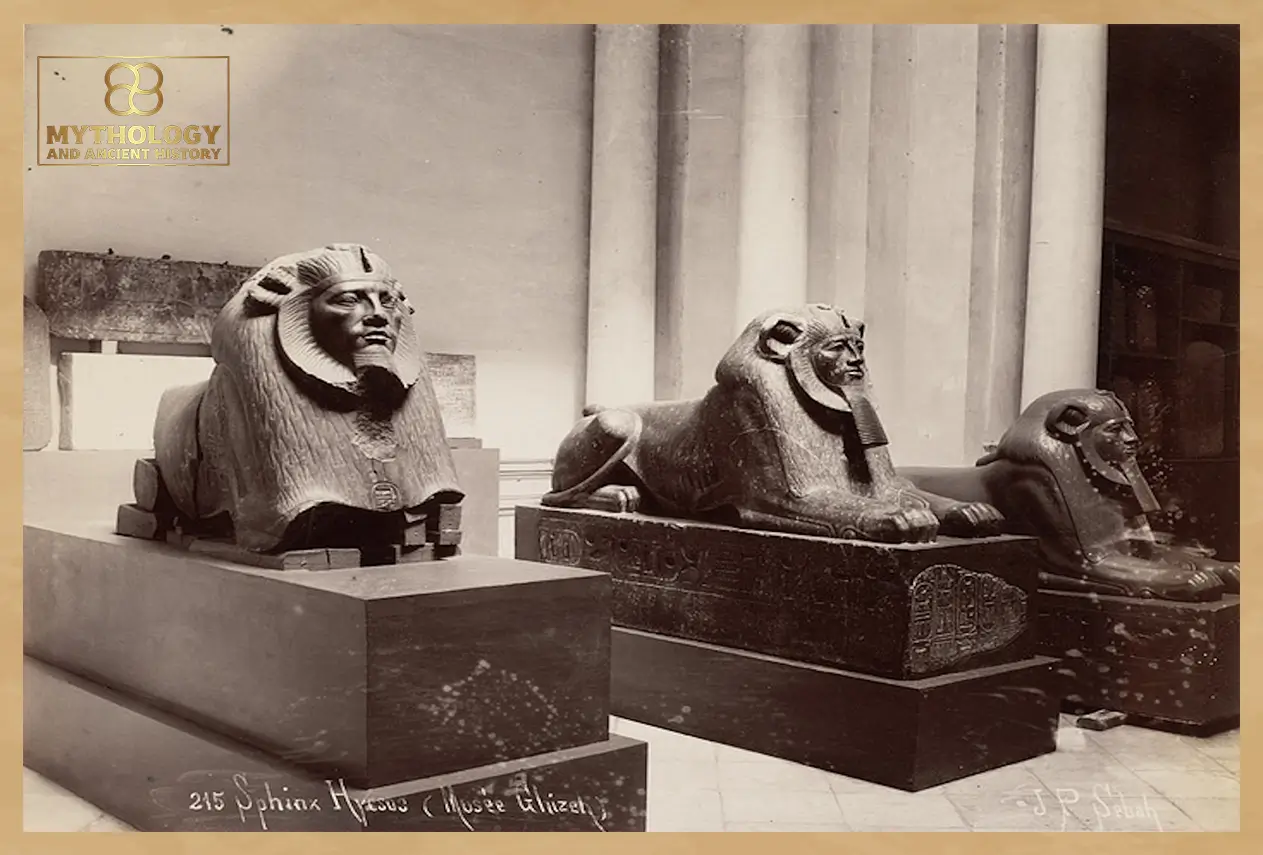
Egypt Before Foreign Rule: How Society Was Organized
Before sustained foreign domination, Egyptian society operated within a locally rooted system of authority where political power, law, economy, and religion were tightly integrated. This integration created a social order that was hierarchical, but internally coherent and broadly understood by the population.
At the top stood the king, whose authority was not merely political but cosmic and religious. Royal power was justified through divine legitimacy rather than foreign force, and this legitimacy shaped how society accepted hierarchy and obedience. Governance flowed downward through Egyptian officials, scribes, priests, and local administrators who shared language, customs, and cultural assumptions with the population they governed.
Social hierarchy under native rule
Egyptian society was stratified, but the divisions were functional rather than exclusionary. Farmers, artisans, soldiers, and priests occupied defined roles within a system that emphasized balance and order rather than racial or foreign distinction. While inequality existed, social status was tied to service, land, and proximity to institutions – not to external identity.
Crucially, elites were Egyptian by origin and culture. Even powerful priesthoods and bureaucratic classes derived legitimacy from participation in Egyptian religious and moral frameworks, reinforcing a shared social identity across classes.
Law, land, and authority
Law in native Egypt was grounded in the principle of Ma’at – a concept combining justice, balance, and cosmic order. Legal authority was not separated from moral or religious expectations, and disputes were handled by courts staffed by Egyptian officials applying Egyptian norms.
Land ownership followed a similar logic. Although much land was technically royal or temple-held, access to land was mediated locally, and taxation operated within a framework that tied agricultural production to state redistribution. This system allowed the state to extract resources while maintaining social stability, particularly in rural communities.
Religion as social cohesion
Religion functioned as a binding force, not a separate institution. Temples were economic centers, employers, and legal actors as much as spiritual spaces. Festivals, rituals, and cult practices reinforced collective identity and legitimized authority in ways that were culturally familiar and locally meaningful.
This religious-social structure meant that power, even when unequal, was perceived as Egyptian and internal, not imposed from outside.
Why this baseline matters
Understanding this pre-foreign framework is essential. Foreign rule did not enter a social vacuum; it disrupted a system where:
- Authority was culturally legitimate
- Law was locally intelligible
- Elites were socially embedded
- Religion reinforced social cohesion
The shock of foreign domination lay not only in political takeover, but in the replacement of internal legitimacy with external control – a shift that fundamentally altered how Egyptians experienced power, justice, and belonging.
| Aspect | Before Foreign Rule | Under Foreign Rule |
|---|---|---|
| Political Authority | Rooted in Egyptian religious and cultural legitimacy | Imposed by external powers with limited local representation |
| Social Hierarchy | Status based on service, land, and religious role | Status tied to proximity to foreign administration and privilege |
| Law and Justice | Unified legal framework grounded in Ma’at | Dual systems with legal inequality and foreign immunity |
| Economic Structure | Production aimed at local stability and redistribution | Economy oriented toward extraction for external markets |
| Rural Life | Local negotiation and communal resilience | Heavier taxation, land loss, and administrative pressure |
| Relationship to Authority | Authority seen as internal and culturally legitimate | Authority perceived as distant, external, and strategic |
Foreign Rule as a Shock to Egyptian Political Life
Foreign rule in Egypt did not simply replace one ruler with another. It introduced a fundamental break in how political power was justified, exercised, and experienced by society. For the first time in long periods of Egyptian history, authority was no longer rooted in local legitimacy but imposed through external control.
Loss of sovereignty and political displacement
Under native rule, political authority was inseparable from Egyptian religious and cultural frameworks. Foreign domination disrupted this link. Whether under the Ptolemaic Kingdom or Roman Egypt, ultimate decision-making power shifted away from Egyptian institutions toward rulers whose legitimacy came from conquest, imperial law, or foreign dynasties rather than Egyptian tradition.
This loss of sovereignty had immediate social consequences. Egyptians were no longer subjects of a ruler who symbolically embodied the land and its cosmic order. Instead, they became governed populations, managed by administrations designed to serve external interests.
Egyptian elites under foreign governors
Foreign rulers rarely governed alone. They relied on local intermediaries-Egyptian scribes, priests, and officials – who were absorbed into foreign administrative systems. While this preserved a degree of continuity, it fundamentally altered elite status.
Egyptian elites now derived power conditionally, dependent on loyalty to foreign authorities rather than on traditional legitimacy. This created a political class caught between two worlds: culturally Egyptian, but politically constrained. Over time, this weakened trust between elites and broader society, as authority increasingly appeared collaborative rather than representative.
Administration without representation
Foreign regimes prioritized efficiency, taxation, and stability over participation. Administrative reforms often centralized authority, reduced local autonomy, and bypassed traditional consultative mechanisms. Decision-making became more bureaucratic and less embedded in community structures.
For ordinary Egyptians, this translated into:
- Fewer channels to influence governance
- Increased distance between rulers and ruled
- A growing perception of government as external and extractive
This political alienation marked a sharp contrast with earlier systems, where authority-however unequal-was still perceived as internally grounded.
Why political shock mattered socially
The political transformation under foreign rule reshaped Egyptian society in lasting ways:
- Authority lost its cultural familiarity
- Obedience shifted from moral duty to enforced compliance
- Political power became associated with foreignness, not collective order
These changes did not remain confined to government. They directly influenced social hierarchy, legal inequality, and economic control-effects that will become clearer in the following sections.
How Foreign Rule Reshaped Social Classes
Foreign rule altered Egyptian society most visibly through class restructuring. It did not erase existing hierarchies; instead, it rearranged them by introducing new privileges, new intermediaries, and new forms of exclusion. Social position increasingly depended on proximity to foreign power rather than on traditional status or service.
The rise of intermediary elites
Foreign administrations depended on Egyptians who could operate between rulers and the population. Scribes, tax collectors, translators, legal clerks, and local administrators became indispensable. This created a new intermediary elite whose authority came from collaboration rather than communal legitimacy.
Under regimes such as the Ptolemaic Kingdom and later Roman Egypt, access to education, language skills (especially Greek), and bureaucratic training determined advancement. Social mobility was no longer primarily religious or local; it was administrative and conditional.
This shift widened the gap between elites and the broader population. Elites were seen as extensions of foreign authority, not as representatives of communal interests.
Foreign privilege versus native status
Foreign populations-soldiers, settlers, administrators, merchants-often enjoyed legal and fiscal privileges unavailable to Egyptians. These privileges included favorable tax treatment, access to special courts, and protection under imperial law.
The result was a dual-status society:
- Foreign residents with institutional protection
- Egyptians subject to heavier taxation and fewer legal safeguards
Status was increasingly defined by origin and affiliation, not by role or contribution. This marked a fundamental break from earlier systems, where hierarchy existed but was culturally internal.
Marginalization of rural Egyptians
The rural population bore the greatest burden of foreign rule. Farmers faced intensified taxation, forced labor obligations, and stricter land controls designed to maximize surplus extraction. Administrative distance meant fewer mechanisms to negotiate or resist local abuses.
Over time, villages became resource zones rather than social communities in the eyes of foreign administrations. This accelerated rural impoverishment and deepened the divide between urban administrative centers and the countryside.
Urban concentration and social fragmentation
Foreign rule strengthened cities as centers of power and privilege. Urban spaces attracted administrators, soldiers, merchants, and service workers tied to foreign economies. While cities offered opportunities, they also became sites of social fragmentation, where Egyptians, foreigners, and mixed communities occupied unequal positions within the same urban landscape.
Urban Egyptians often navigated layered identities-culturally Egyptian but socially constrained within systems that favored outsiders. This produced tension, adaptation, and occasional resistance.
Why class restructuring mattered
The social impact of foreign rule was not temporary. By redefining class around access to foreign institutions, it:
- Weakened traditional social bonds
- Linked advancement to collaboration
- Normalized inequality based on external affiliation
These patterns survived changes in rulers and reappeared in later periods of foreign dominance, laying the groundwork for enduring class divisions and social mistrust.
Law and Justice Under Foreign Control
One of the most profound social changes under foreign rule was the restructuring of justice. Law ceased to function as a shared moral framework and became a layered system that reflected power, origin, and privilege. For Egyptians, this shift altered not only legal outcomes but also how justice was perceived and trusted.
Dual legal systems and unequal justice
Foreign regimes commonly introduced parallel legal systems. Imperial or foreign courts operated alongside local Egyptian courts, but with higher authority and broader protection. In practice, this meant that disputes involving foreigners-or Egyptians connected to foreign institutions-were often removed from local jurisdiction.
Justice was no longer uniform. Legal outcomes depended on:
- Ethnic or civic status
- Institutional affiliation
- Access to foreign courts or protections
This produced a society where equality before the law weakened, and legal certainty became uneven.
Legal privilege and immunity
Foreign residents and officials frequently enjoyed legal immunities. They could appeal to imperial law, consular protection, or special tribunals, while Egyptians remained subject to local courts with limited power. This imbalance fostered resentment and eroded confidence in the justice system.
For Egyptians, law increasingly felt external and asymmetrical-a mechanism that protected some groups while disciplining others. The idea of law as an expression of collective order gave way to law as an instrument of control.
Bureaucratization and distance
Foreign legal systems emphasized documentation, taxation records, and written procedure. While this increased administrative efficiency, it also created distance between people and justice. Navigating courts required literacy, language skills, and familiarity with foreign legal norms-advantages held by intermediaries and elites, not ordinary citizens.
As a result:
- Legal access became stratified
- Disputes took longer and cost more
- Outcomes favored those aligned with foreign administration
Justice became something to be managed, not shared.
Social consequences of legal transformation
The social impact of these legal changes was long-lasting:
- Trust in institutions declined
- Informal and communal dispute resolution grew
- Law became associated with foreign authority, not fairness
Even after periods of foreign rule ended, the memory of unequal justice shaped popular attitudes toward courts and governance, influencing later resistance movements and demands for legal reform.
Why law mattered socially
Legal systems define who belongs and who is protected. Under foreign rule, law marked boundaries:
- Between ruler and ruled
- Between privileged and subject
- Between insider and outsider
This division penetrated daily life, reinforcing class stratification and political alienation in ways that outlasted the regimes themselves.
Economic Life: From Local Production to Foreign Extraction
Foreign rule transformed the Egyptian economy by reorienting it away from local stability and toward external priorities. While Egypt had long supported centralized extraction under native rulers, foreign administrations intensified and redirected this process to serve imperial markets, military needs, and foreign elites.
Taxation as a tool of control
Under foreign regimes, taxation became more systematic and more demanding. Administrations focused on predictable surplus extraction, often prioritizing revenue targets over local conditions. Tax assessments were standardized, rigorously recorded, and strictly enforced.
For rural Egyptians, this meant:
- Less flexibility in bad harvest years
- Increased pressure to meet quotas
- Greater vulnerability to debt and land loss
Taxation shifted from a redistributive mechanism to a disciplinary one, tightening foreign control over local producers.
Land ownership and dispossession
Foreign rule altered patterns of land control. Large estates expanded under state officials, military settlers, and foreign elites, while smallholders faced mounting pressures. Legal frameworks increasingly favored registered ownership and bureaucratic claims-systems that disadvantaged illiterate or rural populations.
In periods such as Ptolemaic Kingdom and Roman Egypt, land became a fiscal asset first and a social resource second. This contributed to:
- Concentration of landholdings
- Decline of independent farming
- Long-term rural impoverishment
Egypt as a supplier, not a decision-maker
Foreign administrations integrated Egypt into imperial supply chains. Grain, textiles, and raw materials were extracted to support foreign capitals, armies, and trade networks. Economic planning responded to external demand rather than local consumption.
This shift reduced Egyptian economic autonomy. Decisions about production, pricing, and distribution were made elsewhere, reinforcing Egypt’s role as a resource base within larger empires.
Urban economies and foreign dominance
Cities benefited unevenly. Urban centers hosting administrative offices, ports, and garrisons experienced growth, but much of the profit flowed to foreign merchants and officials. Egyptians in cities often worked as laborers, clerks, or service providers within systems they did not control.
Economic opportunity existed, but it was hierarchically structured, reinforcing social divisions between foreign beneficiaries and local participants.
Social consequences of economic restructuring
The economic changes under foreign rule reshaped society:
- Wealth became more unevenly distributed
- Rural-urban divides deepened
- Economic survival increasingly required alignment with foreign systems
These pressures altered family structures, labor patterns, and migration, embedding economic inequality into the social fabric.
Why economic change mattered
Economic systems shape daily life. By transforming Egypt from a self-managed agrarian state into an extraction economy, foreign rule changed how Egyptians worked, owned land, and planned for the future. These changes outlasted individual regimes, leaving structural imbalances that persisted into later periods of foreign domination.
Daily Life Under Foreign Rule: What Changed for Ordinary Egyptians
For most Egyptians, foreign rule was not experienced through imperial decrees or distant capitals. It was felt in work routines, household security, mobility, and daily interaction with authority. These changes accumulated slowly, reshaping ordinary life in tangible ways.
Work, wages, and labor obligations
Foreign administrations relied heavily on Egyptian labor. Farmers, builders, transport workers, and artisans were drawn into state projects serving foreign priorities. While labor obligations had existed before, foreign rule expanded and formalized them.
Wages were often fixed or delayed, and labor demands became more rigid. In some periods, forced labor obligations increased, particularly for infrastructure, military supply chains, and large-scale agricultural production. For ordinary workers, this reduced autonomy and increased dependence on state-controlled systems.
Rural life under pressure
Rural Egyptians experienced foreign rule primarily through tax collectors and administrators, not governors. Increased taxation, land registration, and enforcement reduced flexibility in village life. Seasonal hardship, once managed locally, now carried higher risks of punishment or dispossession.
Villages became more exposed to:
- Debt accumulation
- Loss of land
- Migration pressures
Daily life in the countryside grew more precarious, even when agricultural output remained high.
Urban experience and social exposure
Cities offered both opportunity and constraint. Urban Egyptians encountered foreign soldiers, merchants, languages, and customs in everyday settings-markets, ports, administrative offices. This exposure expanded horizons but also reinforced hierarchy.
Urban life demanded adaptation:
- Learning foreign languages or scripts
- Navigating unfamiliar legal procedures
- Accepting subordinate roles within foreign-dominated institutions
For many, cities became places of social negotiation, not empowerment.
Cultural pressure and selective adaptation
Foreign rule introduced new cultural practices, administrative norms, and social expectations. Egyptians did not simply absorb or reject these influences. Instead, they practiced selective adaptation-adopting what was useful while preserving core cultural and religious traditions.
Dress, language use, education, and professional behavior evolved unevenly. Change was pragmatic, not ideological, shaped by survival rather than loyalty.
Psychological distance from authority
Perhaps the most subtle change was psychological. Authority became less personal and less culturally familiar. Officials were often seen as representatives of distant powers, not as guardians of communal order.
This distance altered everyday behavior:
- Increased caution in dealing with officials
- Greater reliance on informal networks
- Reduced expectation of fairness
Obedience shifted from moral obligation to strategic compliance.
Why daily life matters historically
Large political changes are only meaningful when reflected in daily experience. Under foreign rule, ordinary Egyptians lived in a society where:
- Work served external systems
- Security depended on compliance
- Adaptation became a survival skill
These everyday realities shaped long-term attitudes toward authority, law, and identity-effects that extended far beyond the period of foreign domination itself.
Resistance, Adaptation, and New Egyptian Identities
Foreign rule did not produce a single Egyptian response. Society reacted through a spectrum of behaviors ranging from quiet adaptation to open resistance. These responses reshaped how Egyptians understood authority, community, and themselves.
Passive resistance and survival strategies
For long stretches of foreign domination, resistance took non-confrontational forms. Avoidance of officials, manipulation of records, informal agreements, and reliance on local networks allowed communities to survive within restrictive systems.
This passive resistance was not apathy. It was a rational response to power asymmetry. By minimizing exposure to foreign authority, Egyptians preserved social cohesion and limited the reach of external control in everyday life.
Cultural preservation beneath foreign systems
Despite administrative and legal changes, core cultural practices endured. Religious rituals, local traditions, family structures, and moral frameworks continued largely unchanged at the communal level. Temples, villages, and households became spaces of cultural continuity.
Foreign rule imposed systems, but it did not erase identity. Egyptians adapted outwardly while maintaining inward coherence-a pattern repeated across centuries.
Selective collaboration and social tension
Some Egyptians chose collaboration as a path to stability or advancement. These individuals often occupied intermediary roles within foreign administrations. While collaboration offered protection and opportunity, it also generated social tension.
Collaborators were frequently viewed with suspicion. Their position highlighted a growing divide between survival through accommodation and dignity through distance. This tension reshaped social trust and redefined notions of loyalty.
From adaptation to organized resistance
Over time, especially in later periods of foreign domination, adaptation gave way to more organized resistance. Collective memory of inequality, legal exclusion, and economic pressure accumulated into broader movements.
Formation of new Egyptian identities
Foreign rule paradoxically contributed to the formation of modern Egyptian identity. Shared experience of external domination fostered a sense of collective grievance and common destiny that transcended local divisions.
Identity shifted:
- From local affiliation to national consciousness
- From religious legitimacy to political solidarity
- From passive endurance to articulated rights
Foreign rule, intended to control, ultimately helped crystallize the idea of Egypt as a nation defined by its people rather than its rulers.
Why identity transformation matters
Social identity shapes political future. By forcing Egyptians to negotiate power, loyalty, and belonging under foreign systems, foreign rule accelerated the transition from ancient frameworks of authority to modern concepts of citizenship and resistance.
These identities did not emerge fully formed-they were forged through constraint, adaptation, and struggle.
How Foreign Rule Changed Egyptian Society
- Political legitimacy shifted from culturally rooted authority to externally imposed control.
- Social status was redefined around access to foreign administration rather than communal role.
- Law became unequal, with parallel systems favoring foreign or protected groups.
- The economy was redirected toward extraction and imperial needs instead of local stability.
- Daily life grew more precarious, especially in rural communities facing heavier taxation and labor demands.
- Authority became distant, encouraging adaptation, informal networks, and passive resistance.
© historyandmyths.com — Educational use
Long-Term Social Legacies of Foreign Rule
Foreign rule in Egypt did not end cleanly with the departure of foreign rulers. Its deepest impact survived in institutions, social structures, and collective attitudes. These legacies shaped post-foreign society long after political control formally changed hands.
Legal and administrative inheritance
One of the most durable legacies was institutional. Administrative practices introduced under foreign regimes-centralized bureaucracy, written documentation, hierarchical decision-making-became normalized. Even after independence, governance continued to operate through frameworks shaped by external models rather than indigenous traditions.
Legal systems reflected this continuity. Hybrid structures developed under foreign dominance influenced later reforms, embedding foreign legal logic into national institutions. Law remained professionalized and centralized, but often distant from popular trust.
Enduring class divisions
Foreign rule entrenched structural inequality by tying advancement to access, education, and institutional alignment rather than communal standing. After foreign rulers left, these patterns did not disappear. Elites trained within foreign systems retained advantages in administration, law, and commerce.
This created a post-foreign society where:
- Social mobility remained uneven
- Rural-urban divides persisted
- Authority continued to feel distant from large segments of the population
Class divisions forged under foreign rule proved difficult to dismantle.
Social mistrust of authority
Perhaps the most intangible legacy was psychological. Generations of Egyptians had learned to treat authority as external, strategic, and unreliable. Compliance became a survival tactic rather than a civic relationship.
Even under national governments, this legacy influenced behavior:
- Preference for informal networks over institutions
- Skepticism toward official justice
- Limited expectation of accountability
Foreign rule reshaped how society related to power itself.
Cultural resilience alongside institutional change
Despite these continuities, foreign rule failed to erase cultural foundations. Language, religion, family structures, and social customs remained largely Egyptian. This coexistence-foreign institutions layered over resilient culture-produced a society that was institutionally altered but culturally continuous.
The tension between these layers defined much of modern Egyptian social life.
Why foreign rule still matters socially
Foreign rule matters not because it happened, but because its mechanisms persisted. It trained society to operate within systems not fully its own, shaping attitudes toward law, class, and governance.
Understanding these legacies clarifies why social reform in Egypt has often faced resistance, mistrust, and structural inertia. Foreign rule did not simply interrupt Egyptian society-it reconfigured it in ways that proved remarkably durable.
Key Takeaways
- Foreign rule reshaped Egyptian society through administration, law, and economic control—not just military conquest.
- Social hierarchy shifted from culturally rooted status to privilege tied to foreign authority.
- Legal systems under foreign rule created inequality and long-term mistrust in justice.
- Economic extraction under foreign administrations deepened rural hardship and class divisions.
- Everyday life became defined by adaptation, compliance, and informal survival strategies.
- The social legacies of foreign rule persisted long after political control ended.
Frequently Asked Questions
How did foreign rule change Egyptian society?
Foreign rule reshaped Egyptian society by altering political authority, legal systems, social hierarchy, and economic life, shifting power away from locally rooted institutions toward external control.
Was foreign rule in Egypt only a military occupation?
No. While foreign rule often began with conquest, its lasting impact came from administrative systems, taxation, law, and social restructuring rather than continuous military presence.
How did foreign rule affect Egyptian social classes?
Foreign administrations created new intermediary elites linked to foreign power, while rural populations and lower classes faced heavier taxation, legal inequality, and reduced social mobility.
Did foreign rulers change Egyptian law?
Yes. Foreign rule introduced parallel legal systems that favored foreign residents and collaborators, weakening legal equality and long-term trust in justice.
How did everyday life change for ordinary Egyptians under foreign rule?
Daily life became more regulated and precarious, shaped by taxation, labor obligations, administrative oversight, and the need to adapt to distant authorities.
Did Egyptians resist foreign rule?
Resistance took many forms, from passive avoidance and informal practices to organized political movements, especially in later periods of foreign domination.
What long-term effects did foreign rule leave on Egyptian society?
Foreign rule left enduring legacies in governance, class structure, legal institutions, and social attitudes toward authority that persisted long after political independence.
Sources & Rights
- Bagnall, Roger S. Egypt in Late Antiquity. Princeton: Princeton University Press, 1993.
- Bagnall, Roger S. Reading Papyri, Writing Ancient History. London: Routledge, 1995.
- Bowman, Alan K. Egypt After the Pharaohs: 332 BC–AD 642. Berkeley: University of California Press, 1996.
- Bowman, Alan K., and Dominic Rathbone. “Cities and Administration in Roman Egypt.” In The Cambridge Ancient History, Vol. XI. Cambridge: Cambridge University Press.
- Britannica, Encyclopaedia. “Egypt: Society and Foreign Rule.” Encyclopaedia Britannica.
- Cole, Juan R. I. Colonialism and Revolution in the Middle East. Princeton: Princeton University Press, 1993.
- Hobsbawm, Eric. The Age of Empire: 1875–1914. New York: Vintage Books, 1989.
- Kemp, Barry J. Ancient Egypt: Anatomy of a Civilization. 2nd ed. London: Routledge, 2006.
- Lewis, Naphtali. Life in Egypt Under Roman Rule. Oxford: Oxford University Press, 1983.
- Marsot, Afaf Lutfi al-Sayyid. Egypt and Cromer: A Study in Anglo-Egyptian Relations. New York: Praeger, 1968.
- Marsot, Afaf Lutfi al-Sayyid. A Short History of Modern Egypt. Cambridge: Cambridge University Press, 1985.
- Mitchell, Timothy. Colonising Egypt. Berkeley: University of California Press, 1988.
- Oxford Research Encyclopedia of African History. “Colonial Legacies and Social Change in Egypt.” Oxford University Press.
- Rathbone, Dominic. “Economic Rationalism and Rural Society in Roman Egypt.” Journal of Roman Studies 75 (1985): 45–67.
- Rathbone, Dominic. “Villages, Land, and Population in Graeco-Roman Egypt.” Proceedings of the Cambridge Philological Society 36 (1990): 103–142.
- Trigger, Bruce G., Barry J. Kemp, David O’Connor, and Alan B. Lloyd. Ancient Egypt: A Social History. Cambridge: Cambridge University Press, 1983.
- Wilkinson, Toby. The Rise and Fall of Ancient Egypt. New York: Random House, 2010.
- Woolf, Greg. Becoming Roman: The Origins of Provincial Civilization in Gaul. Cambridge: Cambridge University Press, 1998.
- Yoffee, Norman. Myths of the Archaic State: Evolution of the Earliest Cities, States, and Civilizations. Cambridge: Cambridge University Press, 2005.
- Zeleza, Paul Tiyambe. Colonialism and African Political Thought. Cambridge: Cambridge University Press, 2020.
Written by H. Moses — All rights reserved © Mythology and History