How Religion and Political Power Shaped Ancient Egypt
In ancient Egypt, political power could not exist without religion. Authority was not enforced by laws or armies alone, but by a shared belief that the ruler’s power was divinely sanctioned. To govern effectively, a king had to rule both the state and the sacred order that justified it.
Religion provided legitimacy, stability, and obedience-but it also created powerful institutions of its own. Temples controlled land, wealth, labor, and knowledge. Priests managed rituals that sustained cosmic order, yet their influence often extended far beyond religious life. At times, this partnership strengthened the throne; at others, it challenged it.
This article explains how religion functioned as a political system in ancient Egypt. It examines how divine authority supported royal rule, how temples became centers of power, and when religious institutions began to limit or rival the king’s authority. By the end, the reader will understand religion not as belief alone, but as a central force shaping political control and state stability.
The Pharaoh and Divine Authority
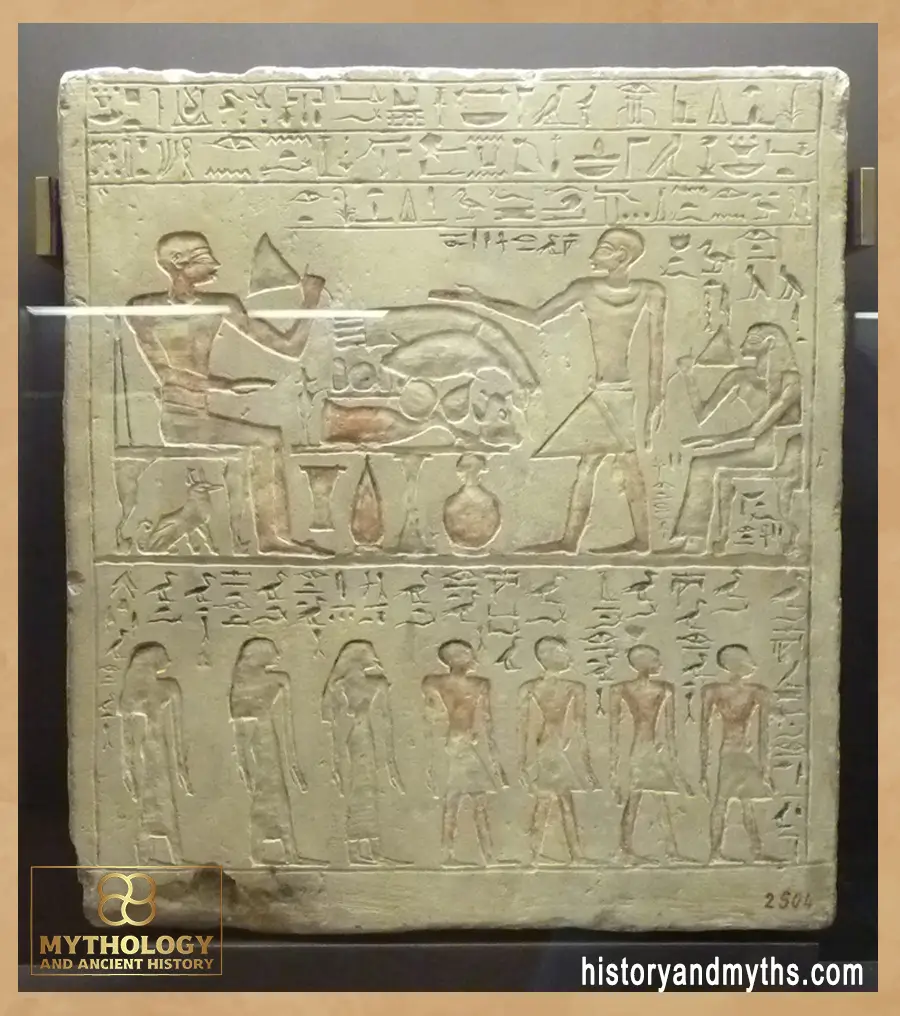
The pharaoh’s power was rooted in religion, but he was not simply worshiped as a god in everyday political practice. His authority came from being the mediator between the divine world and human society. This role justified his right to rule, issue commands, and maintain order across Egypt.
Divine authority worked as a political framework. By presenting the king as chosen by the gods, the state transformed obedience into a moral and cosmic duty, not just a legal one. Loyalty to the pharaoh meant loyalty to ma’at-the principle of order, balance, and justice that held the universe together. Disobedience, therefore, was not only rebellion against the king but a threat to cosmic stability.
This system reduced the need for constant coercion. People obeyed not because they were always forced to, but because authority appeared natural and sacred. Royal decrees, building projects, and military actions were framed as acts carried out on behalf of the gods, making political decisions appear inevitable rather than negotiable.
At the same time, divine authority-imposed limits. A pharaoh who failed to maintain order, prosperity, or stability risked being seen as unfit in the eyes of both gods and people. Religious legitimacy strengthened power, but it also created expectations that rulers were expected to fulfill.
| Element | Religious Function | Political Impact |
|---|---|---|
| Pharaoh | Mediator between gods and people, guardian of ma’at | Legitimized authority and framed obedience as a cosmic duty |
| Temples | Centers of ritual, knowledge, and divine service | Controlled land, labor, and wealth, creating institutional power |
| Priesthood | Interpreters of divine will and ritual specialists | Influenced decisions, policy enforcement, and local governance |
| Rituals & Oracles | Validation of divine approval | Justified or delayed political actions without open conflict |
| Periods of Weak Rule | Religious continuity during instability | Allowed religious institutions to rival or replace royal authority |
| Balance of Power | Religion aligned with kingship | Stability when integrated, fragmentation when autonomous |
Why Religion Became the Foundation of Political Authority
Ancient Egypt did not rely on religion simply because its people were deeply religious. Religion became the foundation of political authority because it offered the most effective way to unite a vast kingdom under a single ruler. By connecting government with divine order, the state transformed obedience from a political obligation into a moral responsibility shared across society.
This approach reduced the need for constant military enforcement. Most Egyptians accepted royal authority because it was presented as part of ma’at, the universal order established by the gods. Respect for the pharaoh therefore supported not only the stability of the government but also the stability of the cosmos itself. Political loyalty and religious belief reinforced one another.
Religion also provided continuity across generations. While individual rulers died, the sacred principles that legitimized kingship remained unchanged. This continuity allowed dynasties to succeed one another without forcing the state to create a new political ideology whenever a new pharaoh ascended the throne.
For this reason, religion should not be viewed merely as a companion to government in ancient Egypt. It was the political framework that gave authority its meaning, justified central rule, and helped maintain one of the longest-lasting states in human history.
Temples as Centers of Power
Temples in ancient Egypt were not passive religious spaces. They functioned as major economic and administrative institutions that directly affected political power. Through royal endowments and donations, temples accumulated vast lands, workshops, storage facilities, and labor forces.
This economic base gave temples real leverage. They managed agricultural production, controlled surplus distribution, and employed large numbers of workers and scribes. In practice, a powerful temple could influence local economies and shape regional stability, making it an essential partner-or competitor-for the state.
Temples also served as centers of knowledge and record-keeping. Priests oversaw rituals, calendars, and sacred texts, but they also preserved administrative expertise. This meant political authority often depended on temple cooperation to function smoothly, especially outside the royal court.
The political impact of temples varied over time. When royal authority was strong, temples reinforced the king’s rule by promoting divine legitimacy. When the throne weakened, the same institutions could operate with greater autonomy, sometimes filling power vacuums. Temples were therefore not merely religious institutions-they were structural pillars of political life.
Priests and Political Influence
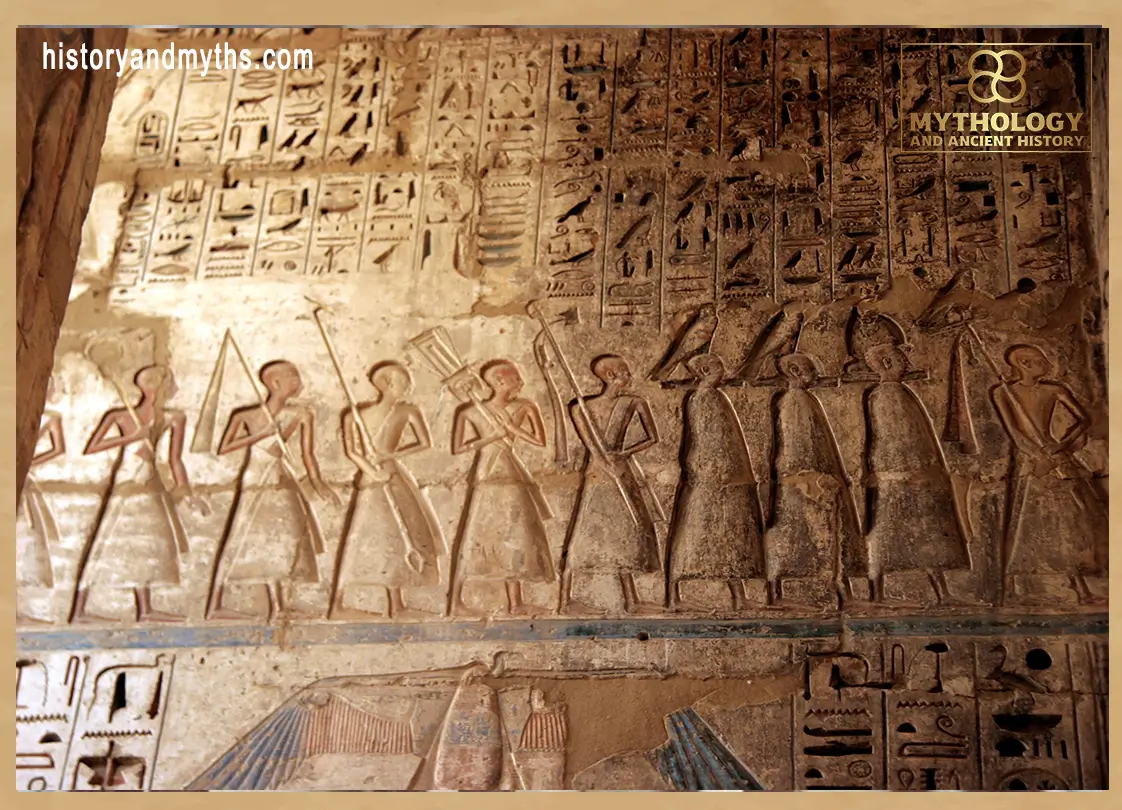
Priests in ancient Egypt were not separate from politics; they operated within it. Their authority came from control over rituals, temples, and religious knowledge, but their influence extended into administration, economics, and decision-making at both local and national levels.
High-ranking priests managed temple estates, supervised labor, and controlled significant resources. This gave them political weight, especially in regions where temple wealth rivaled royal administration. In some cases, priests acted as intermediaries between the population and the state, shaping how royal policies were implemented or interpreted.
Religious expertise also translated into symbolic power. Priests controlled access to divine will through oracles, festivals, and rituals that validated political actions. When a policy or ruler aligned with religious authority, it gained legitimacy. When it did not, resistance could emerge subtly through ritual silence, reinterpretation, or delay.
The balance between king and priesthood was therefore dynamic. Under strong rulers, priests reinforced royal authority. During weaker periods, their autonomy increased, sometimes allowing religious institutions to dominate regional politics. This relationship shows that political power in ancient Egypt was shared, negotiated, and occasionally contested-not monopolized by the throne alone.
Religion as Stability and Control
Religion functioned as a stabilizing system in ancient Egypt because it translated political authority into moral obligation. By framing order, obedience, and hierarchy as divinely sanctioned, the state reduced the need for constant force. People followed authority not only out of fear, but out of belief that stability itself was sacred.
This system worked most effectively during periods of strong central rule. Temples, rituals, and festivals reinforced loyalty to the king by presenting his authority as necessary for maintaining cosmic balance. Public religion aligned individual behavior with state interests, encouraging compliance through shared values rather than coercion alone.
Religion also provided continuity during transitions. When rulers changed or crises emerged, religious institutions offered a sense of permanence that softened political disruption. Ritual cycles, priestly administration, and sacred narratives helped society absorb change without collapsing into disorder.
However, stability depended on balance. Religion supported power only when it remained aligned with royal authority. Once religious institutions accumulated independent influence, the same system that once stabilized the state could complicate governance. Religion was therefore not automatically stabilizing-it was stabilizing when integrated, and disruptive when autonomous.
Political Power and Religion — Core Insight
- Religion was not separate from politics in ancient Egypt; it functioned as a system of governance.
- Divine authority legitimized royal power and reduced the need for constant coercion.
- Temples acted as economic and administrative centers, not only places of worship.
- Priests held political influence through control of resources, ritual authority, and knowledge.
- Religion stabilized the state when aligned with kingship.
- When religious institutions became autonomous, they could rival or replace royal authority.
© historyandmyths.com — Educational use
When Religion Challenged Power
Religion challenged political authority when religious institutions gained independence from the crown. This shift usually happened during periods of weak central rule, economic strain, or political fragmentation. As royal power declined, temples and priesthoods filled gaps in governance, gradually transforming religious influence into political leverage.
The clearest example comes from the growing power of the priesthood of Amun in Thebes during the late New Kingdom. Temple estates expanded, wealth accumulated, and priestly offices became hereditary in practice. Control over land, labor, and resources allowed the priesthood to operate with increasing autonomy, sometimes rivaling royal administration in Upper Egypt.
This process culminated in figures such as Herihor, who held both religious and political authority. By combining priestly legitimacy with administrative control, he effectively governed large parts of Egypt without holding the traditional royal title. His rule demonstrates how religious authority could substitute for kingship when dynastic power weakened.
Religious mechanisms also played a subtler role in limiting royal authority. Oracles and ritual validation could be used to delay, redirect, or justify political decisions. While framed as divine will, these practices often reflected institutional interests within the priesthood. Power was not openly seized but gradually negotiated through religious legitimacy.
These cases reveal a crucial reality: religion in ancient Egypt was not inherently submissive to the state. It was a powerful system that could support political order-or reshape it-depending on where authority, resources, and legitimacy were concentrated.
Key Takeaways
- Political power in ancient Egypt was inseparable from religious legitimacy.
- The pharaoh ruled as a divine mediator, turning obedience into a moral duty.
- Temples functioned as economic and administrative power centers.
- Priests influenced politics through resources, rituals, and control of knowledge.
- Religion stabilized the state when aligned with royal authority.
- When religious institutions gained autonomy, they could challenge or replace royal power.
Frequently Asked Questions (FAQ)
How were religion and political power connected in ancient Egypt?
Religion provided legitimacy for political power by presenting the pharaoh as divinely sanctioned. This turned obedience to the ruler into a moral and cosmic obligation.
Was the pharaoh considered a god or a ruler?
The pharaoh was primarily a ruler who acted as a mediator between the gods and the people. His authority came from maintaining divine order rather than being worshiped as a god in daily governance.
Did temples have political power in ancient Egypt?
Yes. Temples controlled land, labor, and wealth, making them powerful economic and administrative institutions with real political influence.
What role did priests play in politics?
Priests influenced politics by managing temple resources, interpreting divine will, and validating or challenging political decisions through ritual authority.
Did religion always support royal authority?
No. While religion often stabilized the state, religious institutions could challenge royal authority when they gained autonomy, especially during periods of weak central rule.
How did religion help maintain stability in ancient Egypt?
Religion reinforced social order by aligning political authority with cosmic balance, encouraging obedience through belief rather than constant force.
Can religion be linked to political decline in ancient Egypt?
Yes. When religious institutions accumulated excessive power and resources, they sometimes rivaled the monarchy, contributing to political fragmentation.
Sources & Rights
- Assmann, Jan. The Mind of Egypt: History and Meaning in the Time of the Pharaohs. Cambridge, MA: Harvard University Press, 2002.
- Baines, John. “Kingship, Definition of Culture, and Legitimation.” In Ancient Egyptian Kingship, edited by David O’Connor and David P. Silverman. Leiden: Brill, 1995.
- Breasted, James Henry. A History of Egypt: From the Earliest Times to the Persian Conquest. New York: Charles Scribner’s Sons, 1905.
- David, Rosalie. Religion and Magic in Ancient Egypt. London: Penguin Books, 2002.
- Frankfort, Henri. Kingship and the Gods. Chicago: University of Chicago Press, 1948.
- Grimal, Nicolas. A History of Ancient Egypt. Translated by Ian Shaw. Oxford: Blackwell Publishing, 1992.
- Hornung, Erik. Conceptions of God in Ancient Egypt: The One and the Many. Ithaca, NY: Cornell University Press, 1982.
- Kemp, Barry J. Ancient Egypt: Anatomy of a Civilization. 2nd ed. London: Routledge, 2006.
- Moreno García, Juan Carlos. Ancient Egyptian Administration. Leiden: Brill, 2013.
- O’Connor, David. “The Nature of Egyptian Kingship.” In Ancient Egyptian Kingship, edited by David O’Connor and David P. Silverman. Leiden: Brill, 1995.
- Quirke, Stephen. The Cult of Ra: Sun-Worship in Ancient Egypt. London: Thames & Hudson, 2001.
- Redford, Donald B. Akhenaten: The Heretic King. Princeton: Princeton University Press, 1984.
- Shaw, Ian, ed. The Oxford History of Ancient Egypt. Oxford: Oxford University Press, 2000.
- Spalinger, Anthony J. Religion and the State in Ancient Egypt. London: Routledge, 2009.
- Trigger, Bruce G., Barry J. Kemp, David O’Connor, and Alan B. Lloyd. Ancient Egypt: A Social History. Cambridge: Cambridge University Press, 1983.
- Van de Mieroop, Marc. A History of Ancient Egypt. Malden, MA: Wiley-Blackwell, 2011.
- Wilkinson, Richard H. The Complete Gods and Goddesses of Ancient Egypt. London: Thames & Hudson, 2003.
- Wilkinson, Toby A. H. The Rise and Fall of Ancient Egypt. New York: Random House, 2010.
Written by H. Moses — All rights reserved © Mythology and History