Periods of Decline and Social Crisis in Ancient Egypt
Periods of decline in ancient Egypt were not defined only by falling dynasties or foreign invasions. For ordinary people, decline was experienced through unpaid wages, food shortages, rising insecurity, and the breakdown of justice. These crises left traces not just in royal annals, but in complaints, letters, and pessimistic texts that reveal how society felt when order collapsed.
This article examines periods of decline and social crisis in ancient Egypt from the perspective of how instability actually worked on the ground. Instead of listing dates and rulers, it explains the concrete signs of decline, how daily life changed, and why these crises mattered for the long-term development of Egyptian society. By focusing on evidence from texts, administration, and social conditions, the article shows that decline was not simply failure-it was a transformative force that reshaped power, belief, and community.
What Defines a Period of Decline in Ancient Egypt?
A period of decline in ancient Egypt was not marked by chaos overnight, nor was it always accompanied by invasion or the collapse of kingship. Instead, decline can be identified through a set of practical social and administrative indicators that reveal when the system stopped functioning for ordinary people.
One of the clearest signs was the failure of state distribution. When the central administration weakened, wages-often paid in grain-were delayed or reduced. Workers, scribes, and temple personnel depended on these rations for survival. When deliveries stopped, hunger followed, even if the king still ruled in name.
Another defining feature was the breakdown of justice. Legal systems continued to exist on paper, but corruption, favoritism, and the inability to enforce rulings became widespread. Texts from crisis periods repeatedly complain that the poor could no longer rely on courts, while officials abused their positions without consequence.
Economic stress also revealed decline. Reduced agricultural output-often linked to low Nile floods-strained storage systems and local economies. Trade slowed, state building projects were abandoned, and regional officials began acting independently when resources no longer flowed from the center.
Perhaps most importantly, decline was felt as the collapse of trust. People stopped believing that authority protected order. This loss of confidence appears in pessimistic writings that describe a world turned upside down: servants becoming masters, theft replacing law, and fear dominating daily life. These texts are not exaggerations of chaos but reflections of a society aware that its foundations were cracking.
In short, decline in ancient Egypt was not a single event. It was a process-visible in administration, justice, economy, and psychology-long before political collapse became obvious.
| Indicator of Decline | What Changed | Impact on Society |
|---|---|---|
| State Distribution | Delayed or missing grain rations and wages | Food insecurity, hunger, and worker unrest |
| Justice System | Corruption and weak enforcement of law | Loss of trust, social resentment, and inequality |
| Central Authority | Reduced royal control over provinces | Rise of local power holders and fragmentation |
| Economy & Labor | Abandoned projects and irregular employment | Economic instability and declining living standards |
| Social Order (Ma’at) | Perceived collapse of moral and cosmic balance | Pessimistic literature and fear of disorder |
| Political Continuity | Kingship survived without effective governance | Decline as a prolonged condition, not sudden collapse |
Social Crisis and Daily Life: How Ordinary People Were Affected
Social crisis in ancient Egypt became visible when everyday life stopped following its expected rhythms. For most people, decline was not experienced through politics but through disruption to work, food, and safety. These changes affected farmers, laborers, scribes, and soldiers alike, cutting across social classes.
One of the most direct impacts was food insecurity. When state granaries failed to redistribute grain reliably, households were forced to rely on local networks or personal reserves. This situation hit urban workers especially hard, as they depended almost entirely on rations rather than subsistence farming. Hunger, not war, was often the most immediate threat during periods of decline.
Labor conditions also deteriorated. State-sponsored projects slowed or stopped altogether, leaving skilled workers without steady employment. In some cases, workers continued to labor without pay, hoping arrears would eventually be settled. Complaints preserved in texts show frustration, desperation, and a growing sense that the state had broken its obligations.
Security weakened as well. With fewer resources for policing and administration, theft and local violence increased. People no longer trusted officials to protect property or enforce law. This insecurity reinforced social fragmentation, as communities turned inward for protection rather than relying on centralized authority.
Even social values shifted under pressure. Hierarchies that once felt stable became fragile. Texts from crisis periods describe resentment toward elites and officials, reflecting the perception that privilege continued while responsibility vanished. These reactions reveal a society not simply suffering hardship, but actively reassessing its moral order.
Social crisis, therefore, was not just material. It reshaped relationships, expectations, and beliefs. Daily life became unpredictable, and survival depended less on the state and more on adaptability and local support.
Evidence of Crisis: Texts, Complaints, and Pessimistic Literature
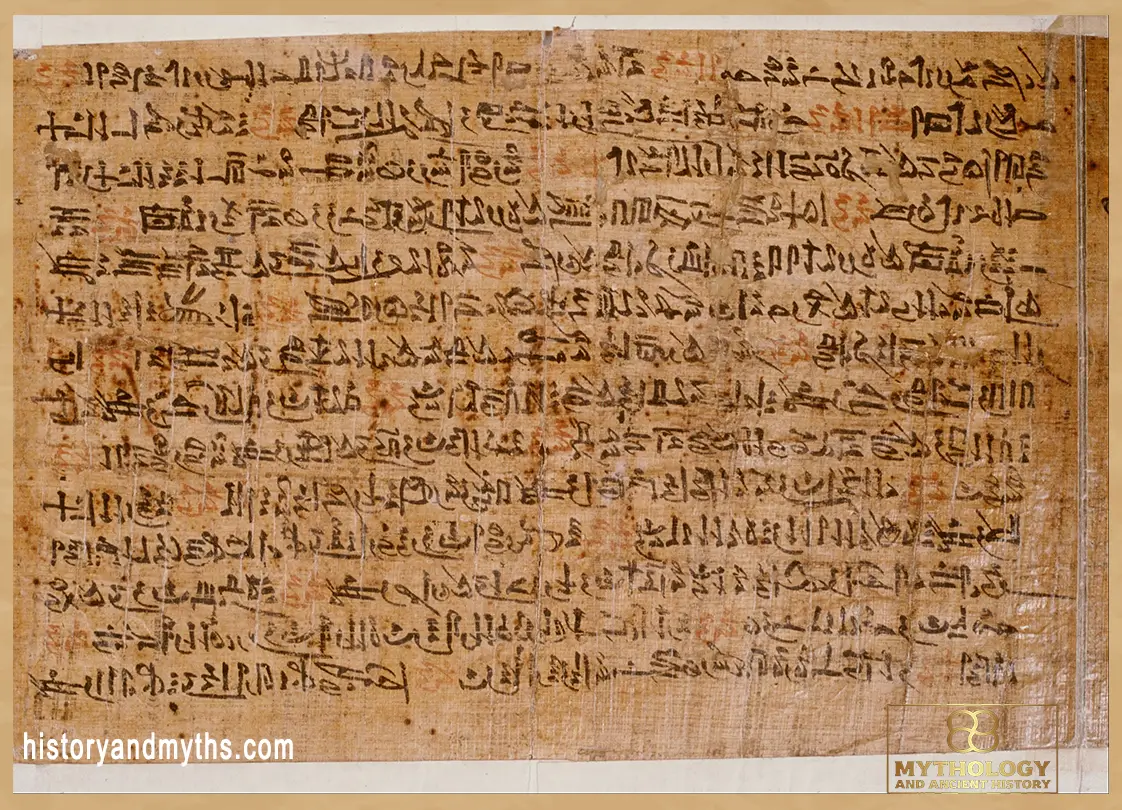
Periods of decline in ancient Egypt are not inferred only from archaeology or later historians. They are documented by contemporary voices that recorded frustration, injustice, and fear in writing. These sources allow us to see crisis as it was experienced, not as it was later summarized.
One key category of evidence comes from complaint texts and petitions. Letters written by officials, workers, and local administrators describe unpaid wages, missing supplies, and abuse by superiors. These documents show that people expected the state to function-and felt betrayed when it did not. Complaints were not acts of rebellion; they were attempts to restore a system that had failed them.
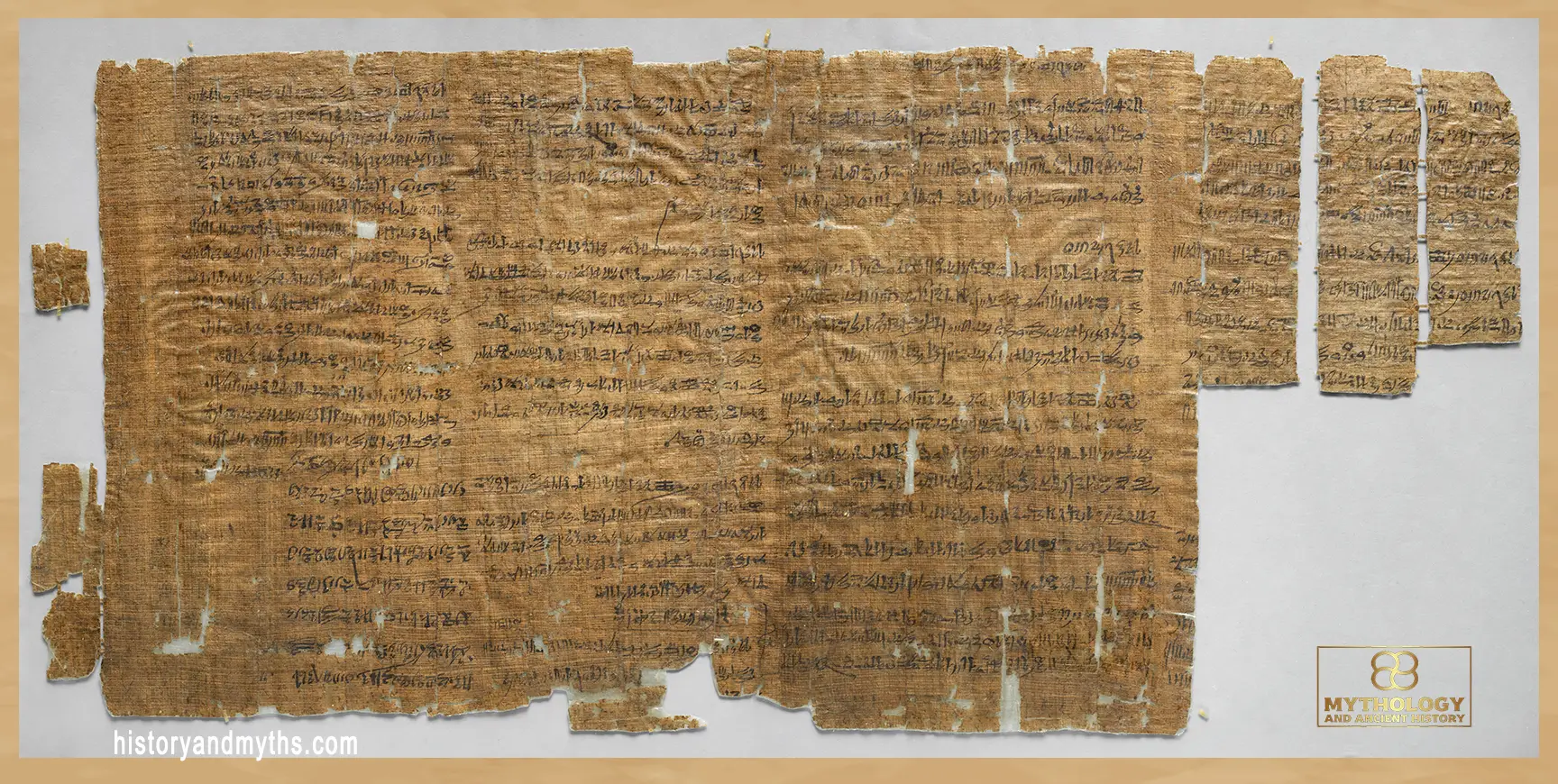
Another powerful body of evidence is pessimistic and moral literature. Texts often grouped under modern labels such as “lamentations” describe a world where order has collapsed: law no longer protects the weak, violence replaces justice, and social roles are inverted. While these writings use exaggeration and symbolism, they reflect real anxieties about the breakdown of authority and moral balance.
Administrative records also reveal decline indirectly. Gaps in documentation, reduced building inscriptions, and the disappearance of large-scale state projects suggest shrinking resources and weakened coordination. Silence in the records can be as revealing as explicit complaint.
What makes these sources especially valuable is their consistency. Different genres-letters, literary texts, and administrative traces-point to the same problems: failing distribution, injustice, and loss of trust. Together, they confirm that social crisis was not imagined or purely ideological. It was a lived reality, recorded by those struggling within it.
These texts do not describe total collapse. Instead, they show a society attempting to understand why order had failed and whether it could be restored. In that sense, the written evidence of crisis is also evidence of resilience.
Political Weakness and the Fragmentation of Authority
Social crisis in ancient Egypt did not emerge in isolation. It was closely tied to political weakness at the center and the gradual fragmentation of authority across the country. When central power weakened, the mechanisms that connected administration, economy, and justice began to unravel.
One major factor was the loss of effective central control. Kingship continued in name, but the ability of the royal court to enforce decisions across regions declined. Provincial officials gained autonomy, not through rebellion, but through necessity. When orders, supplies, or oversight no longer arrived from the capital, local authorities acted independently to keep systems running.
This decentralization altered the balance of power. Officials who once served as extensions of royal authority began to function as regional power holders. In some periods, these local elites controlled taxation, labor, and security without consistent reference to the crown. The state did not collapse-it fractured.
Political weakness also affected succession. Unclear inheritance, short reigns, or rival claimants undermined continuity. Each transition increased uncertainty, making long-term planning impossible. Administration became reactive rather than strategic, focusing on survival instead of governance.
The fragmentation of authority had direct social consequences. Without a strong center to guarantee fairness, local justice varied widely. Protection depended on proximity to power rather than law. This unevenness intensified perceptions of injustice already visible in complaint texts.
Importantly, fragmentation was not always violent. Egypt’s political system eroded quietly through administrative exhaustion. Authority drained away as confidence in central leadership faded. What remained was a network of local powers connected loosely by tradition, not by effective command.
This political fragmentation explains why social crises could persist for generations. Without unified authority, reform was slow, partial, or impossible. Decline became a condition rather than a moment.
Periods of Decline — Core Insight
- Decline was a process measured by failed distribution, weakened justice, and loss of trust—not only by dynasties and battles.
- Social crisis was felt first in food, wages, security, and the reliability of law.
- Written evidence (complaints and pessimistic literature) captures real anxieties about collapsing order.
- Political fragmentation often happened quietly as regional officials filled gaps left by the center.
- Decline did not always mean collapse; society adapted through local networks and temple institutions.
- Recovery required restoring resources, legitimacy, and everyday justice—not merely replacing rulers.
© historyandmyths.com — Educational use
Did Decline Mean Collapse? Continuity, Adaptation, and Recovery
Decline in ancient Egypt did not usually mean total collapse. While political authority weakened and social conditions deteriorated, many core structures of Egyptian society continued to function, albeit in altered forms. Understanding this distinction is essential to avoid viewing crisis as simple failure.
Administrative practices often survived at the local level. Even when central oversight failed, scribes continued to record transactions, resolve disputes, and manage resources within their communities. These local adaptations helped preserve a basic level of order, preventing complete breakdown.
Religion also played a stabilizing role during periods of crisis. While trust in rulers could falter, belief in cosmic order endured. Religious practices shifted from state-centered rituals to more personal forms of devotion. Temples and local cults offered continuity when political authority could not, reinforcing resilience rather than passivity.
Economic recovery followed similar patterns. Large state projects disappeared during decline, but smaller-scale agriculture, craft production, and regional trade persisted. These activities laid the groundwork for later renewal when political conditions improved.
Most importantly, periods of decline produced change. They exposed weaknesses in governance, encouraged new power arrangements, and reshaped social expectations. Many reforms associated with later periods of stability were responses to lessons learned during crisis.
Decline, therefore, should not be understood as an end point. It was a phase of stress and adjustment within a long historical cycle. Egyptian society did not simply survive these crises—it adapted through them, redefining authority, belief, and community until conditions allowed for renewed central power.
Key Takeaways
- Periods of decline in ancient Egypt were defined by practical failures, not sudden collapse.
- Unpaid wages, food shortages, and weakened justice were the clearest signs of social crisis.
- Ordinary people experienced decline through daily insecurity rather than political events.
- Texts, complaints, and administrative gaps provide direct evidence of lived crisis.
- Political fragmentation weakened central authority and allowed local power to dominate.
- Decline was a process that reshaped society and often prepared the ground for recovery.
Frequently Asked Questions (FAQ)
What caused periods of decline in ancient Egypt?
Decline usually resulted from weakened central authority combined with economic stress, disrupted distribution systems, and growing regional autonomy.
How did ordinary people experience social crisis in ancient Egypt?
Many felt crisis through delayed wages, food shortages, rising insecurity, and uneven justice rather than through palace politics.
Did low Nile floods contribute to crisis?
Yes. Poor floods could reduce agricultural output and strain grain storage and redistribution, worsening economic and social pressure.
What evidence do we have for social crisis in ancient Egypt?
We have petitions, complaint letters, administrative traces, and pessimistic literature that describe injustice, fear, and breakdown of order.
Did periods of decline always mean Egypt collapsed?
No. Decline often meant fragmentation and instability, but institutions and communities adapted and later recoveries were possible.
How did political fragmentation affect society?
When authority fractured regionally, justice and security became uneven, and reforms became harder to implement across the country.
Why are these crises important to understanding Egyptian history?
They reveal how Egyptian society worked under stress and how power, economy, and trust shaped long-term stability and change.
Sources & Rights
- Assmann, Jan. The Mind of Egypt: History and Meaning in the Time of the Pharaohs. Cambridge, MA: Harvard University Press, 2002.
- Baines, John. “Society, Morality, and Religious Practice.” In Religion in Ancient Egypt, edited by Byron E. Shafer. Ithaca, NY: Cornell University Press, 1991.
- Breasted, James Henry. Development of Religion and Thought in Ancient Egypt. New York: Charles Scribner’s Sons, 1912.
- David, Rosalie. Religion and Magic in Ancient Egypt. London: Penguin Books, 2002.
- Frankfort, Henri. Ancient Egyptian Religion. New York: Columbia University Press, 1948.
- Grimal, Nicolas. A History of Ancient Egypt. Translated by Ian Shaw. Oxford: Blackwell Publishing, 1992.
- Hornung, Erik. The Ancient Egyptian Books of the Afterlife. Ithaca, NY: Cornell University Press, 1999.
- Kemp, Barry J. Ancient Egypt: Anatomy of a Civilization. 2nd ed. London: Routledge, 2006.
- Moreno García, Juan Carlos. Ancient Egyptian Administration. Leiden: Brill, 2013.
- Quirke, Stephen. Ancient Egyptian Religion. London: British Museum Press, 1992.
- Redford, Donald B. Pharaonic King-Lists, Annals and Day-Books. Mississauga: Benben Publications, 1986.
- Shaw, Ian, ed. The Oxford History of Ancient Egypt. Oxford: Oxford University Press, 2000.
- Spalinger, Anthony J. Religion and the State in Ancient Egypt. London: Routledge, 2009.
- Trigger, Bruce G., Barry J. Kemp, David O’Connor, and Alan B. Lloyd. Ancient Egypt: A Social History. Cambridge: Cambridge University Press, 1983.
- Van de Mieroop, Marc. A History of Ancient Egypt. Malden, MA: Wiley-Blackwell, 2011.
- Wilkinson, Toby A. H. The Rise and Fall of Ancient Egypt. New York: Random House, 2010.
Written by H. Moses — All rights reserved © Mythology and History