The Pharaoh as a Political Ruler in Ancient Egypt
Was the pharaoh of ancient Egypt truly a political ruler, or was he merely a sacred symbol surrounded by power exercised by others? This question sits at the heart of how Egyptian politics actually functioned. While royal ideology presented the pharaoh as divinely chosen and absolute, political reality was far more complex and often far more constrained.
Political authority in ancient Egypt did not depend solely on divine status. It relied on legitimacy, administration, alliances, and the ability to manage crises. Some pharaohs ruled effectively for decades, while others struggled to control officials, temples, or even their own succession. Understanding the pharaoh as a political figure therefore requires separating symbolic authority from practical power.
This article examines the pharaoh not as a mythic god-king, but as a political actor operating within a structured state. By analyzing how legitimacy was constructed, how power was delegated, and where royal authority met its limits, we can understand why some reigns were stable while others collapsed despite sharing the same sacred framework.
Political Legitimacy and Divine Kingship
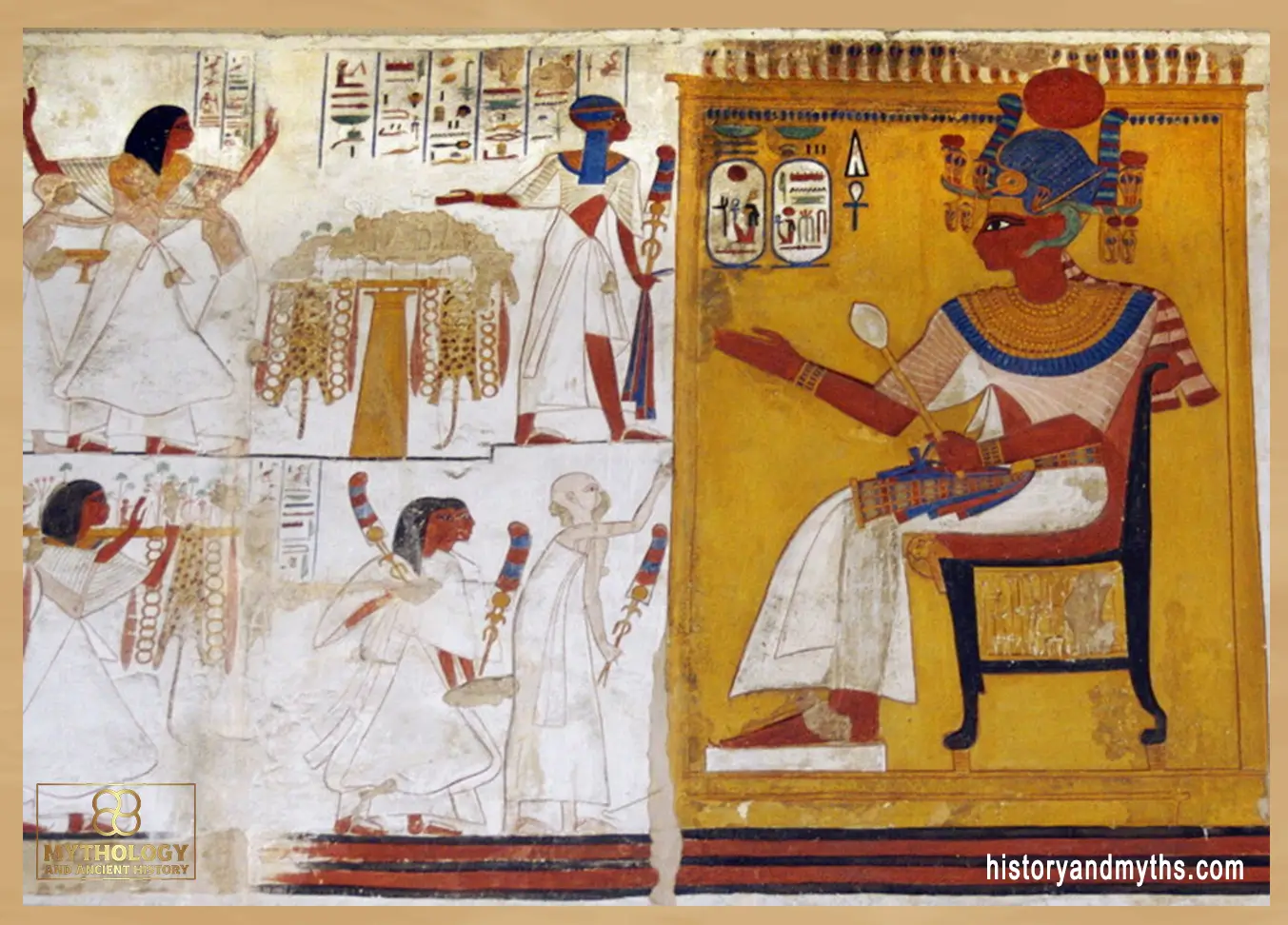
The pharaoh’s political power rested first and foremost on legitimacy. In ancient Egypt, legitimacy was constructed through divine kingship the idea that the ruler was chosen by the gods to maintain order. This belief did not exist merely as theology; it functioned as a political foundation that justified obedience, taxation, and centralized authority.
Divine kingship worked because it linked political rule to stability. By presenting the pharaoh as the guarantor of cosmic and social balance, the state framed resistance as a threat not only to the ruler, but to order itself. This reduced the need for constant coercion. Loyalty was encouraged through belief as much as through force.
However, divine legitimacy was not unlimited. It did not automatically translate into effective rule. A pharaoh could be sacred in theory and weak in practice. When economic failure, military defeat, or succession disputes emerged, divine status alone could not prevent political fragmentation. In such moments, legitimacy had to be reinforced through administration, alliances, and visible competence.
This distinction explains why Egyptian kingship remained stable for long periods yet collapsed at specific points in history. Divine kingship provided the right to rule, but political survival depended on how that right was exercised. Understanding this difference is essential for seeing the pharaoh not as an untouchable god, but as a ruler whose authority required constant maintenance.
| Political Aspect | Theoretical Role | Political Reality |
|---|---|---|
| Divine Kingship | Pharaoh as a divinely chosen ruler | Provided legitimacy but did not guarantee effective control |
| Royal Authority | Supreme and absolute power | Dependent on institutions, officials, and resources |
| Delegation of Power | Authority exercised directly by the king | Governance carried out through officials and administrators |
| Institutional Control | State fully controlled by the throne | Temples and bureaucracy held significant autonomous power |
| Political Stability | Guaranteed by divine rule | Maintained through competent leadership and cooperation |
| Political Crisis | Failure seen as divine disorder | Triggered by weak kingship, economic stress, or institutional breakdown |
The Pharaoh and the State
Although the pharaoh stood at the apex of power, he was not identical to the state itself. Ancient Egypt functioned through institutions that existed beyond the individual ruler, including administration, temples, and provincial authority. The pharaoh ruled through these structures, not above them.
In practice, the state limited royal action as much as it enabled it. Policies had to pass through established channels, resources were controlled by bureaucratic offices, and local officials managed daily affairs. A pharaoh who ignored these mechanisms risked paralysis rather than absolute control. Political power, therefore, was exercised indirectly, shaped by institutional continuity rather than personal command.
This separation becomes clear during periods of transition. When a new pharaoh ascended the throne, the state did not reset. Administrators, scribes, and local governors often remained in place, ensuring continuity regardless of the ruler’s personality or competence. This stability protected the kingdom, but it also meant that royal authority depended on cooperation rather than pure dominance.
Understanding the distinction between the pharaoh and the state helps explain why Egyptian governance endured individual failures. The ruler symbolized unity, but the machinery of government sustained it. When cooperation between throne and institutions broke down, political authority weakened regardless of divine claims.
Delegation of Power and Political Control
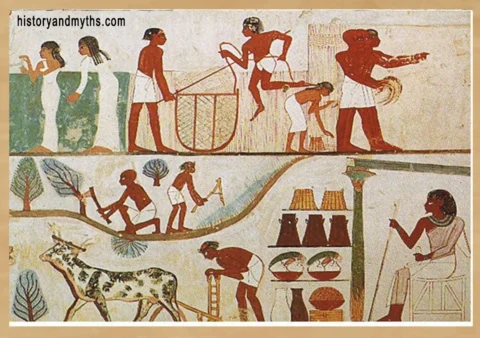
The pharaoh did not govern Egypt by issuing constant orders. Effective rule depended on delegation. Power was distributed to officials who acted on behalf of the throne, translating royal authority into daily political control. Without this system, centralized rule over such a large territory would have been impossible.
Delegation served two political purposes. First, it allowed the state to function efficiently. Officials handled taxation, justice, labor, and provincial administration while the pharaoh focused on legitimacy, major decisions, and symbolic leadership. Second, delegation created distance between the ruler and unpopular actions. Taxes and corvée labor were enforced by administrators, not personally by the king, reducing direct resistance to royal authority.
However, delegation also introduced risk. Officials accumulated experience, influence, and local loyalty. Over time, some gained enough power to challenge or bypass the throne, especially during weak reigns. Political control therefore depended on balance: authority had to be shared but not surrendered.
This dynamic explains why strong pharaohs emphasized supervision, inspections, and record-keeping, while weaker rulers struggled to contain ambitious officials. Delegation was not a sign of weakness; it was a political necessity. The danger arose when the mechanisms of control failed, turning delegated power into independent authority.
Limits of Royal Authority
Despite the image of absolute kingship, the pharaoh’s authority was never without limits. These limits were not written as laws, but imposed by political reality, economic capacity, and institutional constraints. A pharaoh could command, but those commands only worked if the state machinery was able and willing to carry them out.
One major limitation was resources. Royal power depended on agricultural output, labor availability, and treasury control. Poor Nile floods, famine, or economic strain directly weakened political authority. Divine status could justify rule, but it could not create grain, mobilize labor indefinitely, or fund campaigns without administrative support.
Temples and powerful institutions also placed boundaries on royal power. Major religious centers-controlled land, wealth, and personnel. While officially subordinate to the king, they operated with significant autonomy. In periods of instability, priesthoods could rival royal authority, shaping politics behind the language of ritual and tradition.
Finally, legitimacy itself acted as a constraint. A pharaoh who ruled incompetently, lost wars, or disrupted social order risked losing elite support. When confidence in royal leadership declined, officials and regional leaders adapted their loyalties accordingly. These limits reveal that Egyptian kingship was not unchecked tyranny, but a negotiated position within a broader political system.
The Pharaoh as a Political Figure — In Brief
- Pharaonic power was based on political legitimacy, not unchecked authority.
- Divine kingship provided justification to rule, but not automatic control.
- The pharaoh governed through institutions, officials, and delegation.
- Administrative systems both enabled and limited royal power.
- Weak kingship exposed the gap between sacred image and political reality.
- Political crises revealed that authority depended on competence and cooperation.
© historyandmyths.com — Educational use
How Political Power Changed Across Egyptian History
Although the institution of kingship remained remarkably stable, the way pharaohs exercised political power changed throughout Egyptian history. Royal authority was shaped by military expansion, economic conditions, administrative growth, and the increasing influence of religious institutions. As these factors evolved, so did the practical role of the pharaoh.
During the Old Kingdom, royal authority was highly centralized. The king stood at the center of government, directing major state projects while provincial administration remained closely tied to the court. This concentration of authority helped create the monumental building programs associated with the pyramid age.
The Middle Kingdom relied more heavily on an organized bureaucracy after the political fragmentation of the First Intermediate Period. Pharaohs strengthened administrative institutions to restore stability, demonstrating that effective government required more than royal symbolism alone.
In the New Kingdom, Egypt became an imperial power. Pharaohs delegated increasing authority to military commanders, governors, diplomats, and senior officials who managed territories extending far beyond the Nile Valley. Royal power therefore depended on coordination across a far more complex political system.
By the Late Period, foreign invasions, powerful priesthoods, and competing dynasties reduced the direct influence of many rulers. Although the ideology of divine kingship survived, political authority became increasingly shared among military elites, temple institutions, and regional leaders.
These developments show that the title of pharaoh remained constant, but the political realities behind that title evolved considerably across three thousand years of Egyptian history.
Weak Kingship and Political Crisis
Periods of political crisis in ancient Egypt reveal the true nature of pharaonic power. When kingship was strong, divine legitimacy, administration, and institutional cooperation worked together. When kingship weakened, this balance collapsed, exposing the limits of sacred authority.
Weak kingship often emerged during succession disputes, minority reigns, or rapid dynastic change. In these moments, the symbolic power of the throne remained intact, but effective control faded. Officials delayed obedience, provincial leaders acted independently, and powerful institutions pursued their own interests. The state continued to exist, but political unity fractured.
Crises also intensified when external pressure or economic stress coincided with weak leadership. Military defeats, disrupted trade, or poor harvests demanded decisive coordination. When the pharaoh failed to provide it, legitimacy eroded quickly. Divine status could explain authority, but it could not compensate for visible failure.
These episodes demonstrate that pharaonic power was conditional, not absolute. Kingship functioned as a political role that required constant reinforcement through competence, stability, and institutional cooperation. When these elements failed, Egypt did not reject kingship it redefined or weakened it. Understanding this pattern allows us to see the pharaoh not as an infallible god-king, but as a political figure operating within a system that could support or undermine him.
Why the Pharaoh Rarely Governed Alone
Despite his position at the top of the political hierarchy, the pharaoh rarely governed Egypt through personal decision-making alone. The scale of the kingdom required a sophisticated administrative network that transformed royal policy into practical government.
The vizier coordinated much of the state’s daily administration, supervising taxation, legal affairs, agricultural records, and public construction. Provincial governors managed local territories, while scribes maintained the documentation that allowed royal authority to function across vast distances. Military commanders protected borders and enforced royal policy, and temple institutions administered extensive economic resources that supported both religion and the state.
These officials did not replace the pharaoh, but they made centralized government possible. Their effectiveness determined whether royal commands became practical policy or remained symbolic declarations.
Understanding this administrative partnership helps explain why Egyptian government endured for centuries despite changes in individual rulers. The pharaoh represented the state, but the stability of that state depended on a broad political system in which authority was exercised collectively through institutions rather than by one individual acting alone.
Key Takeaways
- The pharaoh’s authority relied on political legitimacy rather than absolute control.
- Divine kingship justified rule but did not ensure effective governance.
- Power was exercised through institutions, officials, and delegated authority.
- Administrative systems both supported and constrained royal power.
- Economic stress, weak leadership, or institutional conflict limited kingship.
- Political crises exposed the gap between sacred image and practical authority.
Frequently Asked Questions (FAQ)
Was the pharaoh a god or a political ruler?
The pharaoh was presented as divinely chosen, but his role was primarily political. Divine status provided legitimacy, while real power depended on administration, institutions, and effective leadership.
Did the pharaoh rule ancient Egypt alone?
No. Although the pharaoh stood at the top of the system, governance was carried out through officials, scribes, priests, and provincial administrators who exercised authority on his behalf.
How much real political power did the pharaoh have?
The pharaoh’s power varied by period and circumstance. Strong rulers exercised wide influence, while weaker kings were constrained by officials, temples, economic limits, and political crises.
What limited a pharaoh’s authority in ancient Egypt?
Royal authority was limited by economic resources, administrative institutions, powerful temples, and the need for elite cooperation. Divine legitimacy alone could not overcome these constraints.
Why were some pharaohs politically weak?
Political weakness often resulted from succession disputes, minority reigns, economic stress, military failure, or loss of elite support, rather than from religious factors alone.
How did religion support political power?
Religion provided ideological justification for rule by linking the pharaoh to cosmic order, but it functioned as a political tool rather than a substitute for effective governance.
Did political crises challenge the idea of divine kingship?
Crises exposed the limits of divine kingship. While the ideology remained intact, failures in leadership and administration weakened practical authority and state control.
Sources & Rights
- Assmann, Jan. The Mind of Egypt: History and Meaning in the Time of the Pharaohs. Cambridge, MA: Harvard University Press, 2002.
- Baines, John. Visual and Written Culture in Ancient Egypt. Oxford: Oxford University Press, 2007.
- Breasted, James Henry. A History of Egypt: From the Earliest Times to the Persian Conquest. New York: Charles Scribner’s Sons, 1905.
- Grimal, Nicolas. A History of Ancient Egypt. Translated by Ian Shaw. Oxford: Blackwell Publishing, 1992.
- Helck, Wolfgang. Zur Verwaltung des Mittleren und Neuen Reichs. Leiden: Brill, 1958.
- Kemp, Barry J. Ancient Egypt: Anatomy of a Civilization. 2nd ed. London: Routledge, 2006.
- Moreno García, Juan Carlos. Ancient Egyptian Administration. Leiden: Brill, 2013.
- O’Connor, David, and David P. Silverman, eds. Ancient Egyptian Kingship. Leiden: Brill, 1995.
- Quirke, Stephen. Ancient Egyptian Religion. London: British Museum Press, 1992.
- Redford, Donald B. Pharaohs and Kings: A Political History of Ancient Egypt. Oxford: Oxford University Press, 2010.
- Shaw, Ian, ed. The Oxford History of Ancient Egypt. Oxford: Oxford University Press, 2000.
- Strudwick, Nigel. The Administration of Egypt in the Old Kingdom. London: Kegan Paul International, 1985.
- Trigger, Bruce G., Barry J. Kemp, David O’Connor, and Alan B. Lloyd. Ancient Egypt: A Social History. Cambridge: Cambridge University Press, 1983.
- Van de Mieroop, Marc. A History of Ancient Egypt. Malden, MA: Wiley-Blackwell, 2011.
- Wilkinson, Toby A. H. The Rise and Fall of Ancient Egypt. New York: Random House, 2010.
- Wilkinson, Richard H. The Complete Gods and Goddesses of Ancient Egypt. London: Thames & Hudson, 2003.
Written by H. Moses — All rights reserved © Mythology and History