Hubris in Greek Mythology: Why the Gods Punished Human Pride
In Greek mythology, few ideas were feared more than hubris. Modern readers often translate the word as pride or arrogance, but the Greeks meant something far more serious. Hubris was the moment a person forgot their place in the world and acted as if the limits that governed ordinary mortals no longer applied to them.
This belief appears throughout Greek myths. Kings challenged the gods, heroes reached beyond human boundaries, and talented individuals claimed equality with divine powers. Again and again, these acts were followed by punishment. The pattern was so common that hubris became one of the central moral forces shaping Greek mythology.
Yet the Greeks did not condemn ambition, success, or confidence. What they feared was the refusal to recognize human limits. Through stories such as Niobe, Arachne, and Bellerophon, Greek mythology explored why crossing the boundary between mortals and gods threatened the natural order and why divine retribution was believed to restore that balance. Understanding hubris therefore reveals not only how the Greeks viewed punishment, but how they understood power, authority, and the fragile place of humanity in the cosmos.
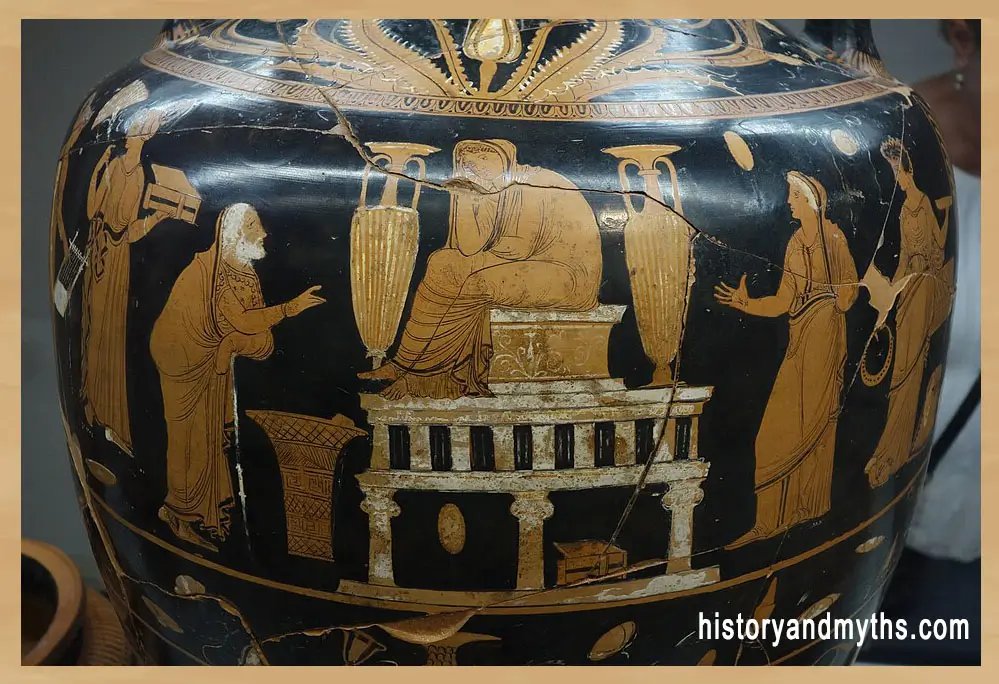
What the Greeks Really Meant by Hubris
Modern discussions often reduce hubris to excessive pride, but Greek mythology used the concept in a much broader and more dangerous sense. A person could be proud without committing hubris. The problem began when an individual behaved as though they were no longer bound by the limits that governed ordinary human life.
For the Greeks, the universe operated according to a hierarchy. Gods possessed powers that mortals did not. Human beings could achieve greatness, earn fame, and accomplish extraordinary deeds, but they remained human. Hubris occurred when someone refused to recognize that distinction and attempted to place themselves on a level that belonged to the divine.
This is why hubris appears so frequently in myths involving successful or talented individuals. The offense was rarely weakness. More often it emerged from strength. A hero became convinced that victories made him invincible. A ruler believed his authority placed him above divine law. A gifted artist claimed equality with the gods. In each case, achievement created the illusion that ordinary limits no longer applied.
The story of Bellerophon illustrates this idea clearly. After defeating powerful enemies and winning great fame, he attempted to ride Pegasus to Mount Olympus itself. His downfall was not caused by a lack of courage or ability. It resulted from the belief that heroic success entitled him to enter a realm reserved for the gods. The act crossed a boundary that Greek mythology treated as sacred.
Understanding hubris in this way reveals why it became such a central theme in Greek myth. The danger was not confidence, ambition, or excellence. The danger was forgetting that even the greatest mortal remained mortal. Once that boundary was ignored, divine retribution was never far behind.
| Aspect | Hubris | Greek Ideal |
|---|---|---|
| View of Human Limits | Ignored or rejected | Recognized and respected |
| Relationship to the Gods | Challenges divine authority | Acknowledges divine authority |
| Typical Behavior | Claims superiority or equality with the gods | Pursues excellence without denying limits |
| Mythological Examples | Niobe, Arachne, Bellerophon | Heroes who respect divine boundaries |
| Result | Divine retribution | Honor and stability |
| Symbolic Meaning | Forgetting human limits | Balance and self-awareness |
Why Hubris Was Considered Dangerous
Greek myths treat hubris as more than a personal flaw because its consequences extended beyond the individual who committed it. When someone ignored the limits separating mortals from gods, the act threatened the balance that held the world together. Hubris was dangerous not simply because it offended a deity, but because it challenged the order that defined how humans, heroes, and gods were meant to exist.
This helps explain why divine punishment in Greek mythology often appears severe. The goal was not merely revenge. Punishment demonstrated that no individual, regardless of power or achievement, could place themselves above the rules governing the cosmos. By showing the consequences of hubris, myths reinforced the boundaries that maintained stability.
The story of Niobe provides one of the clearest examples. As the queen of Thebes, she took pride in her many children and publicly mocked the goddess Leto for having only two. Her mistake was not loving her family or celebrating her success. The offense occurred when she used her good fortune to claim superiority over a divine figure. In Greek thought, this crossed a line that humans were not meant to cross.
What follows in the myth is significant. The punishment does not target Niobe’s pride alone. It serves as a warning about the consequences of measuring human achievements against divine power. Her downfall restores the distinction she attempted to erase. The myth therefore teaches that prosperity and status do not remove the limits of mortality.
Through stories like Niobe’s, Greek mythology presents hubris as a force capable of turning success into disaster. The greater a person’s achievements, the greater the temptation to believe they stand above ordinary constraints. For the Greeks, that belief was often the first step toward ruin, which is why hubris remained one of the most feared causes of divine retribution.
Crossing the Boundary Between Mortals and Gods
Many Greek myths can be understood as stories about boundaries. The line separating gods from mortals was one of the most important of all. Humans could worship the gods, seek their favor, and even trace their ancestry to divine beings, but they were not expected to claim equality with them. When that boundary was crossed, hubris became more than arrogance—it became a direct challenge to the cosmic order.
The myth of Arachne illustrates this principle better than almost any other story. Arachne was an exceptionally talented weaver whose skill attracted widespread admiration. Her downfall began when she refused to acknowledge any superiority in the goddess Athena and claimed that her own work matched—or even surpassed—that of the deity herself. The issue was not talent. Greek mythology often celebrates extraordinary ability. The problem was the rejection of the distinction between human excellence and divine authority.
After their famous weaving contest, Athena punished Arachne, transforming her into a spider. Modern readers sometimes focus on whether the punishment was fair, but Greek audiences were interested in a different lesson. The transformation reinforced a boundary that Arachne had attempted to erase. No matter how gifted she became, she remained mortal.
Similar patterns appear throughout Greek mythology. Characters are not punished for striving, learning, or achieving greatness. They are punished when success convinces them that they no longer belong within the human condition. Hubris begins when accomplishment turns into self-exaltation and the individual stops recognizing limits that apply to everyone else.
This idea helps explain why divine retribution appears so frequently in Greek myths. The gods act not only as powerful beings but also as guardians of boundaries. Whenever a mortal attempts to occupy a place reserved for the divine, mythology responds with a reminder that greatness has limits and that crossing them carries consequences.
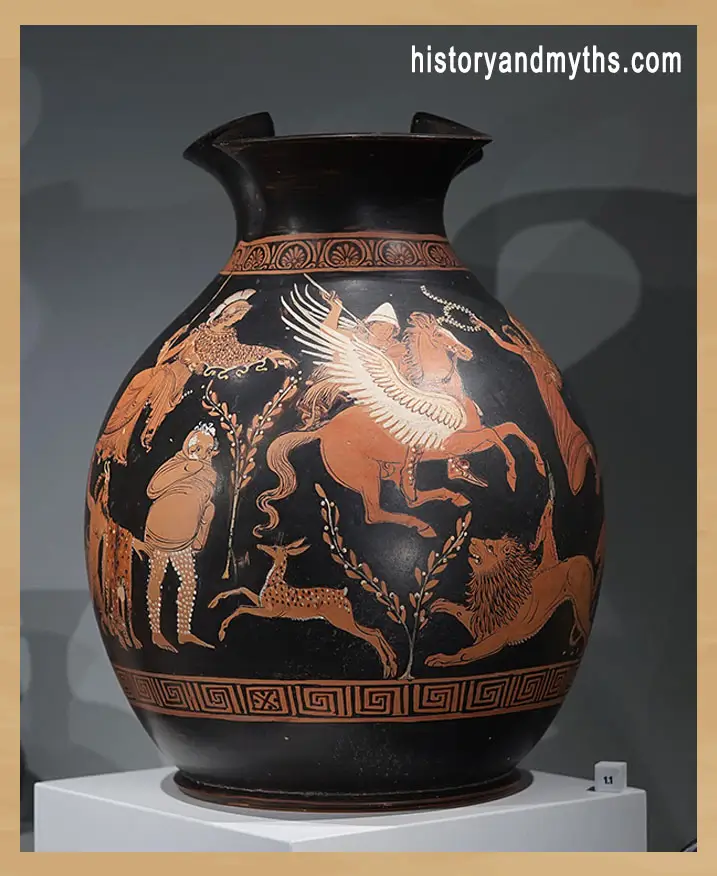
Hubris Was More Than Pride
In Greek mythology, hubris did not simply mean arrogance. It described the moment a mortal refused to accept the limits of human existence and attempted to place themselves on a level reserved for the gods. This violation of cosmic boundaries triggered divine retribution, making hubris one of the most important moral concepts in Greek myth.
© historyandmyths.com — Educational Use
How Divine Retribution Restored Order
In Greek mythology, divine punishment was rarely presented as random anger. The gods did not punish hubris simply because they felt insulted. More often, retribution served to restore a balance that had been disrupted when a mortal exceeded the limits of their position. The punishment was therefore connected to the offense itself and often revealed what the myth believed had gone wrong.
Bellerophon provides a clear example. His achievements made him one of the greatest heroes of his generation, but success gradually led him to attempt the impossible journey to Olympus. Zeus did not destroy him because he was brave or accomplished. He intervened because Bellerophon tried to enter a realm that belonged to the gods alone. His fall returned him to the human world and reestablished a boundary he had ignored.
The same pattern appears in the story of Arachne. Her transformation into a spider was not merely a punishment; it symbolized the restoration of a proper relationship between mortal and divine. Arachne continued to weave, but she no longer stood as a rival to Athena. The challenge that disrupted the natural order had been removed.
Even the tragedy of Niobe follows this logic. After elevating herself above Leto, she experiences devastating loss and becomes a symbol of grief. The myth does not celebrate her suffering. Instead, it demonstrates that human success cannot be used to claim superiority over the gods. The punishment restores a distinction that her words attempted to erase.
These stories reveal an important feature of Greek mythology. Divine retribution was not simply about causing pain. It was about correcting imbalance. When hubris blurred the line between mortals and gods, punishment reestablished that line. Through this pattern, Greek myths reinforced a worldview in which order depended on every being recognizing the limits of its place within the cosmos.
What Hubris Revealed About Greek Values
Hubris appears so frequently in Greek mythology because it reflects a deeper concern within Greek culture. The myths were not trying to teach people to avoid success, ambition, or excellence. Many of the most admired figures in Greek tradition were celebrated precisely because they achieved extraordinary things. What mattered was how they understood those achievements.
Greek mythology consistently distinguishes between greatness and self-deification. Heroes were expected to pursue honor, win victories, and leave behind a lasting reputation. At the same time, they were expected to recognize that no amount of success could erase the difference between human beings and the gods. Hubris emerged when that awareness disappeared.
This distinction explains why myths often portray talented, powerful, or respected individuals falling into disaster. Their downfall serves as a warning that achievement does not grant unlimited authority. A king may rule a city, a warrior may win battles, and an artist may possess remarkable skill, but none of these accomplishments place a mortal beyond the boundaries of human existence.
The repeated connection between hubris and punishment also reveals how the Greeks understood justice. Divine retribution was not primarily concerned with protecting the feelings of the gods. Instead, it protected the structure of the world itself. When a mortal attempted to elevate themselves beyond their proper place, the resulting punishment reaffirmed the values of balance, moderation, and respect for limits.
For this reason, hubris remained one of the most enduring themes in Greek mythology. It addressed a question that every generation faced: how should people respond to power, success, and achievement? The myths answered by suggesting that greatness becomes dangerous only when it convinces someone that they are no longer subject to the same limits that govern everyone else.
Conclusion
In Greek mythology, hubris was far more than personal arrogance. It represented a dangerous misunderstanding of humanity’s place within the cosmos. When mortals forgot their limits and attempted to claim a status reserved for the gods, they disrupted an order that Greek myths treated as essential to the stability of the world.
The stories of Niobe, Arachne, and Bellerophon illustrate the same lesson from different angles. Success, talent, and power were not condemned, but they carried a responsibility to recognize the boundaries that separated human achievement from divine authority. Through the cycle of hubris and retribution, Greek mythology explored one of its most enduring themes: greatness becomes destructive when it leads people to believe that they no longer have limits.
Key Takeaways
- Hubris in Greek mythology meant rejecting the limits that separated mortals from gods.
- The Greeks did not condemn success or ambition, but they feared self-deification.
- Niobe, Arachne, and Bellerophon illustrate different forms of hubris.
- Divine punishment served to restore cosmic order rather than merely express anger.
- Greek myths used hubris to explain why power must be balanced by humility.
- The theme reveals important Greek values concerning authority, moderation, and human limits.
Frequently Asked Questions
What does hubris mean in Greek mythology?
Hubris refers to excessive pride or behavior that causes a mortal to challenge divine authority or ignore human limits.
Why was hubris dangerous to the Greeks?
The Greeks believed hubris threatened the natural order by blurring the distinction between mortals and gods.
What is divine retribution in Greek mythology?
Divine retribution is punishment imposed by the gods to restore balance after a violation of cosmic or moral order.
Who are famous examples of hubris in Greek mythology?
Niobe, Arachne, and Bellerophon are among the best-known figures whose actions led to divine punishment.
Was hubris the same as confidence?
No. Greek mythology often admired confidence and achievement. Hubris occurred when success led someone to deny human limitations.
Why was Arachne punished by Athena?
Arachne claimed equality with a goddess and challenged divine authority, making her a classic example of hubris.
How did Bellerophon commit hubris?
He attempted to reach Mount Olympus on Pegasus, crossing a boundary reserved for the gods.
What lesson did Greek myths teach through hubris?
They taught that greatness requires humility and that ignoring human limits leads to downfall.
Sources & Rights
- Homer. Iliad.
- Homer. Odyssey.
- Hesiod. Theogony.
- Hesiod. Works and Days.
- Apollodorus. Library.
- Ovid. Metamorphoses.
- Pausanias. Description of Greece.
- Pindar. Olympian Odes.
- Euripides. Bacchae.
- Sophocles. Antigone.
- Aeschylus. Prometheus Bound.
- Burkert, Walter. Greek Religion.
- Dodds, E. R. The Greeks and the Irrational.
- Vernant, Jean-Pierre. Myth and Thought Among the Greeks.
- Buxton, Richard. The Complete World of Greek Mythology.
- Gantz, Timothy. Early Greek Myth.
- Powell, Barry B. Classical Myth.
- Bremmer, Jan N. Greek Religion.
- Johnston, Sarah Iles. Ancient Greek Religion.
- Nilsson, Martin P. A History of Greek Religion.
- Parker, Robert. On Greek Religion.
- Graf, Fritz. Greek Mythology.
Written by H. Moses — All rights reserved © Mythology and History