Divine Curses in Greek Mythology: Justice, Fate, and Punishment
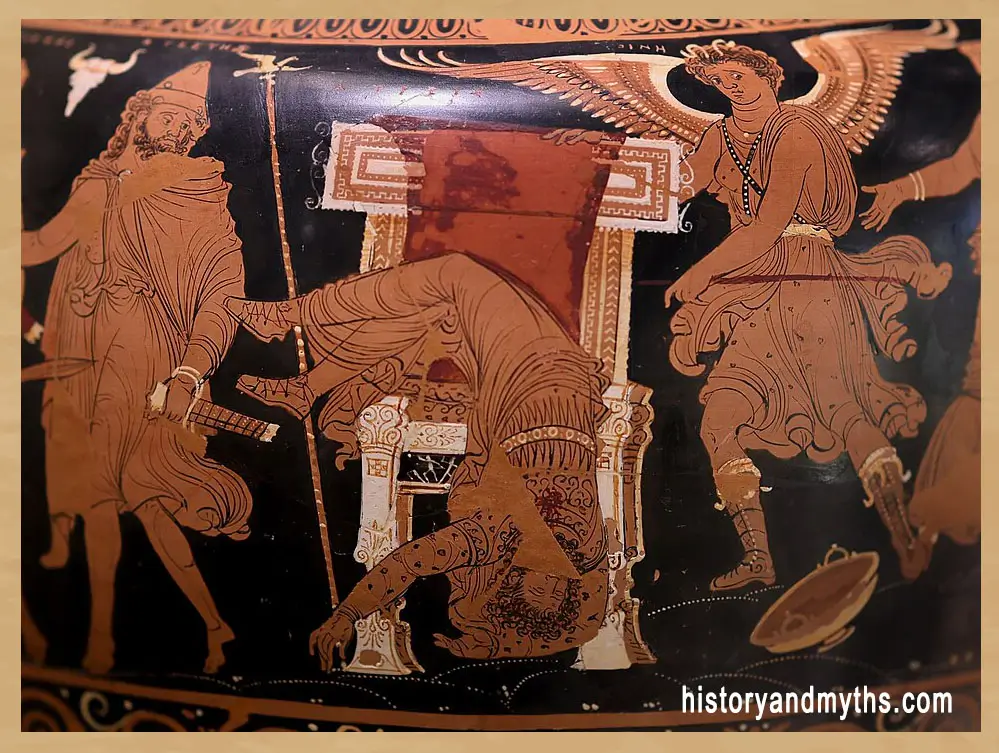
In Greek mythology, a divine curse was more than a punishment imposed by an angry god. It was often portrayed as a lasting force that could shape lives, destroy families, and follow entire bloodlines across generations. While modern readers tend to view curses as supernatural misfortunes, the ancient Greeks saw them as signs that a sacred boundary had been violated and that a deeper imbalance required correction.
Divine curses appeared throughout Greek myths because they helped explain some of the most troubling questions in human life. Why do innocent descendants suffer for crimes committed long before they were born? Why does guilt seem impossible to escape? Why do acts of arrogance, betrayal, or broken oaths often lead to consequences far greater than the original offense? In mythological thought, a curse offered an answer. It transformed wrongdoing into a visible and enduring reality.
Rather than functioning as random acts of divine anger, curses often reinforced the moral and cosmic order that the gods were believed to protect. They reminded mortals that power had limits, promises carried sacred weight, and certain actions could unleash consequences that no individual could fully control. Understanding divine curses therefore reveals far more than stories of suffering—it reveals how the Greeks understood justice, responsibility, and the fragile relationship between humans and the divine.
Why Divine Curses Existed in Greek Mythology
Divine curses occupied a unique place in Greek mythology because they addressed a problem that ordinary punishment could not solve. A thief could be fined, a murderer could be exiled, and an enemy could be defeated in battle, but some actions were believed to create a deeper disturbance that extended beyond human law. When a sacred oath was broken, a family member was betrayed, a guest was mistreated, or a god was openly challenged, the damage was thought to reach into the moral fabric of the world itself.
For the Greeks, the universe was not governed by chance alone. Gods, oaths, rituals, and social obligations formed a network of expectations that held society together. When those expectations were violated, a divine response became necessary. A curse provided that response. It transformed an invisible offense into visible consequences, allowing myth to demonstrate that certain actions could not simply be forgotten or ignored.
This helps explain why curses appear so frequently in Greek myths. They were not included merely to make stories darker or more dramatic. They served a narrative and religious function. A curse showed that actions carried weight beyond the moment in which they occurred. The offender might escape human justice, but the mythological universe itself remained capable of delivering judgment.
The idea also reflected a broader Greek concern with limits. Many myths revolve around individuals who overstep boundaries—kings who abuse power, heroes who become arrogant, or mortals who assume they can challenge divine authority. A curse marked the point at which those boundaries had been crossed. It acted as a warning that there were forces larger than personal ambition, wealth, or status.
Seen from this perspective, divine curses were not random expressions of anger. They were mechanisms that linked wrongdoing to consequence and reinforced the belief that disorder, once introduced into the world, demanded a response. Through curses, Greek mythology expressed one of its most persistent themes: no action exists in isolation, and some choices create consequences that can outlive the person who made them.
| Aspect | Divine Curse | Ordinary Punishment |
|---|---|---|
| Purpose | Restore cosmic and moral balance | Penalize a specific offense |
| Duration | Often long-lasting or generational | Usually limited in time |
| Scope | Can affect families and descendants | Targets the offender alone |
| Source | Divine forces or sacred laws | Human or divine authority |
| Main Fear | Uncontrollable consequences | Immediate suffering |
| Symbolic Meaning | Responsibility beyond the individual | Justice for a specific act |
A Curse Was More Than a Punishment
One reason divine curses played such a prominent role in Greek mythology is that they were fundamentally different from ordinary punishment. A punishment was typically a response to a specific act. It had a clear cause, a clear target, and often a defined end. A curse operated on a different level. It could reshape an entire life, alter a family’s future, or trigger a chain of events that continued long after the original offense had been committed.
This distinction appears repeatedly in Greek myths. Punishment focused on what someone had done. A curse focused on what that action unleashed. Once a curse entered the story, the consequences often became difficult to contain. New victims appeared, old conflicts resurfaced, and future generations found themselves dealing with problems they had not personally created.
Because of this, a curse was often portrayed as a condition rather than a sentence. The cursed individual was not simply being penalized. They were living under the influence of a destructive force that affected decisions, relationships, reputation, and fate itself. The suffering was not always immediate. In many myths, the most dangerous aspect of a curse was its ability to remain dormant before revealing its effects years later.
This helps explain why Greek audiences viewed curses with particular fear. A punishment could be endured. A curse introduced uncertainty. It suggested that the consequences of wrongdoing might extend beyond human control and beyond the reach of ordinary remedies. Wealth, status, military success, or political power offered little protection once divine forces became involved.
The distinction also reinforced a larger mythological message. Greek myths rarely present wrongdoing as an isolated event. Actions create consequences that spread outward, affecting families, communities, and future generations. The curse became the narrative tool that made this idea visible. It transformed moral failure into a continuing presence within the story, reminding audiences that some violations carried consequences far greater than the original act itself.
Divine Curses and the Protection of Cosmic Order
Greek mythology rarely presents the world as a place governed by arbitrary divine behavior. Even when the gods appear harsh, their actions are often connected to the preservation of a larger order. Divine curses were part of that system. They existed to restore balance when a person violated principles that the Greeks considered essential to the stability of both society and the cosmos.
Many of the offenses that trigger curses in myth involve more than personal wrongdoing. Perjury, betrayal of family members, violations of hospitality, and acts of extreme arrogance threatened relationships that Greek society depended upon. If such actions carried no lasting consequences, the moral structure of the world would appear fragile or meaningless. A curse demonstrated the opposite. It showed that certain boundaries were protected by forces beyond human authority.
This is why myths often portray the effects of a curse as unavoidable. The purpose was not simply to make the offender suffer. The purpose was to show that disorder creates consequences of its own. Once a sacred obligation had been broken, the resulting imbalance demanded correction. The curse became the mechanism through which that correction occurred.
The idea is closely connected to the Greek fear of hubris—the belief that excessive pride could lead individuals to forget their proper place in the world. When mortals acted as though they were above divine law, myths frequently responded with disasters that restored the limits they had ignored. In this sense, a curse was not merely a punishment for arrogance; it was a reminder that no individual could place themselves above the order maintained by the gods.
For Greek audiences, these stories reinforced a simple but powerful principle: stability depended on respecting boundaries. Divine curses illustrated what happened when those boundaries were crossed. Their role was not only to punish wrongdoing but to demonstrate that the world remained governed by rules that neither kings, heroes, nor entire dynasties could escape.
How a Divine Curse Worked in Greek Mythology
A divine curse usually followed a clear mythological pattern. First, a sacred boundary was violated: an oath was broken, a god was insulted, a family bond was betrayed, or a forbidden act polluted the household. Second, the violation created disorder that ordinary punishment could not fully repair. Third, the curse turned that disorder into lasting consequence.
This is why curses in Greek mythology often feel larger than the original offense. They were not only about pain or revenge. They explained how guilt, pollution, and broken obligations could survive beyond one moment and continue shaping the future.
© historyandmyths.com — Educational Use
Why Curses Often Affected Entire Families
One of the most striking features of Greek mythology is that divine curses often extend beyond the original offender. A king commits a crime, yet his children and grandchildren suffer the consequences. To modern readers, this may seem unjust. To the Greeks, however, it reflected a different understanding of responsibility, family, and moral contamination.
Greek thought did not always treat the individual as completely separate from the family line. A household was viewed as a continuing unit that connected ancestors, living members, and future descendants. When a severe crime occurred within that unit, its effects could remain embedded in the family itself. Myths expressed this idea through curses that passed from one generation to the next.
This belief was closely connected to the concept of miasma, often translated as ritual or moral pollution. Certain acts—especially murder within the family, betrayal of kin, or offenses against the gods—were believed to create a stain that could not be removed easily. If left unresolved, that stain continued to influence the lives of those connected to it.
The famous cursed dynasties of Greek mythology illustrate this pattern. What matters is not the individual stories but the recurring message behind them: a serious violation could damage an entire lineage. The curse served as a narrative explanation for why cycles of violence, revenge, and suffering continued across generations.
By presenting curses in this way, Greek mythology explored a difficult question that societies still confront today: can the consequences of one generation’s actions shape the lives of those who come after it? The myths answered yes. Divine curses became a symbolic way of expressing how unresolved wrongdoing could survive long after the original offender had disappeared, continuing to influence the future until the underlying disorder was finally addressed.
Broken Oaths, Sacred Boundaries, and Divine Retribution
Among the actions most likely to attract a divine curse in Greek mythology, few were considered more serious than breaking a sacred oath. To the Greeks, an oath was not merely a promise between individuals. It was an agreement witnessed by divine powers. Violating it was therefore more than dishonesty—it was an act of disrespect toward the order that made trust possible.
This belief helps explain why myths frequently connect misfortune with perjury, betrayal, and broken commitments. A person who violated an oath did not simply harm another individual. They undermined a bond that the gods themselves were believed to protect. The resulting curse served as a warning that certain obligations carried consequences beyond human judgment.
The same principle applied to other sacred boundaries. Hospitality toward strangers, respect for family relationships, proper treatment of the dead, and reverence for the gods were all considered fundamental obligations. When these boundaries were crossed, myths often portray the offender as triggering forces that could not easily be controlled or reversed.
What makes this theme significant is that it reveals how Greek mythology linked morality to social stability. Trust, loyalty, and mutual obligations were not presented as personal preferences. They were treated as foundations of civilized life. Divine curses reinforced that idea by showing what could happen when those foundations were deliberately violated.
Rather than acting as random supernatural punishments, curses functioned as reminders that some rules existed above individual desires. In mythological thought, breaking a sacred obligation did more than harm a relationship—it threatened the order that allowed human communities to function. The curse was the mechanism that restored the seriousness of that violation.
Continue Reading
The Psychological Meaning of Divine Curses
Divine curses endured in Greek mythology because they gave form to fears that were difficult to explain through ordinary experience. People often witnessed suffering that seemed disproportionate to its apparent cause, misfortunes that persisted for years, or patterns of tragedy that repeated within the same family. The idea of a curse provided a framework for understanding why certain consequences appeared impossible to escape.
At a psychological level, curses transformed guilt into something visible. A hidden crime, a broken oath, or a moral failure could continue to exert influence even after the original act had passed. In mythological stories, the curse represented the lingering presence of that wrongdoing. It suggested that actions leave traces behind them and that some burdens cannot simply be ignored or forgotten.
Curses also reflected a deep Greek concern with human limits. Many myths center on individuals who believe they can outsmart fate, defy divine authority, or avoid the consequences of their choices. The curse serves as a reminder that control has boundaries. However powerful a king or hero might become, there remained forces beyond human command.
This helps explain why cursed figures often inspire both fear and sympathy. Their stories are not only about punishment. They reveal how fragile human certainty can be when confronted by forces larger than individual ambition or intelligence. The audience is invited to consider how easily success, power, or confidence can be overturned.
Viewed psychologically, divine curses were less about magic than about responsibility. They expressed the belief that actions matter, consequences endure, and no one is entirely free from the results of what they set in motion. Through the language of myth, the Greeks explored anxieties about guilt, accountability, and the limits of human control—concerns that remain recognizable long after the myths themselves were written.
What Divine Curses Revealed About Greek Beliefs
Divine curses reveal that Greek mythology was concerned with far more than supernatural punishment. Behind these stories lies a worldview in which actions carried lasting consequences, moral boundaries mattered, and disorder could not remain unanswered indefinitely. A curse was one of the ways myth transformed these ideas into narrative form.
The persistence of curses across Greek myths shows that the Greeks did not view justice as a simple exchange between crime and punishment. Wrongdoing could spread beyond the original act, affect relationships, damage communities, and shape the future. Myths used curses to explore how deeply a single violation could alter the balance of human life.
They also reflect a culture that placed enormous importance on obligations. Oaths, family ties, hospitality, and respect for divine authority were not treated as optional virtues. They were presented as foundations of order itself. When those foundations were broken, the resulting curse demonstrated that the consequences reached beyond personal loss and into the structure of the world.
For modern readers, the enduring significance of divine curses lies in what they reveal about Greek thought. These myths were not simply asking why people suffer. They were asking how responsibility works, how consequences endure, and whether anyone can truly escape the effects of their choices. The curse became a powerful answer to those questions, expressing the belief that actions continue to matter long after the moment in which they occur.
Key Takeaways
- Divine curses in Greek mythology were not simple acts of anger; they often protected moral and cosmic order.
- A curse differed from ordinary punishment because it could continue for years, affect families, or shape future generations.
- Broken oaths, family crimes, violated hospitality, and hubris were among the actions most likely to invite divine consequences.
- The idea of miasma helped explain why severe wrongdoing could pollute a household or bloodline.
- Curses gave Greek myths a way to explore guilt, inherited consequence, responsibility, and the limits of human control.
- The fear of curses reflected a deeper Greek belief that some actions could not be erased by power, wealth, or time.
Frequently Asked Questions
What is a divine curse in Greek mythology?
A divine curse in Greek mythology is a lasting supernatural consequence caused by violating a sacred, moral, or divine boundary. It often affects more than the original offender.
Why did Greek gods curse mortals?
Greek gods cursed mortals when they violated divine authority, broke sacred oaths, committed family crimes, abused hospitality, or acted with extreme hubris.
How is a divine curse different from ordinary punishment?
Ordinary punishment usually targets one act and one offender. A divine curse can become long-lasting, affect descendants, and represent a deeper disturbance in moral or cosmic order.
Why did curses affect entire families in Greek mythology?
Greek myths often treated the household as a continuing unit. Severe crimes could create pollution or inherited consequence that passed through a family line.
What role did miasma play in Greek curses?
Miasma was ritual or moral pollution caused by serious wrongdoing. It helped explain why certain crimes continued to affect people, families, and communities after the original act.
Were broken oaths connected to divine curses?
Yes. Oaths were considered sacred because divine powers witnessed them. Breaking an oath could invite punishment, curse, or divine retribution.
Were divine curses always revenge?
No. Many Greek myths present curses as a way to restore balance after sacred order has been violated, not merely as personal revenge.
Could a divine curse be removed in Greek mythology?
Some curses could be addressed through purification, sacrifice, exile, or divine intervention, but many myths show curses continuing until the underlying disorder is resolved.
What do divine curses reveal about Greek beliefs?
They reveal that the Greeks connected justice, responsibility, family, religion, and cosmic order. A curse showed that serious actions could have consequences beyond human control.
Sources & Rights
- Burkert, Walter. Greek Religion. Cambridge, MA: Harvard University Press, 1985.
- Parker, Robert. Miasma: Pollution and Purification in Early Greek Religion. Oxford: Clarendon Press, 1983.
- Dodds, E. R. The Greeks and the Irrational. Berkeley: University of California Press, 1951.
- Vernant, Jean-Pierre. Myth and Thought Among the Greeks. New York: Zone Books, 2006.
- Johnston, Sarah Iles. Restless Dead: Encounters Between the Living and the Dead in Ancient Greece. Berkeley: University of California Press, 1999.
- Graf, Fritz. Magic in the Ancient World. Cambridge, MA: Harvard University Press, 1997.
- Faraone, Christopher A. Ancient Greek Love Magic. Cambridge, MA: Harvard University Press, 1999.
- Faraone, Christopher A., and Dirk Obbink, eds. Magika Hiera: Ancient Greek Magic and Religion. Oxford: Oxford University Press, 1991.
- Ogden, Daniel. Magic, Witchcraft, and Ghosts in the Greek and Roman Worlds. Oxford: Oxford University Press, 2009.
- Gager, John G. Curse Tablets and Binding Spells from the Ancient World. Oxford: Oxford University Press, 1992.
- Gantz, Timothy. Early Greek Myth: A Guide to Literary and Artistic Sources. Baltimore: Johns Hopkins University Press, 1993.
- Buxton, Richard. The Complete World of Greek Mythology. London: Thames & Hudson, 2004.
- Mikalson, Jon D. Ancient Greek Religion. Malden, MA: Wiley-Blackwell, 2010.
- Bremmer, Jan N. Greek Religion. Oxford: Oxford University Press, 1994.
- Nilsson, Martin P. A History of Greek Religion. Oxford: Clarendon Press, 1949.
- Hesiod. Theogony. Translated by M. L. West. Oxford: Oxford University Press, 2008.
- Hesiod. Works and Days. Translated by M. L. West. Oxford: Oxford University Press, 2008.
- Homer. Iliad. Translated by Richmond Lattimore. Chicago: University of Chicago Press, 1951.
- Homer. Odyssey. Translated by Richmond Lattimore. New York: Harper & Row, 1965.
- Aeschylus. Oresteia. Translated by Richmond Lattimore. Chicago: University of Chicago Press, 1953.
- Sophocles. Oedipus Tyrannus. Translated by Hugh Lloyd-Jones. Cambridge, MA: Harvard University Press, 1994.
- Sophocles. Antigone. Translated by Hugh Lloyd-Jones. Cambridge, MA: Harvard University Press, 1994.
- Euripides. Medea. Translated by David Kovacs. Cambridge, MA: Harvard University Press, 1994.
- Apollodorus. The Library of Greek Mythology. Translated by Robin Hard. Oxford: Oxford University Press, 1997.
- Pausanias. Description of Greece. Translated by W. H. S. Jones. Cambridge, MA: Harvard University Press, 1918.
Written by H. Moses — All rights reserved © Mythology and History