Prophetic Disasters in Greek Mythology: Fate, Fear, and Tragedy
In Greek mythology, prophecies were rarely sources of comfort or guidance. More often, they marked the beginning of a crisis. A king hears a prediction and takes drastic action to prevent it. A parent abandons a child to avoid a feared future. A hero changes course in an attempt to escape fate. Yet again and again, the effort to avoid disaster becomes the very path that leads toward it.
This pattern appears so frequently that it reveals something important about Greek mythological thought. The danger was not simply that a prophecy foretold a tragic event. The greater danger was what happened after the prophecy was known. Fear, uncertainty, and desperate attempts to control the future often triggered consequences that would never have occurred otherwise.
Prophetic disasters therefore served a larger purpose than predicting misfortune. They explored the limits of human control, the consequences of acting out of fear, and the uneasy relationship between knowledge and fate. By examining why prophecies so often led to catastrophe, we gain insight into how the Greeks understood destiny, choice, and the risks of trying to outmaneuver a future that may already be unfolding.
Why Greek Prophecies Were So Dangerous
In Greek mythology, a prophecy became dangerous the moment it was heard. Before the prediction was revealed, the future remained unknown and life continued normally. Afterward, every decision was influenced by the knowledge of what might happen. The prophecy did not simply describe a possible outcome; it changed the behavior of everyone involved.
This helps explain why prophecies so often lead to disaster in Greek myths. The problem was rarely the prediction itself. The real danger came from fear, panic, and the desire to avoid an unwelcome future. Kings altered succession plans, parents abandoned children, rulers launched wars, and heroes changed their paths because they believed they could outmaneuver destiny. These reactions frequently created new problems that proved more destructive than the prophecy they hoped to escape.
Greek myths repeatedly portray prophecy as a test of human judgment. Once people believe they know the future, they stop responding to the present. Their actions become driven by anticipation rather than reality. Suspicion replaces trust, fear replaces caution, and extreme measures begin to appear reasonable. The prophecy gains power not because it controls events directly, but because it influences the choices made in response to it.
This theme reflects a broader Greek concern about knowledge and responsibility. Knowing the future was not presented as an unquestionable advantage. In many stories, it became a burden that exposed human weaknesses. The ability to hear a prophecy did not guarantee wisdom. In fact, myths often suggest the opposite: people were most vulnerable when they believed they possessed knowledge that allowed them to control what had not yet happened.
For this reason, prophecies functioned as more than predictions. They acted as catalysts. They set events in motion, revealed character flaws, and exposed the limits of human attempts to manage fate. The disasters that followed were often born not from the prophecy itself, but from the decisions made after it was known.
| Aspect | Prophetic Disaster | Ordinary Misfortune |
|---|---|---|
| Cause | Reaction to a prophecy | Chance, conflict, or circumstance |
| Main Trigger | Fear of the future | External events |
| Human Role | Actively contributes to the outcome | Often passive or accidental |
| Core Theme | Limits of control and knowledge | Loss, suffering, or bad luck |
| Narrative Purpose | Explore fate and human decision-making | Create conflict or tragedy |
| Lesson | Fear can help create the future it fears | Misfortune can strike unexpectedly |
How Attempts to Escape Prophecy Created Disaster
One of the most consistent patterns in Greek mythology is that prophecies rarely cause disasters on their own. The catastrophe usually begins when someone tries to prevent the prediction from coming true. Rather than accepting uncertainty, individuals take drastic action to control the future, only to create the conditions that allow the prophecy to unfold.
This pattern appears across different myths because it serves a specific purpose. Greek storytellers were not primarily interested in proving that prophecies were accurate. They were interested in showing how fear can distort judgment. Once a person becomes obsessed with avoiding a predicted outcome, decisions that would normally seem reckless begin to appear necessary.
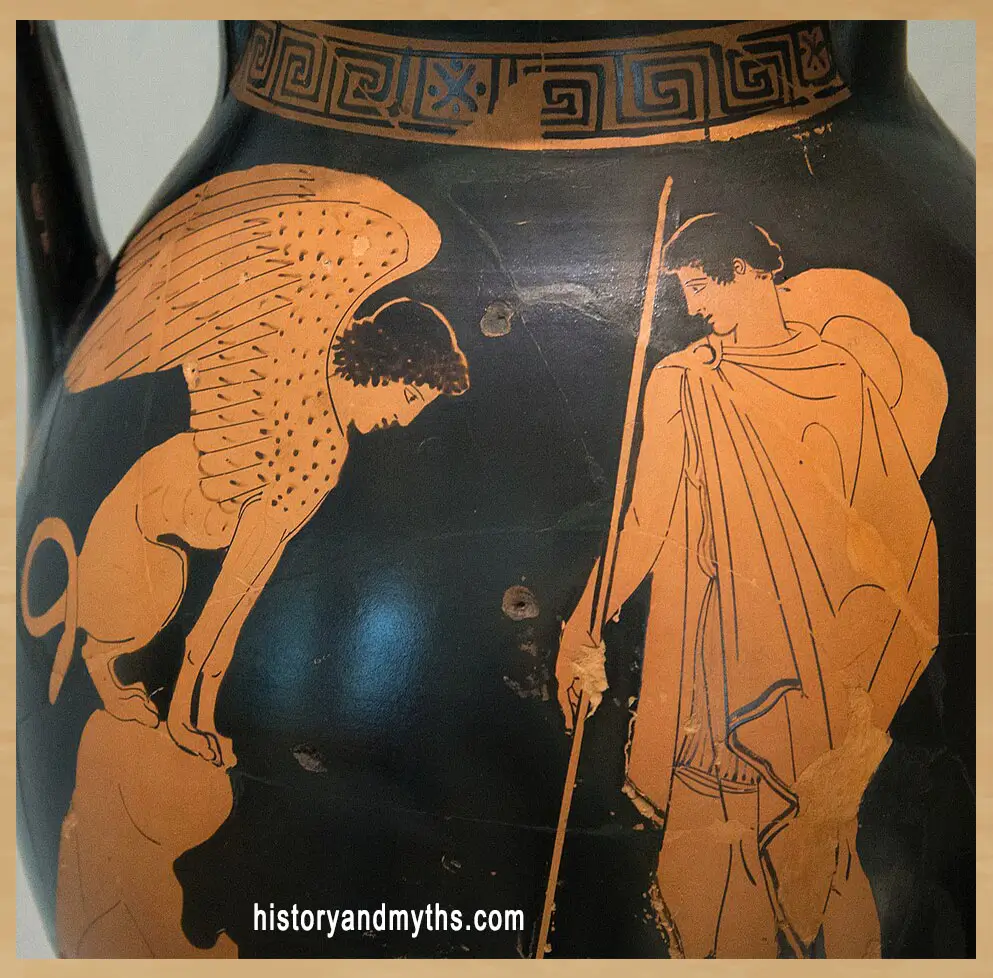
The story of Oedipus provides the clearest example. The tragedy does not begin with the prophecy itself. It begins with the actions taken in response to it. Attempts to prevent the prediction set a chain of events into motion, eventually producing the very outcome everyone hoped to avoid. The prophecy succeeds not because people do nothing, but because they act.
This idea appears elsewhere in Greek mythology as well. Characters who receive warnings often focus so intensely on one future threat that they fail to recognize the dangers created by their own responses. In trying to control destiny, they lose control of their decisions. The prophecy becomes a trap not because it removes free will, but because fear narrows the range of choices people are willing to consider.
For Greek audiences, these stories carried an important lesson. Human beings may influence events, but they cannot eliminate uncertainty by force. Attempts to dominate the future often create consequences that are impossible to predict. Prophetic disasters therefore reveal a recurring theme in Greek mythology: the desire for absolute control can become more destructive than the fate a person is trying to escape.
Why Greek Myths Rarely Show Prophecies Failing
A striking feature of Greek mythology is how rarely prophecies turn out to be wrong. Modern audiences often expect predictions to be challenged, disproven, or overturned. Greek myths usually take a different approach. Once a genuine prophecy has been delivered by a trusted divine source, the question is not whether it will happen, but how it will happen.
This reflects the role that prophecy played within Greek religious thought. A prophecy was not treated as a guess about the future. It was viewed as insight into a reality that already existed beyond ordinary human perception. Gods could see patterns and outcomes that mortals could not. As a result, the accuracy of prophecy reinforced the idea that divine knowledge was fundamentally different from human knowledge.
Because of this, Greek myths rarely focus on testing whether a prophecy is true. Instead, they explore how people respond to truth when it conflicts with their desires. Characters reject warnings, misinterpret messages, or attempt to avoid predicted outcomes. The drama comes from human reactions, not from uncertainty about the prophecy itself.
This narrative choice also serves a deeper purpose. If prophecies regularly failed, they would lose their symbolic power. Greek mythology uses prophecy to demonstrate that there are limits to human understanding. Mortals can make choices, but they cannot see the entire structure of events in the way divine powers can. The fulfillment of prophecy reinforces that difference.
For Greek audiences, the lesson was not that the future was completely fixed. Rather, it was that human beings should be cautious about assuming they possess complete control or complete knowledge. Prophetic disasters repeatedly show what happens when confidence exceeds wisdom. The tragedy often emerges from the belief that a person can outthink forces that operate on a much larger scale than individual plans or ambitions.
The Greek Prophecy Paradox
In many Greek myths, the prophecy itself is not the true source of disaster. The disaster begins when people attempt to avoid it. Fear of the future leads to decisions that would never have been made otherwise, and those decisions gradually bring the predicted outcome closer. This recurring pattern transformed prophecy from a simple prediction into a powerful exploration of fate, choice, and human limitation.
© historyandmyths.com — Educational Use
Prophecy and the Limits of Human Control
Many Greek myths use prophecy to explore a question that lies at the center of human experience: how much control do people actually have over their lives? The answer offered by these stories is neither complete freedom nor complete helplessness. Individuals make choices, but those choices exist within limits they do not fully understand.
This is why prophetic disasters often feel different from ordinary tragedies. The characters involved are not passive victims waiting for fate to arrive. They act, plan, resist, and struggle. Yet their efforts repeatedly reveal that knowledge, power, and determination cannot guarantee the outcome they want. The future remains larger than any single person’s ability to control it.
Greek mythology frequently portrays rulers, heroes, and parents as believing they can manage events through intelligence or authority. Prophecy challenges that assumption. It exposes the gap between what people think they can control and what they can actually control. The resulting disaster often begins when someone mistakes influence for mastery.
This theme helps explain why prophetic stories remained important for Greek audiences. They were not simply tales about fate. They were reflections on human limitations. No matter how powerful a king became or how skilled a hero proved to be, there were still forces beyond individual command. Prophecy made those limits visible.
By connecting disaster to the illusion of control, Greek mythology delivered a message that extended far beyond religion. Wisdom did not come from dominating the future. It came from recognizing the boundaries of human knowledge and acting responsibly within them. Prophetic disasters therefore reveal one of the most enduring ideas in Greek thought: understanding one’s limits was often a greater virtue than trying to overcome them.
What Prophetic Disasters Revealed About Greek Beliefs
Prophetic disasters reveal that Greek mythology was not primarily concerned with predicting the future. Its deeper concern was the relationship between knowledge, choice, and consequence. The recurring tragedies associated with prophecy suggest that the Greeks viewed the future as something far more complex than a problem that could be solved through information alone.
These myths repeatedly challenge a common assumption: that knowing what lies ahead automatically provides an advantage. In Greek thought, knowledge could become a burden when it inspired fear, overconfidence, or desperate attempts to control events. A prophecy often became dangerous because people believed they could use it to escape uncertainty rather than learn from it.
The stories also reveal a culture deeply interested in the limits of human perspective. Mortals saw only fragments of reality, while divine powers possessed a broader view of how events were connected. Prophetic disasters highlighted the risks of making decisions based on incomplete understanding. Characters acted with confidence, yet their actions often produced consequences they never anticipated.
At the same time, these myths were not arguments for passivity. Greek heroes and rulers were still expected to make choices and accept responsibility for them. The lesson was not that action is useless, but that wisdom requires humility. Recognizing the limits of one’s knowledge was often portrayed as a greater strength than attempting to dominate an uncertain future.
Viewed together, prophetic disasters reveal a central belief within Greek mythology: human beings cannot eliminate uncertainty, no matter how much knowledge they acquire. The future remains partly beyond their reach. The tragedies associated with prophecy therefore served as reminders that fear, pride, and the desire for absolute control can become more dangerous than the future itself.
Key Takeaways
- Greek prophecies were dangerous because they changed human behavior after being revealed.
- Many prophetic disasters were caused by attempts to avoid the predicted future.
- Myths often portray fear as more destructive than the prophecy itself.
- Prophecy exposed the limits of human control rather than eliminating free choice.
- Greek myths rarely show true prophecies failing because they reinforced the superiority of divine knowledge.
- Prophetic disasters explored responsibility, uncertainty, and the consequences of acting from fear.
Frequently Asked Questions
What is a prophetic disaster in Greek mythology?
A prophetic disaster is a tragedy that develops after a prophecy is revealed, often because people take actions to avoid the predicted outcome.
Why were prophecies feared in Greek mythology?
They created uncertainty and often forced people to make difficult decisions about events they believed were unavoidable.
Did Greek prophecies always come true?
In mythology, genuine divine prophecies almost always come true, though often in unexpected ways.
Why does Oedipus represent a prophetic disaster?
His story demonstrates how attempts to avoid a prophecy can contribute to its fulfillment.
What role did fate play in Greek prophecies?
Fate represented forces beyond ordinary human control, making prophecies powerful reminders of human limitations.
Were prophecies considered divine messages?
Yes. Greeks often viewed prophecies as insights granted by divine powers, particularly through sacred oracles.
What lesson did prophetic disasters teach?
They taught that fear, pride, and the desire for absolute control can create consequences more dangerous than uncertainty itself.
Why do Greek myths focus on reactions to prophecy?
Because the response to a prophecy often reveals character, judgment, and the limits of human understanding.
Sources & Rights
- Parke, H. W., and Donald Wormell. The Delphic Oracle. Oxford University Press.
- Fontenrose, Joseph. The Delphic Oracle: Its Responses and Operations. University of California Press.
- Dodds, E. R. The Greeks and the Irrational. University of California Press.
- Burkert, Walter. Greek Religion. Harvard University Press.
- Parker, Robert. On Greek Religion. Cornell University Press.
- Vernant, Jean-Pierre. Myth and Thought Among the Greeks. Zone Books.
- Johnston, Sarah Iles. Ancient Greek Divination. Wiley-Blackwell.
- Mikalson, Jon D. Ancient Greek Religion. Wiley-Blackwell.
- Bremmer, Jan N. Greek Religion. Oxford University Press.
- Buxton, Richard. The Complete World of Greek Mythology. Thames & Hudson.
- Gantz, Timothy. Early Greek Myth. Johns Hopkins University Press.
- Nilsson, Martin P. A History of Greek Religion. Oxford University Press.
- Homer. Iliad.
- Homer. Odyssey.
- Hesiod. Theogony.
- Sophocles. Oedipus Tyrannus.
- Sophocles. Antigone.
- Aeschylus. Agamemnon.
- Euripides. The Phoenician Women.
- Apollodorus. Library.
- Pausanias. Description of Greece.
- Herodotus. Histories.
- Plutarch. Moralia.
Written by H. Moses — All rights reserved © Mythology and History