The Minotaur and the Fear of the Labyrinth in Greek Mythology
In Greek mythology, the Minotaur is often remembered as a terrifying monster hidden beneath the island of Crete. Yet the creature alone does not explain why the story remained famous for centuries. The true source of fear was the labyrinth itself—a vast maze designed to ensure that anyone who entered would struggle to find a way out. The Minotaur was dangerous, but the certainty of becoming lost made the danger far more terrifying.
The myth combines two fears that appear throughout human history: the fear of being hunted and the fear of losing one’s way. Victims sent into the labyrinth faced both at the same time. They entered a place where escape seemed impossible, surrounded by twisting passages that concealed a predator waiting somewhere in the darkness. The maze transformed the Minotaur from a monster into an inescapable threat.
Understanding the Minotaur myth therefore requires looking beyond the creature itself. The story is also about isolation, confinement, power, and the psychological fear of entering a place where familiar rules no longer apply. At the center of the myth stands a simple but powerful question: was the Minotaur truly the greatest danger, or was it the labyrinth that made him impossible to escape?
Who Was the Minotaur?
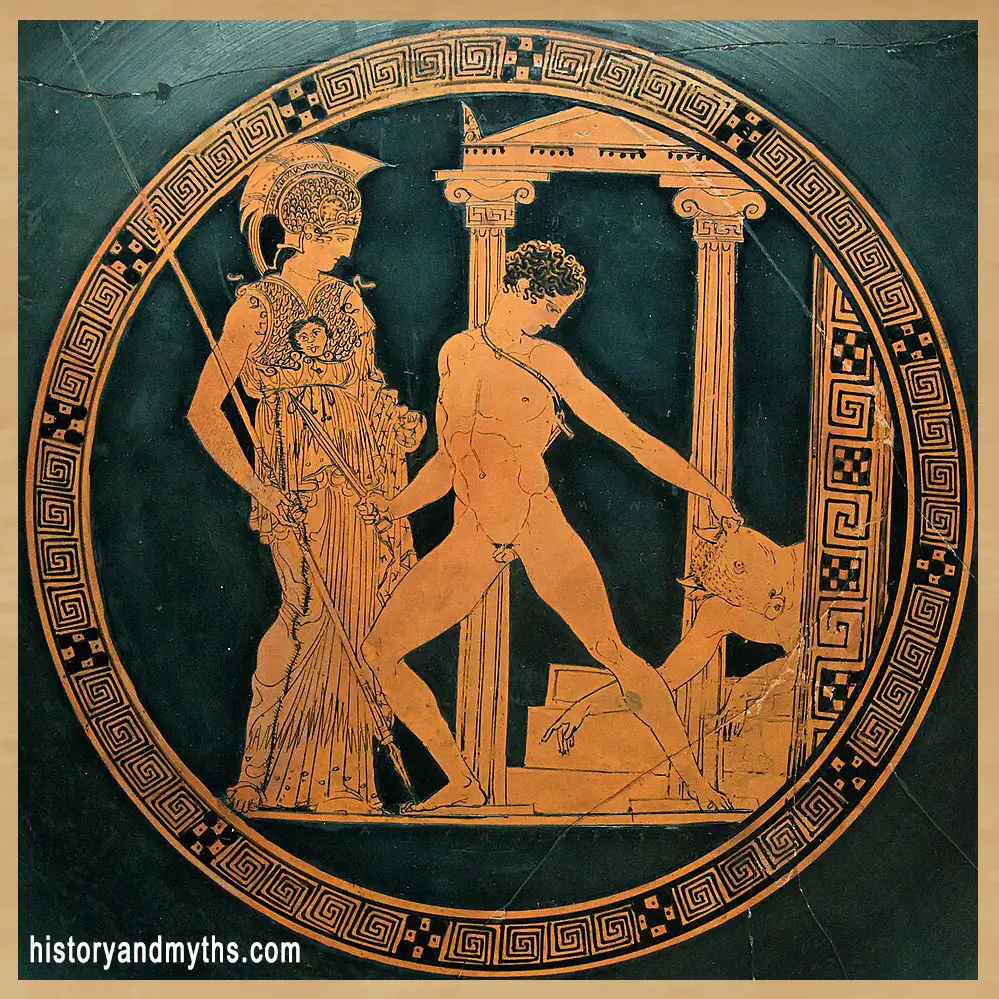
The Minotaur was one of the most famous monsters in Greek mythology, described as a creature with the body of a man and the head of a bull. According to myth, he lived within the Labyrinth on Crete, where he was hidden from the outside world and fed with human victims sent from Athens. His unusual appearance immediately set him apart from both humans and animals, making him a symbol of something that did not belong to the normal order of society.
Yet the Minotaur’s importance comes from more than his physical form. Unlike many monsters that roam freely across the landscape, he exists almost entirely within a confined space. Greek storytellers rarely focus on his actions outside the Labyrinth because the monster and the maze are inseparable parts of the same story. One gives meaning to the other.
This connection helps explain why the Minotaur remained so memorable. A dangerous beast can be avoided, fought, or escaped. The Minotaur was different because he waited at the center of a structure designed to remove those options. Anyone sent into the Labyrinth faced not only a monster but also a place specifically created to make survival unlikely.
For that reason, the Minotaur is best understood not simply as a creature to be feared but as part of a larger system of confinement, uncertainty, and psychological terror. His story begins with the monster, but it becomes powerful because of the world built around him.
| Element | The Minotaur | The Labyrinth |
|---|---|---|
| Role | Physical threat | Psychological threat |
| Symbolism | Hidden danger | Confusion and isolation |
| Challenge | Survive the encounter | Find a way out |
| Defeated By | Theseus’s strength | Ariadne’s thread |
| Core Fear | Being hunted | Being lost forever |
Why the Labyrinth Mattered More Than the Monster
The Minotaur may be the figure people remember, but the Labyrinth is what makes the myth truly frightening. A monster can be confronted. A maze changes the rules entirely. It creates confusion, removes certainty, and turns every decision into a risk. Before anyone encountered the Minotaur, they first had to survive a place designed to disorient them.
This is why the Labyrinth was such a powerful idea in Greek mythology. It transformed fear from a single moment into a continuous experience. Every corridor raised new questions. Was the exit nearby? Was the monster close? Was the path ahead leading to safety or deeper danger? The uncertainty itself became part of the punishment.
The maze also stripped people of control. In most myths, heroes can rely on strength, speed, or courage. Inside the Labyrinth, those qualities are not always enough. A person who cannot find the correct path remains trapped regardless of physical ability. The challenge becomes mental as much as physical.
Seen this way, the Minotaur was only one half of the threat. The Labyrinth ensured that victims could not easily escape, avoid danger, or understand their surroundings. It turned the monster into an inescapable presence, making the fear of the maze just as important as the creature waiting within it.
A Prison Built to Hide a Secret
The Labyrinth was not originally created to trap innocent victims. According to the myth, it was built to contain the Minotaur himself. King Minos faced a problem that could not be solved publicly: a creature whose existence threatened both his authority and his reputation. The maze provided a way to hide that problem from the world while keeping it under control.
This detail changes how the story is understood. The Labyrinth was not simply an architectural wonder. It was a prison designed for something that could not be allowed to roam freely. Its complex passages served a practical purpose: preventing escape. The structure existed because the danger at its center was considered too great to manage by ordinary means.
The myth also reflects a broader theme found throughout Greek storytelling. Powerful societies often attempt to conceal uncomfortable truths rather than confront them directly. The Minotaur was not destroyed when he first appeared. Instead, he was hidden away. The Labyrinth became a physical barrier between the public world and a secret that rulers wanted to keep out of sight.
As a result, the maze symbolizes more than confusion. It represents the attempt to contain a dangerous reality without truly resolving it. The Minotaur remained alive, and the problem remained unsolved. The Labyrinth merely delayed the moment when someone would eventually have to face what was hidden inside.
The Fear of Being Lost
One of the most powerful fears in the Minotaur myth has little to do with the monster itself. It is the fear of becoming lost in a place where every direction looks the same and every choice might lead farther from safety. Long before anyone encountered the Minotaur, the Labyrinth forced them to confront uncertainty.
Unlike a battlefield, where danger can often be seen, the maze concealed its threats. Victims could not know where the monster was, how far they had traveled, or whether they were moving toward an exit. This lack of information created a different kind of fear—one based on confusion rather than direct confrontation.
The story also reflects a common human experience. Becoming lost is frightening because it removes the sense of control that people depend on. Familiar landmarks disappear, decisions become difficult, and confidence begins to fade. The Labyrinth takes that feeling and turns it into the central challenge of the myth.
For this reason, the maze remains one of the most enduring symbols in Greek mythology. The fear it represents is universal. Most people will never face a monster, but everyone understands the anxiety of not knowing where they are, where they should go, or how they will find their way out.
Why the Athenians Sent Victims into the Labyrinth
The Minotaur myth was also a story about power. According to Greek tradition, Athens was required to send young men and women to Crete as tribute, where they would be placed inside the Labyrinth and ultimately face the monster. Whether understood as history, legend, or political symbolism, this arrangement highlights a relationship built on dominance and submission.
For the Athenians, the fear was not limited to the Minotaur. It began long before entering the maze. Families knew that those selected for the tribute were being sent into a situation from which few expected a return. The journey itself became a symbol of helplessness in the face of a stronger power.
This part of the myth helps explain why Theseus became such an important figure. His decision to join the victims was not simply an act of personal bravery. It represented resistance against a system that forced one community to sacrifice its people for the benefit of another. By entering the Labyrinth, he challenged both the monster and the authority that sustained the practice.
Viewed in this light, the story is about more than survival. It explores how fear can be used to maintain control. The Labyrinth and the Minotaur created a constant reminder of Crete’s power, turning the monster into a tool of political domination as well as a source of terror.
The Real Horror of the Myth
The Minotaur is often remembered as the villain of the story, but Greek mythology presents a more complex fear. The Labyrinth transformed a dangerous creature into an almost inescapable threat by removing certainty, direction, and control.
- The maze was originally built to contain the Minotaur.
- Victims feared becoming lost as much as they feared the monster.
- The Labyrinth turned confusion into a form of punishment.
- Theseus succeeded through strategy as well as courage.
- Ariadne’s thread solved the maze before the monster was defeated.
- The myth explores fear, power, isolation, and hidden dangers.
© historyandmyths.com
The Minotaur as a Symbol of Hidden Fear
The Minotaur is often described as a physical monster, but his lasting significance comes from what he represents. He lives out of sight, hidden beneath the surface of society, known to exist but rarely seen. This makes him a powerful symbol of fears that people try to contain rather than confront directly.
Many of the dangers in Greek mythology appear openly and can be challenged face to face. The Minotaur is different. He remains isolated at the center of the Labyrinth, turning him into a constant but unseen threat. People fear him not only because of what he does, but because of what they imagine he might do.
This aspect of the myth helps explain its enduring appeal. Hidden fears often feel more powerful than visible ones. When a threat cannot be fully understood or located, it becomes easier to exaggerate and more difficult to control. The Labyrinth amplifies this effect by separating the monster from ordinary experience.
The Minotaur therefore represents more than violence or danger. He symbolizes the fears that societies attempt to lock away, ignore, or conceal. The myth suggests that hiding such problems does not remove them. Eventually, someone must enter the maze and face what has been waiting there all along.
Continue Reading
Theseus and the Problem of Finding a Way Out
The most difficult part of Theseus’s mission was not killing the Minotaur. It was escaping the Labyrinth afterward. Defeating the monster solved one problem, but it did not solve the challenge of navigating a structure specifically designed to prevent anyone from leaving.
This detail is easy to overlook, yet it sits at the center of the myth. A hero who cannot find the exit remains trapped regardless of his strength or courage. The story therefore shifts the focus from combat to navigation, planning, and problem-solving. Success depends not only on confronting danger but also on understanding how to escape it.
This is why Ariadne’s thread becomes so important. The thread provides a simple solution to a complex problem: it creates a connection between the entrance and the center of the maze. Instead of relying on memory or luck, Theseus gains a reliable path home.
The episode reveals an idea that appears repeatedly in Greek mythology. Intelligence often succeeds where force alone cannot. The Minotaur is defeated by strength, but the Labyrinth is defeated by strategy. Without both, the journey would remain unfinished.
Why Ariadne’s Thread Matters
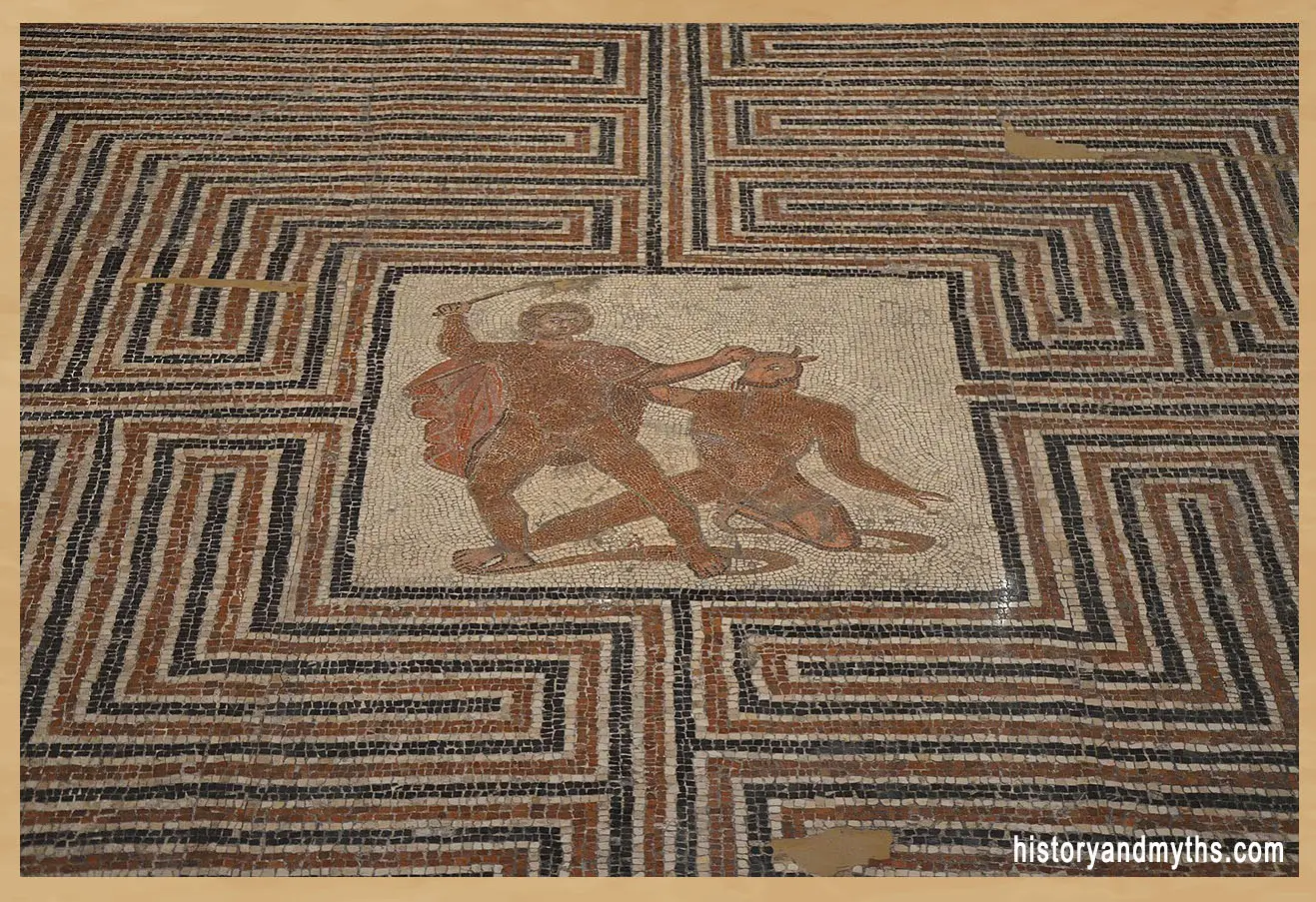
At first glance, Ariadne’s thread seems like a minor detail in the story. In reality, it is one of the most important objects in the entire myth. Without it, Theseus could have killed the Minotaur and still failed to escape the Labyrinth. The thread transforms survival from a matter of strength into a matter of knowledge.
The thread works because it solves the maze’s greatest danger: disorientation. Instead of memorizing countless passages, Theseus creates a simple connection between where he starts and where he needs to return. The solution is remarkably practical, which helps explain why it became one of the most memorable elements of Greek mythology.
Its symbolic meaning is equally important. Throughout Greek myth, heroes often receive guidance, advice, or tools that allow them to overcome challenges that brute force alone cannot solve. Ariadne’s gift reminds us that wisdom, preparation, and assistance can be just as valuable as courage.
The lasting influence of this image can still be seen today. The phrase “Ariadne’s thread” is often used to describe a clue, method, or idea that helps someone navigate a difficult problem. Long after the Minotaur and the Labyrinth became myths, the thread remained a symbol of finding direction in situations that seem impossible to understand.
What the Labyrinth Reveals About Greek Society
The Labyrinth is often treated as a setting, but it also reflects ideas that mattered to the Greeks themselves. At its core, the story is concerned with control. King Minos uses the maze to contain a threat, protect his authority, and maintain a system that forces others to submit to his power. The structure is therefore as much a political symbol as an architectural one.
The myth also highlights the value Greeks placed on intelligence. The problem of the Labyrinth cannot be solved through strength alone. Success requires planning, guidance, and the ability to navigate uncertainty. This emphasis on cleverness appears throughout Greek mythology and helps explain why figures such as Odysseus and Theseus were admired.
Another important theme is the tension between civilization and what lies beyond it. The palace of Minos represents order, law, and royal authority. Hidden beneath it is the Minotaur, a creature that exists outside those boundaries. The maze stands between these worlds, separating the familiar from the unknown.
For Greek audiences, the story was not simply about a monster trapped underground. It explored questions about power, fear, knowledge, and the hidden dangers that can exist beneath even the most impressive societies. That complexity is one reason the myth has remained relevant for more than two thousand years.
The Minotaur remains one of the most famous figures in Greek mythology, but the enduring power of the myth comes from more than the monster itself. The story combines physical danger with psychological fear, placing both at the center of the Labyrinth. What makes the tale memorable is not simply the presence of a deadly creature, but the experience of entering a place where direction, certainty, and control have been taken away.
The Labyrinth transforms the Minotaur from a dangerous opponent into an almost inescapable threat. It creates confusion, isolation, and the constant fear of becoming lost. For this reason, the maze is not merely the setting of the story—it is one of its central characters.
The myth also explores themes that mattered deeply to Greek society, including power, intelligence, secrecy, and the struggle between order and chaos. Theseus succeeds not because he is the strongest person to enter the Labyrinth, but because he combines courage with guidance and strategy. The story repeatedly shows that understanding a problem can be just as important as confronting it.
More than two thousand years later, the image of the Minotaur at the center of the Labyrinth continues to resonate because it reflects a fear that remains familiar: the fear of entering a place where the path forward is uncertain and the way back is difficult to find.
Key Takeaways
- The Minotaur and the Labyrinth function as a single system of fear.
- The maze is just as important as the monster in the myth.
- The Labyrinth symbolizes confusion, uncertainty, and isolation.
- The Minotaur represents hidden threats kept out of public view.
- Theseus’s challenge was not only defeating the monster but escaping the maze.
- Ariadne’s thread symbolizes knowledge, guidance, and problem-solving.
- The myth reflects Greek concerns about power, secrecy, and control.
Frequently Asked Questions
Who was the Minotaur in Greek mythology?
The Minotaur was a creature with the body of a man and the head of a bull who lived in the Labyrinth beneath Crete.
Why was the Minotaur kept inside the Labyrinth?
The Labyrinth was built to imprison the creature and prevent it from escaping into the outside world.
Who killed the Minotaur?
Theseus killed the Minotaur during his journey into the Labyrinth.
Why is the Labyrinth important in the myth?
The maze creates the fear of confusion, isolation, and becoming permanently lost, making the story more than a simple monster tale.
What did Ariadne’s thread do?
It allowed Theseus to retrace his path and escape the Labyrinth after defeating the Minotaur.
What does the Minotaur symbolize?
The Minotaur often symbolizes hidden dangers, suppressed fears, and threats concealed beneath society.
What does the Labyrinth symbolize?
The Labyrinth represents confusion, uncertainty, and the challenge of finding direction in difficult situations.
Why does the Minotaur myth remain popular today?
Because it combines universal fears of being hunted, trapped, and lost with themes of courage, intelligence, and survival.
Sources & Rights
- Apollodorus. Bibliotheca. Loeb Classical Library.
- Plutarch. Life of Theseus. Loeb Classical Library.
- Diodorus Siculus. Library of History. Loeb Classical Library.
- Hyginus. Fabulae. University of Kansas Publications.
- Burkert, Walter. Greek Religion. Harvard University Press.
- Graf, Fritz. Greek Mythology: An Introduction. Johns Hopkins University Press.
- Buxton, Richard. The Complete World of Greek Mythology. Thames & Hudson.
- Hard, Robin. The Routledge Handbook of Greek Mythology. Routledge.
- Gantz, Timothy. Early Greek Myth. Johns Hopkins University Press.
- Dowden, Ken. The Uses of Greek Mythology. Routledge.
- Kirk, G. S. The Nature of Greek Myths. Penguin Books.
- Nilsson, Martin P. A History of Greek Religion. Oxford University Press.
- Johnston, Sarah Iles. The Story of Myth. Harvard University Press.
- Boardman, John. The Greeks Overseas. Thames & Hudson.
- Edmonds, Radcliffe G. Greek Mythology: A Reader. Hackett Publishing.
Written by H. Moses — All rights reserved © Mythology and History