Islands of the Blessed: The Paradise of Heroes in Greek Mythology
The Islands of the Blessed occupy a curious place in Greek mythology. They are often described as a paradise reserved for exceptional heroes, yet many modern readers encounter them only briefly before the discussion shifts to Elysium or the Underworld. As a result, the Blessed Isles are frequently misunderstood, merged with other mythical destinations, or treated as a different name for places that served a very different purpose.
In the earliest traditions, the Islands of the Blessed were imagined as a distant realm at the edge of the world, far beyond the lands known to ordinary people. Life there was free from hardship, conflict, and decay. Unlike most mortals, the individuals who reached these islands did not simply receive a favorable afterlife—they entered a privileged existence reserved for a select few whose status set them apart from humanity as a whole.
Understanding the Blessed Isles therefore requires more than identifying them on a mythical map. They reveal how the Greeks imagined heroic reward, sacred geography, and the possibility of a perfect land beyond the limits of the known world. They also help explain why Greek mythology developed several different visions of paradise rather than a single destination for the dead.
What Were the Islands of the Blessed?
The Islands of the Blessed, known in Greek as Makaron Nesoi, were a mythical paradise located at the far edge of the world beyond the ordinary reach of humanity. Unlike the Underworld, which received the vast majority of the dead, these islands were reserved for a much smaller group of exceptional individuals whose lives or achievements set them apart from other mortals.
Ancient sources describe the Blessed Isles as a place free from hardship and suffering. The land produced abundance without labor, the climate remained pleasant, and those who lived there enjoyed an existence untouched by many of the difficulties that defined ordinary human life. Rather than a realm of judgment or punishment, the islands represented reward and permanence.
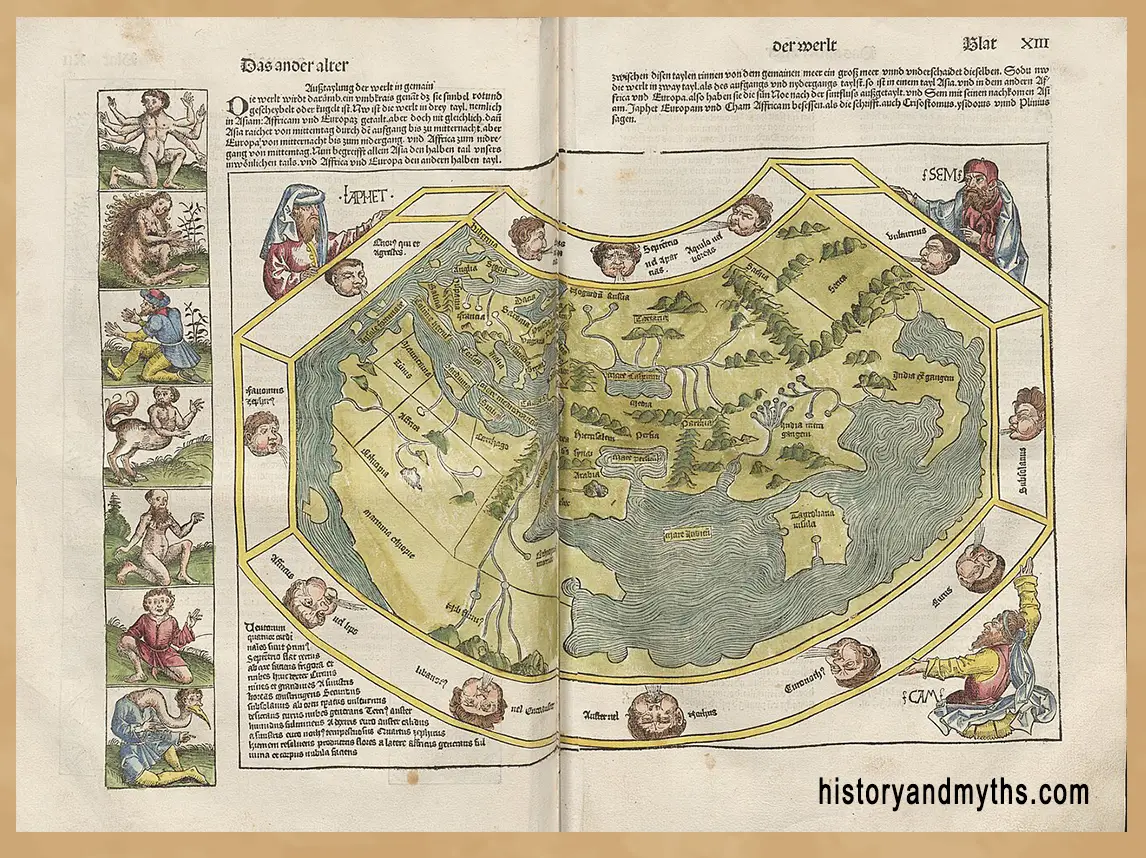
The location itself was important. Greek writers typically placed the islands near the limits of the known world, often beyond Oceanus, the great river believed to encircle the earth. Their distance reinforced the idea that perfection existed outside the boundaries of normal experience. The paradise could be imagined, but it could not be reached through ordinary travel.
The Blessed Isles also occupied a unique position within Greek mythology because they combined elements of sacred geography and the afterlife. They were simultaneously a place on the mythological map and a destination associated with heroic reward. This dual nature helps explain why later traditions sometimes linked them with Elysium while still treating them as a distinct location.
For Greek audiences, the Islands of the Blessed represented more than a pleasant afterlife. They embodied the idea that extraordinary lives deserved an extraordinary destination, a realm separated from both the struggles of the living world and the shadows of the ordinary dead.
| Mythological Paradise | Who Lives There? | Primary Function | Location |
|---|---|---|---|
| Islands of the Blessed | Exceptional heroes | Heroic reward and immortality | Beyond Oceanus at the edge of the world |
| Elysium | Favored mortals and heroes | Blessed afterlife | Remote paradise later linked to the afterlife |
| Hyperborea | Living blessed people | Ideal earthly society | Beyond the North Wind |
Who Was Allowed to Live There?
The Islands of the Blessed were never intended for ordinary mortals. Greek tradition consistently presents them as a reward reserved for exceptional individuals whose status placed them above the rest of humanity. Entry depended not on wealth, social rank, or ritual observance, but on a form of heroic distinction recognized by the gods.
Most accounts associate the islands with legendary heroes. These were figures whose achievements, suffering, or divine connections elevated them beyond normal human limits. Their lives often involved extraordinary trials, and the Blessed Isles provided a final reward that reflected their unique place within the mythological world.
This exclusivity is one of the features that distinguishes the islands from broader concepts of the afterlife. The destination was never imagined as a universal paradise available to all good people. Instead, it functioned as a privileged realm for a select minority whose lives carried exceptional significance.
Some traditions also suggest that certain heroes could reach the Blessed Isles after experiencing death more than once or after receiving special favor from the gods. Such stories reinforce the idea that entry was based on divine recognition rather than a fixed set of moral rules. The inhabitants belonged there because they occupied a unique position between humanity and the divine.
For Greek audiences, the message was clear. The Blessed Isles were not simply a pleasant destination after death. They represented the highest reward available within the mythological imagination, reserved for those whose deeds allowed them to transcend the ordinary limits of mortal existence.
Why Were the Blessed Isles Located at the Edge of the World?
The location of the Islands of the Blessed was not chosen randomly. Greek mythology repeatedly places ideal lands beyond the boundaries of the known world, in regions that ordinary people could imagine but never realistically reach. By placing the Blessed Isles at the far edge of existence, myth transformed them into a destination separated from the imperfections of everyday life.
This pattern appears throughout Greek sacred geography. Paradise is rarely found at the center of the human world. Instead, it lies beyond oceans, mountains, or other natural limits that mark the boundary between the familiar and the unknown. Distance itself becomes part of the symbolism. The farther a place is from ordinary experience, the easier it becomes to imagine it as perfect.
The association with Oceanus reinforces this idea. In many Greek cosmological traditions, Oceanus encircled the world and marked the outer limit of human geography. Locating the Blessed Isles beyond or near this boundary placed them in a realm that existed between the human world and something greater. They belonged to the map, yet remained beyond normal access.
This geographical isolation also protected the paradise from change. Cities decline, kingdoms fall, and human societies experience conflict, but the Blessed Isles remain untouched because they exist outside the historical world. Their distance allows them to function as a permanent symbol of harmony and reward.
For Greek audiences, the location of the islands carried an important message. Perfection was not something available within ordinary life. It existed beyond the limits of the known world, accessible only to those rare individuals whose status allowed them to cross boundaries that other mortals could never pass.
Cronus and the Rule of the Blessed Isles
One of the most overlooked aspects of the Islands of the Blessed is their connection to Cronus. In several later traditions, the defeated Titan is not portrayed as eternally imprisoned after the Titanomachy. Instead, he is associated with the Blessed Isles, where he rules over a peaceful realm far removed from the struggles that once defined the divine world.
This tradition is significant because it gives the islands a role beyond that of a heroic paradise. They become a place linked to an earlier cosmic age, a memory of the period before Zeus and the Olympians established their rule. The presence of Cronus connects the Blessed Isles to themes of lost harmony, divine succession, and the passage from one world order to another.
The association also helps explain why the islands are often described as unusually peaceful. Cronus was remembered not only as a fallen ruler but also as the king of the Golden Age, a mythical era when humanity lived without labor, warfare, or suffering. By placing him in the Blessed Isles, Greek tradition symbolically relocates the ideals of the Golden Age to a distant paradise beyond the ordinary world.
This does not mean the islands oppose Olympus. Rather, they preserve a different vision of perfection. Olympus represents divine authority and active governance, while the Blessed Isles evoke rest, stability, and the recovery of a harmony that no longer exists within the human world.
For this reason, the connection between Cronus and the Blessed Isles is more than a mythological detail. It reveals that the islands were imagined not only as a destination for heroes but also as a sanctuary where the memory of an earlier and more peaceful cosmic age continued to survive.
The Key Idea Behind the Blessed Isles
The Islands of the Blessed were not the Greek version of heaven for everyone. They were an exclusive paradise reserved for exceptional heroes whose achievements elevated them above ordinary humanity. Located beyond the known world, the islands combined sacred geography, heroic reward, and memories of the Golden Age under Cronus.
© historyandmyths.com — Educational Use
Islands of the Blessed vs Elysium
The Islands of the Blessed and Elysium are often treated as the same place, but the relationship between them is more complicated. While both represent privileged destinations associated with happiness and reward, they emerged from different traditions and served slightly different functions within Greek mythology.
Elysium appears early as a special afterlife reserved for favored individuals. In Homer’s works, it is presented as a distant realm where selected heroes enjoy an existence free from suffering. The emphasis is placed on the condition of life there rather than on a specific geographical setting.
The Islands of the Blessed, by contrast, are more closely tied to sacred geography. They are imagined as actual islands located at the edge of the world beyond Oceanus. Their identity depends not only on who lives there but also on where they exist within the mythological landscape.
Over time, these traditions began to overlap. Later authors sometimes connected Elysium and the Blessed Isles so closely that the distinction became blurred. Both came to represent ideal destinations for heroic figures after death, and some sources effectively merged them into a single paradise.
Despite this convergence, the original difference remains useful. Elysium is primarily a concept of heroic reward in the afterlife, while the Islands of the Blessed are a specific paradise situated within Greek sacred geography. Understanding that distinction helps explain why ancient sources occasionally describe them separately even when they share similar characteristics.
For modern readers, the two places are best understood as related rather than identical. They belong to the same family of mythological paradises, but they developed from different traditions before gradually moving closer together in later Greek thought.
Islands of the Blessed vs Hyperborea
Although both are often described as perfect lands located beyond the limits of the known world, the Islands of the Blessed and Hyperborea serve very different purposes in Greek mythology. Their similarities can make them easy to confuse, but they belong to separate mythological traditions.
The most important difference is that Hyperborea is not an afterlife. It is a remote earthly paradise inhabited by a blessed people who live in harmony with the gods. Its residents are not dead heroes but an extraordinary community believed to exist beyond the reach of ordinary human experience.
The Islands of the Blessed, by contrast, are closely associated with heroic reward after death. Their inhabitants are exceptional individuals who have already completed their mortal lives and received a unique privilege unavailable to most people. The islands therefore function as part of Greek ideas about destiny, immortality, and the fate of heroes.
Their geographical symbolism also differs. Hyperborea lies beyond the North Wind, in a distant northern realm separated from the human world by geography. The Blessed Isles are usually placed near the outer boundaries of Oceanus, emphasizing their connection to the edges of the mythological cosmos and the transition between life and heroic immortality.
The two places nevertheless share a common purpose. Both allow Greek mythology to imagine forms of existence untouched by ordinary suffering. They represent ideal worlds located beyond familiar reality, but they achieve that goal in different ways. Hyperborea offers a vision of perfect life, while the Islands of the Blessed offer a vision of perfect reward.
Understanding this distinction helps clarify why Greek mythology contains multiple paradises. Each one addresses a different question about what lies beyond the limits of ordinary human experience.
Why Did Greek Mythology Imagine Multiple Paradises?
The existence of several paradises in Greek mythology reflects the fact that Greek beliefs were never organized into a single, unified system. Different regions, poets, religious traditions, and historical periods developed their own ideas about ideal places beyond ordinary human life. Rather than replacing one another, many of these concepts continued to coexist.
Each paradise also served a different purpose. Elysium addressed the fate of favored individuals after death. The Islands of the Blessed focused on heroic reward and sacred geography. Hyperborea imagined a perfect society living beyond the known world. Although all three represent happiness and freedom from suffering, they answer different questions about perfection.
This diversity allowed Greek mythology to explore several forms of human aspiration. Some stories imagined an ideal destination after death. Others imagined a lost golden age, a remote land of divine favor, or a place where heroes could transcend ordinary mortality. A single paradise would have been too limited to contain all of these ideas.
The presence of multiple paradises also reflects the flexible nature of Greek myth itself. Greek mythology was not governed by a central authority that enforced one official cosmology. Different traditions could develop side by side, sometimes overlapping and sometimes contradicting one another without being considered problematic.
As a result, the various paradises of Greek mythology should not be viewed as competing versions of the same place. They are different expressions of a broader desire to imagine worlds untouched by the hardships, uncertainties, and limitations that defined ordinary human existence.
What the Islands of the Blessed Symbolized
At their deepest level, the Islands of the Blessed were not simply a paradise for heroes. They represented an answer to one of the oldest questions in Greek mythology: what becomes of exceptional individuals after death? The islands provided a way to imagine a reward that matched the extraordinary nature of heroic lives.
The symbolism extends beyond personal immortality. The Blessed Isles embody the idea that virtue, courage, endurance, and divine favor can overcome the limitations of ordinary human existence. Heroes do not become gods, but neither do they share the fate of the common dead. They occupy a unique space between mortality and divinity.
The islands also symbolize separation from the imperfections of the human world. Warfare, political conflict, labor, aging, and suffering all disappear. In their place stands a vision of permanent stability and abundance. This contrast highlights the gap between ordinary life and the ideal condition imagined by myth.
Their location at the edge of the world reinforces another symbolic theme: perfection is distant. It cannot be reached through wealth, power, or exploration. The Blessed Isles exist beyond normal human boundaries, emphasizing that some ideals remain permanently outside everyday experience.
For Greek audiences, the Islands of the Blessed ultimately expressed hope that greatness could be rewarded and remembered. They transformed heroic achievement into a lasting form of immortality, preserving the belief that extraordinary lives deserved a destiny beyond the reach of ordinary death.
The Islands of the Blessed occupy a distinctive place within Greek mythology because they combine sacred geography, heroic reward, and visions of an ideal existence beyond the known world. Although they are often confused with Elysium or compared to Hyperborea, they developed as a separate tradition with their own role in the Greek mythological imagination.
Their significance lies not only in their description as a paradise but also in what they reveal about Greek ideas of heroism. Entry was reserved for a select few whose lives placed them beyond the ordinary human condition. In this sense, the Blessed Isles functioned as the highest form of recognition available to mortal heroes.
The islands also illustrate a broader pattern found throughout Greek sacred geography. Perfect places are consistently located beyond familiar boundaries, whether across Oceanus, beyond the North Wind, or at the edges of the mythological cosmos. Distance itself becomes part of the meaning.
Seen together, these themes explain why the Islands of the Blessed remained important for centuries. They were more than a destination after death. They represented the possibility that exceptional lives could transcend ordinary mortality and find a permanent place in a world untouched by suffering, conflict, and decline.
Key Takeaways
- The Islands of the Blessed were a paradise reserved for exceptional heroes.
- They were traditionally located beyond Oceanus at the edge of the world.
- The islands differed from both Elysium and Hyperborea.
- Several traditions associate Cronus with ruling the Blessed Isles.
- The location reflected Greek ideas about sacred geography and distant perfection.
- The islands symbolized heroic immortality rather than a universal afterlife.
- They reveal why Greek mythology developed multiple visions of paradise.
Frequently Asked Questions
What were the Islands of the Blessed?
The Islands of the Blessed were a mythical paradise where exceptional heroes enjoyed an existence free from suffering and hardship.
Were the Islands of the Blessed the same as Elysium?
No. The two concepts became closely connected in later traditions, but they originated as separate mythological ideas.
Where were the Islands of the Blessed located?
Greek sources generally place them beyond Oceanus at the outer edge of the known world.
Who could enter the Islands of the Blessed?
Only exceptional heroes and specially favored individuals were believed to reach the islands.
What is the connection between Cronus and the Blessed Isles?
Some traditions describe Cronus as ruling the islands after the Titanomachy, linking them to memories of the Golden Age.
How were the Blessed Isles different from Hyperborea?
Hyperborea was a distant earthly paradise inhabited by living people, while the Blessed Isles were associated with heroic reward after death.
Why did Greek mythology have multiple paradises?
Different traditions developed different visions of perfection, resulting in places such as Elysium, Hyperborea, and the Blessed Isles.
What did the Islands of the Blessed symbolize?
They symbolized heroic immortality, divine favor, and the possibility of transcending ordinary human mortality.
Sources & Rights
- Hesiod. Works and Days.
- Hesiod. Theogony.
- Homer. Odyssey.
- Pindar. Olympian Odes.
- Apollodorus. Bibliotheca.
- Pausanias. Description of Greece.
- Strabo. Geographica.
- Diodorus Siculus. Library of History.
- Walter Burkert. Greek Religion.
- Timothy Gantz. Early Greek Myth.
- Richard Buxton. The Complete World of Greek Mythology.
- Robin Hard. The Routledge Handbook of Greek Mythology.
- Sarah Iles Johnston. Ancient Greek Religion.
- Fritz Graf. Greek Mythology.
- H.J. Rose. A Handbook of Greek Mythology.
- Robert Parker. On Greek Religion.
- Emma Griffiths. Greek Myth: A Very Short Introduction.
- Jennifer Larson. Greek Heroine Cults.
- William Hansen. Classical Mythology: A Guide to the Mythical World of the Greeks and Romans.
- Oxford Classical Dictionary. Entries on Elysium, Hyperborea, and Blessed Isles.
Written by H. Moses — All rights reserved © Mythology and History